
Leveraging Landau-Zener-Stückelberg interference for accelerating diabatic quantum annealing
Source: arXiv:2606.09706 · Published 2026-06-08 · By Matthias Werner, Matías Jonsson, Artur García-Sáez, Arnau Riera, Tameem Albash
TL;DR
This paper addresses the challenge of circumventing exponentially closing spectral gaps that limit the runtime efficiency of conventional adiabatic quantum annealing (QA) for optimization problems. Prior work showed that diabatic, variationally optimized annealing schedules outperformed linear adiabatic schedules on a frustrated Ising ring, but the physical mechanism behind this speedup was unclear. This study identifies Landau-Zener-Stückelberg (LZS) interference—a quantum coherent effect arising from repeated transitions near avoided level crossings—as the process enabling population transfer between ground and excited states to bypass the bottleneck of minimal gaps. Leveraging this insight, the authors propose a simplified parameterized variational schedule ansatz characterized by a few linear ramps punctuated with waiting plateaus. This ansatz not only recovers previous numerical speedups but further reduces the number of optimization parameters from ~100 to 7, enabling polynomial time classical optimization of the schedule parameters. Extensive numerical experiments on the frustrated Ising ring and on MAXCUT benchmark problems demonstrate that the LZS-based schedules effectively overcome exponential gap slowdowns and yield performance competitive with more complex variational algorithms, while relying on coherent quantum dynamics. Analytical arguments and simulations also confirm decoherence sharply degrades this mechanism, establishing coherence as an essential resource. Overall, this work elucidates the physical foundations of diabatic annealing speedups and provides a practically tractable variational framework grounded in LZS interference.
Key findings
- Identification of Landau-Zener-Stückelberg interference as the key mechanism enabling diabatic annealing speedups over adiabatic QA (Section II B,C).
- Proposed variational schedule ansatz uses only 7 parameters (locations and durations of ramps and plateaus) compared to ~100 in prior work, drastically simplifying optimization (Section II D).
- Analytical proof that classical optimization of these 7 parameters can be done in polynomial time in system size N under mild assumptions (Section II G).
- Numerical results on the frustrated Ising ring show sub-quadratic scaling exponents for minimal anneal time using the ansatz, improving over prior variational schedules (Section III A).
- Tests on small MAXCUT instances exhibiting perturbative anti-crossings yield competitive or better final residual energies with far fewer parameters than QAOA circuits (Section III C).
- Analytical and numerical analysis shows decoherence channels (dephasing, amplitude damping) restrict population transfer and degrade performance, confirming coherence as essential (Section II F and III D).
- Concatenation of sweep-wait sequences modeled as universal SU(2) rotations enables preparation of arbitrary superpositions in the low-energy subspace, establishing the universality of the approach (Proposition 1, Section II E).
- Using spline interpolation instead of linear ramps further reduces anneal time scaling on the frustrated Ising ring (Section III E).
Threat model
The adversary corresponds to environmental noise and decoherence mechanisms that can disrupt quantum coherence essential for the LZS interference mechanism. The model assumes limited noise rates and that the quantum system dynamics approximately remain restricted to the two lowest instantaneous energy levels. It does not consider malicious or adaptive adversaries but rather natural noise processes that limit coherence time and thus interfere with diabatic annealing efficacy.
Methodology — deep read
Threat model & assumptions: The study considers a heuristic quantum annealing setting where the system evolves under a time-dependent Hamiltonian H(s) interpolating between a transverse field Hamiltonian HX and a problem Hamiltonian HZ encoding an optimization problem. The central assumption is that the dynamics effectively restrict to the two lowest instantaneous energy levels near the minimal gap, allowing a two-level system approximation. The adversary is conceptualized as the environment introducing decoherence, which is analyzed in terms of different noise channels to understand its impact on the speedup mechanism.
Data: Numerical experiments were conducted on several benchmark problems:
- Frustrated Ising ring instances with exponentially closing spectral gap, system sizes ranging from small to moderate N (exact sizes and splits not fully detailed).
- A toy model exhibiting perturbative anti-crossings.
- A well-studied MAXCUT instance known for a small spectral gap. Input states are the ground states of HX (fully polarized in X basis), with evolution simulated under the proposed variational schedules to measure achieved energy/residual error and excited state populations.
- Architecture / algorithm:
- The authors introduce a variational schedule ansatz consisting of sequences of linear ramps of the schedule parameter s(t) interrupted by waiting plateaus maintaining s constant. This concatenation produces LZS interference by repeated Landau-Zener transitions and phase accumulations.
- The schedule is parameterized by 7 variables: two plateau locations s1, s2, and durations t1 to t5 (with total time T = sum ti).
- The ansatz allows expressing the low energy subspace evolution as sequences of universal SU(2) rotations decomposed into transitions (with Landau-Zener transition probability r) and phase rotations controlled by waiting times.
- They analyze the population transfer under this model, showing the concatenated gates generate arbitrary superpositions (universality) and can efficiently pump excited state populations.
- Training regime:
- Classical optimization of schedule parameters is done to minimize final energy/residual error.
- They analytically prove optimization can be done in polynomial time under assumptions that an optimal schedule with polynomial T exists.
- Numerical optimizations are carried out using standard methods (exact details of optimizer, epochs, batch sizes not specified).
- Evaluation protocol:
- Metrics include minimal anneal time T needed to achieve a target energy accuracy or residual energy.
- Benchmarks against linear schedules and prior variational schedules from literature.
- Ablations include changing interpolation method (linear vs spline) and adding decoherence noise models.
- Numerical verification of LZS oscillations and coherence dependence by varying wait times.
- Comparison to QAOA depth and parameter counts on MAXCUT benchmarks.
- Reproducibility:
- The paper does not state public code or dataset releases.
- Mathematical derivations are complete, allowing independent reproduction given access to Hamiltonians and simulation tools.
Concrete example: For the frustrated Ising ring, the 7-parameter LZS schedule alternates ramps and plateaus timed to cause constructive interference in the two-level subspace, effectively populating excited states to bypass the minimal gap bottleneck. Numerical simulation showed sub-quadratic scaling of minimal anneal time with system size, outperforming linear adiabatic schedules and prior multi-parameter variational ramps, while needing far fewer variational parameters.
Technical innovations
- Identification and formalization of Landau-Zener-Stückelberg interference as the physical mechanism enabling diabatic quantum annealing speedups.
- Design of a minimal 7-parameter variational annealing schedule ansatz combining linear ramps and waiting plateaus to leverage LZS interference.
- Analytical proof that the schedule parameter optimization is polynomial-time achievable under reasonable annealing time assumptions.
- Demonstration that concatenations of these schedules form a universal SU(2) control on the low-energy subspace, enabling arbitrary state preparation.
- Analytical and numerical elucidation of the crucial role of quantum coherence and the detrimental impact of realistic noise on the mechanism.
Datasets
- Frustrated Ising ring — moderate N qubit sizes (exact number not specified) — synthetic, model-based
- MAXCUT benchmark instance from prior literature — size unspecified — public benchmark
- Toy model exhibiting perturbative anti-crossings — synthetic
Baselines vs proposed
- Linear adiabatic schedule: minimal anneal time scales exponentially with system size vs proposed LZS-schedule: sub-quadratic scaling exponent (Section III A).
- Prior variational schedules (~100 parameters): competitive final energy but heavier classical optimization vs proposed ansatz (7 parameters): matches or slightly exceeds performance with polynomial-time optimization (Section II D, III A).
- QAOA applied to frustrated Ising ring: quadratic circuit depth bound vs proposed ansatz: competitive scaling with fewer parameters (Section III C).
- QAOA applied to MAXCUT small-gap instance: requiring deeper circuits for better residual energies vs proposed ansatz: comparable residual energies with only 7 parameters (Section III C).
Figures from the paper
Figures are reproduced from the source paper for academic discussion. Original copyright: the paper authors. See arXiv:2606.09706.
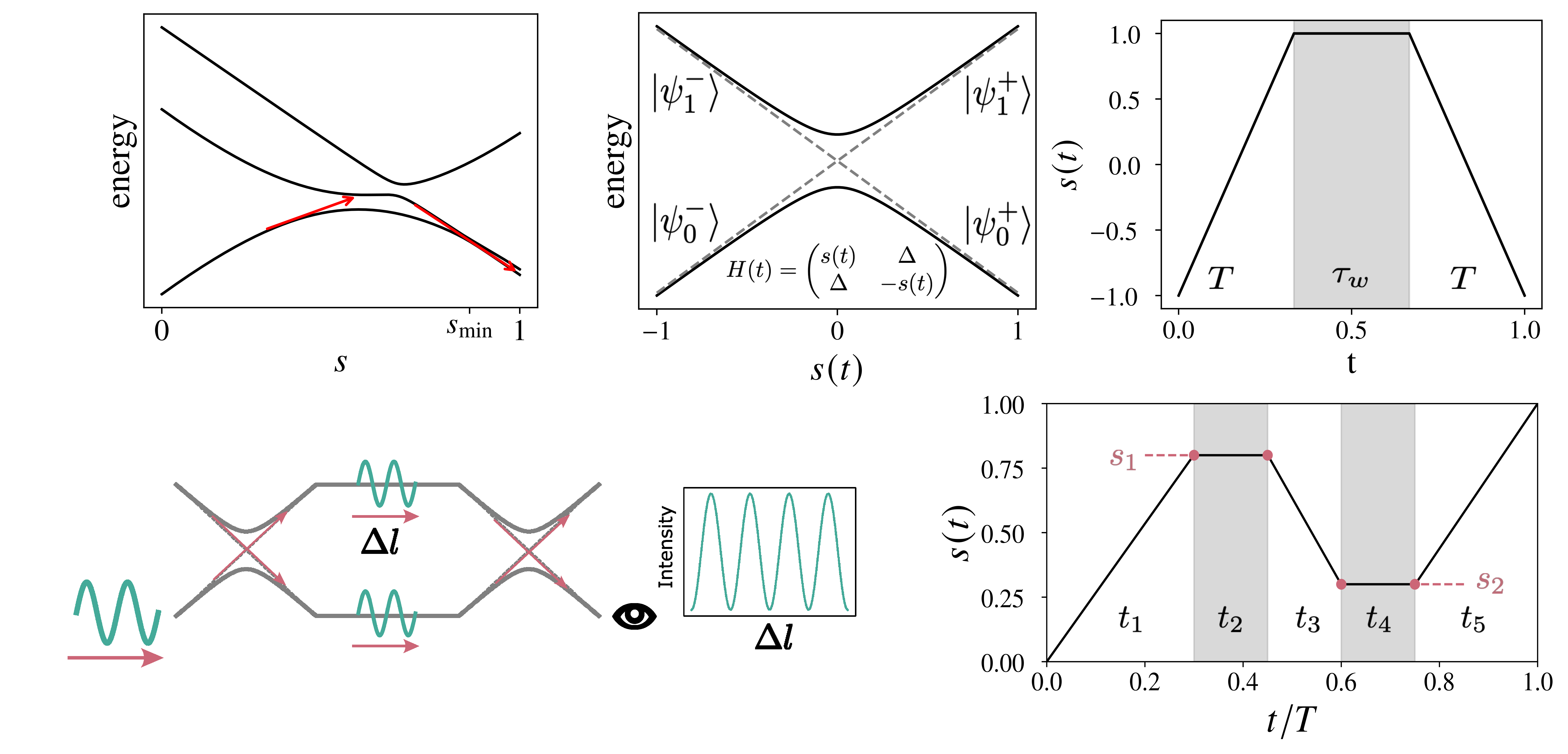
Fig 1: (a) Diagram of the three lowest energy eigenvalues of H(s), red arrows indicating the diabatic transitions that allow
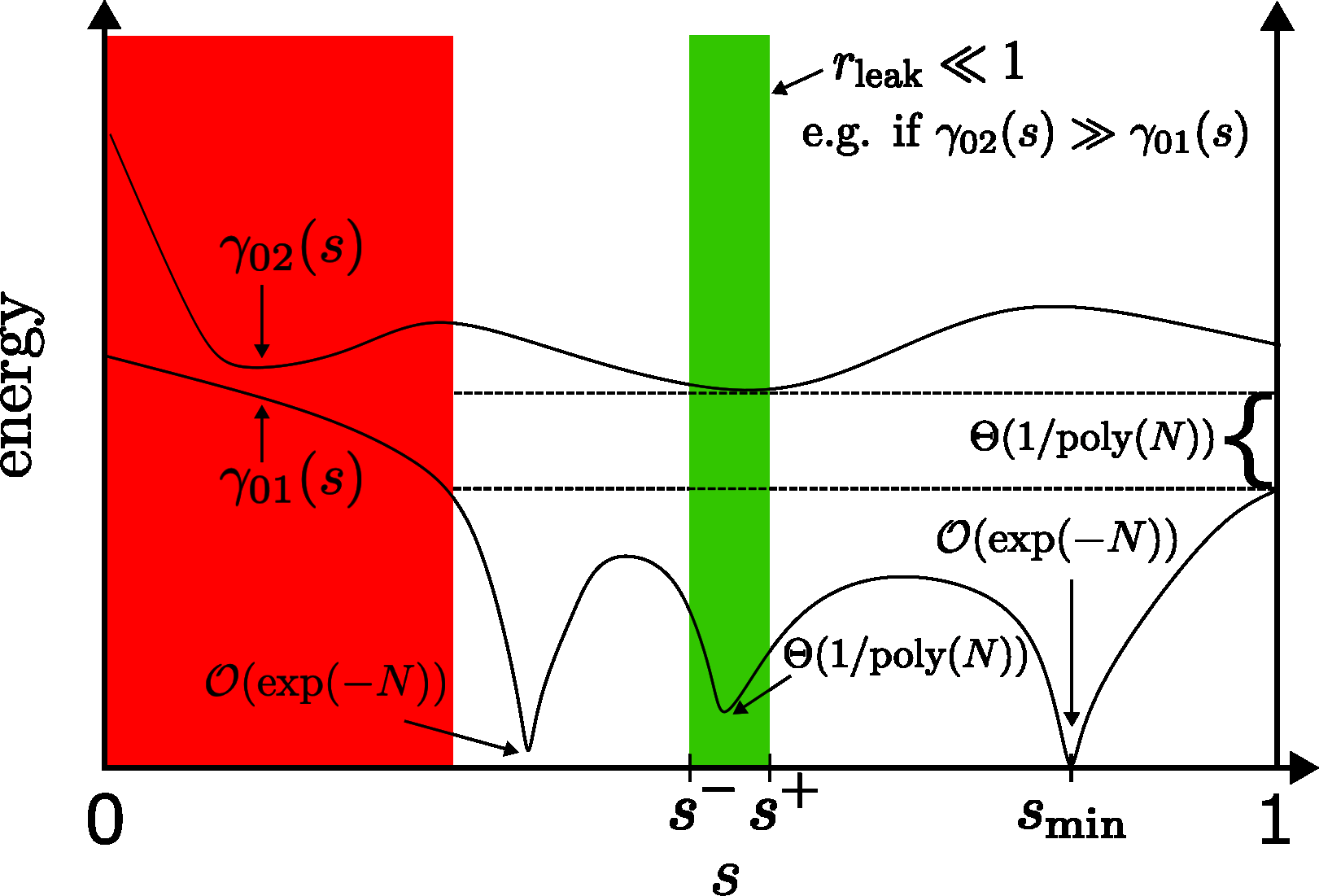
Fig 3: Illustration of a spectrum where we expect our
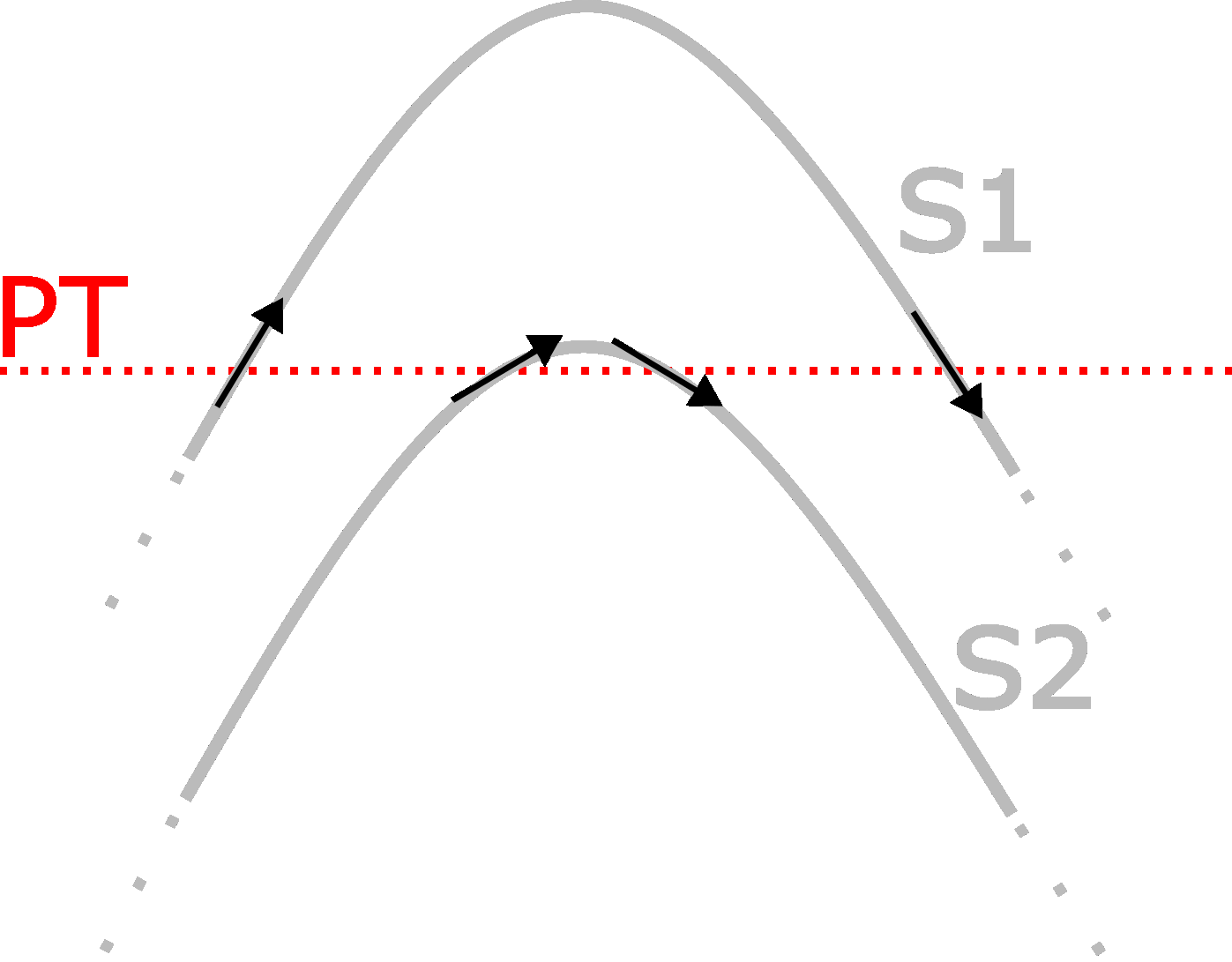
Fig 11: (a) Schedules obtained by linear interpolation ver-
Limitations
- Numerical experiments are limited to small to moderate system sizes; scalability to very large systems not fully demonstrated.
- Analysis relies heavily on the two-level approximation near avoided crossings; multi-level systems may reduce accuracy of model.
- Decoherence is analyzed numerically but no experimental data to confirm robustness of the schedule in realistic noisy quantum annealers.
- Optimization of schedule parameters assumes existence of polynomial-time optima; pathological instances with harder landscapes could exist.
- The ansatz is mainly tested on instances with known perturbative anti-crossings; applicability to broader problem classes remains to be established.
Open questions / follow-ons
- How well do LZS-based variational schedules perform on large-scale or more complex problem Hamiltonians beyond 1D Ising rings and small MAXCUT instances?
- What are the precise noise thresholds and decoherence time requirements for LZS-based annealing speedups to remain effective in realistic hardware?
- Can the variational schedule ansatz be extended beyond one-dimensional parameter schedules to multi-parameter or higher-dimensional control for more complex Hamiltonians?
- Is it possible to combine LZS interference mechanisms with error mitigation or error correction techniques to enhance robustness?
Why it matters for bot defense
While the paper focuses on quantum annealing as a heuristic for combinatorial optimization, the core insight around leveraging coherent quantum interference effects to accelerate optimization has conceptual parallels to designing efficient state discrimination or cryptographic primitives in bot-defense contexts. For CAPTCHA or bot-defense engineers, understanding how physical mechanisms (here LZS interference) can be explicitly encoded into algorithmic schedules provides a model for how careful schedule or challenge parameterization could impact solver performance. Moreover, the demonstrated sensitivity of this quantum speedup mechanism to decoherence highlights the crucial role of noise and robustness, a general concern when designing bot-defense challenges reliant on physical or behavioral complexity. Although classical bot-defense systems do not use quantum annealing, the approach of reducing parameter counts while preserving expressive power via physically motivated ansätze may inspire cleaner, more tractable challenge parameterizations in CAPTCHAs and bot puzzles.
Cite
@article{arxiv2606_09706,
  title={ Leveraging Landau-Zener-Stückelberg interference for accelerating diabatic quantum annealing },
  author={ Matthias Werner and Matías Jonsson and Artur García-Sáez and Arnau Riera and Tameem Albash },
  journal={arXiv preprint arXiv:2606.09706},
  year={ 2026 },
  url={https://arxiv.org/abs/2606.09706}
}