
Disentanglement with Holographic Reduced Representations
Source: arXiv:2606.09725 · Published 2026-06-08 · By Jhonny J. Velasquez Olivera, Christo K. Thomas, Walid Saad
TL;DR
This paper addresses the problem of unsupervised disentangled representation learning by proposing a novel approach that leverages holographic reduced representations (HRRs), a type of vector symbolic architecture (VSA) with compositional symbolic structure. Unlike prior continuous latent variable models (e.g., β-VAE, FactorVAE) or discrete latent approaches, the authors introduce a neural autoencoder architecture that learns latent vectors as sums of bound symbol-value pairs using HRR binding and bundling operations. This structure induces an inductive bias favoring disentanglement. They further complement empirical results with an information-theoretic analysis proving that the HRR unbinding operation yields approximately independent latent slots and bounds the latent capacity, quantifying how many generative factors can be encoded. Empirically, their HRR model achieves competitive to superior disentanglement metrics on multiple benchmark datasets compared to strong baselines, while also exhibiting superior noise robustness in the latent space. Qualitative analysis through latent component swapping and interpolation supports the modularity and factor alignment of the discovered representations. Overall, this work provides a novel neuro-symbolic paradigm for disentanglement grounded in vector symbolic architectures, strengthening the theoretical understanding and practical utility of symbolic latent representations.
Key findings
- HRR unbinding induces approximate statistical independence among the m latent slots with KL divergence (total correlation) decreasing as O(m^2 / (t^4 d)), vanishing with large latent dimension d.
- The information capacity of the HRR latent channel is upper bounded by min(m · d/2 log(1+1/m), m log k), where m is number of latent slots, d is vector dimension, and k is codebook size.
- HRR achieves top aggregate InfoMEC disentanglement scores of (InfoM, InfoE, InfoC) = (0.68, 0.88, 0.54) averaged over 4 benchmark datasets, outperforming β-VAE (0.54, 0.57, 0.45) and VQ-VAE (0.57, 0.88, 0.47).
- HRR improves modularity (InfoM) by approximately 4.6% and compactness (InfoC) by approximately 5.9% over the next-best baseline averaged across datasets.
- HRR and VQ-VAE show superior robustness to latent Gaussian noise injection, maintaining reconstruction PSNR above 20dB down to 0dB SNR, outperforming other baselines (β-VAE, TC-VAE, QLAE).
- Qualitative latent component swapping with HRR cleanly changes a single factor at a time without unintended alterations in unrelated factors, unlike QLAE which sometimes disrupts other factors.
- Progressive swapping (latent interpolation) of HRR slots produces smooth, factor-wise transitions between source and target images, evidencing compositional modularity of factors.
Threat model
n/a - This is a representation learning paper without a security adversary model; the primary challenge is unsupervised disentanglement under no supervision and no explicit factor labels.
Methodology — deep read
The authors frame the adversary as the inherent difficulty in unsupervised disentanglement: no labels or supervision about factor correspondence are available, and the model must discover compositional symbolic latent structure.
They train a convolutional neural network autoencoder to map input data x (images from benchmark datasets like Shapes3D, MPI3D, Isaac3D, Falcor3D) into a latent vector z structured as a holographic reduced representation: a sum of m binding operations between fixed, randomly initialized symbol vectors (S = {s_i}) and learned value vectors (V = {v_i}). Each latent slot corresponds to a factor of variation.
The symbol vectors remain fixed (frozen) at initialization, sampled approximately orthogonal from a Gaussian with variance 1/d. The encoder outputs z, from which the model retrieves noisy estimates of value vectors via the unbinding operation (circular convolution with inverses of each symbol). These noisy vectors are denoised by a small feedforward network, then discretized by vector quantization to their nearest neighbor in a learned codebook C with size k.
The decoder reconstructs x from the re-composed latent vector (sum of symbol bindings with quantized values).
The total loss combines reconstruction binary cross-entropy, vector quantization and commitment losses (from VQ-VAE), plus structural regularizers which encourage latent vectors to match the statistical distributions (norms, variances) of ideal HRR vectors at multiple stages (latent vector z, denoised retrievals, and codebook entries).
Optimization uses AdamW with carefully tuned hyperparameters. Experiments sweep a key hyperparameter per dataset to find best performing model versions.
For evaluation, they compute disentanglement metrics InfoMEC (InfoM for modularity, InfoE for explicitness, InfoC for compactness) and DCI (disentanglement, completeness, informativeness), averaged over 5 random seeds per model/dataset combination. They use latent traversals, swapping, and interpolation visualizations qualitatively.
Noise robustness is evaluated by applying Gaussian noise of varying SNR levels to latent vectors and measuring reconstruction PSNR.
Theoretical analysis models each slot as passing through a noisy additive white Gaussian noise (AWGN) channel with effective SNR inversely proportional to the number of slots m and vector dimension d. An upper bound on mutual information between input and latent is derived using classical information theory and the independence of slots is quantified via total correlation bounds.
The key experimental example is the Shapes3D dataset, where the model learns m=7 latent slots (matching known generative factors). The encoder produces the latent HRR vector, unbinding retrieves noisy slot values, which are denoised, quantized, re-bound, then decoded back to images. The disentanglement metrics show the HRR model surpasses baselines like β-VAE, VQ-VAE, QLAE consistently. Latent component swap experiments reveal modular factor isolation, with minimal cross-factor contamination.
Code and weights are not publicly released, datasets used are standard benchmarks publicly available to the community. Detailed model architectures, optimization settings, and hyperparameter sweeps are documented in appendices.
Overall, the paper provides both a practical training recipe and a novel theoretical justification for the use of HRR latent spaces in disentangled representation learning.
Technical innovations
- Introducing a neural autoencoder architecture that learns latent representations as sums of bound symbol-value pairs using holographic reduced representations (HRRs) to impose an inductive bias favoring disentanglement.
- A latent unbinding operation that enables approximate statistical independence of encoded factors (slots) by treating each slot as a hetero-associative memory retrieval, mathematically analyzed via mutual information bounds.
- A novel structural regularization scheme enforcing HRR vector statistical properties (norm and variance constraints) on latent, retrieval, and codebook vectors to stabilize training.
- Integration of vector quantization with HRR latent space, allowing discrete symbolic codebook assignment per latent slot and facilitating factor disentanglement in unsupervised settings.
Datasets
- Shapes3D — ~480k images — publicly available synthetic dataset of 3D objects with known generative factors
- Falcor3D — unspecified size — synthetic 3D object dataset from NVIDIA
- Isaac3D — unspecified size — synthetic dataset from NVIDIA Isaac simulator
- MPI3D-C — ~140k images — real-world colored variant of the MPI3D dataset
Baselines vs proposed
- β-VAE: InfoM aggregated = 0.54 vs HRR: 0.68
- β-TCVAE: InfoM aggregated = 0.56 vs HRR: 0.68
- VQ-VAE: InfoM aggregated = 0.57 vs HRR: 0.68
- QLAE: InfoM aggregated = 0.65 vs HRR: 0.68
- HRR outperforms all baselines on InfoMEC InfoM by 4.6% relative improvement on average across datasets
- HRR outperforms baselines on InfoMEC InfoC by 5.9% on average
- HRR and VQ-VAE show superior latent noise robustness measured by PSNR at low SNR (e.g. >20dB PSNR at 0dB SNR), significantly outperforming β-VAE and TC-VAE
Figures from the paper
Figures are reproduced from the source paper for academic discussion. Original copyright: the paper authors. See arXiv:2606.09725.
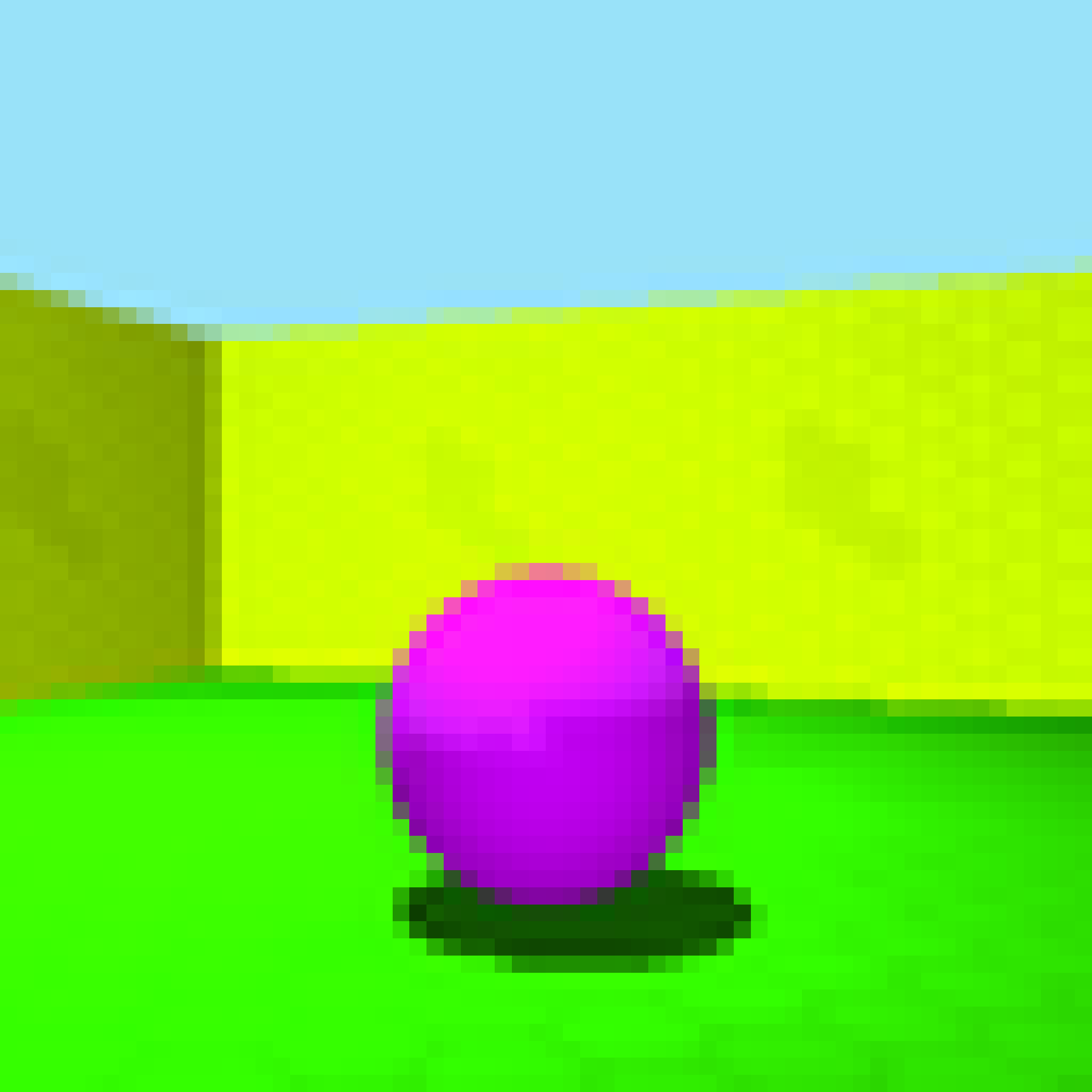
Fig 2: Each row is a visualization of how reconstruction quality degrades as noise intensity
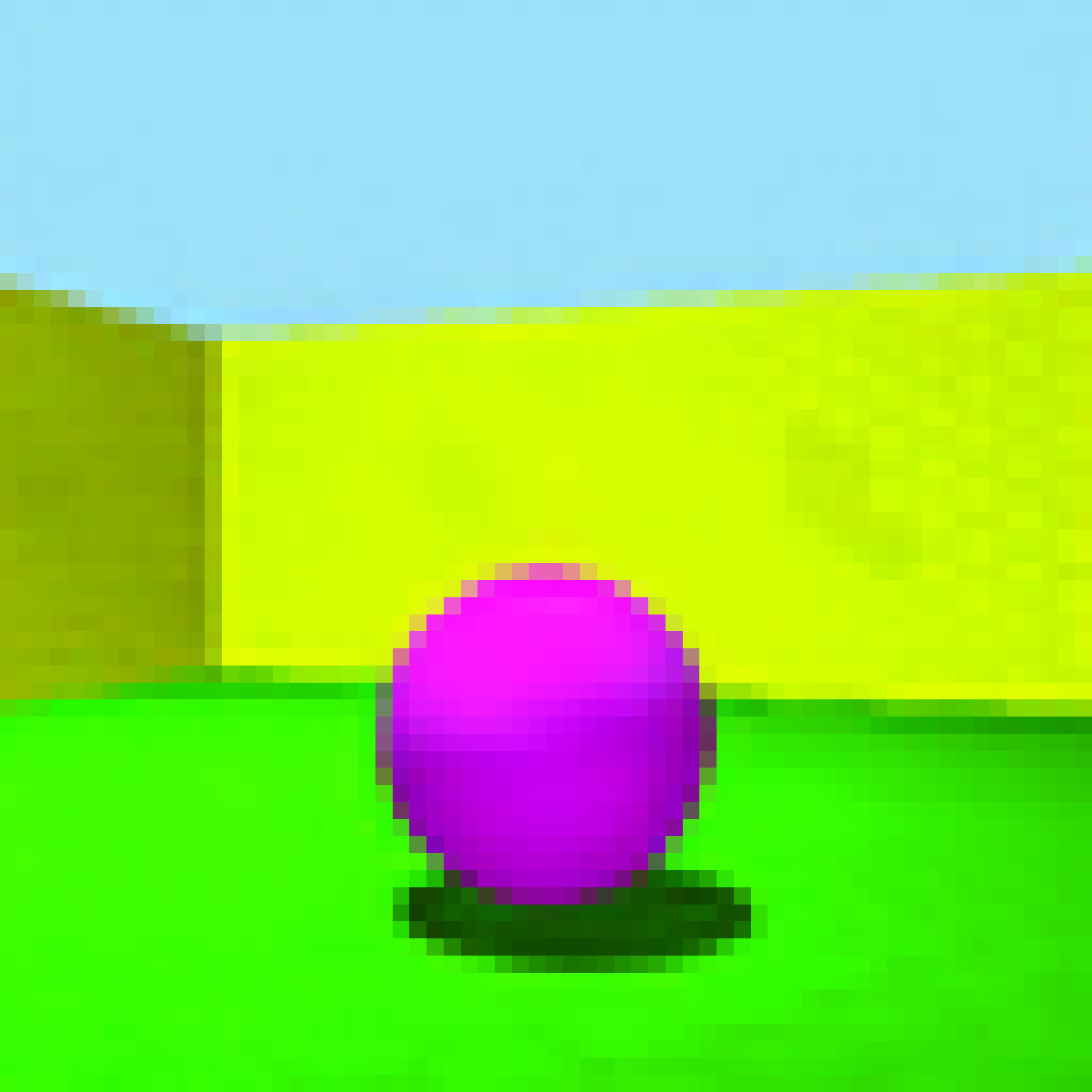
Fig 3: compares latent component swaps for HRR and other baselines. We make the following
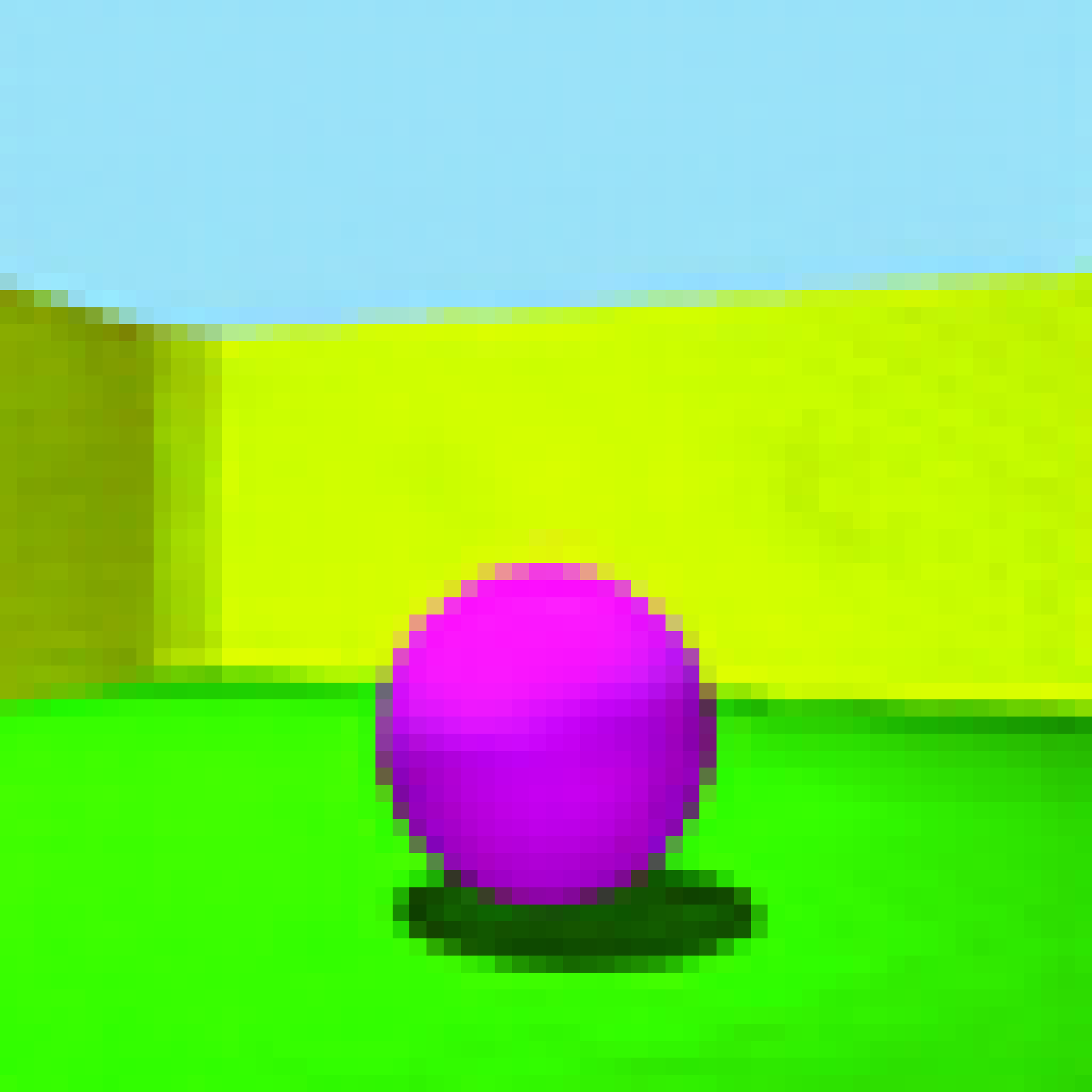
Fig 4: Latent interpolation swaps components progressively until the representation is fully
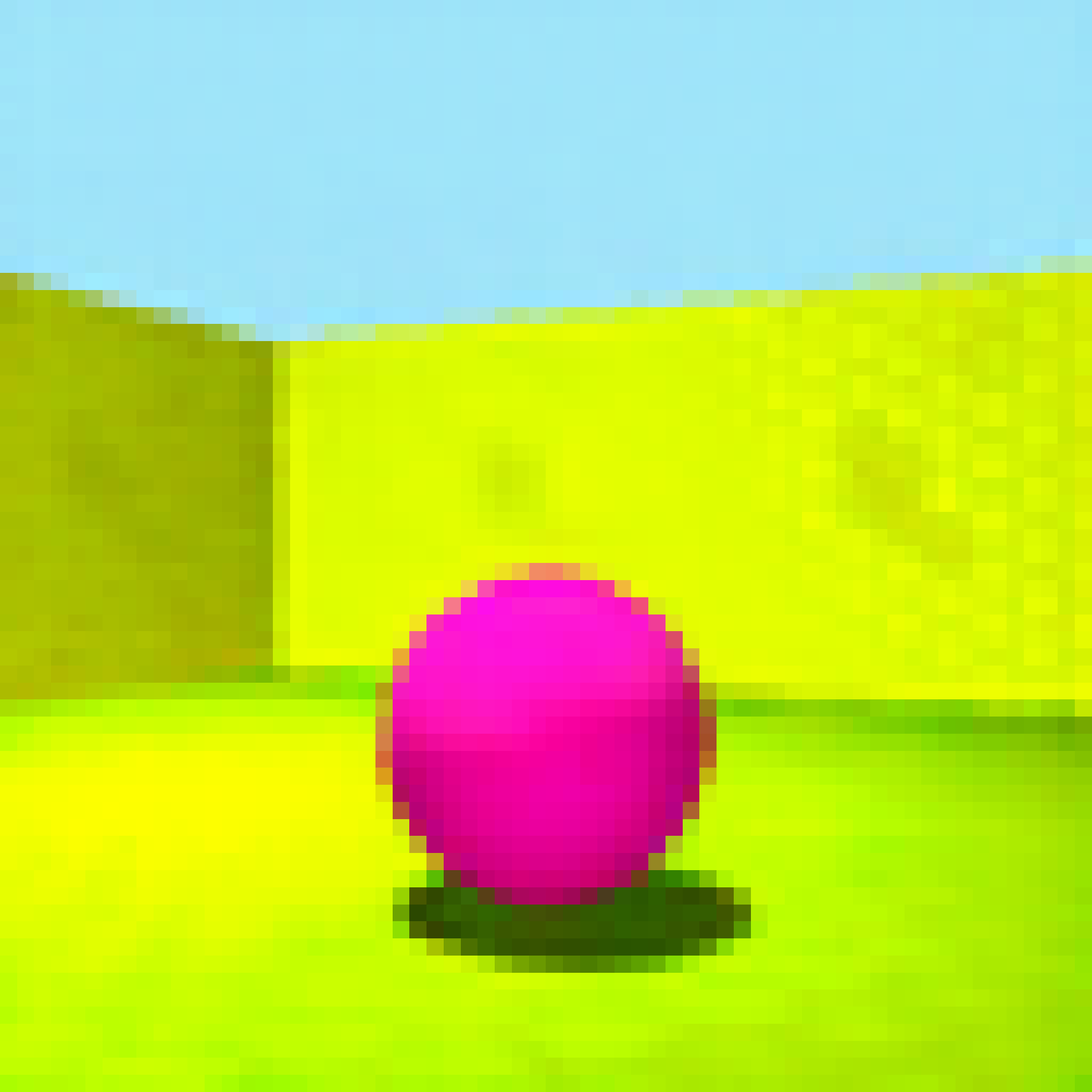
Fig 1: Average performance of each model, as measured by PSNR, under varying levels of
Fig 5 (page 9).
Fig 6 (page 9).
Fig 7 (page 9).
Fig 8 (page 9).
Limitations
- The method requires fixing the number of latent slots m a priori, which must balance factor coverage and noise capacity; no automatic determination.
- The approach has only been evaluated on standard synthetic and semi-real datasets; real-world complex data with unknown compositional structure could present challenges.
- Training relies fully on reconstruction loss and regularization without explicit adversarial or label supervision; might limit disentanglement in more ambiguous datasets.
- Code and pretrained models are not released, limiting immediate reproducibility.
- No evaluation against adaptive adversarial perturbations or robustness to adversarial attacks, relevant for security-critical applications.
- Computational cost and scalability to very high-resolution data or very large symbol sets have not been explored.
Open questions / follow-ons
- How can the number of latent slots m be automatically adapted to dataset complexity in an unsupervised way?
- Can the HRR-based disentanglement approach be extended to handle hierarchical or relational compositions beyond flat slot binding?
- Could combining HRR representations with adversarial robustness techniques enhance resilience to adversarial latent perturbations?
- What is the performance of HRR disentanglement on real-world datasets with unlabeled, unknown factor structures, such as natural images or speech?
Why it matters for bot defense
For bot-defense and CAPTCHA systems, this work suggests the potential utility of neuro-symbolic latent spaces with explicit slot-factor compositionality learned in an unsupervised manner. Robust latent representations that cleanly separate underlying generative factors and demonstrate noise tolerance could improve the interpretability and robustness of CAPTCHA generation or detection models. The HRR vector symbolic architecture introduces an inductive bias conducive to factor modularity, which might facilitate designing CAPTCHA challenges that vary along isolated semantic dimensions to better differentiate bots from humans. Additionally, understanding the information capacity limits of such structured latents can inform the design of challenge complexity and diversity. However, practical application would require integrating these architectures with task-specific CAPTCHA datasets and testing adversarial resilience, which the paper does not address. The approach may inspire future CAPTCHA defenses that rely on discrete compositional feature spaces rather than continuous latent embeddings, improving noise robustness and modularity.
Cite
@article{arxiv2606_09725,
  title={ Disentanglement with Holographic Reduced Representations },
  author={ Jhonny J. Velasquez Olivera and Christo K. Thomas and Walid Saad },
  journal={arXiv preprint arXiv:2606.09725},
  year={ 2026 },
  url={https://arxiv.org/abs/2606.09725}
}