
CoMetaPNS: Continually Meta-learning Personalized Neural Surrogates for Cardiac Electrophysiology Simulations
Source: arXiv:2606.07488 · Published 2026-06-05 · By Ryan Missel, Xiajun Jiang, Linwei Wang
TL;DR
This paper addresses the challenge of continually personalizing neural surrogate models for cardiac electrophysiology (EP) simulations under sequentially arriving, unlabeled clinical data sources. Prior meta-learning approaches can efficiently personalize surrogates with limited subject-specific data but assume a static training distribution with known task identities. They require costly retraining on the full dataset to avoid catastrophic forgetting when new subjects or evolving data distributions appear, limiting clinical feasibility. The authors propose CoMetaPNS, a continual meta-learning framework that simultaneously integrates new cardiac EP data from multiple subjects over time while detecting if data arises from known or novel patient dynamics, thereby avoiding forgetting past knowledge. CoMetaPNS leverages a Bayesian Gaussian Mixture Model (GMM) over a memory buffer to infer task relationships and manage memory for continual learning. Empirical evaluation on synthetic cardiac datasets demonstrates CoMetaPNS achieves better simulation forecast accuracy, improved computational efficiency, and robustness to catastrophic forgetting compared to baselines including individual optimization and traditional meta-learners. The continual Bayesian clustering enables dynamic task identification and selective meta-model updates instead of blind retraining.
Key findings
- CoMetaPNS achieves higher spatial correlation coefficients (SCC) and Dice coefficients (DC) on synthetic cardiac EP streaming data compared to baselines, indicating superior personalization accuracy (Fig 3, 5).
- Integration of continual meta-learning with task-relational Bayesian GMM clustering reduces catastrophic forgetting, maintaining stable performance as new subjects arrive (Fig 4).
- Compared to a task-aware approach that treats each new boundary as a new task, CoMetaPNS better balances memory representation and avoids fragmentation by clustering similar tasks.
- Feed-forward amortized meta-inference enables rapid adaptation per subject without computationally expensive gradient fine-tuning required by methods like MAML.
- Reservoir sampling with continual GMM effectively maintains a limited fixed-size memory buffer (size M unspecified) representing evolving non-stationary subject distributions.
- Novelty detection based on average log-likelihood from GMM clusters allows the model to decide when to update meta-parameters fully or apply fast adaptation alone, optimizing compute use.
- Evaluation includes comparisons to individualized optimization-based personalized cardiac simulations and generic neural surrogates lacking meta-inference, showing improved accuracy and scalability.
- Neither meta-learning alone nor continual learning alone sufficed to handle non-stationary clinical cardiac data streams; their combination in CoMetaPNS was necessary.
Threat model
The adversary in this context is not explicitly security-related but corresponds to the non-stationarity and unknown subject identities composing the 'threat' to stable model performance. The framework assumes access to sequential, unlabeled cardiac EP data with known change points (task boundaries) but unknown task IDs. The adversary cannot alter the data or replay attacks, only the incoming data distribution shifts. This represents a practical clinical challenge rather than a malicious attacker scenario.
Methodology — deep read
The authors formulate personalized cardiac EP simulation as learning a neural surrogate f(v, θ) approximating simulation model M(v; θ), where θ are patient-specific physiological parameters. Prior methods learn either a generic surrogate or personalize via optimization; this work meta-learns a feed-forward neural surrogate conditioned on set-embedding c derived from limited subject-specific context data X_s. The generative model decomposes into temporal transition T_θt (a conditional gated recurrent unit adapted per patient-specific embedding c) and spatial emission G_θs modeled with graph convolutional neural networks accounting for cardiac mesh structure. Meta-inference of c uses amortized variational inference with a set-embedding network embedding context observations via GCN-GRU, averaging embeddings to parameterize a Gaussian latent variable. The overall objective maximizes an evidence lower bound summing reconstruction likelihood and KL divergences, optimized episodically with context-query splits. To address continual learning, data from different patients arrive sequentially with known task boundaries but unknown task IDs (i.e., unknown whether data is novel or re-encountered patient). A fixed-size reservoir memory buffer stores past samples via reservoir sampling. Two strategies are proposed: task-aware (assigning unique task IDs per boundary) and task-relational meta-learning, which models the embedding distribution of reservoir samples with a continually updated Bayesian Gaussian Mixture Model (GMM). The GMM clustering enables automatic task ID inference, novelty detection by average log-likelihood, and more balanced memory updates across related tasks. Novel data triggers full meta-parameter updates, while known data uses fast feed-forward adaptation. Reservoir updates integrate auxiliary buffers and prune GMM components with low weights to manage memory size. Experiments use synthetic cardiac EP datasets simulating non-stationary data streams with distribution shifts. Performance is measured via spatial correlation coefficient (SCC) and Dice coefficient (DC) for simulation accuracy, computational cost, and forgetting effects. Baselines include individually optimized simulation models, generic neural surrogates without meta-inference, and standard continual meta-learning approaches. Reproducibility details on code release or datasets are not specified in the text. An end-to-end example is presented where context sets of limited size are embedded to condition the neural surrogate generating personalized simulated EP signals, continually updated as new patient data streams in, with the GMM inferring task identity to optimize training versus fast adaptation decisions.
Technical innovations
- Integration of continual Bayesian Gaussian Mixture Models with a memory buffer for unsupervised task identification and novelty detection in a continual meta-learning framework.
- Feed-forward amortized variational inference meta-model for personalized cardiac neural surrogates allowing rapid adaptation without gradient fine-tuning.
- Conditional gated recurrent unit temporal transition model parameterized by patient-specific latent embedding enabling spatially localized adaptation on varying cardiac mesh geometries.
- Task-relational meta-learning approach that dynamically manages reservoir memory with cluster-based sampling and pruning to balance continual adaptation and prevent catastrophic forgetting.
Datasets
- Synthetic cardiac electrophysiology data — size unspecified — generated to simulate non-stationary subject distributions
Baselines vs proposed
- Individually optimized simulation models: higher computational cost and lower personalization accuracy compared to CoMetaPNS
- Generic neural surrogates without meta-inference: lower spatial correlation coefficients (SCC) and Dice coefficients (DC) versus CoMetaPNS
- Standard continual meta-learning baselines (task-aware and gradient-based meta-learners): more prone to catastrophic forgetting and slower adaptation than CoMetaPNS
Figures from the paper
Figures are reproduced from the source paper for academic discussion. Original copyright: the paper authors. See arXiv:2606.07488.
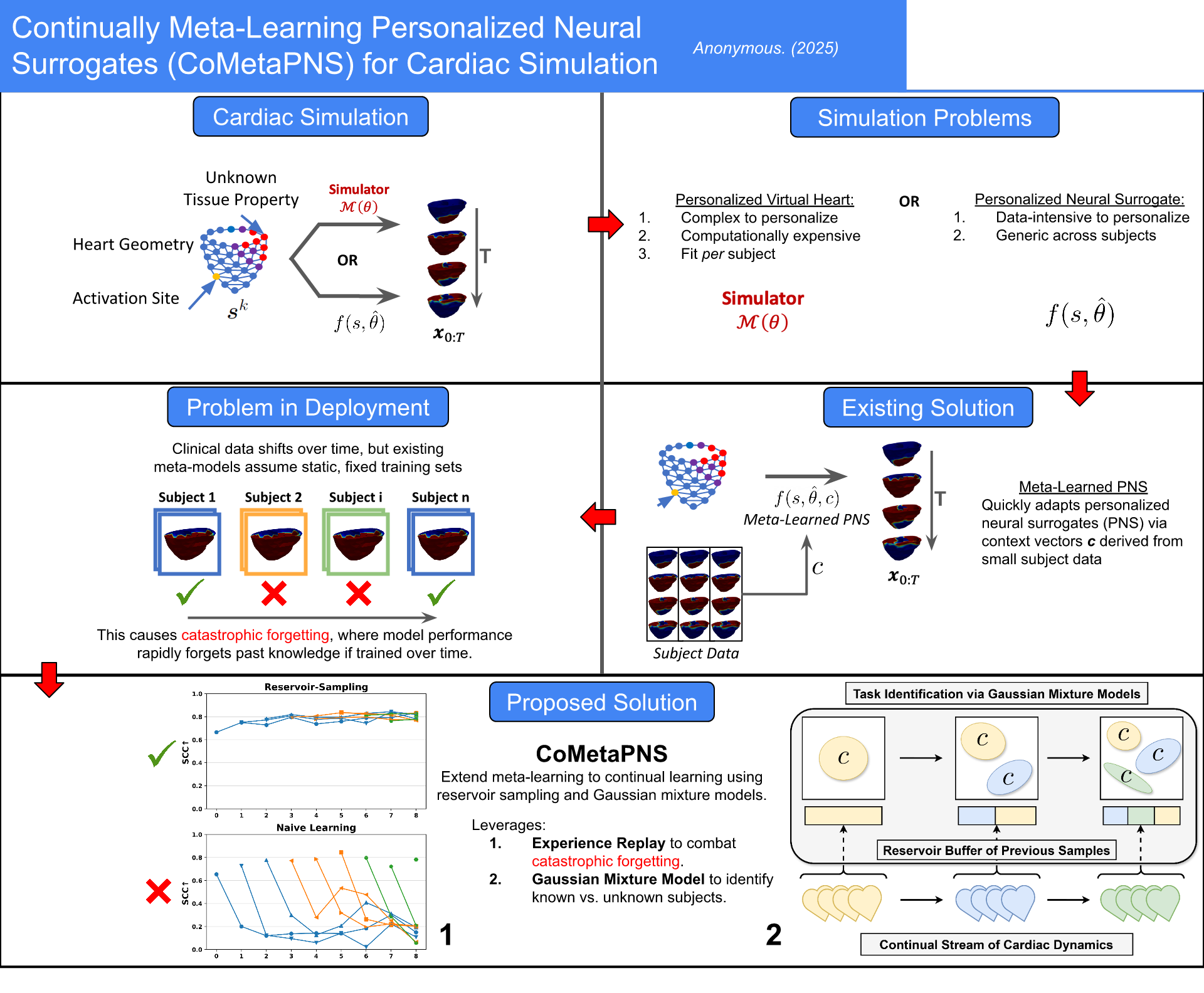
Fig 1 (page 1).
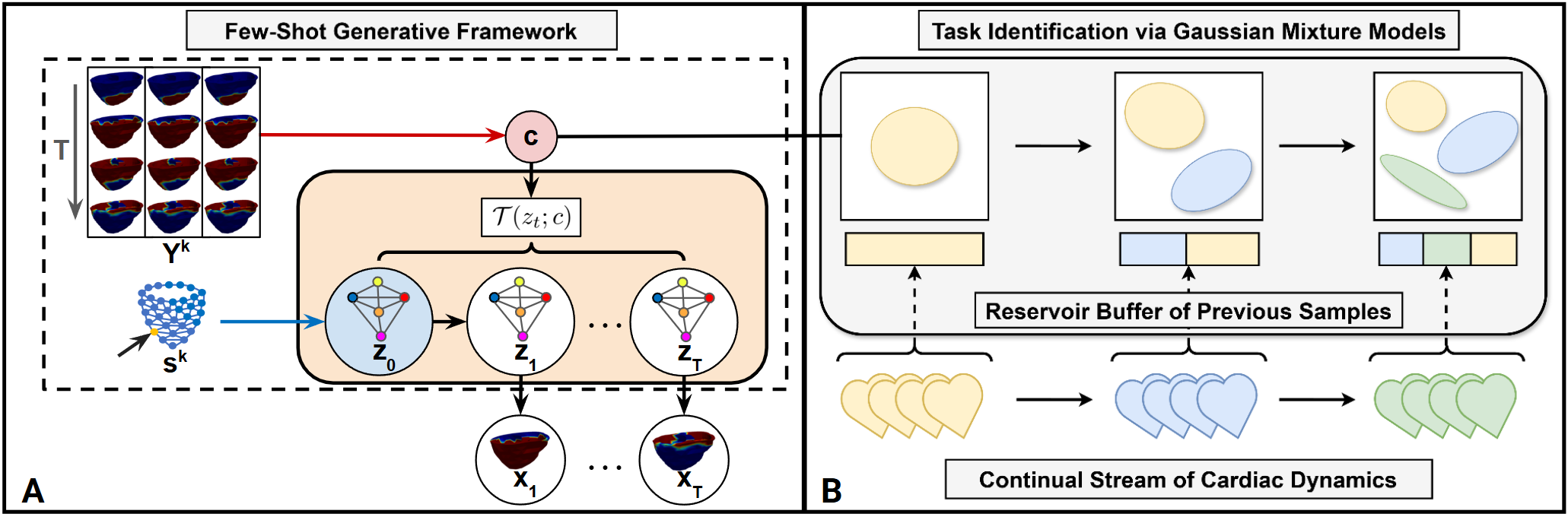
Fig 1: Overview of CoMetaPNS, showing A) the framework of few-shot generative
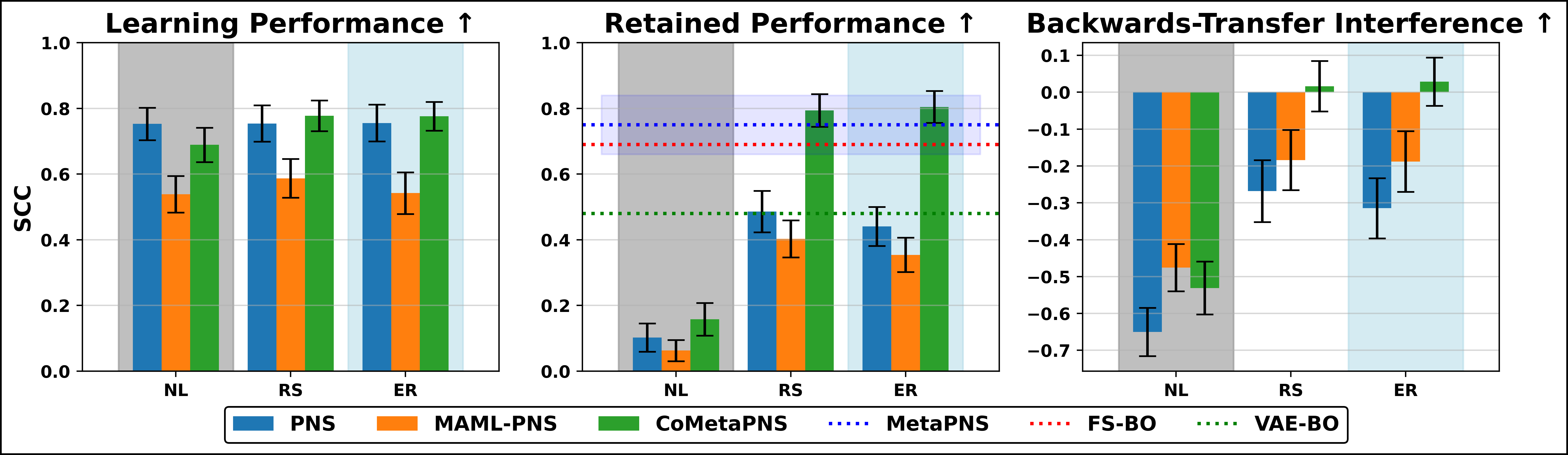
Fig 2: Spatial correlation coefficient (SCC) performance comparison on the synthetic
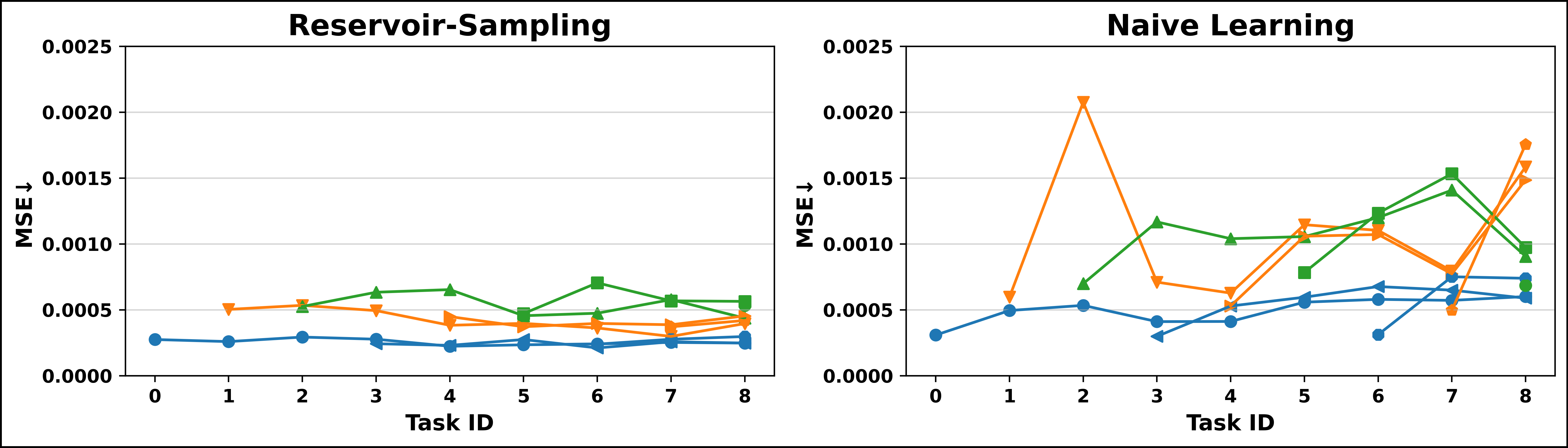
Fig 3: CoMetaPNS with Task-Aware Meta-Learning (left) overcomes catastrophic for-
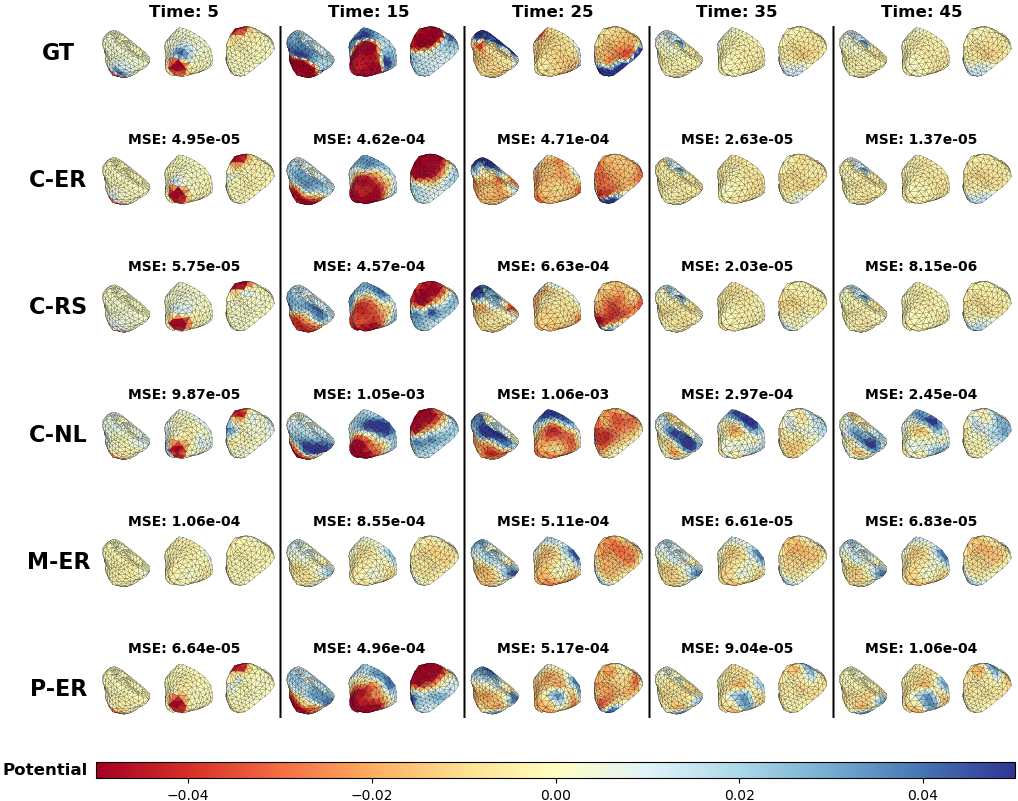
Fig 4: Visual examples of reconstructed electrical activity from the proposed continual
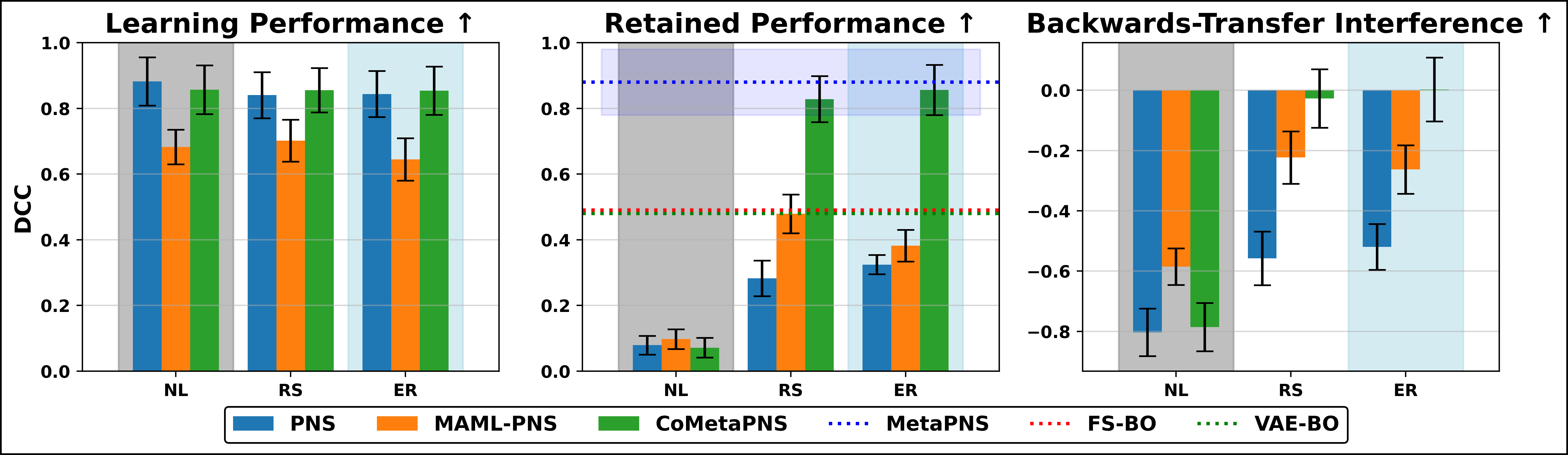
Fig 5: Dice coefficient (DC) performance comparison on the synthetic data for the
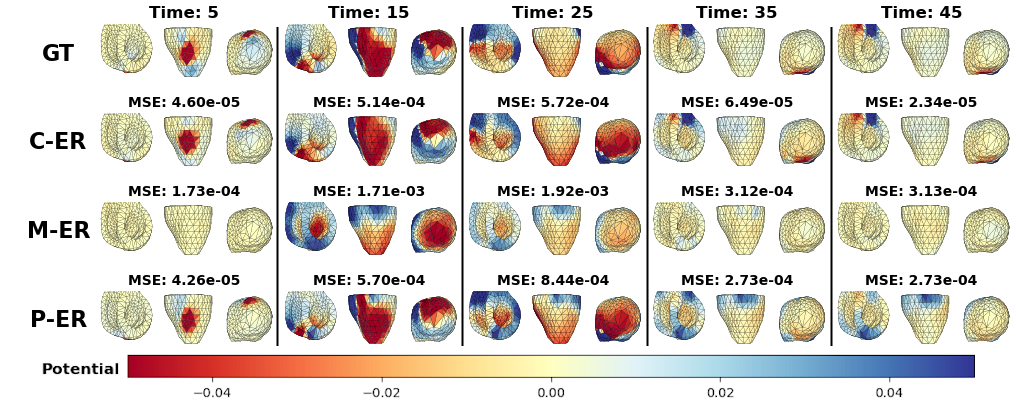
Fig 6: Visual examples of reconstructed electrical activity on both meta-learners con-
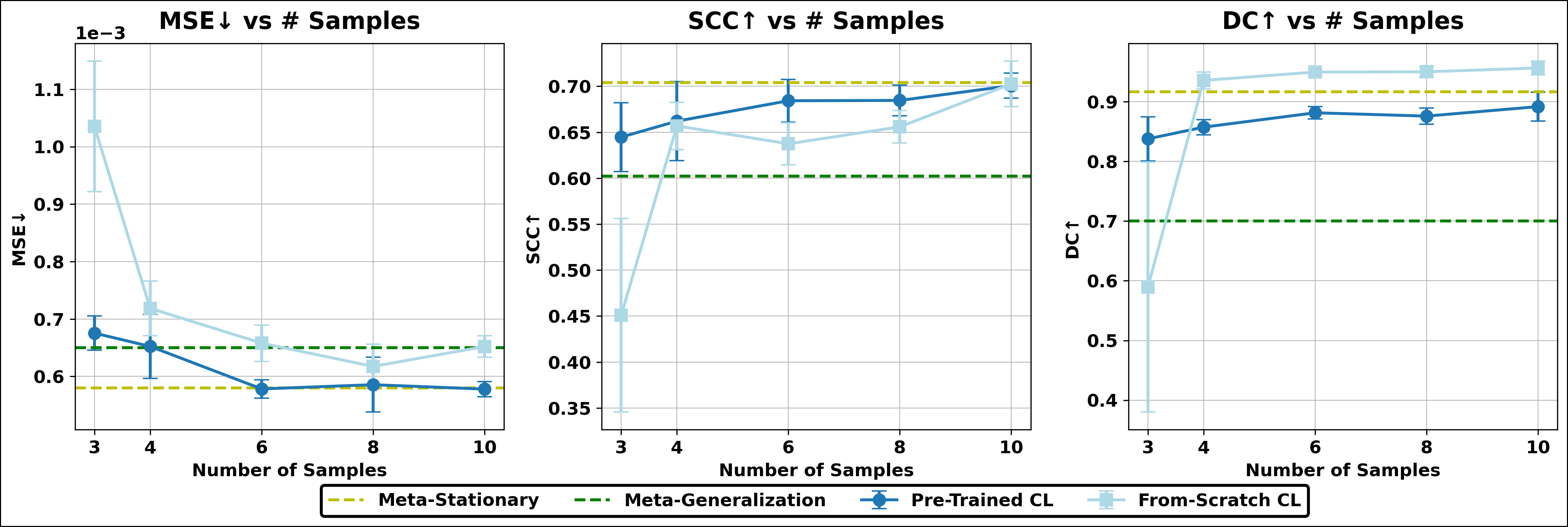
Fig 7: Performance metrics evaluating the effectiveness of using a pre-trained meta-
Limitations
- Experiments primarily conducted on synthetic datasets; real clinical cardiac data generalization is claimed but details are limited or truncated.
- Exact reservoir memory size and computational resource requirements are not fully detailed.
- Assumption that task boundaries (subject switches) are known in advance, which may not hold in all clinical data streams.
- The clustering approach depends on hyperparameters and quality of embedding space which may be sensitive or require tuning.
- No explicit adversarial robustness or out-of-distribution generalization tests beyond synthetic non-stationary streams.
Open questions / follow-ons
- How well does CoMetaPNS generalize to real-world clinical cardiac data with more heterogeneous and noisy distributions?
- Can the approach scale to larger reservoir sizes or finer-grained task clustering without excessive computational cost?
- What are the robustness bounds of the Bayesian GMM clustering under extreme distribution shifts or noisy task boundaries?
- How sensitive is the method to the choice of embedding architectures and hyperparameters for task-relational meta-learning?
Why it matters for bot defense
For bot-defense and CAPTCHA practitioners, this paper offers an advanced continual meta-learning methodology capable of adapting surrogate models in dynamic, evolving environments without catastrophic forgetting. The continual Bayesian clustering for task identification and novelty detection could inspire similar approaches for adapting bot detection models to shifting attack patterns or user behaviors over time without requiring full retraining on all historical data. The feed-forward amortized inference techniques demonstrate how fast personalization can be achieved with limited context data, potentially benefiting real-time adaptive bot-defense. However, the domain-specific modeling of cardiac meshes and physiological dynamics limits direct applicability; concepts rather than implementations translate best. The approach overall underscores the value of combining meta-learning with scalable continual learning frameworks that manage limited memory buffers and infer task relations dynamically — principles directly relevant for long-lived bot detection systems faced with non-stationary traffic and adversarial evolution.
Cite
@article{arxiv2606_07488,
  title={ CoMetaPNS: Continually Meta-learning Personalized Neural Surrogates for Cardiac Electrophysiology Simulations },
  author={ Ryan Missel and Xiajun Jiang and Linwei Wang },
  journal={arXiv preprint arXiv:2606.07488},
  year={ 2026 },
  url={https://arxiv.org/abs/2606.07488}
}