
PriSrv: Privacy-Enhanced and Highly Usable Service Discovery in Wireless Communications
Source: arXiv:2606.05821 · Published 2026-06-04 · By Yang Yang, Robert H. Deng, Guomin Yang, Yingjiu Li, HweeHwa Pang, Minming Huang et al.
TL;DR
PriSrv tackles the long-standing problem of privacy leaks and security vulnerabilities in wireless service discovery (SD) protocols. Existing SD methods often expose sensitive device information, allowing adversaries to perform tracking, spoofing, man-in-the-middle, and denial-of-service attacks. PriSrv introduces a novel private service discovery protocol that enables both service providers and clients to express fine-grained, bilateral authentication policies while maintaining high usability with minimal overhead. The protocol achieves privacy through a dual-layer matching architecture: an outer layer for fast filtering based on public attributes and an inner layer that performs mutual authentication leveraging selectively disclosed private attributes. At its cryptographic core, PriSrv proposes anonymous credential-based matchmaking encryption (ACME), a primitive that combines attribute-based anonymous credentials with expressive policy-based encryption to enable bilateral access control, selective attribute disclosure, and multi-show unlinkability. The implementation integrates with widely used wireless protocols such as Wi-Fi EAP, mDNS, BLE, and AirDrop. Extensive formal security proofs and real-world performance evaluation across desktop, laptop, smartphone, and Raspberry Pi platforms demonstrate that PriSrv can perform private discovery and mutual authentication in under 1 second on mainstream devices, preserving privacy without sacrificing user experience.
Key findings
- PriSrv achieves private service discovery and anonymous mutual authentication in under 0.973 seconds on desktop, laptop, and smartphones, and under 2.712 seconds on Raspberry Pi 4B.
- ACME supports bilateral fine-grained policy control, selective attribute disclosure, and multi-show unlinkability in a single cryptographic step, outperforming CRYPTO'19 matchmaking encryption in functionality and efficiency.
- Fast Anonymous Credential (FAC), a building block of ACME, provides constant-size credentials with efficient showing and verification that outperform prior anonymous credential schemes in terms of computational cost and credential size.
- PriSrv is the only evaluated SD protocol that meets all privacy enhancement requirements: private broadcast, mutual authentication, bilateral anonymity, bilateral flexible policy control, selective attribute disclosure, and multi-show unlinkability.
- PriSrv requires no pre-registered pairing or third-party service dependence for service discovery and operates without reliance on online identity issuance during discovery, improving usability.
- Formal security proofs cover adversaries who intercept, tamper, replay, inject, drop, or interleave messages and demonstrate PriSrv's resilience to impersonation, MITM, spoofing, and tracking attacks.
- Integration of PriSrv with EAP, mDNS, BLE, and AirDrop demonstrates its practical applicability and interoperability across diverse wireless frameworks.
- Complex bilateral policies reduce performance but maintain under 1 second latency on mobile devices (Fig. 5), showing PriSrv scales reasonably with policy complexity.
Threat model
The adversary is a strong network attacker with full control over the communication channel between service providers and clients. They can passively eavesdrop or actively intercept, modify, replay, delay, inject, or drop messages. Both providers and clients are considered untrustworthy and may impersonate or attempt to track each other. The credential issuer is considered fully trusted to securely issue and revoke credentials. The adversary cannot break computational assumptions underlying standard cryptographic primitives (DL, DDH, MDDH). The adversary aims to (1) break authenticated key exchange security and (2) extract sensitive private attributes or link multiple sessions to identify entities.
Methodology — deep read
The paper addresses privacy leaks in wireless service discovery by proposing PriSrv, a protocol combining cryptography and efficient system design.
Threat Model & Assumptions: The threat model assumes adversaries with full network control able to eavesdrop, intercept, tamper, replay, inject, drop, or interleave messages between parties. Service providers and clients are untrusted and may attempt impersonation or tracking. The credential issuer is trusted to issue and revoke anonymous credentials. The adversary cannot break standard cryptographic assumptions like Discrete Logarithm and Decisional Diffie-Hellman.
Data, Provenance, and Preprocessing: The protocol operates on device attributes partitioned into public and private sets. Public attributes (e.g., domain name, device type) are used for fast filtering; private attributes (e.g., IP address, device ID) are disclosed selectively for mutual authentication. Attribute sets and policies are formulated as monotone Boolean formulas, represented as secret-shared linear secret sharing schemes for cryptographic enforcement.
Architecture / Algorithms: PriSrv features a dual-layer matching design. The outer layer encrypts broadcast messages under public attributes and policies so mismatched clients or providers fail decryption quickly. The inner layer uses ACME — a novel anonymous credential-based matchmaking encryption scheme — to enforce bilateral policy satisfaction and selective attribute disclosure with unlinkable, anonymous credentials. ACME overcomes limitations in prior matchmaking encryption by integrating fast anonymous credentials (FAC), supporting constant-size credentials, efficient verification, multi-show unlinkability, and expressive fuzzy policy matching.
FAC credentials and proofs use bilinear pairings in Type-3 groups, with operations carefully optimized for constrained wireless devices. Policy enforcement uses linear secret sharing schemes mapping monotone Boolean formulas.
Training / Deployment Regime: As a protocol rather than a learned model, PriSrv is implemented and tested on multiple hardware platforms including desktops, laptops, smartphones, and Raspberry Pi 4B devices. Cryptographic operations are benchmarked. Hyperparameters correspond to cryptographic security parameters (e.g., elliptic curve parameters) and policy complexity, which affect runtime.
Evaluation: Evaluation metrics include runtime latency of private broadcast and mutual authentication phases, credential size, communication cost, and ability to integrate with wireless standards (EAP, mDNS, BLE, AirDrop). Ablation includes varying policy complexity, device class, and overhead breakdowns for cryptographic primitives. Formal security proofs (in appendices) analyze privacy guarantees and resistance to attacks. Usability is gauged by latency under 1 second, consistent with human perception of immediate response.
Reproducibility: The paper does not explicitly mention code release or open datasets — the credential schemes use standard public parameters. The underlying cryptographic assumptions and access policy building blocks are well established. Some minor implementation details are provided, but exact code is not public.
End-to-end example: In a smart office, a smart TV acts as a service provider broadcasting encrypted service advertisements specifying its public attributes (e.g., device type, vendor, domain name) and private attributes (e.g., IP address). The client device evaluates its own public attributes against the TV's policy; only if mutually authorized will it decrypt the inner-layer ciphertext revealing private attributes and authenticate the provider. Both parties then establish a secure session key. Attribute and policy selections allow selective disclosure while preserving mutual anonymity and unlinkability across multiple sessions.
Overall, the methodology carefully balances privacy, security, expressiveness, and efficiency by integrating novel cryptographic constructions with practical wireless protocol requirements.
Technical innovations
- Introduction of Anonymous Credential-based Matchmaking Encryption (ACME) that supports bilateral policy-based encryption with selective attribute disclosure and multi-show unlinkability in a single cryptographic operation.
- Design of Fast Anonymous Credential (FAC) scheme offering constant-size credentials and efficient show/verify protocols optimized for constrained wireless devices.
- Dual-layer matching architecture splitting public attribute filtering and private attribute mutual authentication to achieve fast filtering and strong privacy guarantees.
- Concrete integration methods for combining PriSrv with popular wireless service discovery protocols (EAP, mDNS, BLE, AirDrop) without additional infrastructure or pre-configuration.
Baselines vs proposed
- Matchmaking Encryption (ME) [CRYPTO'19]: functionality limited to identity-based equality matching vs ACME: supports expressive fuzzy policies and selective disclosure
- AirDrop protocol: public attribute leakage and tracking vulnerabilities vs PriSrv: full bilateral anonymity and unlinkability
- PrivateDrop and WTSB: partial privacy features but lack bilateral policy control or multi-show unlinkability vs PriSrv: meets all privacy requirements
- Runtime latency on smartphones: AirDrop ~ several seconds (not precisely stated) vs PriSrv: under 0.973 seconds
- Private broadcast latency on Raspberry Pi 4B: PriSrv 1.189 seconds vs mutual authentication 2.712 seconds
Figures from the paper
Figures are reproduced from the source paper for academic discussion. Original copyright: the paper authors. See arXiv:2606.05821.
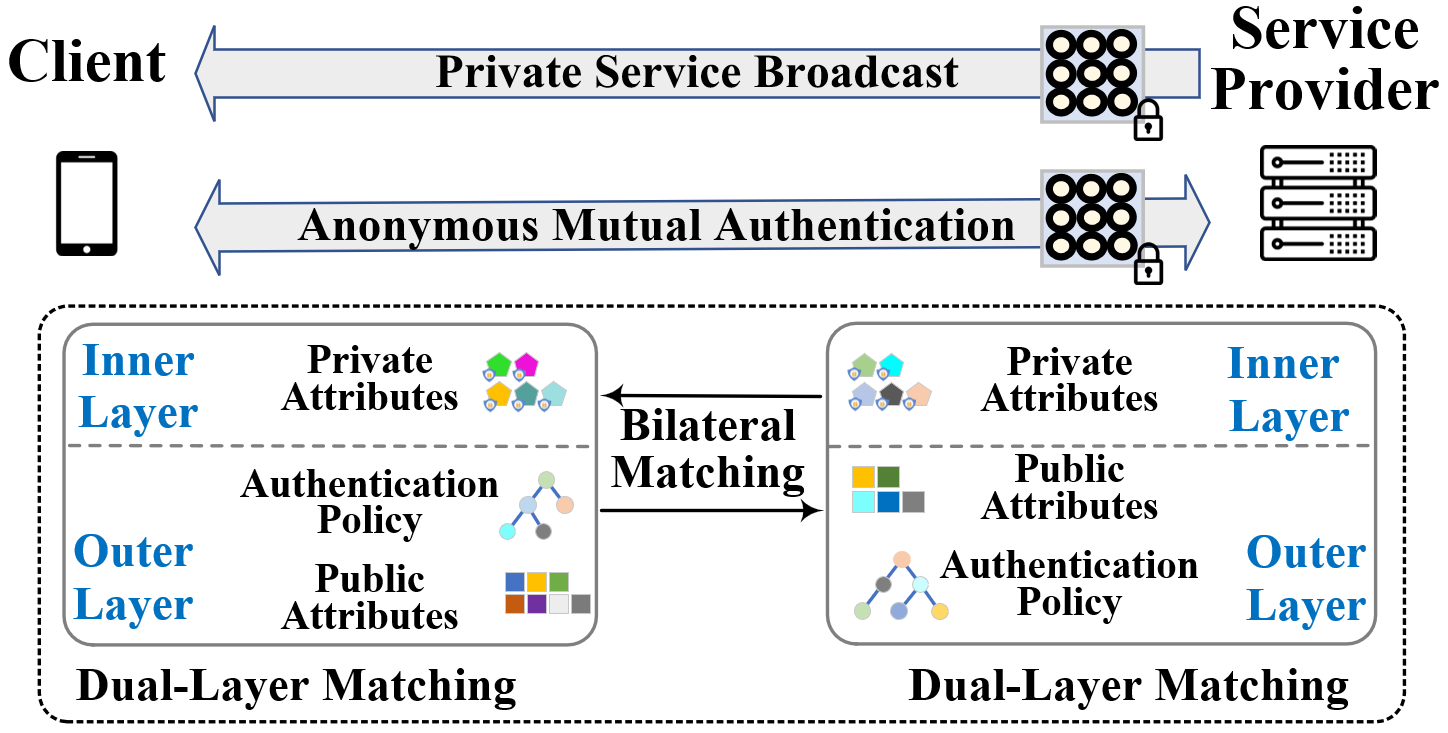
Fig 1: Overview of PriSrv
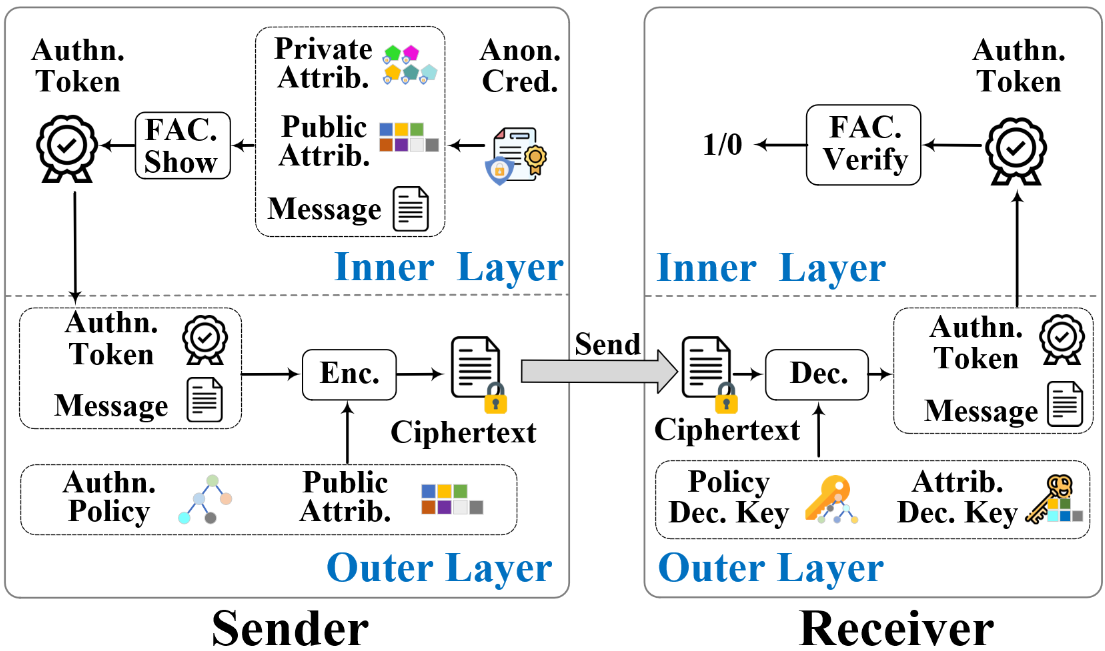
Fig 2: Architecture of ACME
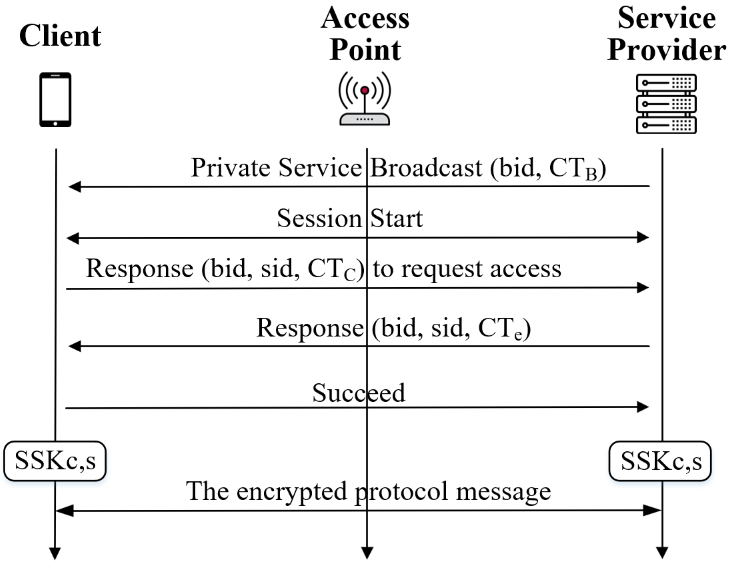
Fig 4: Architecture of Privacy Enahnced EAP
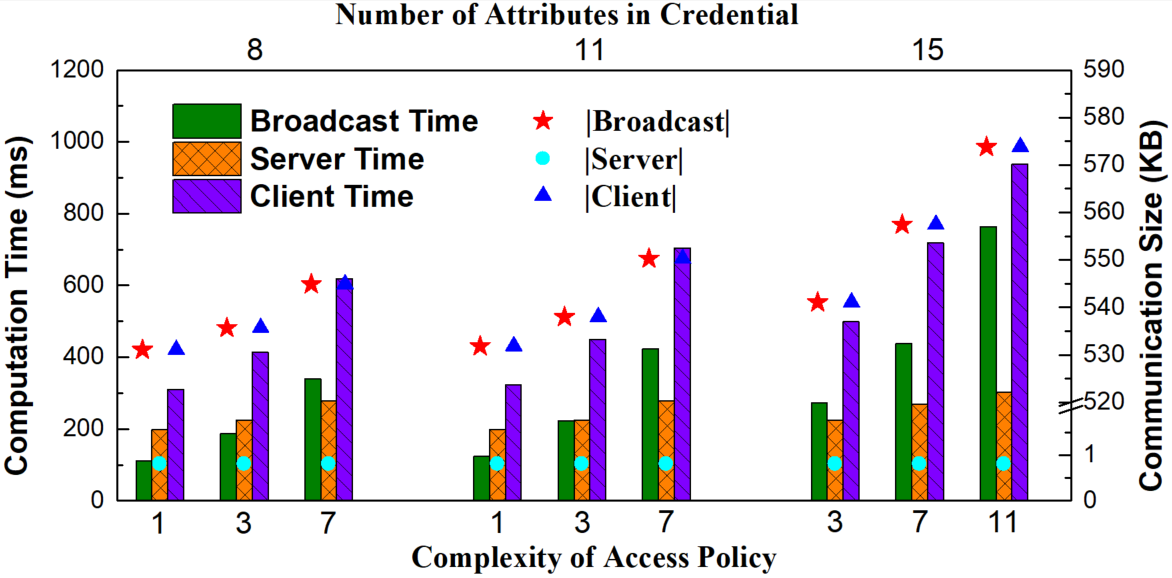
Fig 5: Computation/Communication cost of PriSrv
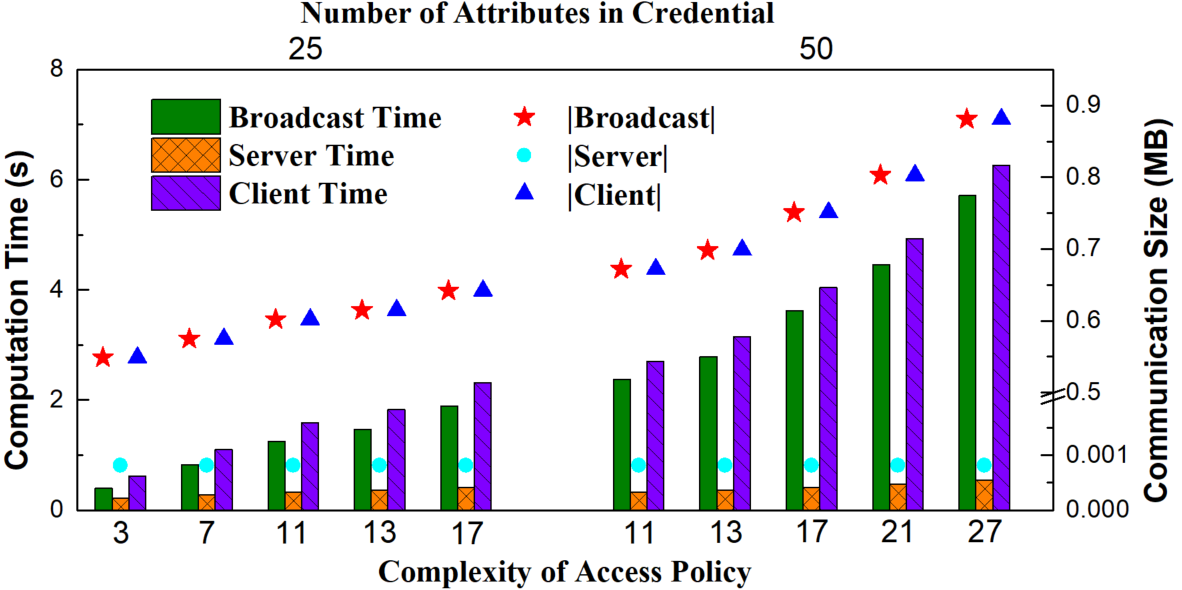
Fig 6: Performance of PriSrv with Complex Policies
Limitations
- PriSrv requires in-advance identity issuance from a trusted credential issuer, which could impose practical deployment challenges despite being outside the actual discovery protocol.
- Computation overhead of ACME increases with policy complexity and uses expensive cryptographic primitives like pairings, leading to latency above 2.7 seconds on Raspberry Pi-class IoT devices.
- No explicit adversarial evaluation under active attacks aside from formal security proofs; empirical robustness against adaptive attackers not extensively tested.
- Protocol does not support fully dynamic or context-dependent attribute disclosure policies beyond predefined monotone Boolean formulas.
- No source code or open implementation publicly released, reducing immediate reproducibility.
- Privacy model assumes trusted credential issuer; insider attacks or credential revocation schemes are not fully explored.
Open questions / follow-ons
- How to efficiently handle dynamic credential revocation and updates in large-scale wireless environments without compromising unlinkability?
- Can ACME be extended to support richer or context-aware policies beyond monotone Boolean formulas without excessive overhead?
- What are the trade-offs in privacy and latency when integrating PriSrv with emerging low-power IoT protocols beyond BLE and Raspberry Pi class devices?
- How does PriSrv perform under large-scale deployment with many simultaneous providers and clients in highly dynamic mobility scenarios?
Why it matters for bot defense
PriSrv's approach to privacy-preserving mutual authentication and fine-grained access control has direct relevance to modern bot defense and CAPTCHA systems, where verifying entity attributes without exposing sensitive user data is critical. The dual-layer filtering approach and selective attribute disclosure could inspire more nuanced challenge-response protocols that minimize information leakage while enabling rapid verification. Additionally, the anonymous credential mechanisms and unlinkability features align with goals of preventing automated scraping and profiling by bots. Bot defense engineers might consider integrating cryptographic policy enforcement like ACME to strengthen privacy guarantees in device and user fingerprinting mitigation while preserving seamless usability. However, the computational overheads and requirement for credential issuance are trade-offs to evaluate carefully in real-time bot mitigation contexts.
Cite
@article{arxiv2606_05821,
  title={ PriSrv: Privacy-Enhanced and Highly Usable Service Discovery in Wireless Communications },
  author={ Yang Yang and Robert H. Deng and Guomin Yang and Yingjiu Li and HweeHwa Pang and Minming Huang and Rui Shi and Jian Weng },
  journal={arXiv preprint arXiv:2606.05821},
  year={ 2026 },
  url={https://arxiv.org/abs/2606.05821}
}