
Ensuring Interaction Safety in Multitask Exoskeleton Control: A Simulation-Trained Variable Impedance Framework
Source: arXiv:2606.06370 · Published 2026-06-04 · By Muyuan Ma, Houcheng Li, Haotian Zhai, Lijun Han, Xinpan Meng, Xiuze Xia et al.
TL;DR
This paper addresses the challenge of providing safe and adaptive assistance across diverse tasks in wearable exoskeleton control. Rather than focusing on single-task solutions, the authors propose a novel simulation-trained variable impedance control framework with formal stability guarantees for multitask human-exoskeleton interaction. The core innovation is a three-stage pipeline: first, generating high-fidelity human-exoskeleton interaction data in simulation via Proximal Policy Optimization (PPO), modeling muscle activations and joint torques across nine different arm motions with variable assistance ratios; second, training a bimodal multitask imitation learning policy that fuses semantic task instructions with historical proprioception to predict reference trajectories and interaction stiffness gains; and third, enforcing safety by using Lyapunov stability theory to constrain stiffness variations and guarantee closed-loop stability during real-world deployment. Experimental evaluation on a 1-DoF elbow exoskeleton demonstrates that the proposed method improves metabolic efficiency by 10.9% over natural movement during load-carrying tasks, surpassing a standard ProMP baseline, without sacrificing trajectory tracking accuracy. This validates the feasibility of the approach for safe, scalable, and physiologically plausible multitask exoskeleton control.
Key findings
- Simulation-trained PPO policies generate biomechanically consistent human-exoskeleton interaction data for 9 tasks, 3 assistance ratios (α ∈ {0, 0.5, 1}), and 3 user masses, totaling 81 policies.
- Muscle activation reward decreases progressively with assistance ratio: partial (α=0.5) and full assistance (α=1) significantly reduce muscular effort compared to no exoskeleton or zero assistance (Fig. 4; p < 0.05 for 7 of 9 tasks).
- Trajectory tracking error rewards show no significant difference across assistance conditions (Table I, p > 0.05), confirming task accuracy is maintained despite reduced effort.
- The bimodal policy fuses semantic text embeddings with proprioceptive history via cross-attention to predict reference trajectories (q_elbow_d) and variable interaction stiffness (K_interactive) in real time.
- Lyapunov-based stability analysis yields explicit bounds on stiffness derivative (˙K_interactive ≤ 2(D/M) K_interactive) enforced via asymmetric rate limiting, guaranteeing asymptotic closed-loop stability.
- Real-world experiments on a 1-DoF elbow exoskeleton across 9 tasks achieve average RMSE of 0.1 ± 0.03 rad for trajectory tracking with adaptive stiffness modulation synchronized to joint motion phases.
- During a 10-minute repetitive 10 kg load-carrying task, metabolic energy expenditure is reduced by 10.9% compared to natural movement and by 2.1% compared to a ProMP baseline.
- Joint-level tracking during the load-carrying task yields an RMSE of 0.2 rad despite dynamic disturbances, demonstrating robustness under physically demanding conditions.
Threat model
The paper does not explicitly define an adversarial threat model, focusing instead on ensuring safe and stable physical human-exoskeleton interaction under variable impedance control. The system assumes cooperative users and benign environment conditions without malicious interference or adversarial manipulation of control inputs.
Methodology — deep read
Threat Model & Assumptions: The system assumes a cooperative human wearing an elbow exoskeleton performing diverse tasks. The control objective is to provide adaptive assistance that reduces user effort while guaranteeing stable and safe physical interaction. The adversary is not explicitly modeled, as the focus is on safety under variable impedance control rather than malicious attack.
Data Generation: A high-fidelity musculoskeletal simulation environment is built in MuJoCo, combining a dual-arm musculoskeletal model with 76 DoFs driven by 126 muscle-tendon units, and a kinematic exoskeleton model attached to the arms. Proximal Policy Optimization (PPO) trains 81 policies (9 tasks × 3 assistance ratios × 3 masses) to produce muscle activation signals minimizing tracking error and muscle effort. Assistance torque is proportional to biological elbow joint torque scaled by α ∈{0,0.5,1}. The state includes reference joint positions, current joint positions and velocities, tracking errors, and interaction torques. Data recorded includes semantic text instructions, interaction torques, reference and actual exoskeleton joint positions.
Architecture / Algorithm: The multitask assistance policy is a neural network with two input modalities: semantic task instructions (encoded via embedding and RNN) and historical proprioception (joint positions and velocities encoded via 1D dilated convolutions). These are fused via multi-head cross-attention (proprioception as queries, text as keys/values) to produce a latent feature. The outputs are two heads: a linear projection for reference elbow joint trajectory and a multi-layer perceptron for interaction stiffness (impedance gain). The loss optimizes weighted squared L2 error on both outputs.
Training Regime: Training uses the PPO-optimized dataset from simulation for imitation learning of the dual-modality policy. Exact epochs, batch size, hardware, and seeds are not explicitly detailed, but PPO policies and the learned network are trained independently per task/condition to ensure coverage.
Evaluation Protocol: Simulation results statistically analyze muscle activation rewards and trajectory tracking rewards across the nine tasks and assistance levels using Friedman tests treating musculoskeletal masses as paired blocks. Real-world evaluation uses a 1-DoF elbow exoskeleton with series elastic actuators performing nine tasks under: natural movement, the proposed method, and a ProMP baseline. Metrics include joint trajectory RMSE, interaction stiffness modulation, and metabolic energy expenditure measured via indirect calorimetry during a 10-min repetitive load-carrying task. Statistical significance and comparative metabolic reductions are reported.
Reproducibility: The paper provides a publicly accessible simulation dataset via an anonymous open science link. Detailed architecture and control equations are included. However, code for network training, evaluation scripts, and real hardware deployment are not explicitly stated as publicly available. Simulation policies and datasets enable reproduction of training data, but details on initial seeds and hyperparameters for PPO or imitation policy training are limited.
Example Pipeline: First, PPO trains 81 individual policies in MuJoCo to produce muscle activations minimizing trajectory tracking and effort for different tasks and assistance ratios. Then, rollouts record semantic task instructions, joint states, interaction torques, etc., assembling a large multitask dataset. Next, the bimodal neural network uses proprioceptive and task embeddings to learn to predict reference trajectories and impedance (stiffness) gains simultaneously via imitation loss. Finally, the learned policy runs in real-world experiments, with network outputs rate-limited per derived Lyapunov stability criteria to maintain closed-loop stability when commanding variable stiffness during assistive control on the physical exoskeleton.
Technical innovations
- Integration of a dual-arm musculoskeletal model with robotic exoskeleton dynamics in MuJoCo, enabling high-fidelity co-simulation of muscle activations and interaction torques.
- Bimodal multitask imitation policy fusing semantic language instructions with temporal proprioceptive features using multi-head cross-attention for generalizable exoskeleton assistance.
- Lyapunov-based stability constraint on variable impedance control, explicitly bounding stiffness derivative to guarantee asymptotic closed-loop stability during physical human-robot interaction.
- Application of asymmetric rate limiting on neural network impedance predictions to enforce stability constraints in real-time control deployment.
Datasets
- Simulated human-exoskeleton co-motion dataset — 81 PPO policies across 9 motions × 3 assistance ratios × 3 masses — publicly available via open science link
Baselines vs proposed
- No exoskeleton: muscle activation reward highest vs partial assistance (α=0.5): muscle activation reward reduced (stat. sig. for 7/9 tasks, p<0.05)
- Full assistance (α=1): muscle activation reward lowest, statistically significant reduction (p<0.05) vs No Exo
- Trajectory tracking error rewards: no significant difference (p>0.05) across assistance conditions
- ProMP baseline: 10-minute metabolic energy expenditure = 230.1 kJ vs proposed method = 223.0 kJ (10.9% reduction compared to natural movement baseline of 250.2 kJ and 2.1% improvement over ProMP)
- Real-world trajectory RMSE: average 0.1 ± 0.03 rad for proposed method across 9 tasks
Figures from the paper
Figures are reproduced from the source paper for academic discussion. Original copyright: the paper authors. See arXiv:2606.06370.
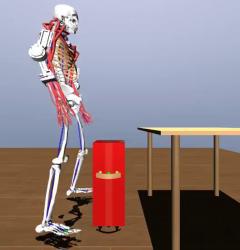
Fig 2: The architecture of the proposed dual-loop co-simulation frame-
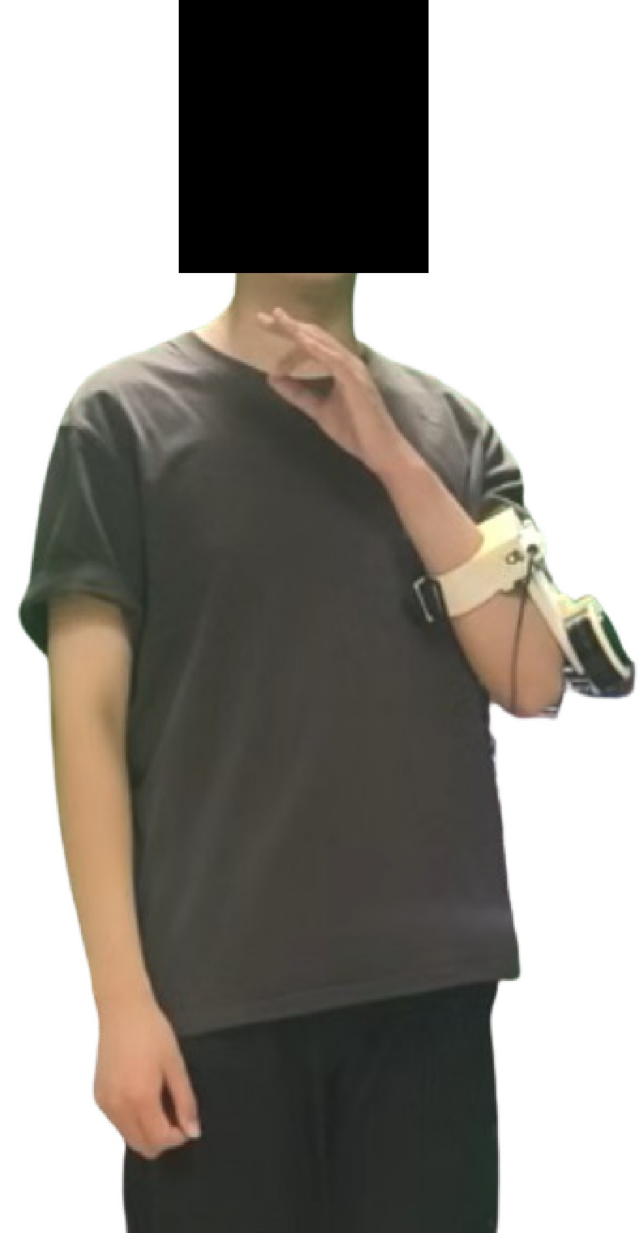
Fig 5: Reference trajectory tracking and dynamically generated interaction stiffness across the nine evaluated tasks in real-world experiments.
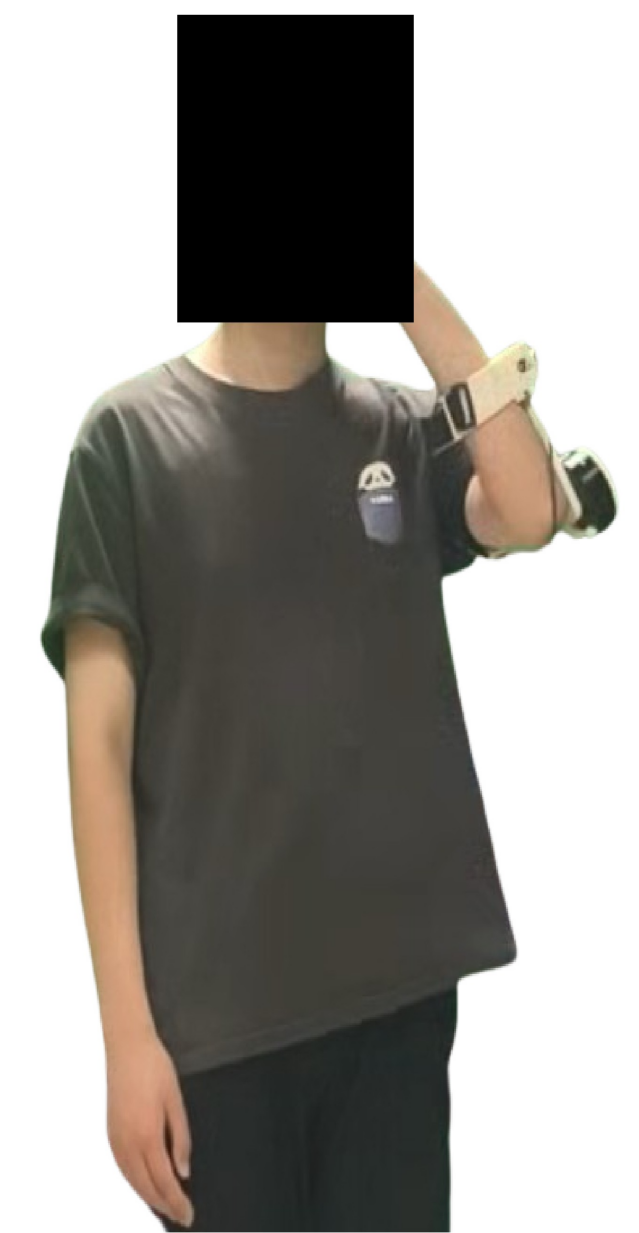
Fig 6: Trajectories of mass-normalized metabolic energy expenditure

Fig 7: Kinematic tracking performance and variable stiffness modulation

Fig 5 (page 6).

Fig 6 (page 6).

Fig 7 (page 6).

Fig 8 (page 6).
Limitations
- Evaluation limited to a 1-DoF elbow exoskeleton; multi-joint and full-arm exoskeletons remain unexplored.
- Real-world validation performed with a single participant or small cohort; lacks large-scale human subject testing to confirm generalizability.
- The PPO training and learned policies depend on simulation fidelity; domain gap and transferability to diverse real humans are not exhaustively studied.
- Stability guarantees apply to modeled impedance variations but may not cover unexpected disturbances or adversarial behaviors.
- Metabolic cost assessment focused on one repetitive load-carrying task; broader activity spectrum and long-term fatigue impacts are untested.
- The paper does not release full source code or exact training hyperparameters, potentially limiting reproducibility.
Open questions / follow-ons
- How well does the proposed stability-guaranteed variable impedance framework generalize to multi-joint or full upper-limb exoskeletons with higher degrees of freedom?
- What is the robustness of the learned policies and stability constraints under real-world perturbations, sensor noise, and unforeseen dynamic interactions?
- Can the framework adapt safely and efficiently across a broader, more diverse population of users with varying anthropometrics and neuromuscular capabilities?
- How can continual learning or online adaptation be integrated to further improve multitask assistance while maintaining formal stability guarantees?
Why it matters for bot defense
For bot-defense or CAPTCHA practitioners focusing on safe and adaptive robot-human interaction, this work demonstrates a principled approach to guaranteeing stability in variable impedance control despite complex, multimodal input data (language plus proprioception). The stability-based rate limiting strategy offers a concrete means to enforce safety constraints on learned controllers that produce continuous feedback parameters. The bimodal fusion method to capture task context also parallels combining semantic and sensory signals in bot-detection or interaction monitoring. While this domain targets exoskeleton assistance rather than automated attack detection, the methodology of integrating simulation-trained policies, formal stability bounds, and multimodal fusion could inspire analogous approaches in CAPTCHA systems requiring robust, interpretable control under variable environmental conditions. Engineering safety, interpretability, and adaptability together is key for both fields.
Cite
@article{arxiv2606_06370,
  title={ Ensuring Interaction Safety in Multitask Exoskeleton Control: A Simulation-Trained Variable Impedance Framework },
  author={ Muyuan Ma and Houcheng Li and Haotian Zhai and Lijun Han and Xinpan Meng and Xiuze Xia and Long Cheng },
  journal={arXiv preprint arXiv:2606.06370},
  year={ 2026 },
  url={https://arxiv.org/abs/2606.06370}
}