
SLUSCHI-UP: A Web Infrastructure for SLUSCHI Melting-Temperature Calculations Using Universal Machine-Learning Interatomic Potentials
Source: arXiv:2606.04973 · Published 2026-06-03 · By Qi-Jun Hong
TL;DR
This paper presents SLUSCHI-UP, a publicly deployed web infrastructure for estimating melting temperatures of materials using the SLUSCHI small-size solid–liquid coexistence method combined with universal machine-learning interatomic potentials (uMLIPs). Melting temperature is an important but computationally expensive property to predict using first-principles molecular dynamics. SLUSCHI-UP significantly lowers cost and complexity by replacing expensive electronic-structure force calculations with pretrained uMLIPs and providing a user-friendly asynchronous GPU-backed web interface. Users submit a crystal structure and select from production-ready uMLIP backends; the system then runs many short coexistence molecular dynamics trajectories to statistically infer melting temperature. The architecture transparently tracks model provenance and diagnostic trajectory outcomes for reproducibility and model comparison. Validation on the MeltBench-10 dataset and a larger MeltBench benchmark shows that the service achieves mean absolute errors (MAE) around 180–330 K on nine diverse materials with raw uMLIP predictions, and corrected results for the Allegro-OAM-L potential reduce MAE to about 166 K in the larger set. These results confirm that SLUSCHI-UP provides a practical midpoint between fast scalar melting predictors and costly first-principles coexistence calculations. It enables broadly accessible, atomistically-resolved melting temperature estimation with traceable provenance and model diagnostics, though prediction accuracy remains limited by model transferability, finite-size cell effects, and high-temperature stability.
Key findings
- SLUSCHI-UP enables melting temperature predictions with mean absolute errors (MAE) of 178–327 K on MeltBench-10 across three production uMLIPs: DPA-3.2-5M-OMat24 (177.8 K), Allegro-OAM-L (198.8 K), and MACE-MPA-0 (326.6 K) for raw coexistence results (Table II).
- Applying a first-order PBE enthalpy correction reduces Allegro-OAM-L's MAE to 175.3 K and MACE-MPA-0’s MAE to 251.4 K, but increases DPA-3.2-5M-OMat24’s MAE to 233.6 K due to outlier cases.
- In a broader MeltBench validation with 119 raw uMLIP melting temperature entries, the aggregate MAE is approximately 284 K with RMSE of 380 K; Allegro-OAM-L performs best with a raw MAE of 247 K over 66 entries (Fig. 4).
- After PBE correction, the broader set’s MAE decreases to 225 K and RMSE to 303 K; Allegro-OAM-L’s corrected MAE improves to 166 K with 75.8% predictions within ±200 K of reference melting temperature.
- Finite-size testing using Allegro-OAM-L shows system-dependent sensitivity, with Al requiring larger cells (>100 atoms) for convergence and NaCl, ZrO2 stabilizing at smaller sizes (~100 atoms) (Fig. 5).
- Model disagreement on specific materials (e.g., La2Zr2O7, AlNi3) indicates limits of uMLIP transferability and relevance of architecture and training data choice for high-temperature phases.
- SLUSCHI-UP reduces computational cost by an order of magnitude compared to DFT-based SLUSCHI, enabling turnaround of melting estimates typically within 12–24 hours on shared GPU hardware.
Threat model
The paper assumes a standard scientific usage scenario without adversarial intent. The user submits known or custom crystal structures for melting temperature estimation via the web interface. Adversaries with knowledge of the system could attempt to overload computational resources or submit ill-formed inputs, but no explicit adversarial threat model or attack vector analysis is conducted. The system trusts user inputs to represent physically meaningful materials but exposes workflow failures and model disagreements as diagnostic outputs.
Methodology — deep read
The core methodology integrates the SLUSCHI small-cell solid–liquid coexistence melting temperature estimation workflow with pretrained universal machine-learning interatomic potentials (uMLIPs) executed asynchronously on GPUs via a web infrastructure. The threat model assumes a non-adversarial user submitting crystal structures for melting temperature estimation; adversarial manipulation is not explored.
Users input either a Materials Project (MP) identifier or POSCAR format crystal structure. The input is validated, standardized, and converted into a simulation cell suitable for coexistence simulation, typically targeting ~100 atoms with a minimum effective radius of 11 Å to balance computational efficiency and finite-size accuracy. The structure is then paired with a user-selected uMLIP backend, including production models mace-mpa-0-medium (MACE family), Allegro-OAM-L (NequIP-based Allegro architecture), and DPA-3.2-5M-OMat24 (DeePMD family). Beta models extend architectural and training diversity.
For each job, SLUSCHI-UP prepares a small solid–liquid coexistence simulation cell by combining equal volumes of solid and liquid phases. Many (>10) independent short molecular dynamics trajectories are launched at trial temperatures around the expected melting point, using the uMLIP to provide energies and forces in place of expensive DFT calculations. Each trajectory outcome is classified into solid-like or liquid-like states based on the system’s structural evolution.
A logistic function models the probability Pliq(T) of liquid-like outcomes at temperature T. Melting temperature Tm is estimated as the temperature where Pliq=0.5, fitted by maximum likelihood from the multinomial trajectory outcomes across trial temperatures. The fitted curve width w represents finite-size transition broadening. Statistical uncertainty is derived from the fit or bootstrap resampling.
Optionally, melting temperature estimates are corrected by a first-order PBE enthalpy of fusion adjustment, calculated as the ratio of PBE and uMLIP heats of fusion (∆Hfus) obtained by single-point DFT evaluations on representative solid and liquid snapshots from trajectories. This correction accounts for systematic energy offsets in the potential energy surface while assuming accurate entropy approximation by the uMLIP.
All job metadata including input structure, model version, trajectory outcomes, fitted Tm and w, uncertainties, and failure diagnostics are stored and accessible for provenance and reproducibility. Jobs run asynchronously in a GPU-backed cluster queue with typical turnaround times of 12–24 hours.
Evaluation relies on the MeltBench benchmark datasets, especially MeltBench-10 (10 diverse materials, ~29 raw data points), and a larger continuously growing MeltBench validation set (119 uMLIP raw coexistence entries). Performance metrics include signed error, mean absolute error (MAE), root-mean-square error (RMSE), and fraction of predictions within ±200 K of reference melting temperatures. Both raw and PBE-corrected melting temperatures are analyzed.
Finite-size dependence is explicitly tested by varying the simulation cell sizes in selected materials using Allegro-OAM-L to determine the smallest size yielding converged melting predictions within uncertainty.
SLUSCHI-UP is open to the community through a web portal requiring email verification but no local software installation. The design emphasizes accessibility, transparency, and multi-model comparison rather than introducing new melting algorithms. Detailed statistical models and original SLUSCHI methodology are referenced to prior publications. The source code and MeltBench data are publicly available for independent validation and benchmarking.
Technical innovations
- Integration of the SLUSCHI small-size solid–liquid coexistence melting methodology with multiple pretrained universal machine-learning interatomic potentials within a publicly accessible web service.
- Asynchronous GPU-backed execution of many short molecular dynamics trajectories driving statistical coexistence analysis without requiring local installations of SLUSCHI, LAMMPS, or potential-specific software.
- Provision of modular selection among complementary uMLIP architectures (MACE, Allegro, DeePMD-based) in a standardized workflow that transparently records provenance and exposes model disagreement as diagnostic metadata.
- Implementation of a first-order PBE enthalpy of fusion correction selectively applied to uMLIP predictions by re-evaluating representative trajectory snapshots, decoupling thermodynamic shape approximation from systematic energy offsets.
Datasets
- MeltBench-10 — 10 materials, ~29 raw coexistence calculations, public
- MeltBench — Over 100 materials with raw and PBE-corrected melting temperature measurements from SLUSCHI-UP, public and continuously updated
Baselines vs proposed
- DPA-3.2-5M-OMat24: raw MAE = 177.8 K (MeltBench-10) vs Allegro-OAM-L raw MAE = 198.8 K
- Allegro-OAM-L: raw MAE = 198.8 K vs PBE-corrected MAE = 175.3 K (MeltBench-10 subset)
- MACE-MPA-0: raw MAE = 326.6 K vs PBE-corrected MAE = 251.4 K (MeltBench-10 subset)
- Broader MeltBench set (119 entries): raw aggregate MAE = 284 K, Allegro-OAM-L raw MAE = 247 K vs Allegro-OAM-L PBE-corrected MAE = 166 K
- Finite-size cell dependence for Al, NaCl, and ZrO2 shows fluctuations within statistical uncertainty above ~100 atoms (Fig. 5)
Figures from the paper
Figures are reproduced from the source paper for academic discussion. Original copyright: the paper authors. See arXiv:2606.04973.
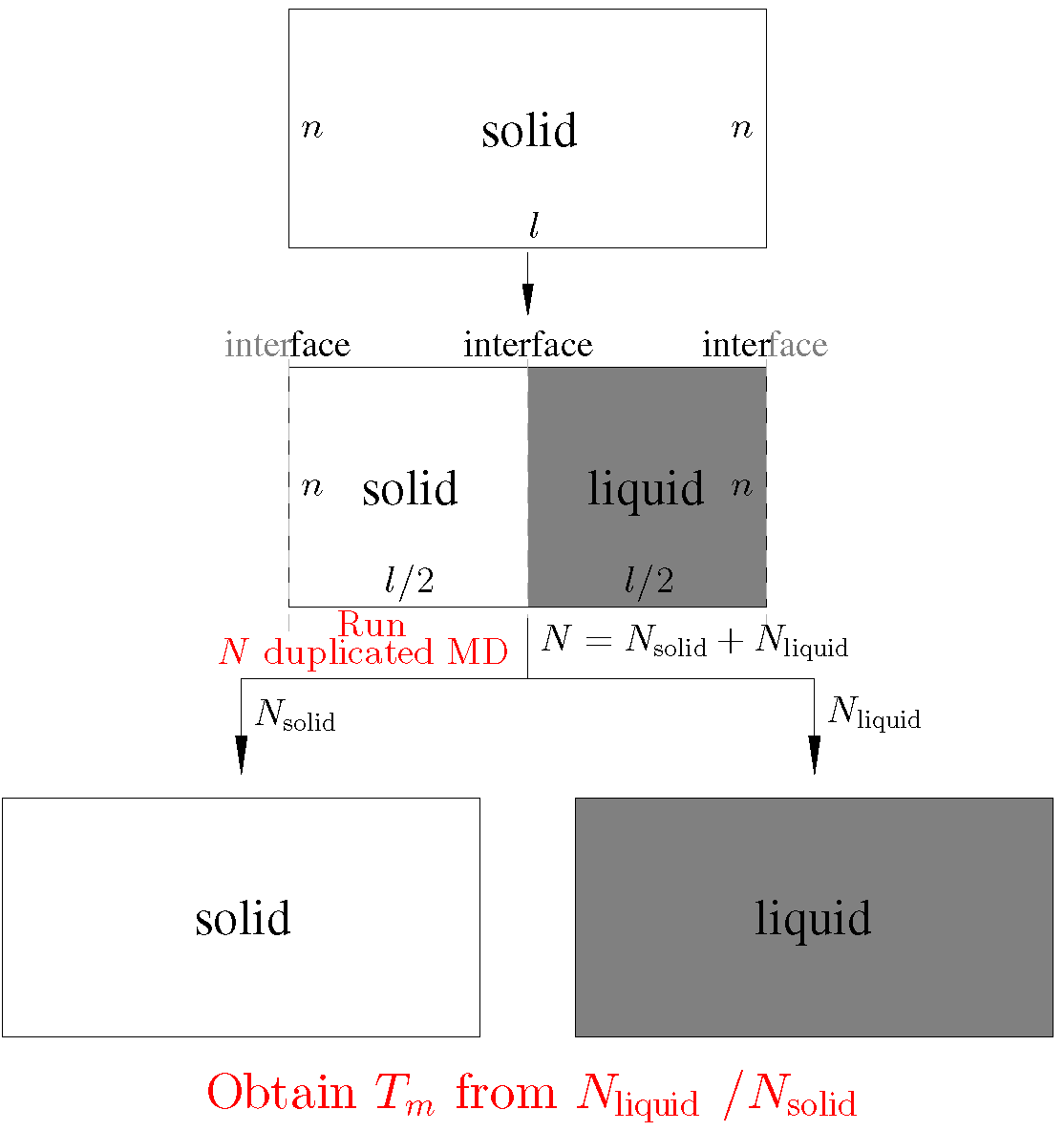
Fig 1: Schematic of the SLUSCHI small-size coexistence
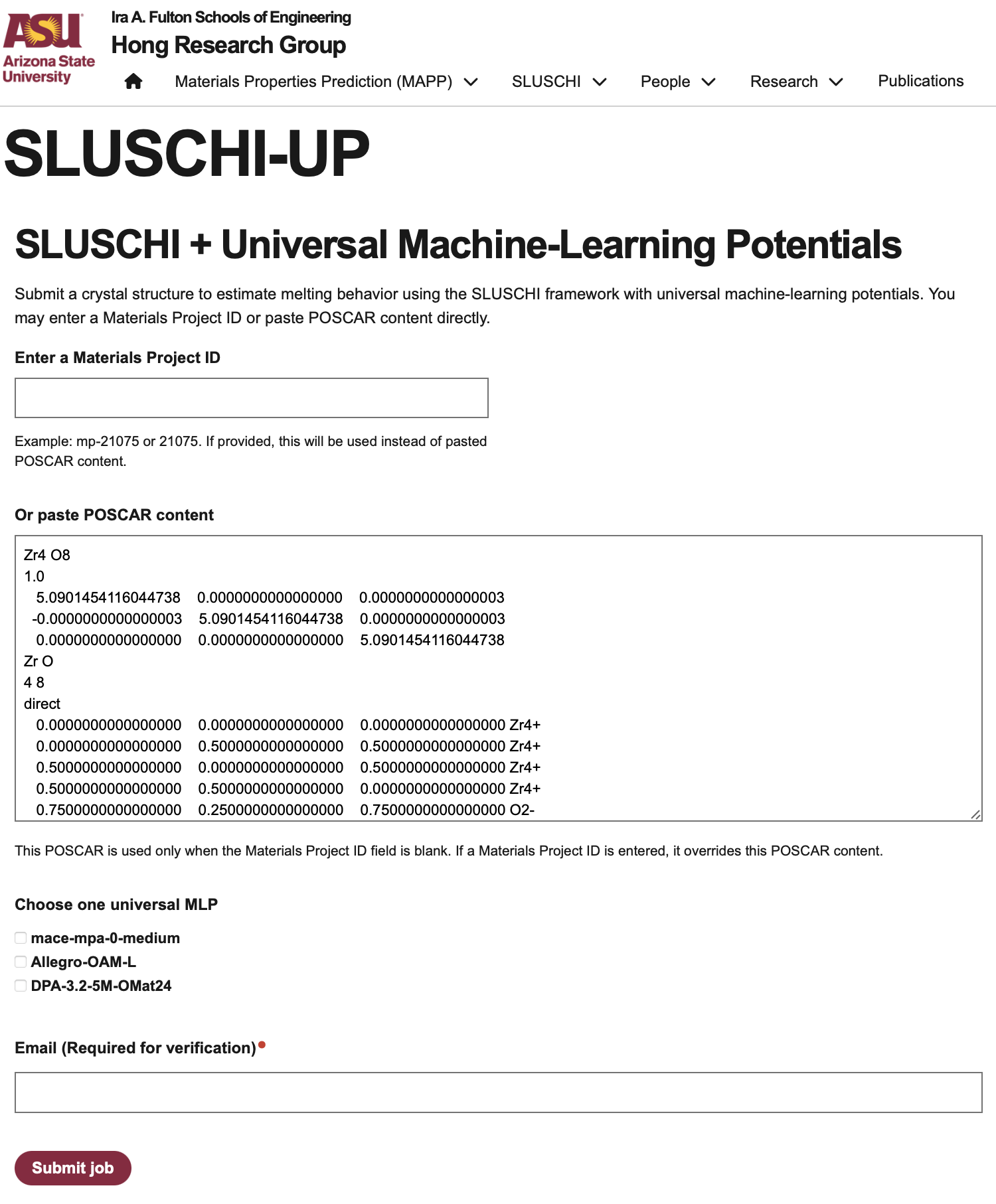
Fig 2: Screenshot of the deployed SLUSCHI-UP web inter-
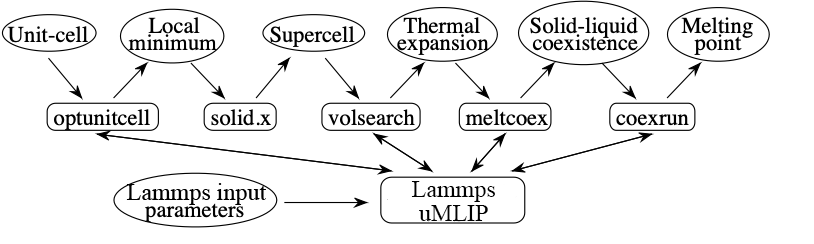
Fig 3: Schematic of the SLUSCHI-UP melting temperature
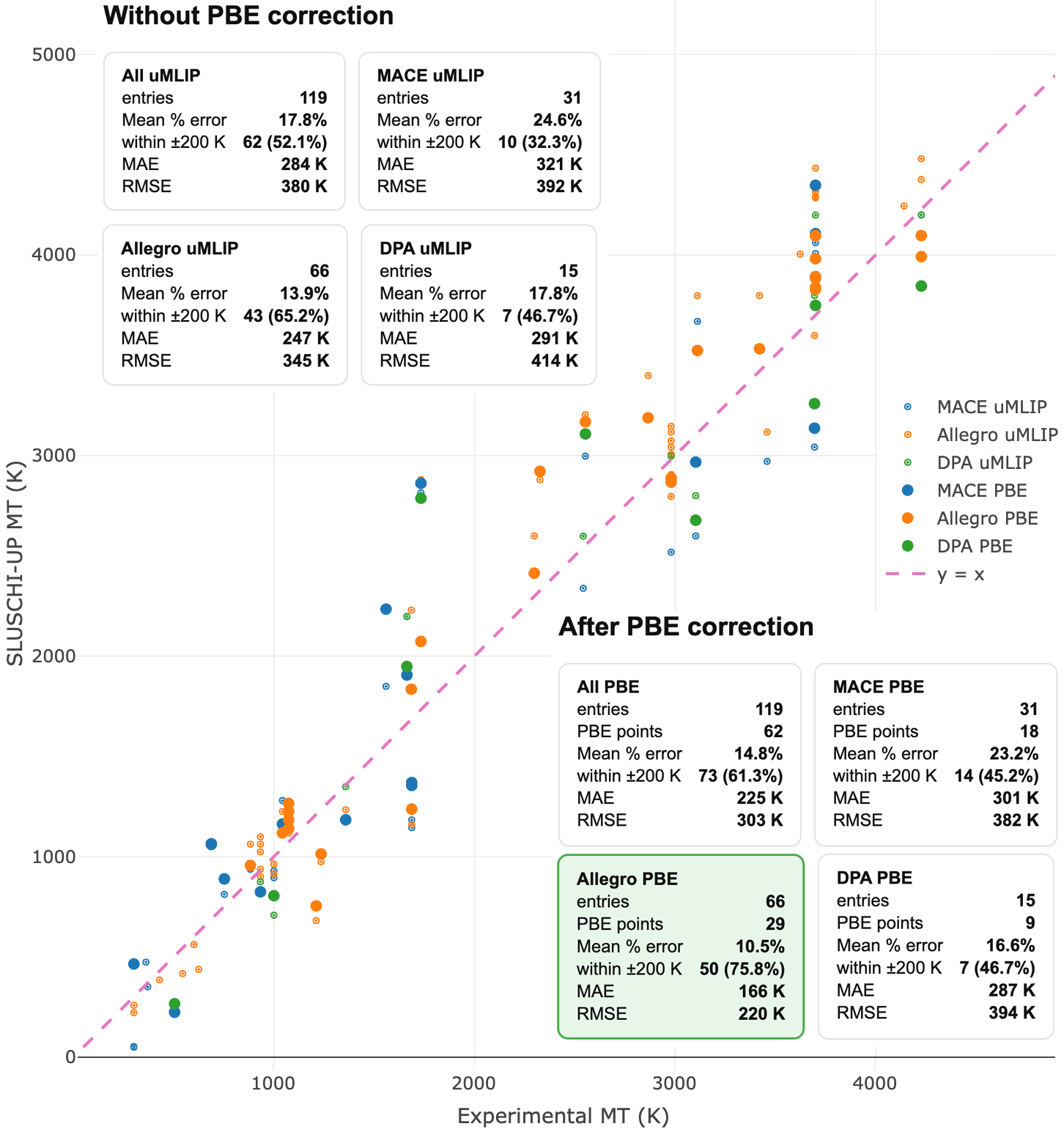
Fig 4: Broader MeltBench validation snapshot for the deployed SLUSCHI-UP workflow. The parity plot compares SLUSCHI-
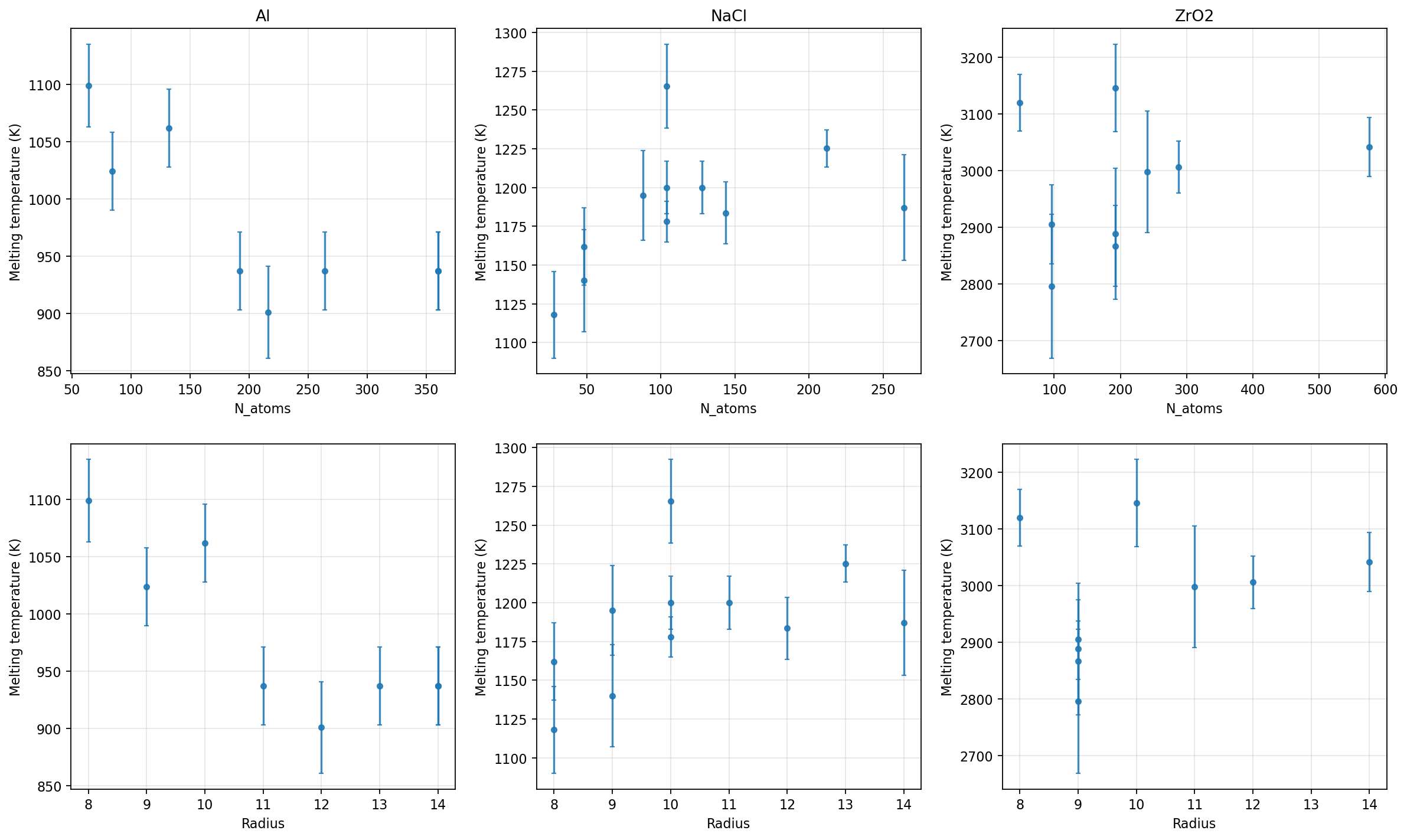
Fig 5: Representative finite-size tests in SLUSCHI-UP using the Allegro-OAM-L backend. The predicted melting temperature
Limitations
- SLUSCHI-UP's predictions are screening-level estimates; absolute accuracy depends heavily on uMLIP transferability, which varies substantially by chemistry and phase.
- The first-order PBE enthalpy correction assumes similarity of entropy between uMLIP and PBE ensembles; it does not replace full first-principles coexistence recalculation and can degrade accuracy in some systems.
- Finite-size effects remain material-dependent, requiring ~100 atoms minimum for stability, which limits throughput and may bias some melting temperatures.
- Deployed production uMLIP backends are not universally reliable across all chemistries, liquid configurations, or temperature regimes, particularly for high-energy and interfacial states.
- Current dataset coverage is uneven across models and chemistries; the growing MeltBench remains incomplete and unbalanced, limiting definitive comparative conclusions.
- SLUSCHI-UP does not consider pressure or multi-component alloy effects beyond supplied crystal structures, constraining application scope.
- No adversarial robustness evaluation or security analysis is presented; potential risks from malformed inputs or malicious misuse are unexamined.
Open questions / follow-ons
- How can uMLIP training data and architectures be improved to enhance transferability and stability for high-temperature solid–liquid coexistence configurations?
- What are best practices for systematic uncertainty quantification and error calibration incorporating finite-size effects and trajectory-level diagnostic data?
- How can automated workflows like SLUSCHI-UP be extended to incorporate pressure effects and multicomponent alloy systems with compositional variability?
- What are effective methodologies for large-scale benchmarking and leaderboard construction to rigorously compare emerging universal ML potentials on melting and other thermodynamic properties?
Why it matters for bot defense
While SLUSCHI-UP is primarily a materials science infrastructure project rather than a bot defense or CAPTCHA methodology, the deployment principles and workflow automation share conceptual similarities relevant to secure web-based computational services. Its approach of asynchronous execution, user input validation, provenance tracking, and model choice transparency can inform best practices in robust, user-friendly platform design subject to potentially heavy computational loads.
Bot-defense engineers supporting high-throughput scientific computing platforms like SLUSCHI-UP could learn from its queue management, email verification step, and job provenance logging to mitigate abuse and ensure reproducibility. The multiple model backends serve as internal consistency checks analogous to anomaly detectors in bot defense, where disagreement signals might flag suspicious or error-prone inputs. However, SLUSCHI-UP does not specifically address adversarial robustness or exploit mitigation techniques that are central in CAPTCHA or bot defense research.
Cite
@article{arxiv2606_04973,
  title={ SLUSCHI-UP: A Web Infrastructure for SLUSCHI Melting-Temperature Calculations Using Universal Machine-Learning Interatomic Potentials },
  author={ Qi-Jun Hong },
  journal={arXiv preprint arXiv:2606.04973},
  year={ 2026 },
  url={https://arxiv.org/abs/2606.04973}
}