
GraphAlg Playground: An Online Platform for Learning and Experimenting with the GraphAlg Language
Source: arXiv:2606.04813 · Published 2026-06-03 · By Daan de Graaf, Robert Brijder, Soham Chakraborty, George Fletcher, Bram van de Wall, Nikolay Yakovets
TL;DR
GraphAlg Playground is a fully client-side, web-based platform designed to teach and allow experimentation with GraphAlg, a domain-specific language for graph algorithms that integrates tightly with graph databases. By running entirely in the browser using WebAssembly, the playground enables users to write, compile, and execute GraphAlg programs without installation or network overhead, providing real-time syntax highlighting, error diagnostics, and visualizations of graph outputs. The platform targets both newcomers through an interactive tutorial and experienced users looking to prototype or test algorithms quickly on small-scale graphs.
GraphAlg itself addresses gaps in current graph analytics support by offering concise, expressive programming based on linear algebra operators and integrating compiled algorithms natively with database query engines for optimized execution. The playground exposes this language with a friendly, interactive environment, allowing users to modify code, upload custom input graphs, and verify algorithm behavior prior to deploying on production systems like AvantGraph. The platform is open-source under a permissive license, ensuring reproducibility and community adoption.
Key findings
- GraphAlg programs can be 2–10× shorter than equivalent SQL or Java implementations due to linear algebra abstractions.
- The playground runs client-side in WebAssembly with real-time compiler diagnostics, enabling instant parsing and type error feedback.
- Users can upload custom graphs and visualize algorithm outputs as rendered graphs directly in-browser, enabling rapid prototyping.
- GraphAlg compiler used in the playground is identical to the one integrated with AvantGraph, ensuring algorithm correctness between playground and production.
- In a usage scenario, modification and testing of PageRank with sink node redistribution was done entirely in the playground before deployment on a large real-world graph.
- The tutorial contains interactive code snippets progressing from basic syntax to complex algorithms like PageRank, enabling hands-on learning.
- Compared to other online playgrounds (for Go, Rust, DuckDB, Umbra), GraphAlg playground offers client-side execution, real-time highlighting, and graph output visualization, features mostly absent in others.
Threat model
The playground assumes benign users running code locally in a web browser; there is no trust or adversarial threat model since code execution is client-side and isolated, with no server interaction or data persistence. Attacks on the system or malicious actors are out of scope.
Methodology — deep read
Threat model & assumptions: The system does not target adversarial scenarios but is designed for benign users ranging from learners to expert programmers modifying graph algorithms. It assumes users operate in a standard web browser without trust requirements beyond privacy (code runs locally).
Data: The playground supports user-provided small test graphs uploaded in-browser. No fixed datasets are bundled; rather, users can experiment on miniature graphs to validate algorithm behaviors. Input graphs serve as adjacency matrices or related matrix representations.
Architecture / algorithm: The playground frontend is implemented in JavaScript embedded in a webpage, which renders an interactive editor with syntax highlighting and hosting the tutorial markdown. The backend consists of the GraphAlg compiler and runtime, written in C++ and compiled to WebAssembly (WASM) so it executes entirely client-side. The compiler parses and type-checks GraphAlg code, providing detailed error diagnostics referencing code locations.
Training regime: Not applicable since no ML training occurs. However, the GraphAlg language compiler and tooling underwent development and testing in previous research.
Evaluation protocol: Usability and correctness evaluation is demonstrated via scenarios: a new user completes an interactive tutorial progressing through 12 parts including Fibonacci and PageRank algorithms, and an experienced user modifies PageRank to add sink redistribution logic, observing immediate diagnostics and result visualizations. The equivalence of playground code execution to the production AvantGraph system ensures correctness.
Reproducibility: The codebase of the playground, including compiler, runtime, and tutorial materials, is publicly released under a permissive license at https://github.com/wildarch/graphalg. The system uses the same compiler code as AvantGraph, ensuring reproducibility. The playground runs entirely in-browser, requiring no external service.
End-to-end example: In the scenario with Alex, a user uploads a small citation graph file to the playground, runs a sink-detection algorithm to confirm sink nodes, then pastes the existing GraphAlg PageRank code. Without sink redistribution, the sum of ranks is below 1. Alex adds the redistribution logic, fixes a type error flagged by real-time diagnostics, re-runs the program, and observes correct rank distribution summing to 1. The validated code is then deployed in production using AvantGraph.
Technical innovations
- Client-side WebAssembly compilation and execution of the full GraphAlg language and compiler for zero-install interactive use.
- Integration of real-time compiler diagnostics with error source locations directly inside a web editor.
- Rendering of algorithm outputs as interactive graph visualizations immediately after execution in-browser.
- Embedding of an interactive tutorial within the playground using markdown and executable GraphAlg code snippets.
Baselines vs proposed
- Neo4j Graph Data Science library PageRank: lacks sink redistribution vs GraphAlg: supports sink redistribution with user code (no direct runtime comparison).
- Execution mode Go, Rust, Umbra, DuckDB playgrounds: server-side or no real-time error highlighting vs GraphAlg playground: client-side (WASM), real-time linting and diagnostics.
Figures from the paper
Figures are reproduced from the source paper for academic discussion. Original copyright: the paper authors. See arXiv:2606.04813.
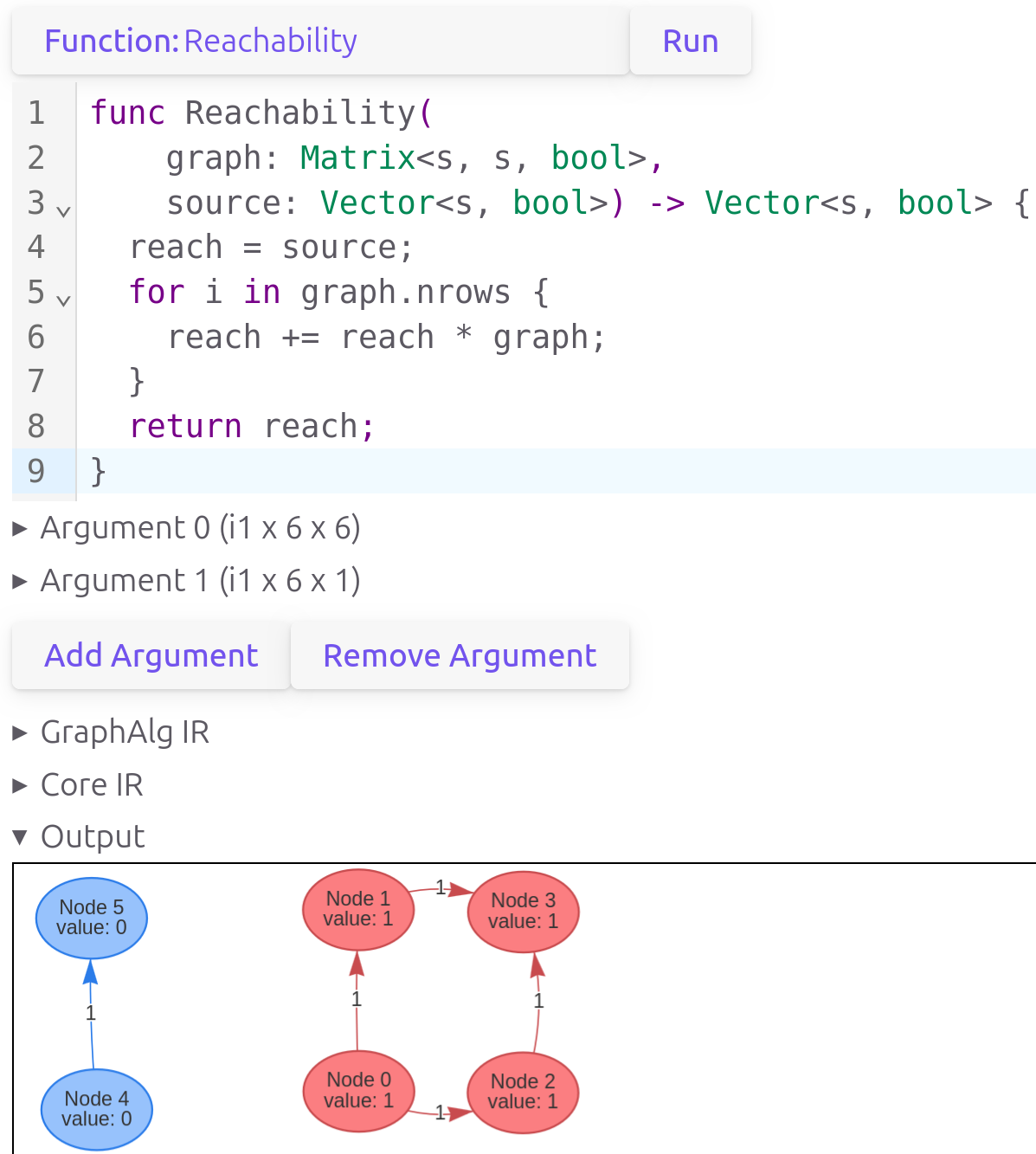
Fig 1: A GraphAlg program in the playground.

Fig 4: An error diagnostic in the code editor, generated by
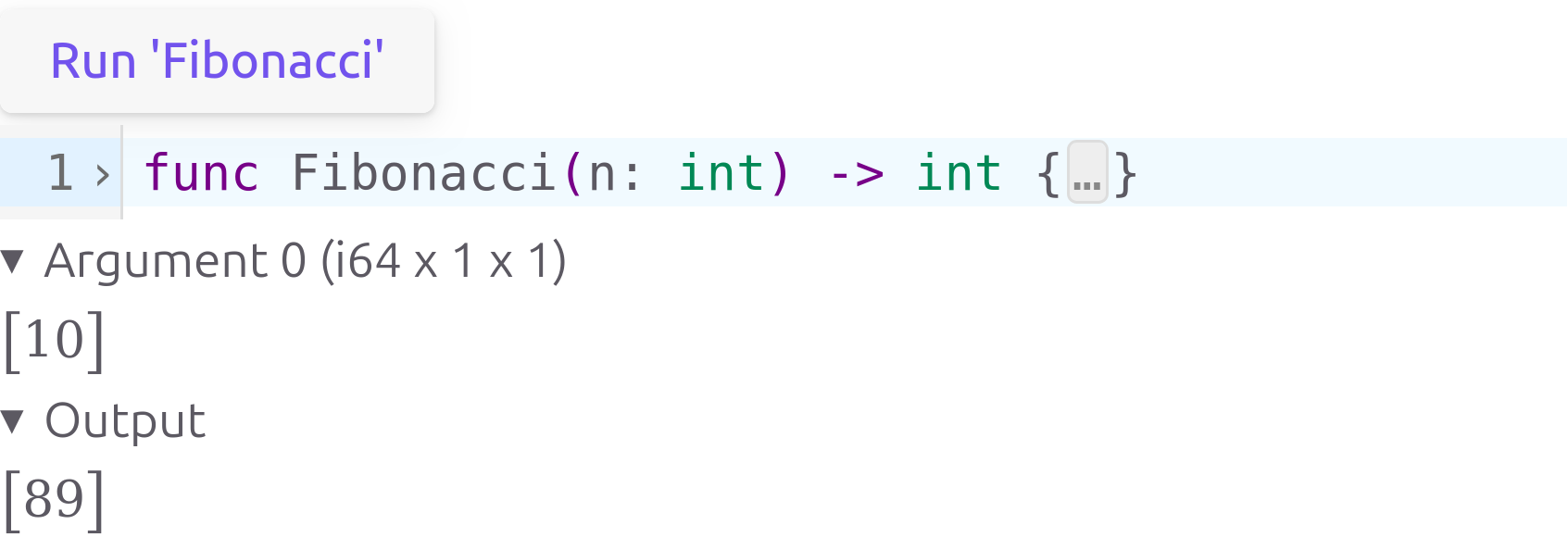
Fig 5: Code editor with rendered argument and output.
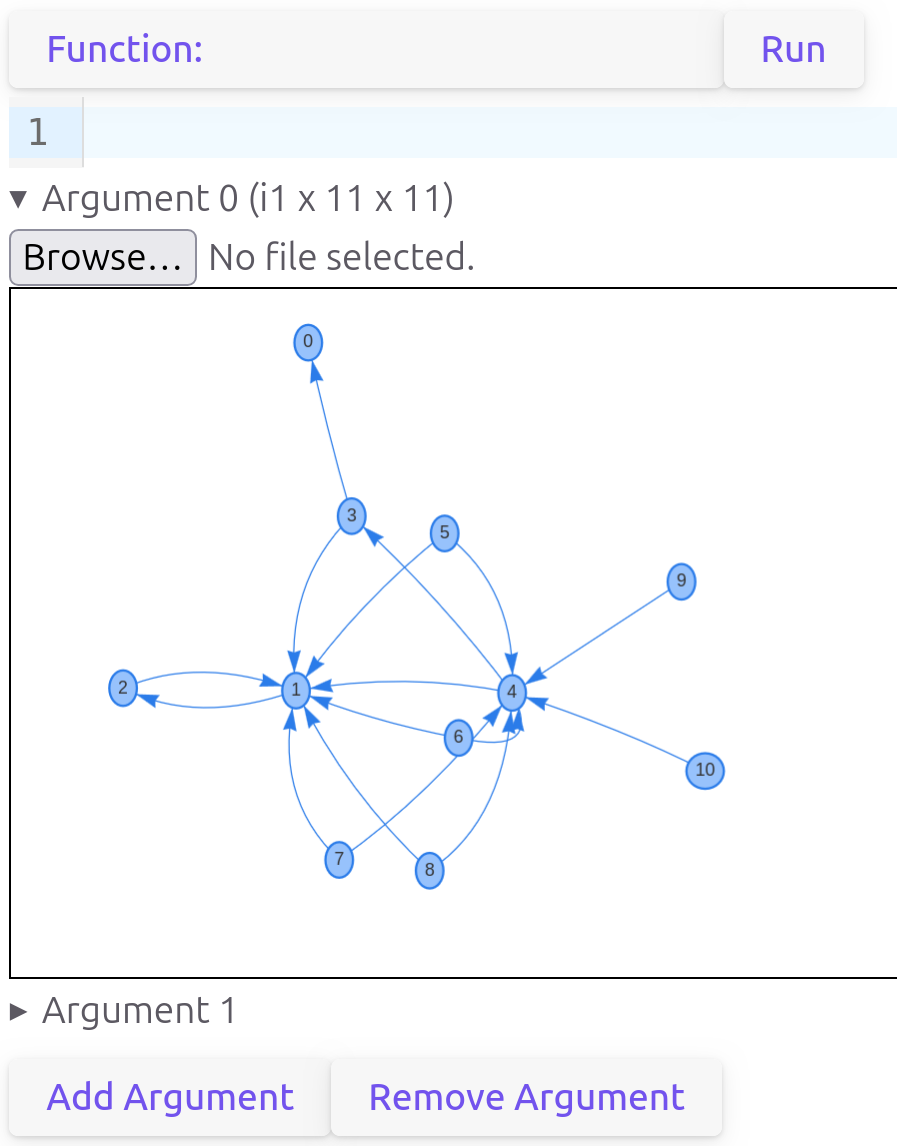
Fig 6: Alex uploads a file containing a small graph to the
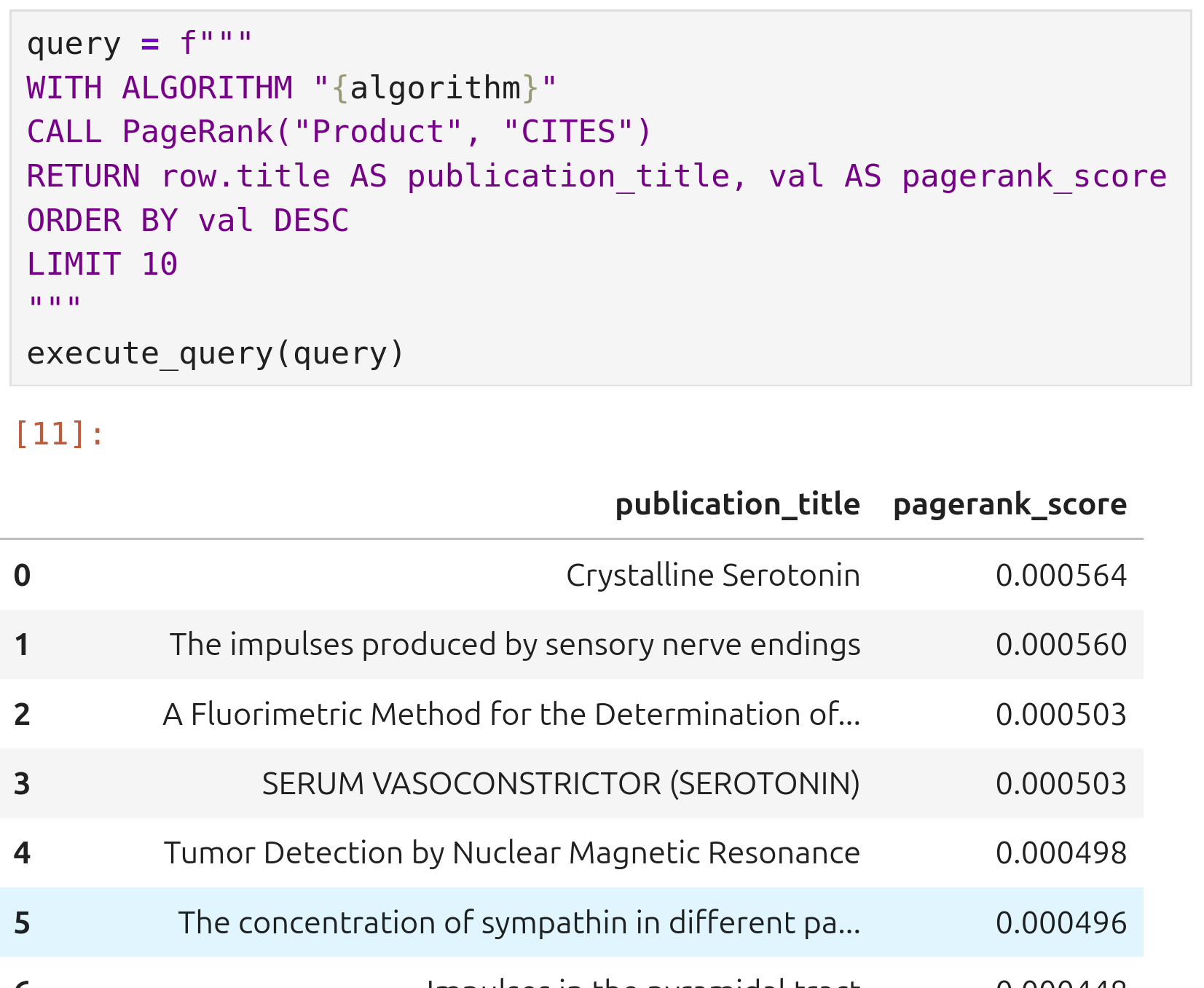
Fig 7: Alex executes the PageRank algorithm on the large
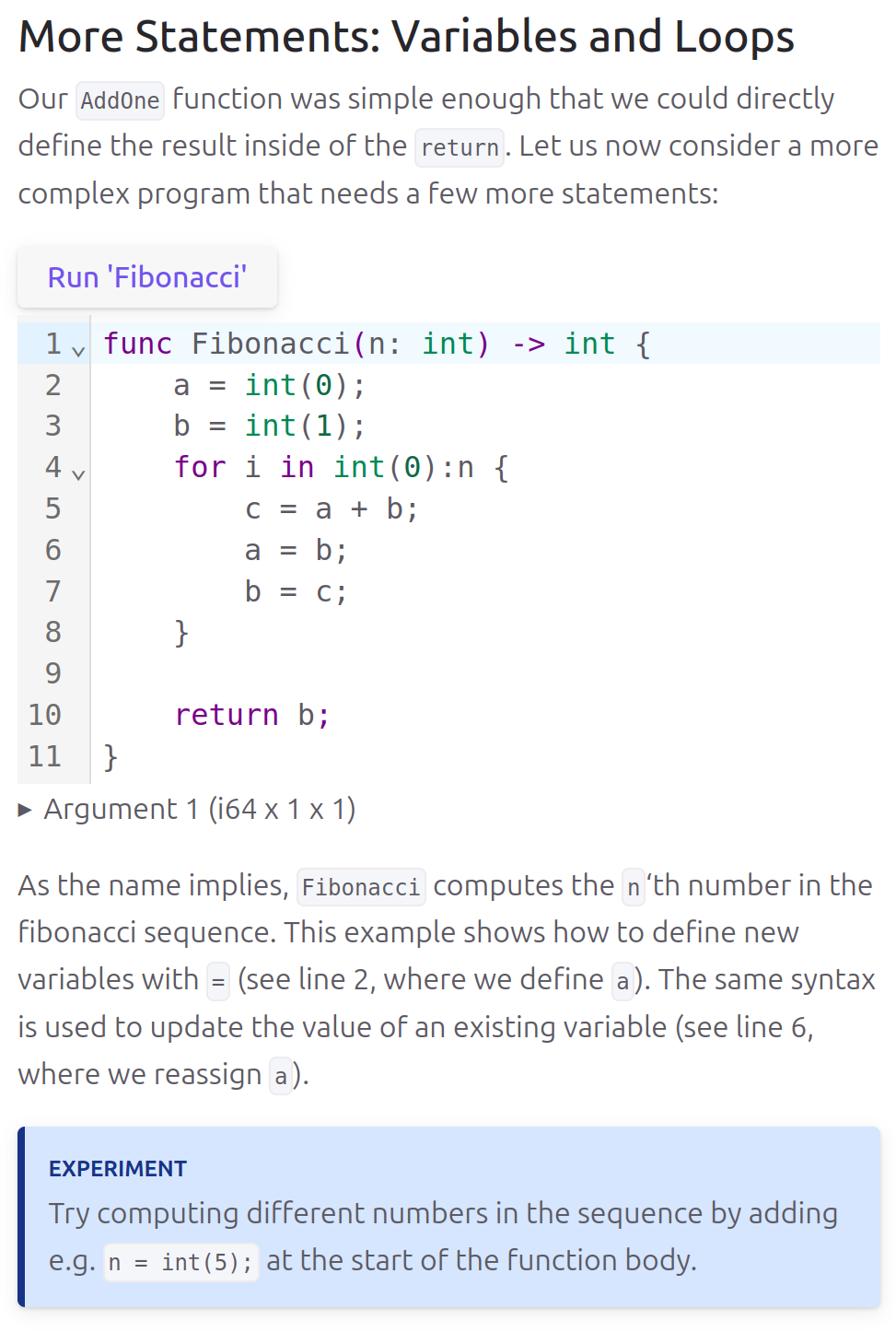
Fig 8: A section of the GraphAlg tutorial with an inter-
Limitations
- The playground backend uses an unoptimized WebAssembly runtime, limiting it to learning and prototyping rather than production-scale workloads.
- No explicit quantitative user studies or benchmarking of tutorial effectiveness or user productivity improvements are reported.
- The playground handles small input graphs only due to resource constraints of browser execution and client-side memory.
- No adversarial security or robustness evaluations are discussed; playground trust is limited to local client use.
- Error diagnostics catch compile-time issues well but runtime errors may be harder to diagnose without debugger features.
Open questions / follow-ons
- How effective is the GraphAlg playground in accelerating learning and adoption by real users in practice? User studies required.
- Can the WebAssembly runtime be optimized to support larger graphs and scale closer to production workloads in-browser?
- What debugging and profiling tools could be integrated into the playground to improve developer productivity?
- How might the playground support collaborative editing and sharing of GraphAlg programs in a multi-user environment?
Why it matters for bot defense
From a bot-defense and CAPTCHA practitioner perspective, the GraphAlg playground demonstrates how a domain-specific language for graph algorithms can be made accessible to users without installation or local setup. Such an approach might inspire designing interactive browser-based tools for experimenting with bot detection graph analytics or evolving CAPTCHA challenge patterns that utilize graph-based user interaction analytics. The local execution model preserves privacy and reduces server load, which is attractive for high-traffic bot-defense applications.
Moreover, the real-time error diagnostics and visual feedback mechanisms lower the barrier to experimentation with complex graph queries or algorithms, which could be leveraged in prototyping interactive attack detection or CAPTCHA puzzle generation techniques involving user interaction graphs. However, the playground’s design focuses on graph algorithm learning rather than adversarial robustness or bot resistance, so direct application requires further security-oriented enhancements.
Cite
@article{arxiv2606_04813,
  title={ GraphAlg Playground: An Online Platform for Learning and Experimenting with the GraphAlg Language },
  author={ Daan de Graaf and Robert Brijder and Soham Chakraborty and George Fletcher and Bram van de Wall and Nikolay Yakovets },
  journal={arXiv preprint arXiv:2606.04813},
  year={ 2026 },
  url={https://arxiv.org/abs/2606.04813}
}