
Mind the Gap in the Mining Game
Source: arXiv:2606.03153 · Published 2026-06-02 · By Kyoung-Kuk Kim, Donghwa Seo
TL;DR
This paper develops a rigorous game-theoretic model of strategic block delay (mining gaps) in Proof-of-Work (PoW) blockchain systems. Miners balance operational costs against expected rewards from block creation and transaction fees, leading to intentional timing gaps where mining rigs are turned off temporarily. The authors derive conditions for the existence of such mining gaps as open-loop Nash equilibria in a continuous-time differential game framework. Their analysis shows that mining gaps occur when expected rewards relative to costs and miner dominance reach critical thresholds. The interaction between miners' strategic delays and the blockchain difficulty adjustment algorithm (DAA) can cause block time instability and system vulnerabilities, especially as block rewards diminish and reliance on transaction fees grows.
The paper illustrates these dynamics through analytical characterizations, a two-player miner game simulation, and an application to Bitcoin's reward structure and difficulty adjustments. Key results include closed-form equilibrium mining start times for homogeneous miners with affine reward functions and precise stability criteria for the DAA under mining gaps. The authors highlight scenarios where mining gaps create oscillations in block times and threaten protocol sustainability. Their framework provides new quantitative tools to understand miner behavior, economic incentives, and how protocol design impacts blockchain security and efficiency.
Key findings
- Theorem 2: Necessary and sufficient condition for no mining gap is R(0) ≥ c w⁻¹ + (max γ_n) / (Σ γ_i - max γ_n) × E[R(B) - R(0)], where R(t) is expected reward at time t, c cost per hash, w winning rate, and γ_i miner capacities.
- Mining start times at equilibrium (Theorem 1 and Lemma 5) follow a unique sequence t₁ ≤ t₂ ≤ ... ≤ t*_N, with miners of higher capacity starting later, validating Tsabary and Eyal's 2018 simulation findings analytically.
- In homogeneous miner case with affine revenue R(t) = α t + β, mining gap is absent if and only if β ≥ c w⁻¹ + α / ((N -1) w γ) (Corollary 1).
- Closed-form expressions derived for equilibrium start times, utilities, and expected block generation times in affine revenue model (Corollaries 1 and 2).
- Difficulty adjustment algorithm (DAA) stabilizes block generation time if µ'(w) > -2 µ / w (Theorem 4). Otherwise, mining gaps cause oscillations and instability in block times.
- Two-player simulations show that increased concentration of mining power leads to more mining gaps but increased utilities for miners, creating incentives to coalesce (Section 5.2).
- Bitcoin network analysis indicates halving events combined with DAA can induce mining gaps that destabilize the system if transaction fees and block rewards do not meet critical thresholds (Section 6).
- Mining gaps remain economically rational as miners delay mining until transaction fees accumulate sufficiently to cover costs, especially as direct block rewards phase out.
Threat model
The adversary is an economically rational miner or coalition with private control over mining rig activation timing and hash power allocation, operating within the protocol rules. They do not control network propagation delays nor conduct overt attacks like 51% double-spend, but instead manipulate mining patterns strategically to maximize profit by introducing intentional mining gaps. The model disallows real-time reactive strategies beyond open-loop controls and excludes coordinated malicious collusion beyond non-communicative competition.
Methodology — deep read
Threat Model & Assumptions: The adversary is a profit-maximizing miner or coalition with private control over mining power utilization, constrained by physical mining capacities γ_n. Miners observe block generation times but not others' real-time mining strategies, just the global transaction queue sorted by fee. The model assumes miners strategically decide when to activate mining rigs (control sn(t)) to maximize expected profit amid operational costs c and stochastic mining success probability w. The focus is on economic incentives, not direct attacks or malicious behavior. Assumptions include a continuous-time setting with Poisson transaction arrivals and concave, twice differentiable expected rewards R(t).
Data: The analysis is primarily theoretical and mathematical. The only data input is empirical Bitcoin network parameters used in numerical experiments and simulation of a two-player miner game. The Bitcoin reward halving schedule, block size limit K, and observed hash rate distribution of mining pools inform parameter choices but no proprietary or large-scale datasets are employed.
Architecture / Algorithm: The problem is formalized as a differential game where each miner's control function sn(t) determines hash power over time since last block. The state variable x(t) tracks cumulative hash operations attempted. Using optimal control theory and the Maximum Principle, authors characterize optimal bang-bang strategies where miners switch mining rigs fully off or on at specific times t* to maximize expected profit Jn. The equilibrium is an open-loop Nash equilibrium with piecewise constant control functions s*_n(t) = γ_n 1{t >= t*_n}. The switching function σ_n(t) determines the start mining time t*_n as the unique solution to σ_n(t*_n) = 0.
Training Regime: n/a (no learning). The model parameters such as block reward, transaction arrival rate, cost per hash, and mining difficulty evolve dynamically via DAA. Analytical closed-form and numerical methods are used to compute equilibria and simulate dynamic sequences of winning rates w_i and mean block times µ_i over iterations.
Evaluation Protocol: Theoretical equilibria conditions and stability criteria are formally proved (Theorems 1-4, Lemmas 1-6). Numerical illustration includes a two-player game simulation varying miner dominance and operating cost to show changes in equilibrium start times and mining gaps. Bitcoin parameters from March 2024 and reward halving schedule are used to assess system sustainability. Stability of DAA is evaluated via fixed point iteration and graphical analysis (Fig 2), showing convergence or oscillatory behavior. No cross-validation or adversarial robustness testing is performed.
Reproducibility: The paper provides detailed mathematical derivations but no code or implementation is publicly released. The Bitcoin network data used is publicly available. The two-player simulation setup is described but not accompanied by software artifacts. Full proofs and model specifics are in appendices. Therefore, full end-to-end reproduction requires re-implementing the mathematical model and numerical solver based on the paper.
Technical innovations
- Formulation of mining rig activation timing as a continuous-time differential game with piecewise constant bang-bang controls and open-loop Nash equilibrium characterization.
- Derivation of necessary and sufficient analytical condition for the existence of mining gaps involving operating cost, reward function, and miner capacity concentration (Theorem 2).
- Integration of mining strategic delays with blockchain difficulty adjustment algorithm (DAA) to analyze system-wide stability and derive explicit stability conditions (Theorem 4).
- Closed-form equilibrium solutions for homogeneous miners with affine reward functions, linking mining gap presence to explicit parameter inequalities (Corollaries 1 and 2).
Datasets
- Bitcoin network data from March 2024 — public blockchain data
- Synthetic two-player miner game simulations — self-generated per model parameters
Baselines vs proposed
- Tsabary and Eyal [2018] numerical simulation: mining gaps predicted under low block reward regime validated by analytical Nash equilibrium characterization in this paper (Theorem 1).
- Fiat et al. [2019] and Goren and Spiegelman [2019] models of miner slowdowns expanded by analytical mining gap and DAA stability criteria (Theorem 4).
- Current Bitcoin DAA performance: empirical block time fluctuations linked to mining gaps and incentives through proposed model, showing theoretical basis for observed instabilities.
Figures from the paper
Figures are reproduced from the source paper for academic discussion. Original copyright: the paper authors. See arXiv:2606.03153.
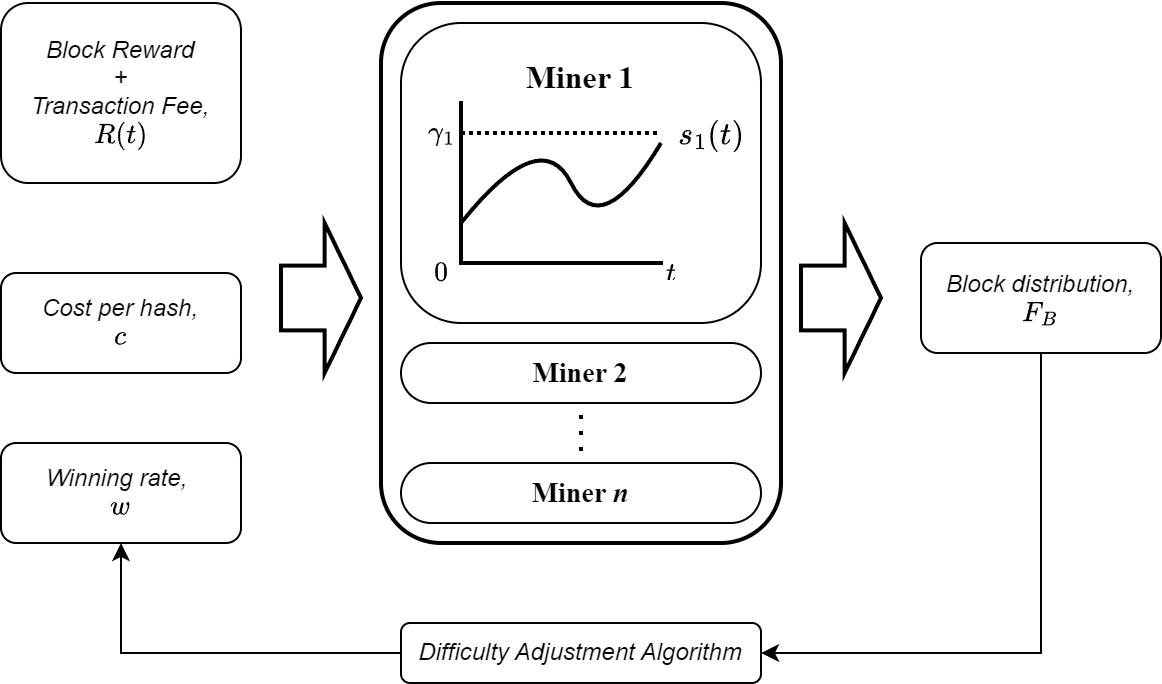
Fig 1: The feedback process between model parameters, block distribution, and DAA.
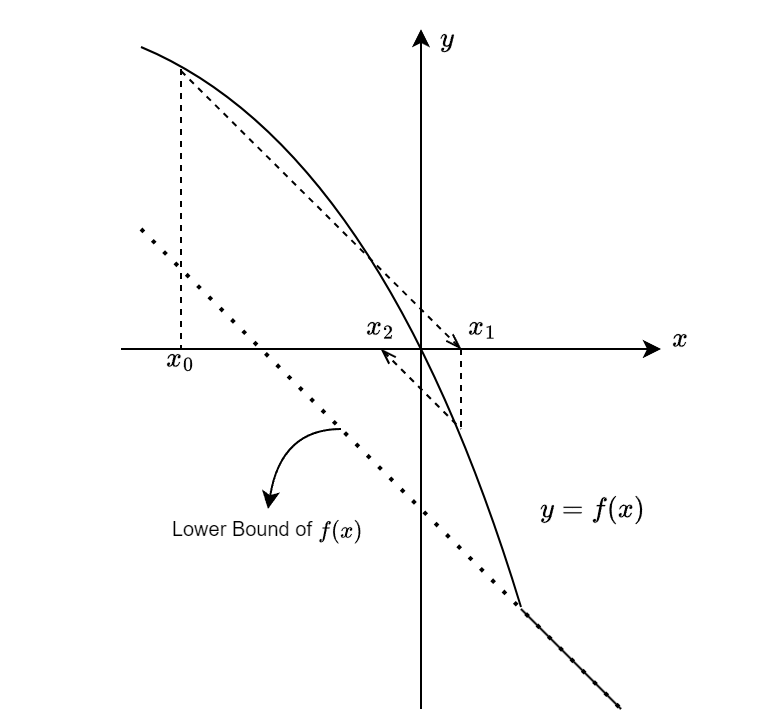
Fig 2: Example of difficulty update path
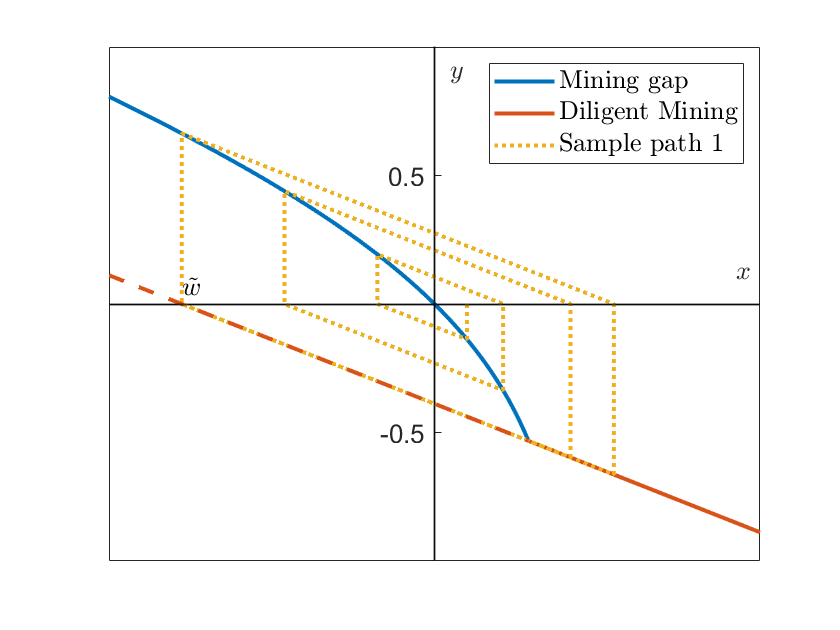
Fig 3: Interaction between DAA and mining gap
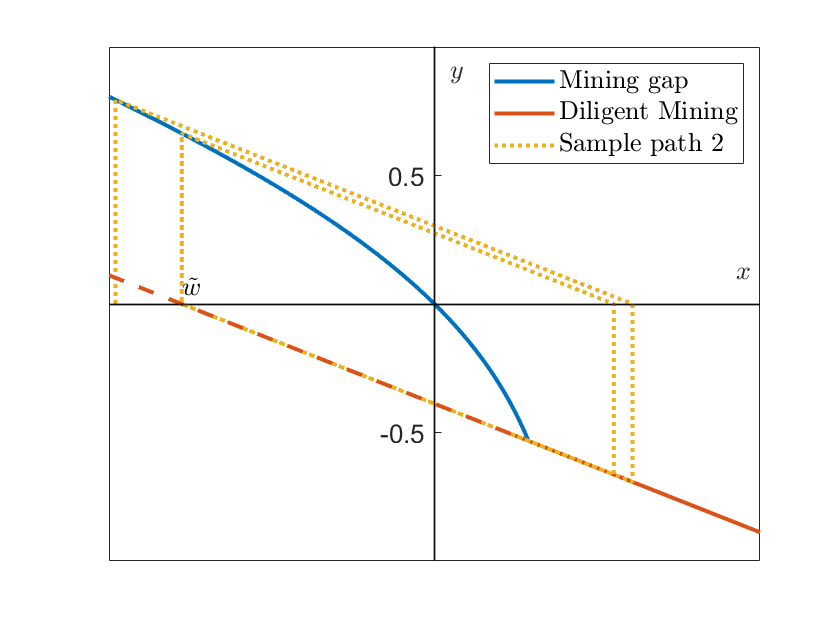
Fig 4: The optimal responses of the two miners under three types of revenue functions
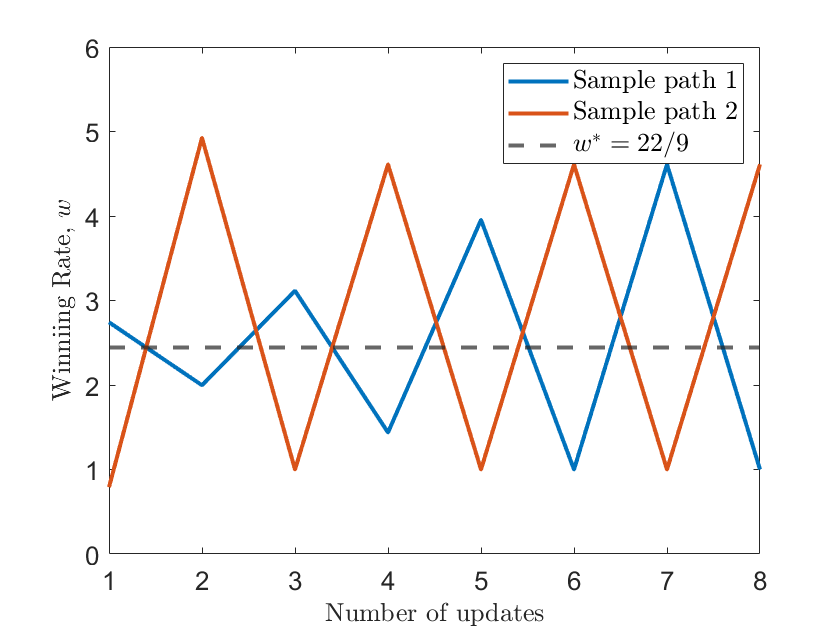
Fig 5: Behaviors of miners as the dominance of the large miner varies. At each dominance level,
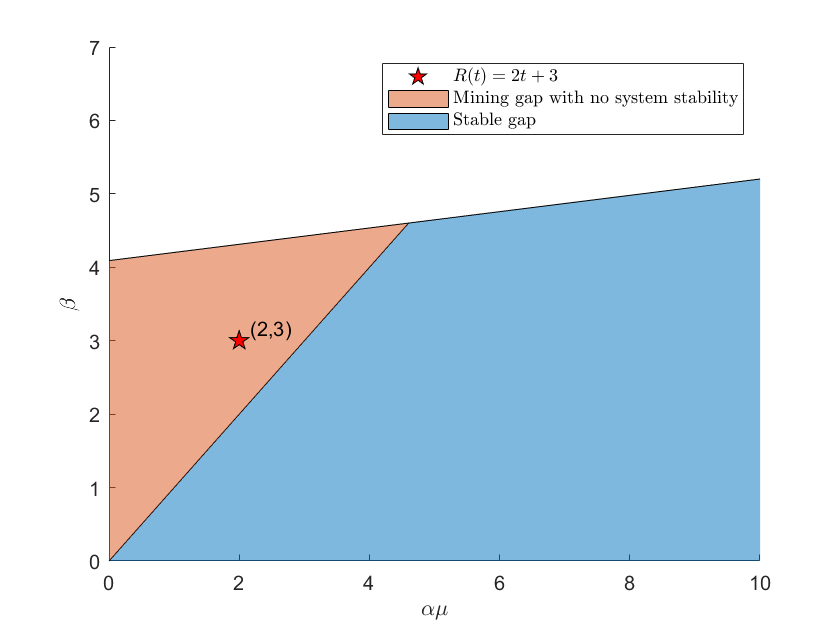
Fig 6 (page 17).
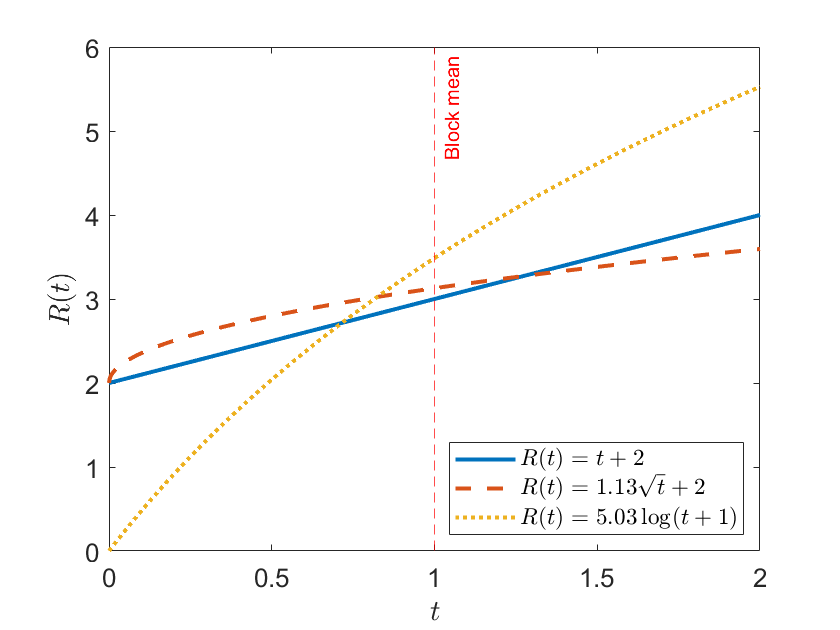
Fig 6: Behaviors of the two miners as the cost c varies. Naturally, higher costs cause adverse
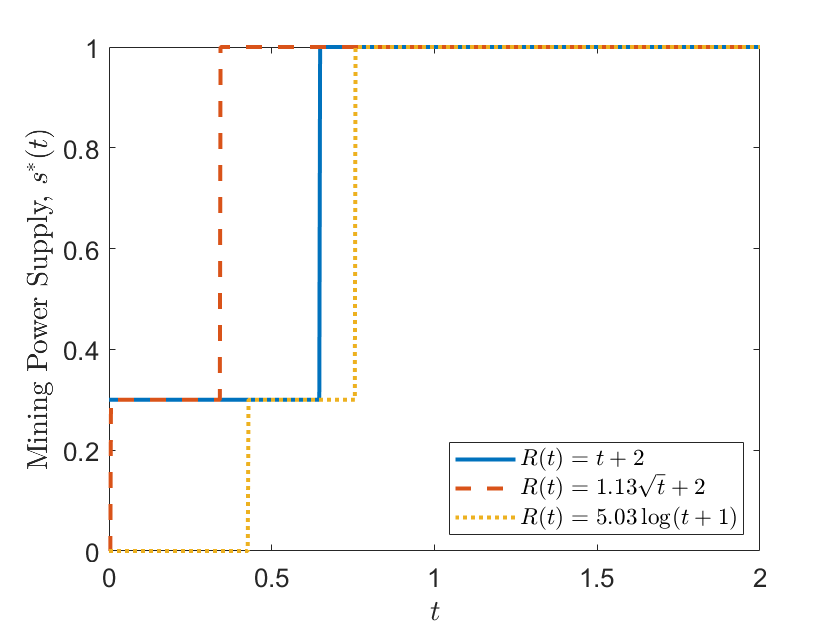
Fig 8 (page 18).
Limitations
- Model ignores network propagation delays and possible block orphaning effects, assuming synchronized global transaction views.
- Open-loop equilibrium assumes miners cannot dynamically react in real-time to others’ mining power changes, limiting realism for highly adaptive adversaries.
- Transaction fee arrival process modeled as i.i.d. Poisson with simplified order statistics; real network fee dynamics are more complex.
- No explicit user behavior modeling beyond revenue function R(t); user transaction strategy feedback loops are not incorporated.
- Numerical experiments limited to two-miner games and parameter sweeps; no large-scale miner pool heterogeneity explored comprehensively.
- Code and detailed implementation aspects not made publicly available, limiting replication convenience.
Open questions / follow-ons
- How do real-time reactive (closed-loop) strategies by miners affect equilibrium existence and system stability compared to open-loop assumptions?
- What is the impact of network delays, block propagation, and orphan rates on mining gap dynamics and system robustness?
- How do user fee bidding behaviors and complex transaction arrival processes interact with miner strategic delays?
- Can new difficulty adjustment algorithms be designed to mitigate mining gaps and stabilize block timing under varying reward regimes?
Why it matters for bot defense
From a bot-defense and CAPTCHA perspective, this paper's analysis relates tangentially through the shared concept of economic incentives driving strategic behavior that affects system availability and stability. Mining gaps represent deliberate resource temporization to optimize profit, analogous to how bots might modulate activity to evade defenses or optimize cost/benefit tradeoffs.
A bot-defense engineer can apply the insights about how incentive structures combined with automated adjustment mechanisms cause system oscillations or downtime. Similar principles may inform design of CAPTCHAs or resource challenge systems where client participation timing affects overall system performance or security. The notion of equilibria in utilization and stability criteria can inspire more robust adaptive challenge mechanisms that prevent deliberate or emergent resource withholding or gaming by adversaries.
Cite
@article{arxiv2606_03153,
  title={ Mind the Gap in the Mining Game },
  author={ Kyoung-Kuk Kim and Donghwa Seo },
  journal={arXiv preprint arXiv:2606.03153},
  year={ 2026 },
  url={https://arxiv.org/abs/2606.03153}
}