
AAD-1: Asymmetric Adversarial Distillation for One-Step Autoregressive Video Generation
Source: arXiv:2606.03972 · Published 2026-06-02 · By Haobo Li, Yanhong Zeng, Yunhong Lu, Jiapeng Zhu, Hao Ouyang, Qiuyu Wang et al.
TL;DR
AAD-1 addresses key limitations in one-step autoregressive image-to-video generation, where prior adversarial distillation approaches struggled with motion collapse and unstable training that produced static or visually degraded videos. The paper introduces an asymmetric architecture: a causal generator preserves autoregressive sampling, while a bidirectional discriminator attends across the full spatiotemporal video for holistic realism scoring. Additionally, a phased training pipeline includes an initial diffusion-based ODE initialization, a distribution matching warmup stage to bring the student's output close to the teacher's distribution, followed by adversarial refinement. Experiments on the VBench video benchmark demonstrate that AAD-1 achieves state-of-the-art performance on multiple metrics measuring visual quality, temporal consistency, and conditioning fidelity using only one forward sampling step. The ablation studies verify that both the asymmetric discriminator design and phased training are critical to overcoming motion collapse and instability.
Key findings
- AAD-1 with asymmetric bidirectional discriminator achieves subject consistency of 94.34 and background consistency of 95.08 on VBench-I2V, outperforming prior state-of-the-art autoregressive models (Self Forcing at 93.41 and 89.37 respectively).
- One-step generation via AAD-1 reaches 71.49 imaging quality and 98.65 I2V subject faithfulness, close to multi-step bidirectional models (Wan 2.1 I2V with 100 NFE sampling achieving 70.12 and 96.80).
- Removing the DMD distribution matching warm-up stage causes severe training instability and visual degradation (aesthetic quality drops from 58.64 to 53.63 in VBench metrics).
- Causal discriminators with frame-wise prediction produce static videos with negligible motion degree (Dynamic Degree = 1.08) due to inability to detect temporal drift.
- Bidirectional discriminators with video-level logit provide best drift mitigation (drift score 4.02) and stable long-horizon motion fidelity, compared to causal or frame-wise variants (drift scores up to 7.10).
- The staged training pipeline (ODE initialization, DMD warmup, adversarial refinement) is essential to stabilize one-step training and avoid conflicting objectives between GAN and diffusion losses.
- Ablations show that bidirectional attention in the discriminator is critical for detecting global temporal failures and preventing motion collapse in one-step autoregressive video generation.
Threat model
The implicit threat model is of a training instability and failure mode adversary, where the generation model falls into motion collapse or drift over time, producing unrealistic static or distorted videos. The discriminator has full access to all video frames during training (bidirectional attention), but the generator must produce frames autoregressively with causal attention and limited temporal context. The model cannot rely on future frame information at inference, and the training adversary cannot intervene to provide additional supervision beyond the teacher diffusion model and adversarial signals.
Methodology — deep read
Threat Model & Assumptions: The threat model is implicit in the video generation domain as mitigating failure modes like motion collapse and training instability in one-step autoregressive video generation. The adversary is effectively the training dynamics themselves where the model can collapse into producing static frames or suffer from long-range drift. During training, the discriminator has bidirectional access to the full video context, but the generator remains strictly causal to support autoregressive streaming generation.
Data: The main evaluation dataset is VBench-I2V, producing 5-second videos (320 frames at 480p resolution) from a single conditioning image. The paper does not detail dataset size but uses the benchmark's standard evaluation splits and metrics. Conditioning is image-to-video.
Architecture & Algorithm: The generator G_θ is a causal diffusion transformer (Wan 2.1 T2V backbone adapted with block-wise causal attention). It generates each video chunk autoregressively conditioned on previous generated frames plus a fixed set of 'sink' frames anchoring global context. The discriminator D_ψ is an asymmetric bidirectional DiT transformer with learnable query tokens that aggregate full spatiotemporal features into a single video-level realism score, rather than frame-wise logits. The discriminator uses Gaussian input noise and temporal noise scheduling for regularization. The asymmetric design breaks the prior symmetry that limited causal discriminators to only local context.
Training optimizes three stages: (I) ODE Initialization uses diffusion forcing training to adapt the causal student generator to approximate denoising teacher trajectories, training for 2000 steps using flow-matching losses. (II) Distribution Matching Warmup further aligns the student to the teacher's distribution under self-rollout by training a fake-score network and minimizing score differences, run for 100 steps with GAN training disabled to avoid instability. (III) Asymmetric Adversarial Refinement involves adversarial training of the causal generator against the bidirectional discriminator on noisy video samples, with losses including logistic GAN objectives and local gradient regularization. Generator learning rate is 4e-7, discriminator at 1e-6/2e-6 head, batch size 256 with gradient accumulation.
Training Regime: Training uses Exponential Moving Average (EMA) for the generator with 0.98 decay. The discriminator employs R1-type gradient penalties approximated via Gaussian perturbations. The generator trains for roughly 200 steps in stage III after prior warmup. Noise timesteps τ are uniformly sampled to match diffusion noise levels. The sink token and sliding window mechanism aid long video generation.
Evaluation Protocol: Metrics on VBench include subject consistency, background consistency, motion smoothness, dynamic degree, aesthetic quality, imaging quality, and faithfulness to conditioning. Comparisons include multi-step and autoregressive baselines like Wan 2.1 (100 NFE), CausVid (4 NFE), Self Forcing (4 NFE). Ablations manipulate discriminator visibility (causal vs bidirectional), logit granularity (frame-wise vs video-wise), and training stage presence (with/without DMD warmup), showing impacts on drift score and dynamic degree.
Reproducibility: The backbone Wan 2.1 T2V is publicly available. The authors detail training recipes including schedules and architectures but state that some models and code base may not be fully open source. Key design details for discriminator and training stages are described to aid replication. Specific seeds and hardware details are not provided. Overall, the stepwise pipeline and architectural innovations are clearly described but exact reproduce-ability would depend on access to backbones and code.
Example: To produce one chunk autoregressively, the generator takes noise z_t and the sliding window of previously generated frames plus fixed sink frames as input. At stage II, the generator's output distribution is nudged closer to the diffusion teacher via distribution matching using learned score estimators, reducing the initial distribution gap. At stage III, the generator produces an entire clip ˆx_{1:T} autoregressively, which is fed to the bidirectional discriminator with Gaussian noise perturbation. The discriminator predicts a single realism score for the full clip. The generator's parameters are updated adversarially via the gradient of this score, incentivizing temporal coherence and global realism across frames, thereby mitigating long-range drift and motion collapse.
Technical innovations
- Breaking generator/discriminator symmetry by using a causal generator with a bidirectional, video-level discriminator to detect global temporal issues.
- Introducing a three-stage staged training regime with ODE initialization, self-rollout distribution matching warmup, and asymmetric adversarial refinement to stabilize one-step autoregressive video training.
- Employing learnable query tokens in the bidirectional discriminator to aggregate full spatiotemporal features into a single holistic realism score.
- Utilizing noise injection and gradient regularization on the discriminator inputs to stabilize training dynamics in the adversarial refinement stage.
Datasets
- VBench-I2V — 5-second 480p video clips — public benchmark
Baselines vs proposed
- Wan 2.1 I2V (100 NFE sampling): Subject Consistency = 93.88 vs AAD-1 Stage-III: 94.34
- CausVid (4 NFE sampling): Subject Consistency = 83.45 vs AAD-1 Stage-III: 94.34
- Self Forcing (4 NFE sampling): Subject Consistency = 91.77 vs AAD-1 Stage-III: 94.34
- Without DMD warmup: Aesthetic Quality = 53.63 vs with DMD warmup: 58.64
- Discriminator causal + frame-wise: Dynamic Degree = 1.08 vs bidirectional + video-wise: 39.29
- Discriminator causal + video-wise logit: Drift Score = 7.10 vs bidirectional + video-wise logit: 4.02
Figures from the paper
Figures are reproduced from the source paper for academic discussion. Original copyright: the paper authors. See arXiv:2606.03972.
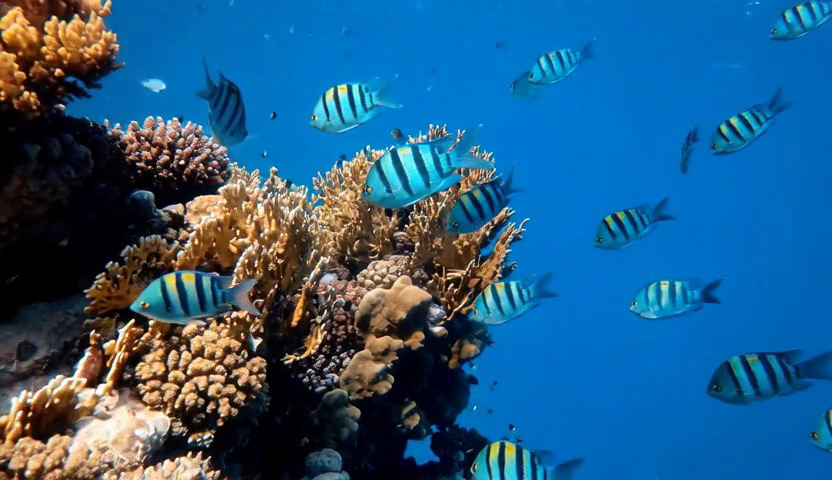
Fig 1: We propose AAD-1, an Asymmetric Adversarial Distillation framework for One-step autoregressive video generation. Given a
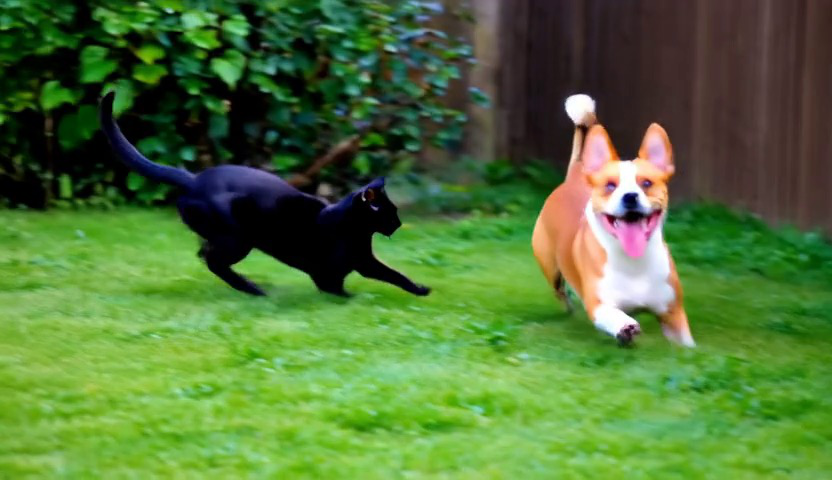
Fig 2: Discriminator Architecture Comparison. We compare
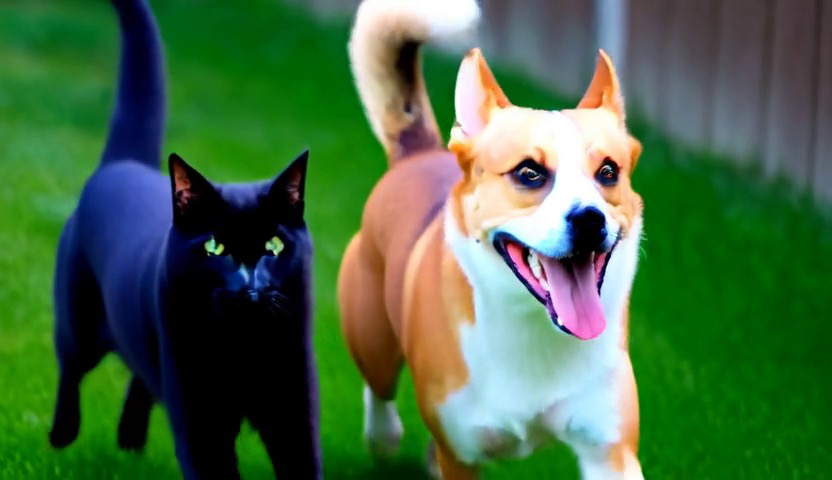
Fig 3 (page 1).
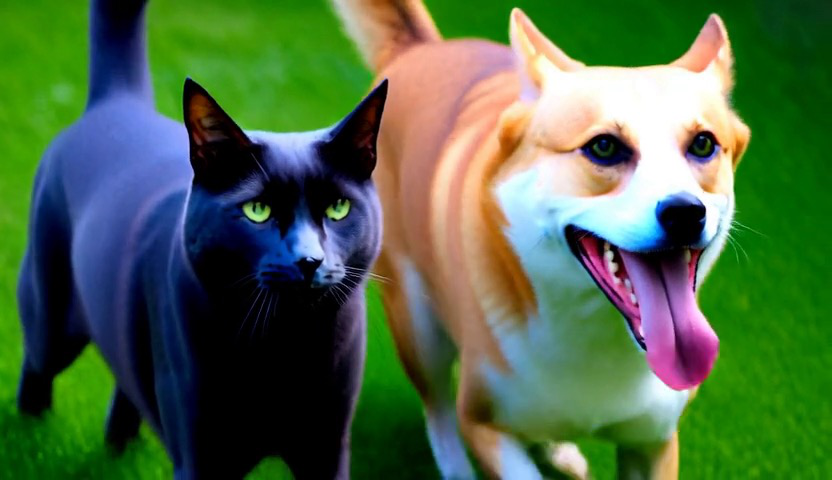
Fig 4 (page 1).

Fig 5 (page 1).

Fig 6 (page 1).
Fig 7 (page 1).
Fig 8 (page 1).
Limitations
- The training regime is complex, requiring three distinct stages that may increase development cost and tuning effort.
- Runs on a large 14B parameter backbone (Wan 2.1 T2V), which may limit accessibility and real-time deployment on low-resource devices.
- Evaluation focuses primarily on short 5-second videos; effectiveness on very long horizon generation or diverse datasets remains to be shown.
- The asymmetric discriminator requires access to full video context during training, limiting applicability to settings with partial observability or streaming-only training data.
- Code and pretrained weights availability is not fully confirmed, which may affect reproducibility and adoption.
- The approach addresses motion collapse but does not explore adversarial robustness or resistance to targeted attacks on generation fidelity.
Open questions / follow-ons
- Can the asymmetric adversarial distillation framework be adapted to longer video horizons and real-time streaming contexts with fewer sink frames?
- How does the approach perform on diverse video domains, including highly dynamic scenes or non-naturalistic videos?
- Is it possible to simplify or unify the three-stage training pipeline to reduce complexity without sacrificing quality?
- What is the vulnerability or robustness of the asymmetric discriminator to adversarial manipulation or poisoning during training?
Why it matters for bot defense
For bot-defense and CAPTCHA practitioners working on bot-generated video or multimedia content detection, AAD-1 offers insights on combating typical failure modes such as motion collapse that arise in fast autoregressive generation. The asymmetric discriminator design highlights the value of using holistic temporal context at the critic stage to detect subtle inconsistencies that frame-wise or causal-only discriminators miss. Practitioners could apply similar asymmetric architectures when building detectors for synthesized video authenticity that must capture long-range temporal artifacts and motion coherence failures typical in synthetic footage. Additionally, the phased training approach balancing distribution matching before adversarial refinement underscores the importance of stabilizing complex generative models, which may be relevant when building robust detectors on generated content distributions that evolve over training.
Cite
@article{arxiv2606_03972,
  title={ AAD-1: Asymmetric Adversarial Distillation for One-Step Autoregressive Video Generation },
  author={ Haobo Li and Yanhong Zeng and Yunhong Lu and Jiapeng Zhu and Hao Ouyang and Qiuyu Wang and Ka Leong Cheng and Yujun Shen and Zhipeng Zhang },
  journal={arXiv preprint arXiv:2606.03972},
  year={ 2026 },
  url={https://arxiv.org/abs/2606.03972}
}