
New Windows on Heavy Dark Matter: Mineral Melt Modelling and X-Ray Readout for Muscovite Mica
Source: arXiv:2606.02579 · Published 2026-06-01 · By Yilda Boukhtouchen, Joseph Bramante, Andrew Buchanan, Alexander Hayes, Matthew Leybourne, Jennika McIntosh et al.
TL;DR
This work advances the use of muscovite mica as a paleodetector material for searching for heavy composite dark matter (DM) with masses far beyond the reach of conventional direct detection experiments. The authors develop a new theoretical framework modeling melt track formation caused by DM transit using a Sedov-Taylor thermal spike formalism, capturing both opaque (geometric) and diffuse (constituent scattering) regimes of energy deposition. They validate the submicron melt radii predictions with SRIM/TRIM nuclear recoil cascade simulations, which also calibrate the phonon efficiency factor governing localized energy converted to heat. Experimentally, they demonstrate a novel rapid X-ray fluorescence (XRF) readout method utilizing a copper backing technique to detect micron-scale damage tracks over large mica areas, calibrated with laser-ablated defect surrogates. Using mineral geology and isotopic dating, they analyze mica track retention and thermal annealing, enabling sensitivity projections for composite DM parameter space, including a new sub-melt hole-channel detection mode for large, overburden-attenuated composites. The work also critically reevaluates prior mica-based DM constraints, identifying limitations in those analyses. Overall, this combined theoretical, computational, and experimental framework significantly expands the ability to use muscovite mica to search for heavy composite dark matter signatures preserved over geological timescales.
Key findings
- Sedov-Taylor thermal spike model predicts melt track radius scales as R_melt ≈ 255√η R_D with phonon efficiency η ≈ 0.75 in muscovite mica (Eq. 9)
- SRIM/TRIM nuclear recoil cascade simulations validate melt radii predictions down to RD ∼0.1–1 nm scale with good agreement (Fig. 4)
- Phonon efficiency factor η governing local heating estimated as 0.75 from SRIM calibrations accounting for nuclear + phonon energy deposition
- XRF copper backing method can detect micron-scale melt voids ≥25 µm in radius in cleaved mica with large-area scan capability (Section 3)
- Laser-ablated holes of ~50–150 µm diameter serve as effective calibration surrogates for minimum detectable track size in XRF readout
- Projected sensitivities extend to composite DM radii from nanometers to microns, including a novel sub-melt hole-channel detection mode for opaque composites attenuated by overburden (Section 4.3)
- Reassessment of prior mica monopole/DM etching constraints reveals shortcomings including underestimated annealing and track retention effects compromising robustness (Section 4.4)
- Thermal diffusion timescale (∼10−2 s) orders of magnitude longer than DM transit timescale (∼10−10 s) justifies adiabatic instantaneous energy deposition assumption
Threat model
n/a — this is a rare particle detection and material damage modeling study, not an adversarial security scenario.
Methodology — deep read
The authors study detection of heavy composite dark matter (mass MD, radius RD) passing through muscovite mica from a geological passive detection perspective. They consider two limiting interaction regimes between the DM composite and the mica nuclei: (1) the opaque or geometric limit, where the composite completely scatters all nuclei within its geometric cross-section πR2_D with mean recoil energy ~20 keV, and (2) the diffuse constituent limit with smaller per-nucleon interactions for loosely bound DM constituents, resulting in lower energy depositions dependent on microscopic cross-section parameters.
They employ a Sedov-Taylor thermal spike approximation to model how the prompt kinetic energy deposition from a DM transit (timescale t_dep ∼ RD/v_D ~ 10^-10 s) creates a thermal shock melting a cylindrical track of radius R_melt depending on RD, DM speed, and thermodynamic parameters (specific heat capacity Cp, latent heat of fusion H_f) of muscovite mica. This approach assumes the energy deposition is effectively instantaneous compared to the much slower thermal diffusion time t_diff ∼ L^2/D (~10^-2 s for 100 μm scales), allowing an adiabatic treatment.
To validate the analytical thermal spike model, the authors perform SRIM/TRIM Monte Carlo simulations of nuclear recoil cascades initiated by primary knock-on atoms (PKAs) displaced by the DM interaction. SRIM simulates energy deposition profiles from nuclear collisions, phonon production, and electronic stopping in the muscovite stoichiometry. Calibrating against SRIM outputs, they extract a phonon efficiency factor η ≈ 0.75 representing the fraction of DM energy deposited that contributes to local heating (nuclear + phonon energy vs total). The simulated 3D energy deposition profiles and melt radii agree well with the analytic scaling for RD in the 0.1–1 nm range, while SRIM assumptions break down at larger scales, where geometric estimates become dominant.
Experimentally, they propose and demonstrate a rapid X-ray fluorescence (XRF) readout method using a thin copper backing placed beneath cleaved mica sheets. The copper backing emits characteristic Cu Kα and Kβ X-rays when irradiated; damage tracks in mica that expose the copper beneath enhance local Cu fluorescence, providing a contrast signal of micron-scale melt voids. The method is calibrated with laser-ablated holes of 50–150 μm diameter as surrogates for DM damage. Wide-area XRF scans reconstruct elemental maps and track spatial distributions.
For geological sample validation, isotope geochronology and fission track dating establish track retention ages and thermal annealing histories, crucial for interpreting observed damage features as ancient DM signals with gigayear exposure.
Sensitivity projections combine the thermal spike model, SRIM calibration, readout threshold, and geology to predict reachable parameter space for various DM types and overburden attenuation, including opening a novel sub-melt detection regime involving bored hole-channels.
No code release or frozen weights are mentioned. The SRIM calculations and readout methods are described in detail with empirical calibration examples (laser ablation), supporting reproducibility. The approach unifies theory, numerical simulation, and experimental demonstration in a single end-to-end protocol for mica-based DM paleodetection.
Technical innovations
- Application of the Sedov-Taylor thermal spike model to derive melt track radii induced by heavy composite dark matter transits through muscovite mica, capturing opaque and diffuse interaction regimes.
- Calibration of phonon efficiency η for energy deposition and track formation in mica via SRIM/TRIM nuclear recoil cascade simulations at sub-nanometer scale, bridging microphysics to macroscopic damage.
- Novel use of rapid X-ray fluorescence (XRF) mapping with a copper backing contrast technique for detecting micron-scale melt tracks in muscovite mica over large areas, enabling scalable paleodetector readout.
- Identification and modeling of a sub-melt 'boring' regime involving hole-channel formation for large composite DM states heavily attenuated by geological overburden, extending detection sensitivity.
Datasets
- Muscovite mica samples — geological origin from craton depths (~20 km), characteristics studied in-house with isotope geochronology and fission track dating — non-public, mineralogical provenance detailed in Section 4.1.
Baselines vs proposed
- SRIM/TRIM simulation melt radius predictions at RD=0.1–1 nm: melt radii within ~20–200 nm match thermal spike analytic scaling within ~10% (Fig. 4).
- Phonon efficiency η from SRIM calibrated to 0.75 vs literature η ~0.7 for low-velocity nuclear recoils.
- XRF readout detects laser-ablated holes as small as 50 μm diameter whereas prior etching methods target >100 μm features; implies improved spatial sensitivity.
Figures from the paper
Figures are reproduced from the source paper for academic discussion. Original copyright: the paper authors. See arXiv:2606.02579.
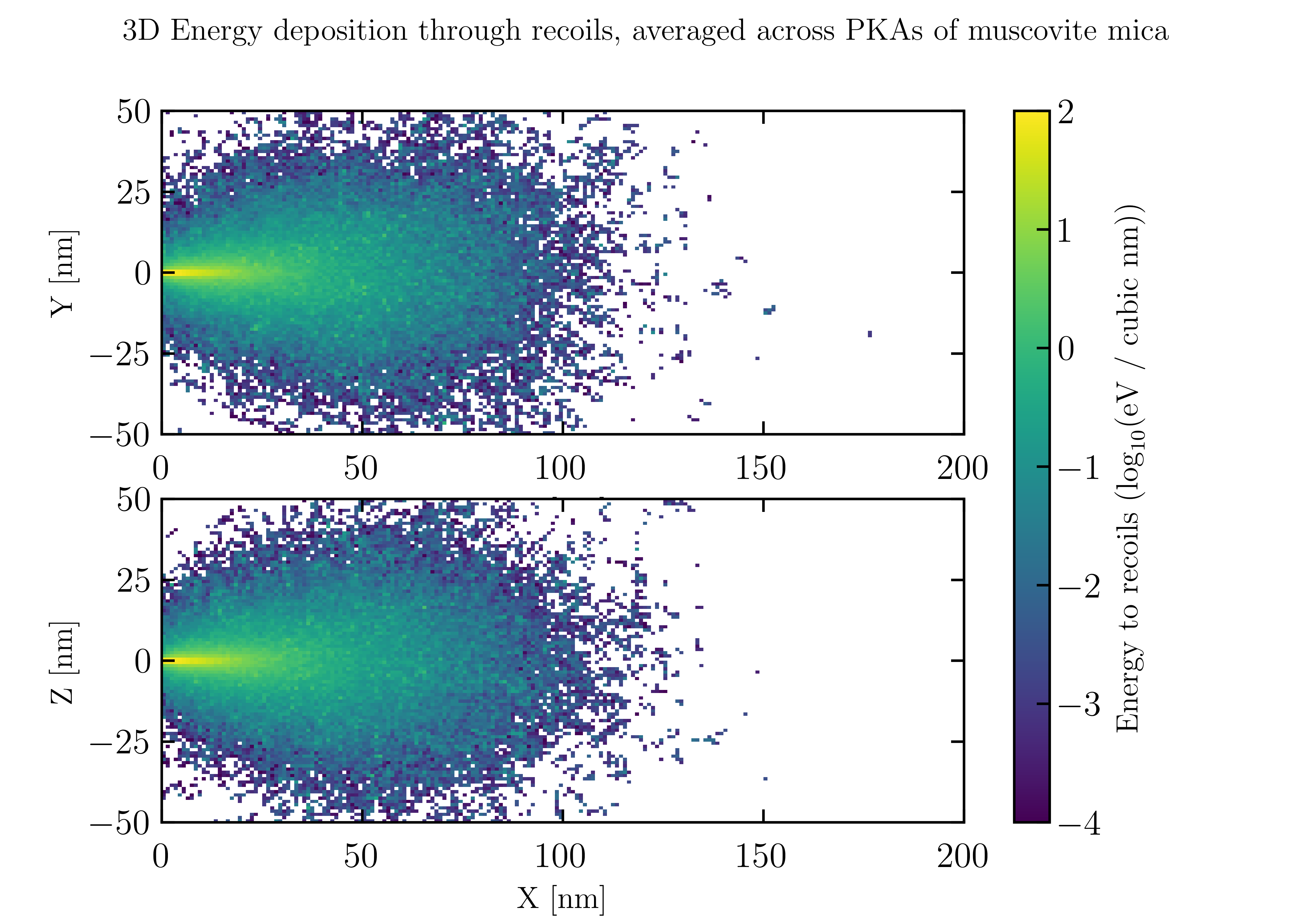
Fig 1: Average energy deposited due to a recoil cascade induced by a single PKA from a
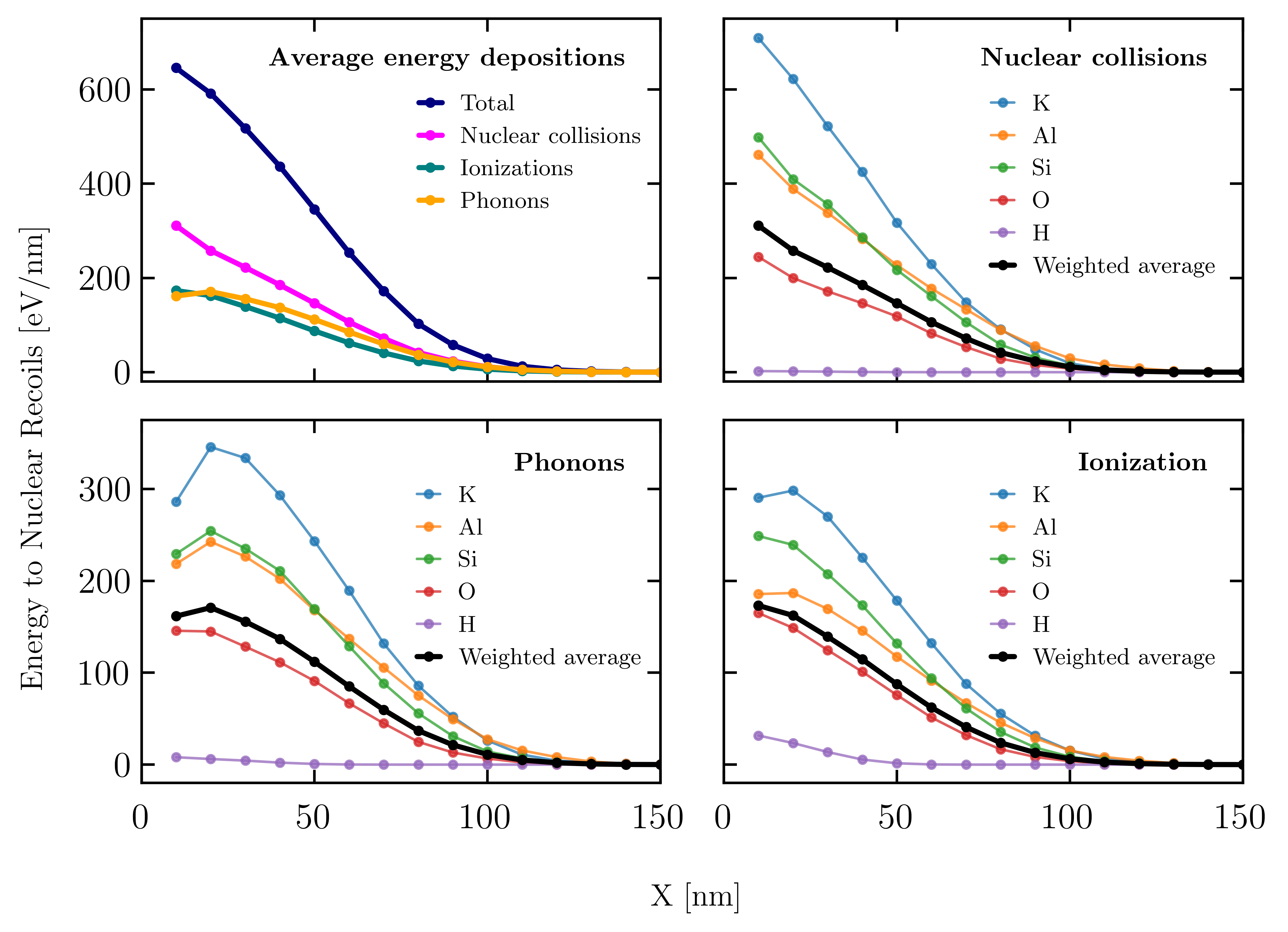
Fig 2: Energy depositions due to a recoil cascade induced by a single primary knock-on atom
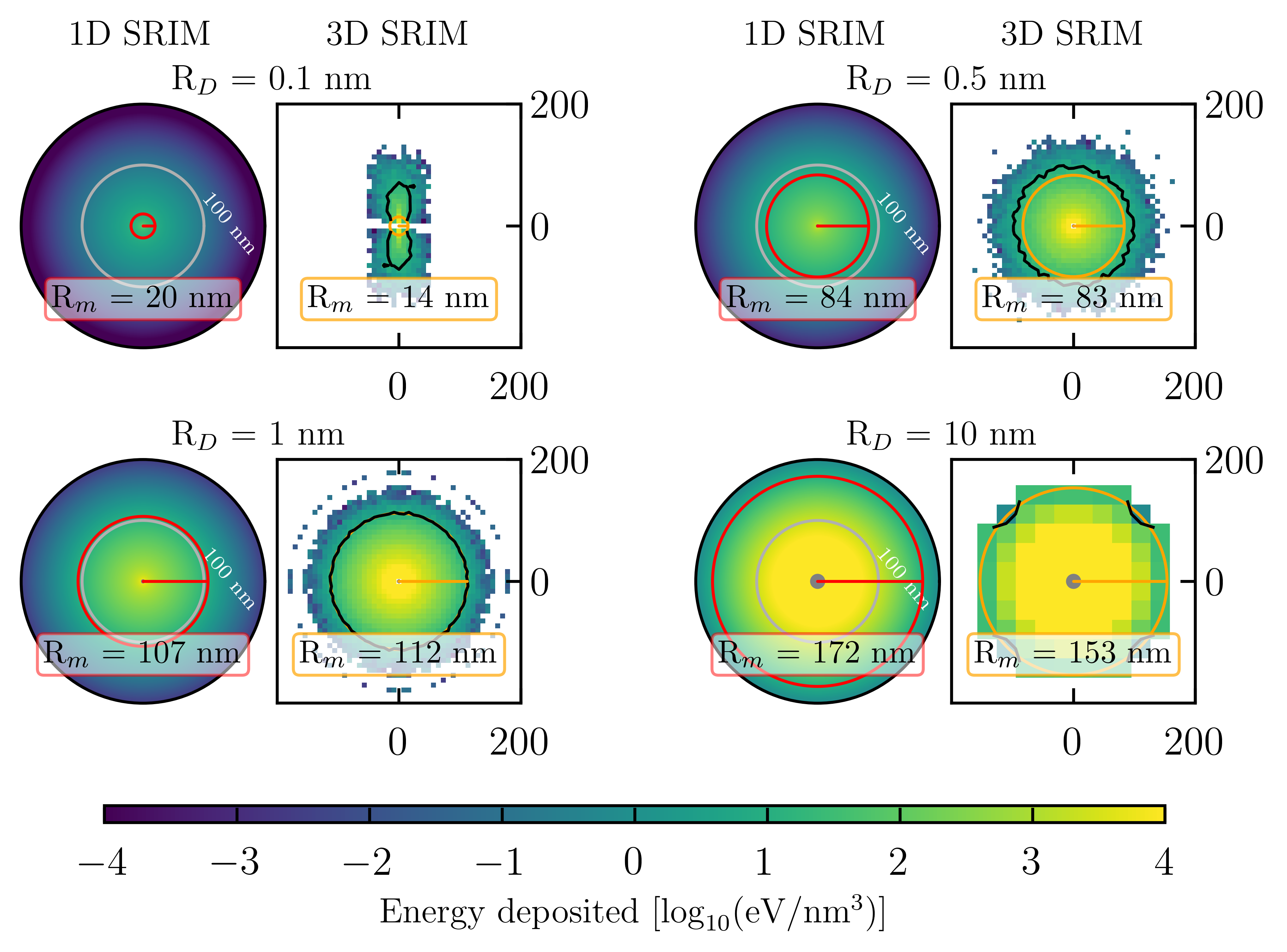
Fig 3: Total energy deposition per cubic nanometre, for composites of varying RD. For each
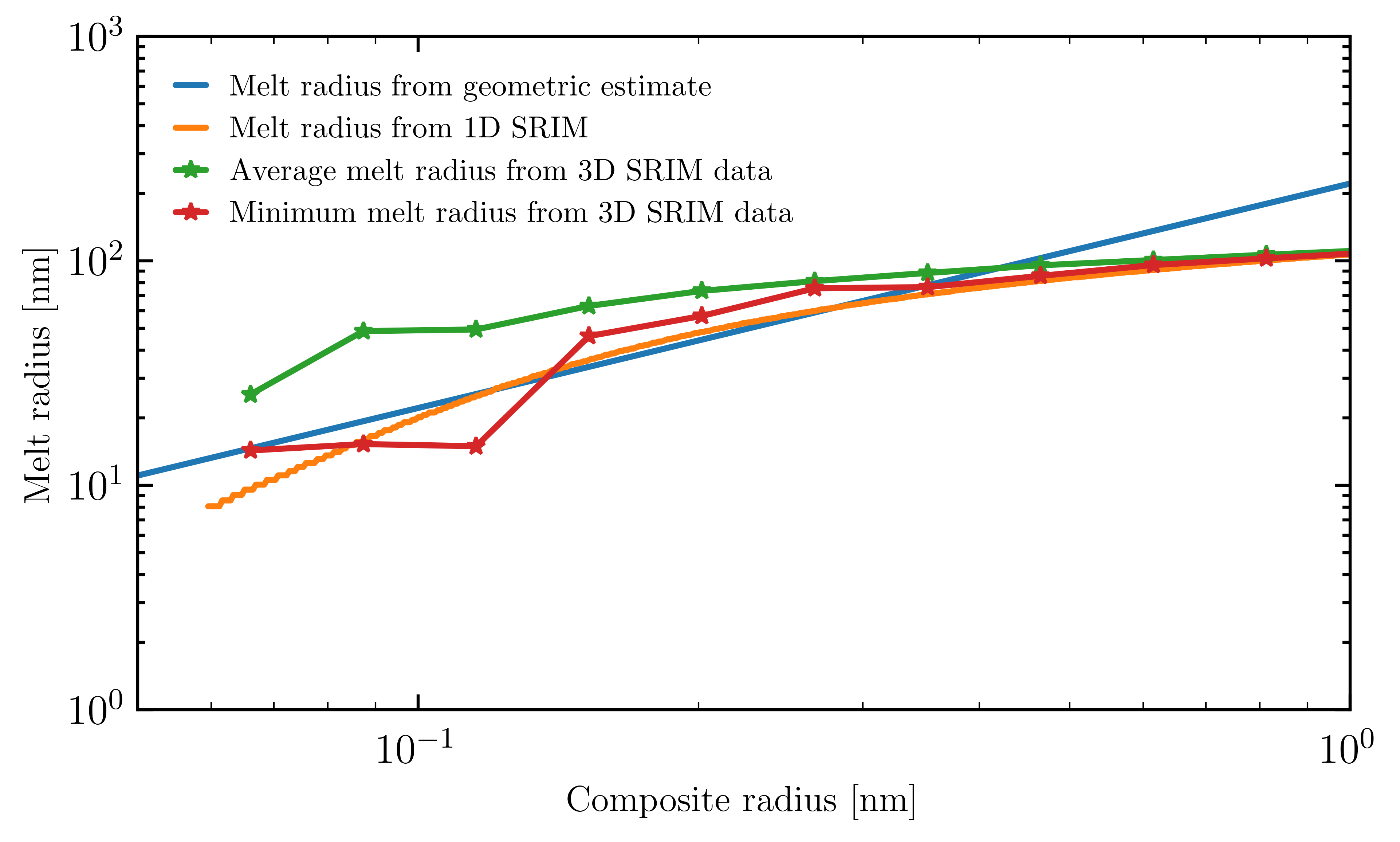
Fig 4: A comparison of the predicted melt radius for varying composite radii in the geometric
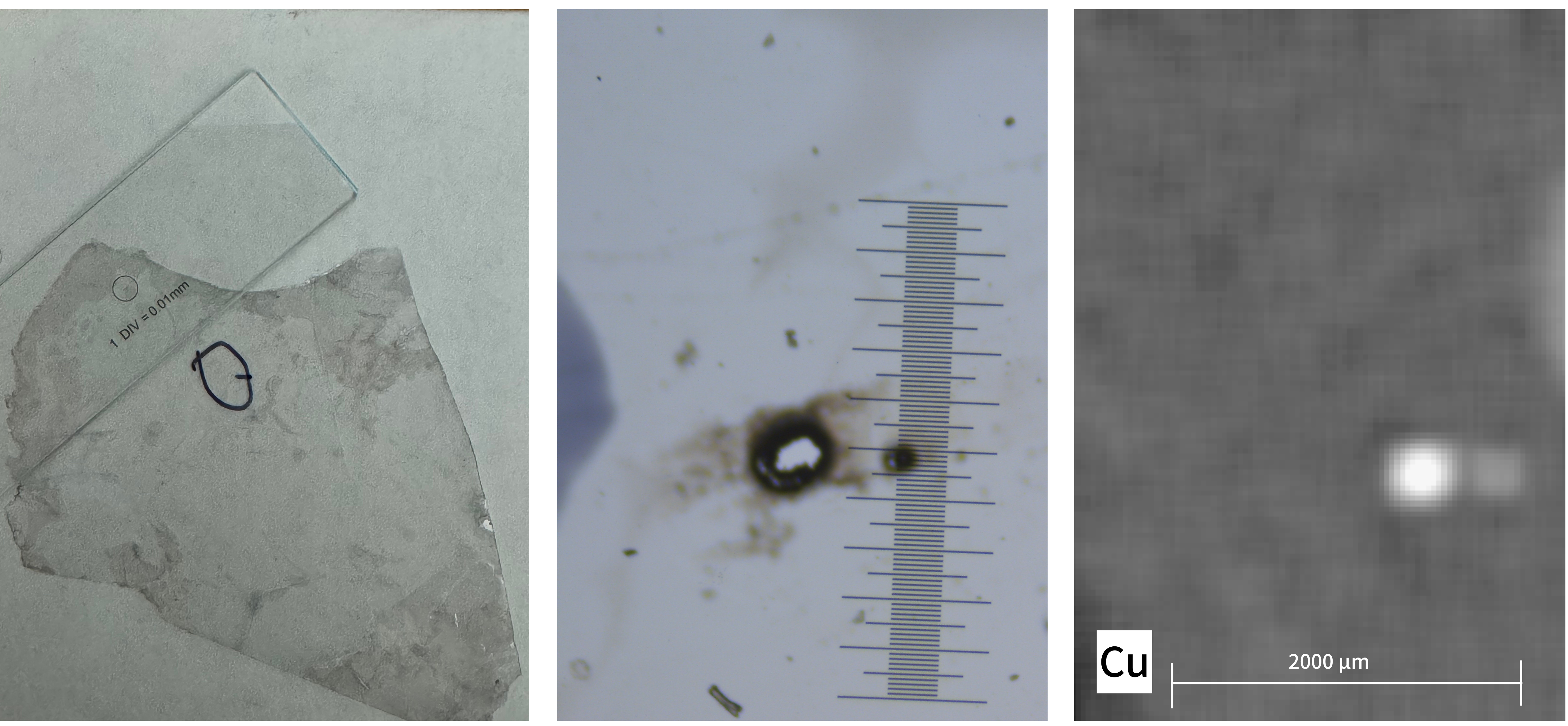
Fig 5: From left to right, three views of the same calibration sample. Left: wide-field photo-
Limitations
- SRIM simulations become inaccurate for composite radii above ~1 nm due to breakdown of unchanged lattice assumption and neglect of bulk atomic motions.
- Thermal diffusion and annealing histories assumed constant or simplified; geological thermal histories can be complex and variable, potentially affecting track retention.
- Experimental readout sensitivity limited to melt track radii above ~25 μm, leaving smaller composite tracks below detection threshold with current techniques.
- Model assumes instantaneous energy deposition and idealized uniform composite structure; real composite dark matter may exhibit more complex interactions or morphologies.
- No adversarial or noise robustness evaluation of readout method; background discrimination primarily relies on unique track morphology assumptions.
- Geological sample provenance and dating constrained to limited sites; applicability to broader mineral datasets remains untested.
Open questions / follow-ons
- Can the XRF detection sensitivity be further improved to detect sub-micron or sub-25 µm melt tracks, enabling smaller composite dark matter regimes to be probed?
- How do complex geological thermal histories, including episodic heating and tectonic events, affect long-term track retention and annealing in muscovite mica?
- What are the effects of other lattice impurities, crystal defects, or mineralogical heterogeneities on melt track formation and XRF readout fidelity?
- Can alternate paleodetector minerals or composite dark matter models with more complex scattering behavior be integrated into the thermal spike and readout framework?
Why it matters for bot defense
While this work addresses a scientific detection problem well outside typical bot-defense or CAPTCHA application domains, its core innovation in scalable, high-throughput X-ray fluorescence readout of micron-scale damage over macroscopic areas may analogously inspire advanced imaging or non-invasive detection techniques in CAPTCHA adversarial environments. The detailed modeling of localized energy deposition and readout thresholds could conceptually inform detection of subtle physical or hardware anomalies caused by bots or automated systems at micro scale. However, the direct applicability to CAPTCHA security or bot defense is limited given the radically different threat models and technological aims. The work does exemplify the critical role of rigorous modeling combined with experimental calibration to achieve robust identification of rare and subtle signals, a principle broadly valuable in security-oriented anomaly detection.
Cite
@article{arxiv2606_02579,
  title={ New Windows on Heavy Dark Matter: Mineral Melt Modelling and X-Ray Readout for Muscovite Mica },
  author={ Yilda Boukhtouchen and Joseph Bramante and Andrew Buchanan and Alexander Hayes and Matthew Leybourne and Jennika McIntosh and Anupam Ray and Aaron Shugar },
  journal={arXiv preprint arXiv:2606.02579},
  year={ 2026 },
  url={https://arxiv.org/abs/2606.02579}
}