
Three-dimensional orbital-free density functional theory description of nuclear pasta in the inner crust of neutron stars
Source: arXiv:2605.28783 · Published 2026-05-27 · By Yo Nakamura, Kazuyuki Sekizawa
TL;DR
This paper addresses the computational challenges of systematically modeling nuclear pasta phases that form in the inner crust of neutron stars. Nuclear pasta refers to various complex, often crystalline, nuclear matter morphologies emerging under extreme densities. Fully microscopic three-dimensional Kohn-Sham density functional theory (KS-DFT) calculations have prohibitive computational costs, limiting their systematic application across wide parameter spaces. To overcome this, the authors propose a self-consistent orbital-free density functional theory (OF-DFT) approach using the extended Thomas-Fermi (ETF) approximation applied up to second order in \hbar-expansion for the Skyrme energy density functional (EDF). This "self-consistent ETF (SC-ETF)" method avoids explicit orbital calculations by expressing the energy purely in terms of local neutron and proton densities and their gradients. Using a gradient descent solver on 3D Cartesian grids with periodic boundary conditions, they efficiently compute pasta structures without pre-assuming geometric forms.
Their results reproduce standard pasta shapes (spheres, rods, slabs) consistent with previous studies, and uncover more exotic configurations such as bending and connected rods, and slabs with holes in transitional density regions. Numerical stability and convergence depend sensitively on the choice of EDF parameters and grid spacing. Benchmarking against finite nuclei (40Ca) reveals a stability hierarchy of Skyrme parameter sets. The SC-ETF framework provides a promising route for large-scale, nonempirical exploration of nuclear pasta properties at vastly reduced cost compared to orbital-based DFT, with potential for future extensions to finite temperature and improved EDF quality.
Key findings
- The SC-ETF method efficiently solves 3D OF-DFT equations for nuclear pasta using gradient descent with periodic boundary conditions on boxes sized 16^3 to 40^3 fm^3.
- Standard pasta morphologies emerge self-consistently from random initial neutron/proton density seeds across relevant densities without assuming parametrized shapes.
- Exotic pasta shapes such as bending/connected rod structures and slabs with holes appear near phase transition regions between conventional pasta phases.
- Numerical stability of SC-ETF is sensitive to mesh spacing and Skyrme EDF: parameter sets T6 and RATP yield stable convergent results over Δx ∈ [0.4,2.0] fm, while SLy4 becomes unstable at Δx ≈ 1.1 fm.
- Total energy calculations for 40Ca under various EDFs demonstrate that smaller effective mass and certain density-dependent terms correlate with instability and oscillatory numerical artifacts.
- Short-wavelength density oscillations emerge inside nuclei with some EDFs (e.g., SLy4) at fine grids, indicating energy gain from unphysical oscillations triggering instability.
- The SC-ETF approach does not require parametrized density profiles, enabling discovery of more complex pasta microstructures missed by previous parametrized ETF methods.
- SC-ETF enforces β-equilibrium and charge neutrality via self-consistent inclusion of electron kinetic and Coulomb energy functionals.
Methodology — deep read
The paper addresses modeling nuclear pasta phases within neutron star inner crusts—complex structures formed by nucleons under extreme densities. The goal is to develop an efficient non-empirical method to simulate these three-dimensional configurations without prohibitively expensive orbital calculations.
Threat Model & Assumptions: The physical system simulated is nucleons (neutrons and protons) in beta equilibrium, submerged in an electron background, arranged in periodic boundary conditions mimicking infinite nuclear pasta lattices. The model assumes zero temperature and focuses on ground state density distributions minimizing total energy. Quantum shell effects are approximated via a semiclassical expansion. The adversarial perspective is irrelevant here.
Data: No experimental data used. Numerical "data" are initial density distributions (random or Woods-Saxon for finite nuclei benchmarks) on uniform 3D Cartesian grids with mesh spacings Δx typically from 0.4 to 2.0 fm and cubic volumes from (16 fm)^3 to (40 fm)^3. Outputs are optimal neutron and proton density functions obtained by energy minimization.
Architecture / Algorithm: The energy is modeled by a second-order extended Thomas-Fermi energy density functional derived from Skyrme EDFs, which depends on local neutron and proton densities and gradients but does not require orbitals, i.e., orbital-free DFT (OF-DFT). The key functional components include kinetic, nuclear interaction, Coulomb, and electron kinetic energy terms. The functional derivatives yield Euler-Lagrange equations reminiscent of Schrödinger-like equations for real-valued amplitude functions φ_n(r), φ_p(r) whose squares give densities. These nonlinear equations incorporate effective masses, spin-orbit terms, and Coulomb potentials.
Training Regime: Numerical solution employs a gradient descent method on discretized 3D grids. Starting from initial guesses, iteratively update φ_q(r) by subtracting scaled functional derivatives of the energy, enforcing normalization for fixed nucleon numbers. The step size parameter Δτ controls convergence speed. Calculations are performed on computational boxes with periodic boundary conditions for pasta and isolated boxes for finite nuclei benchmarks. Mesh spacings and EDF parameter sets are varied to study numerical stability.
Evaluation Protocol: Stability and convergence are evaluated by variance of Hamiltonian operators applied to the φ_q(r) functions reaching below 10^{-10} MeV^2. Energy minimization is checked for physical validity by comparing total energies and density profiles against known nuclear data (e.g., 40Ca nucleus). Pasta structures identified by visualizing final density distributions for different average densities. The authors compare results between 22 different Skyrme EDF parameter sets to understand numerical stability and physical realism.
Reproducibility: The paper does not explicitly mention public code release or frozen weights; the Skyrme EDFs employed are standard from literature. The methodology is detailed enough to reproduce with suitable numerical solvers for nonlinear PDEs on 3D grids.
A Concrete Example: For 40Ca (benchmark finite nucleus), start from Woods-Saxon density profiles, discretize in a box ~253 fm^3 with mesh spacing Δx, and apply SC-ETF gradient descent iterations updating φ_q(r) functions. Depending on EDF and Δx, the solution converges to physically meaningful density distributions and total energies. Mesh spacing controls numerical stability; e.g., SLy4 EDF diverges for Δx <~1.1 fm due to unphysical oscillations.
For nuclear pasta, random initial densities on 3D boxes with periodic boundary conditions are evolved similarly, resulting in emergence of pasta phases without preset geometric assumptions, demonstrating method feasibility and efficiency.
Technical innovations
- Development of a fully self-consistent 3D orbital-free density functional theory (OF-DFT) solver for nuclear pasta using second-order extended Thomas-Fermi (ETF) expansion of Skyrme EDF.
- Implementation of a gradient descent numerical method to solve coupled nonlinear Euler-Lagrange equations directly for neutron and proton density amplitudes on 3D uniform grids without parametrized density shapes.
- Demonstration that nuclear pasta complex morphologies, including exotic transitional structures, emerge naturally from minimization without prior assumptions on shape.
- Extensive numerical stability analysis across 22 Skyrme EDF parameter sets identifying criteria (such as effective mass) impacting convergence and physical realism.
Baselines vs proposed
- Parametrized ETF method: captures standard pasta shapes but misses exotic topologies—SC-ETF: discovers additional complex pasta configurations.
- Skyrme EDF T6 (m*/m=1): stable convergence across mesh sizes Δx=0.4–2.0 fm with smooth density distributions vs SLy4 (m*/m=0.7): instability occurs for Δx ≤ 1.1 fm accompanied by oscillatory artifacts.
- Finite nucleus 40Ca total energy (MeV) with T6 EDF at Δx=1.2 fm: −367.15 vs SLy4 EDF: −733.46, indicating significant differences in binding energies and stability behavior.
Figures from the paper
Figures are reproduced from the source paper for academic discussion. Original copyright: the paper authors. See arXiv:2605.28783.
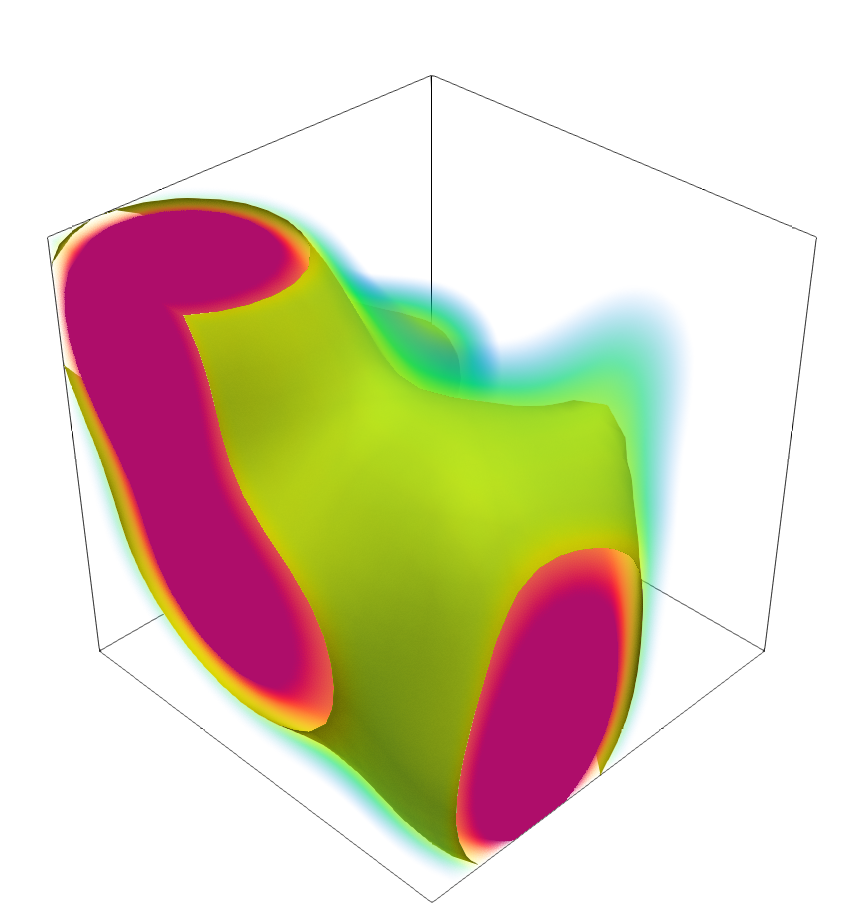
Fig 4: Nucleon density distributions during the gradient descent iterations for the same calculations shown in Fig. 3. The top row corresponds
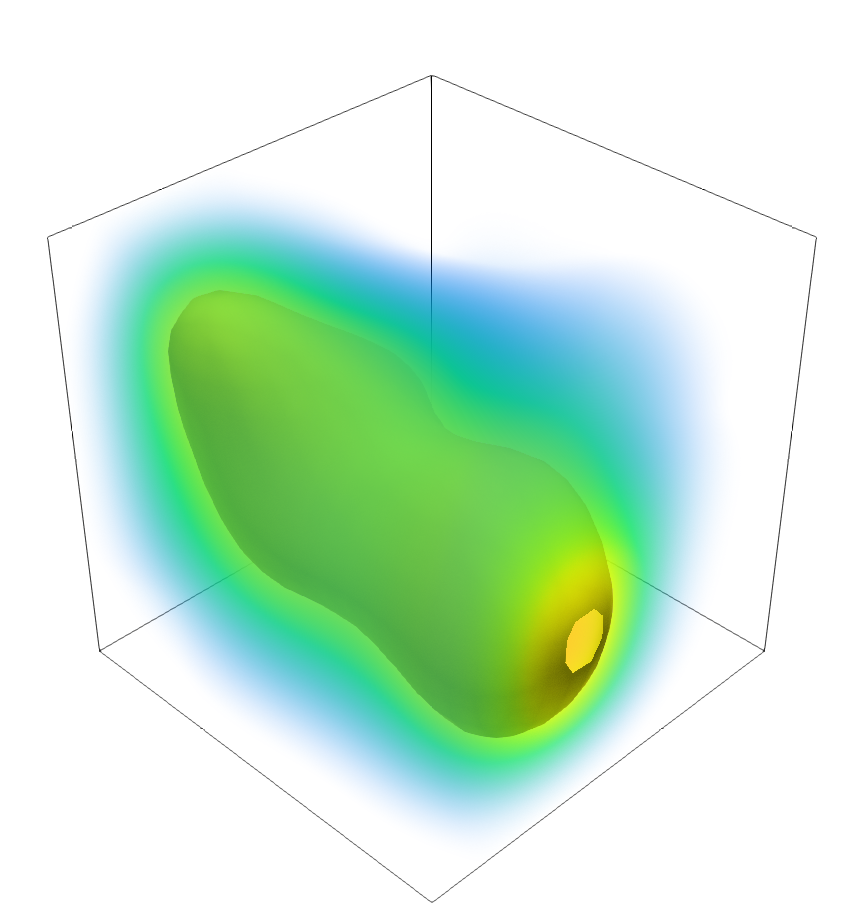
Fig 3: for µ = 11 MeV with SkM∗EDF. In the figure, Ω, de-
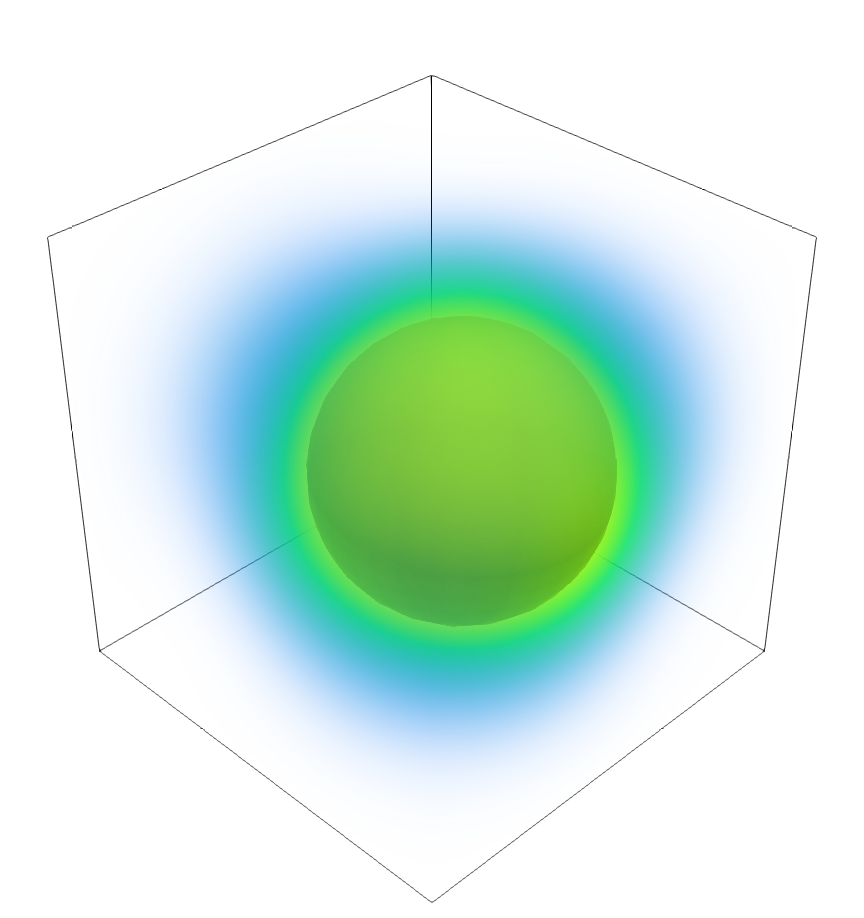
Fig 5: A stacked bar chart displaying classified pasta configura-
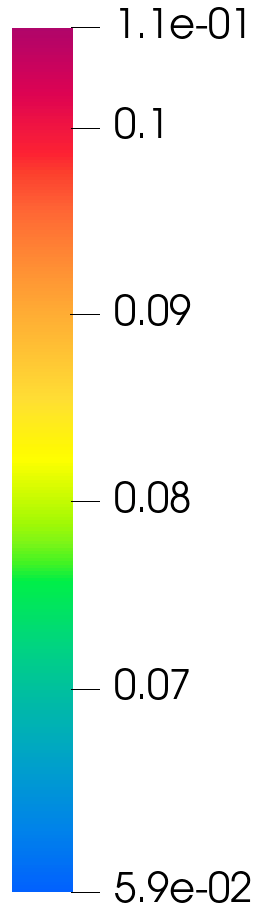
Fig 6: Same as Fig. 5(a), but for the results of SC-ETF calculations
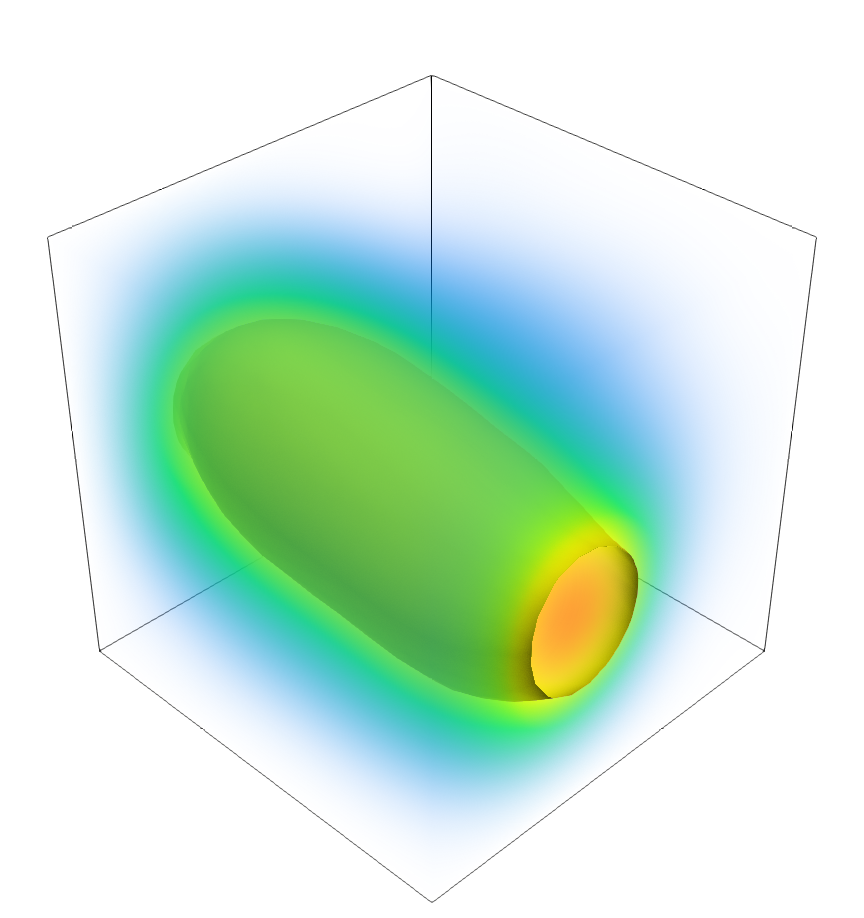
Fig 7: Examples of density distributions which are not usually considered as nuclear pasta shapes. Results with L = 24fm are shown from (a)
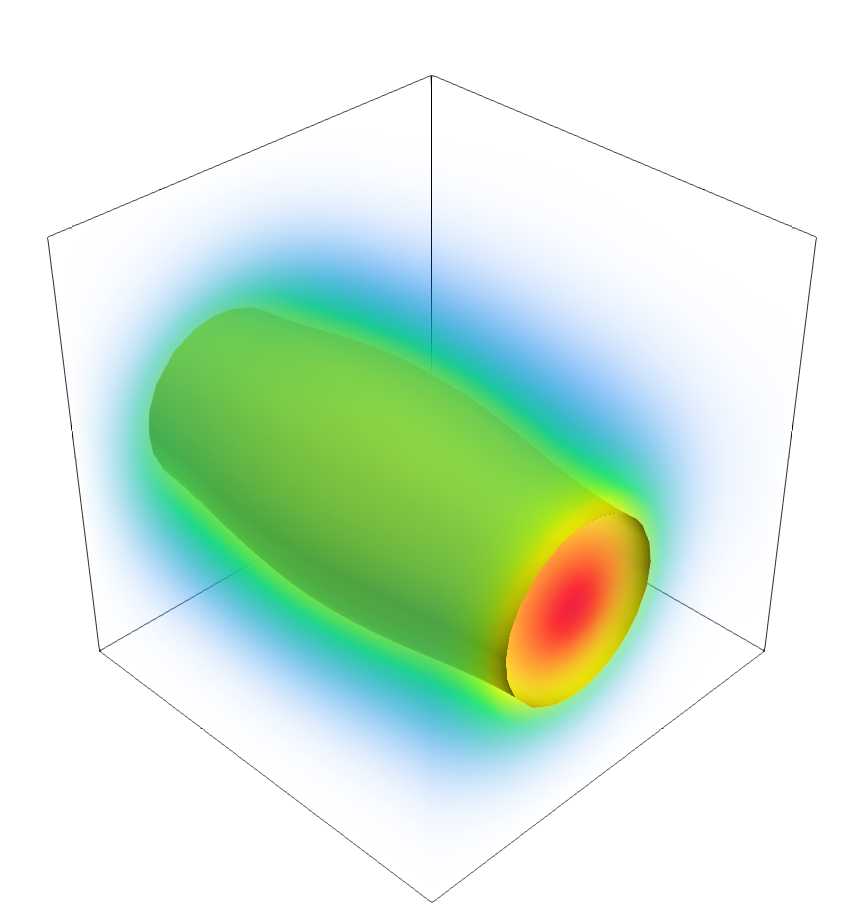
Fig 8: Same as Fig. 6, but for the results of SC-ETF calculations
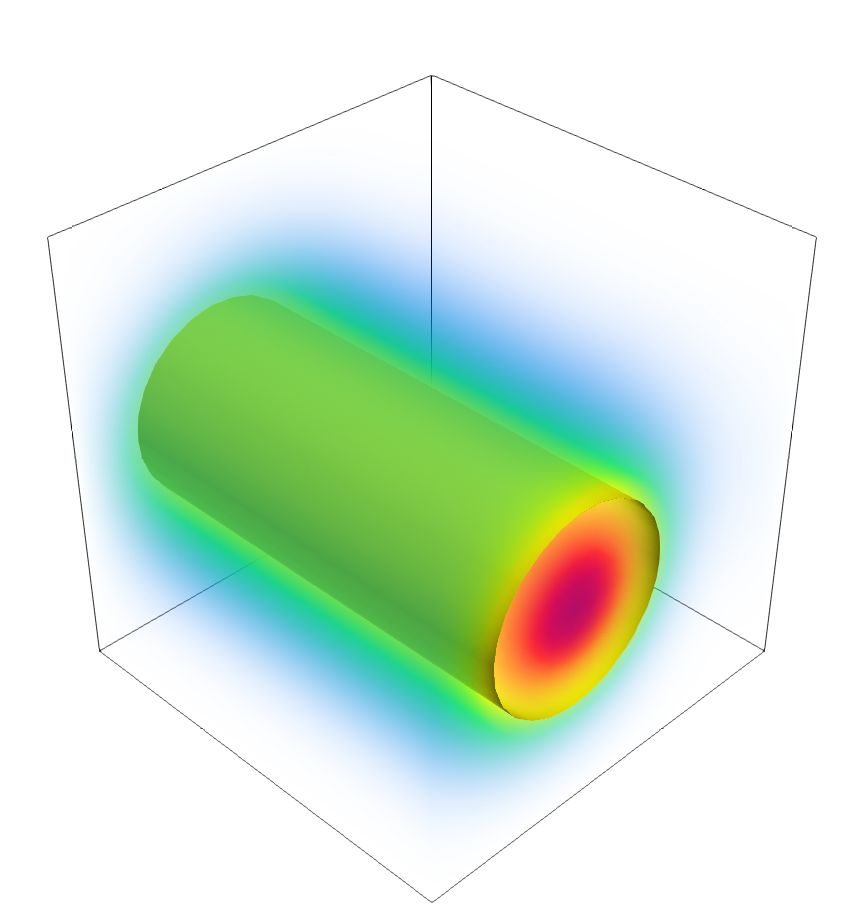
Fig 7 (page 10).
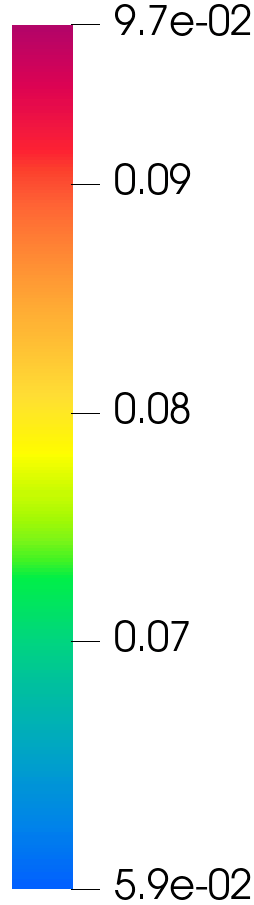
Fig 8 (page 10).
Limitations
- Neglects finite temperature effects; calculations are limited to zero-temperature ground states.
- Shell effects beyond second-order semiclassical expansions are omitted; higher-order corrections could refine results but increase complexity.
- Some Skyrme EDF parameter sets lead to numerical instabilities or unphysical oscillations depending on mesh spacing.
- Electron background treated as uniform relativistic gas; ignoring possible electron density perturbations may miss subtle screening effects.
- No explicit treatment of neutron/proton pairing correlations which affect superfluidity and superconductivity in neutron star crusts.
- Lack of direct benchmarking against fully orbital-based KS-DFT or experimental neutron star observations limits direct validation.
Open questions / follow-ons
- How can higher-order semi-classical corrections (e.g., ¯h^4 terms) improve the accuracy and stability of OF-DFT calculations for nuclear pasta?
- How does finite temperature affect the stability and morphology of nuclear pasta configurations in SC-ETF calculations?
- Can machine learning approaches help to incorporate quantum shell effects more accurately into orbital-free EDFs for neutron star matter?
- What is the impact of including pairing correlations and superfluidity on the predicted pasta structures within SC-ETF?
Why it matters for bot defense
While this paper does not directly focus on bot defense or CAPTCHA technologies, the methodological advances in efficiently solving complex nonlinear PDEs on 3D grids and discovering complex emergent structures from minimal assumptions may inspire analogous approaches in bot-defense research. For instance, self-consistent field approaches and orbital-free functional methods exemplify reducing computational overhead while maintaining fidelity, a desirable trait for real-time detection and classification systems. Additionally, the gradient descent solver for coupled nonlinear systems with stability-sensitive numerical parameters may inform robust training or optimization procedures in dynamic, adversarial environments common in CAPTCHA design and bot detection frameworks.
Cite
@article{arxiv2605_28783,
  title={ Three-dimensional orbital-free density functional theory description of nuclear pasta in the inner crust of neutron stars },
  author={ Yo Nakamura and Kazuyuki Sekizawa },
  journal={arXiv preprint arXiv:2605.28783},
  year={ 2026 },
  url={https://arxiv.org/abs/2605.28783}
}