
Looking into the faintEst WIth MUSE (LEWIS): Exploring the nature of ultra-diffuse galaxies in the Hydra-I cluster. VI. A star-forming UDG in Hydra I: a rare UDG or a transition phase?
Source: arXiv:2605.27109 · Published 2026-05-26 · By Luca Rossi, Chiara Buttitta, Goran Doll, Enrichetta Iodice, Marco Gullieuszik, Marc Sarzi et al.
TL;DR
This paper presents an in-depth spectroscopic and morphological study of UDG 6, a gas-rich star-forming ultra-diffuse galaxy (UDG) member of the Hydra I cluster, using MUSE integral field data from the LEWIS survey. UDG 6 is unique among the LEWIS UDG sample for hosting strong ionised gas emission lines indicative of ongoing star formation. The authors characterize the stellar and gas morphology, kinematics, and stellar populations via spectral fitting and spatially-resolved emission line analysis. They find UDG 6 has an elongated and regular shape, contains dust and metal-poor ionised gas, and shows multiple local star-forming regions evidenced by emission line maps and BPT diagnostics. The galaxy shows coherent gas rotation despite hints of tidal disturbance, and an arc-like tidal feature is detected in unsharp-masked images. These results suggest UDG 6 represents a rare transitional stage of a "puffed-up dwarf" galaxy environmentally processed by tidal interactions triggering localized star formation without disrupting its rotation. This detailed case study provides new constraints on the formation and evolution channels of UDGs in dense cluster environments.
Key findings
- UDG 6 is the only gas-rich, star-forming UDG with significant ionised gas emission lines in the LEWIS Hydra I sample.
- Systemic stellar velocity Vsys,* = 3584 ± 15 km/s and gas velocity Vsys,gas = 3559 ± 1 km/s, showing consistent co-rotation.
- Dust extinction AV = 1.2 ± 0.5 mag and electron density log10(ne) = 2.2 ± 0.3 cm⁻³ measured from Balmer decrement and [S II] flux ratios.
- Gas-phase metallicity 12 + log(O/H) = 7.7 ± 0.2 dex, indicating metal-poor ionised gas.
- Star formation rate SFR = (1.9 ± 0.1) × 10⁻³ M⊙/yr and specific SFR sSFR = (7 ± 3) × 10⁻¹¹ yr⁻¹ estimated from dust-corrected H alpha luminosity.
- Stellar population fitting indicates underlying old-to-intermediate age stars (≳3 Gyr) with poorly constrained metallicity.
- Unsharp masking reveals an arc-like tidal feature possibly caused by interaction with nearby lenticular galaxy HCC 005.
- 2D gas kinematics show a smooth velocity gradient consistent with coherent rotation despite environmental tidal perturbations.
Threat model
UDG 6 exists in a dynamically active cluster environment where tidal forces from neighboring galaxies and the cluster potential can perturb and strip gas and stars. The challenges are to observe and measure intrinsic stellar and gas kinematics, star formation, and morphology despite these environmental effects. The adversary is thus the external cluster environment capable of disturbing or quenching the galaxy, but the galaxy remains observable with coherent rotation and emission lines. No direct tests of malicious or synthetic adversaries were part of this astrophysical study.
Methodology — deep read
The study’s threat model concerns environmental effects acting on UDGs within a cluster; the main adversary is tidal disruption and gas stripping by neighboring cluster members, but the intrinsic stellar and gas components remain observable.
Data derive mainly from ESO VLT MUSE integral field spectroscopy under the LEWIS large programme targeting UDGs in Hydra I, complemented by deep optical imaging from the VST VEGAS survey and near-infrared VIRCAM@VISTA H-band data for stellar mass estimates. UDG 6 was observed with total exposure of 2.25 hours over three nights, with spatial sampling of 0.2 arcsec pixels and a spectral range 4800-9300 Å at ~2.5 Å resolution.
They reconstructed white-light images from the MUSE cube for isophotal analysis using photutils ellipse fitting, measuring geometric parameters (ellipticity ~0.6, position angle 65°) and defining apertures for spectral extraction. Unsharp masking with Gaussian kernels revealed small-scale features including a faint arc-like tidal structure.
Spectroscopy was analyzed by co-adding spaxels within elliptical apertures. The pPXF software was used for full spectral fitting to derive stellar and gas kinematics and to decompose emission lines. For the stellar component, E-MILES SSP templates were fitted accounting for velocity, dispersion, and polynomial corrections. Gas emission lines were fitted with Gaussian templates constrained by Balmer decrement and theoretical line ratios.
Stellar population ages and metallicities were derived by regularized fits restricted to 4800-5500 Å due to weak absorption features, testing robustness against polynomial continua and masking effects. Star-forming region diagnostics utilized continuum-subtracted emission line maps (Hα, Hβ, [O III], [S II]) extracted from the MUSE cube. Extinction and electron density were estimated from Balmer decrement and sulfur line flux ratios respectively, using established calibrations.
They computed the star formation rate from dust-corrected Hα luminosity using the Kennicutt (1998) relation. Gas-phase metallicities used Dopita et al. (2016) calibrations from emission line ratios.
Spatially-resolved gas kinematics maps were generated by Voronoi binning to reach S/N thresholds, revealing coherent rotation structures.
The evaluation protocol included fitting parameters uncertainties from 500 Monte Carlo perturbations, consistency checks across polynomial continuums, and cross-validation with photometric colors and velocity dispersion scalings. No adversarial or simulated environmental models were tested, limiting interpretation to empirical scenarios.
Data reduction used esoreflex MUSE pipeline with ZAP sky subtraction, but strong sky residuals in the red spectral region limited interpretation beyond 7000 Å. The stellar velocity dispersion measurement was unreliable due to faint absorption features.
Code and data availability are not explicitly stated, but LEWIS is an ESO Large Programme with public releases planned. The complex multi-component fitting methodology is replicable given the description and use of standard tools (pPXF, photutils). An example end-to-end case is analyzing the stacked spectrum within the Reff aperture, fitting emission+stellar components, extracting velocities, and calculating star formation rate and metallicity from line ratios.
Technical innovations
- Use of integral field spectroscopy with MUSE to spatially resolve faint emission line structures in a low surface brightness UDG.
- Application of combined stellar + multi-component gas emission spectral fitting with pPXF incorporating theoretical line ratio constraints for improved gas kinematics.
- Unsharp masking on spectrally-defined narrow bands to isolate tidal features associated with emission line gas distinct from stellar continuum.
- Robust dust extinction and electron density estimates in a diffuse galaxy environment leveraging Balmer decrements and sulfur line diagnostics.
Datasets
- LEWIS MUSE data on UDG 6 in Hydra I cluster — 2.25 hr total exposure — ESO Large Programme 108.222P
- VEGAS VST optical imaging — deep multi-band photometry of Hydra I region
- VIRCAM@VISTA H-band imaging — independent stellar mass constraints
Baselines vs proposed
- Gas velocity dispersion σLOS,gas = 18 ± 1 km/s compared to stellar dispersion unconstrained; rotation velocity consistent within ±15 km/s.
- Dust extinction AV = 1.2 ± 0.5 mag vs Milky Way foreground AV = 0.217 mag indicating significant internal dust.
- Star formation rate SFR = (1.9 ± 0.1) × 10⁻³ M⊙/yr consistent with low but measurable active star formation vs typical quenched cluster UDGs with SFR ~0.
- Gas-phase oxygen abundance 12 + log(O/H) = 7.7 ± 0.2 dex showing lower metallicity compared to typical massive galaxies (~8.7 dex).
Figures from the paper
Figures are reproduced from the source paper for academic discussion. Original copyright: the paper authors. See arXiv:2605.27109.
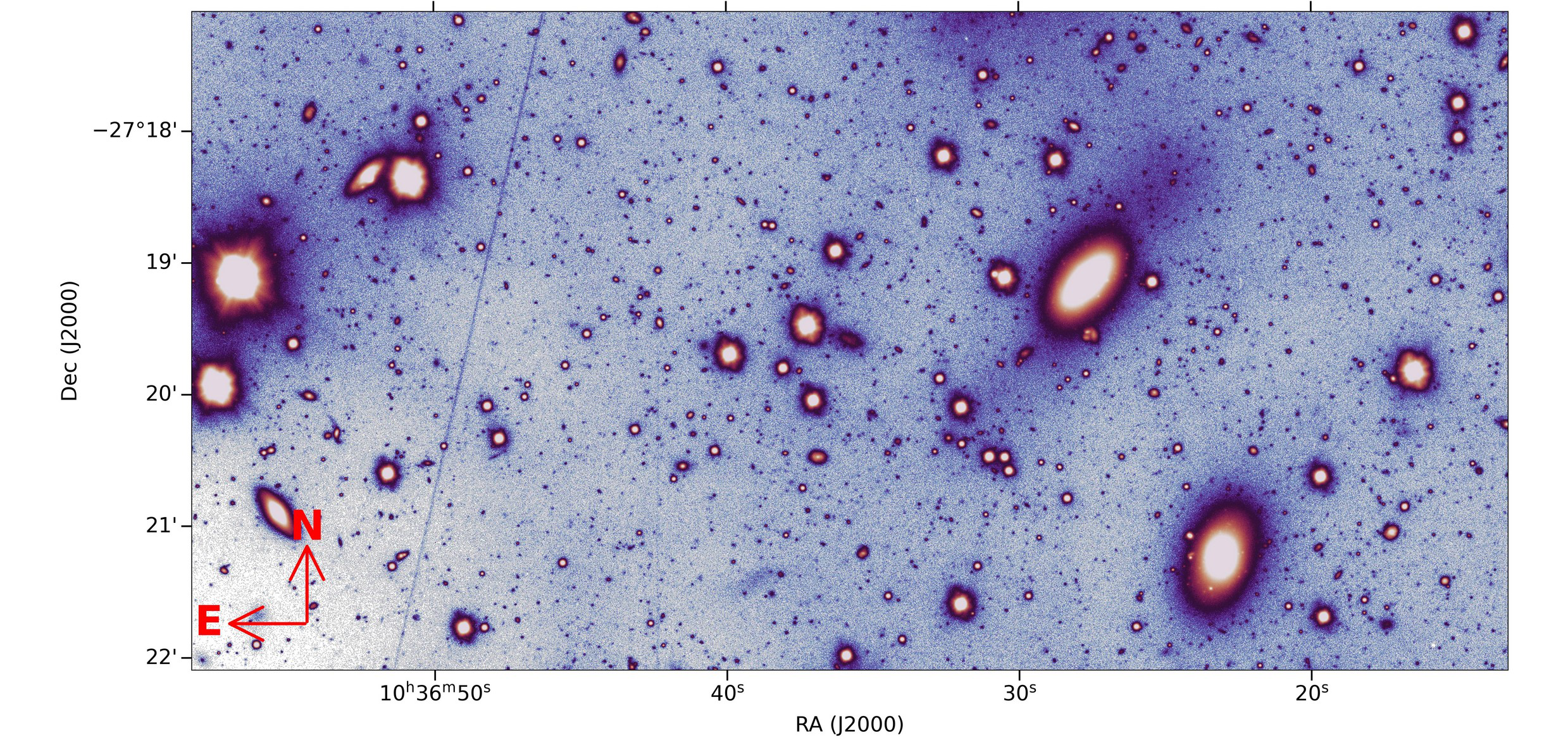
Fig 1: OmegaCAM@VST r-band image of the North group of the Hydra I cluster, adapted from ESO/INAF/M. Spavone, E. Iodice.
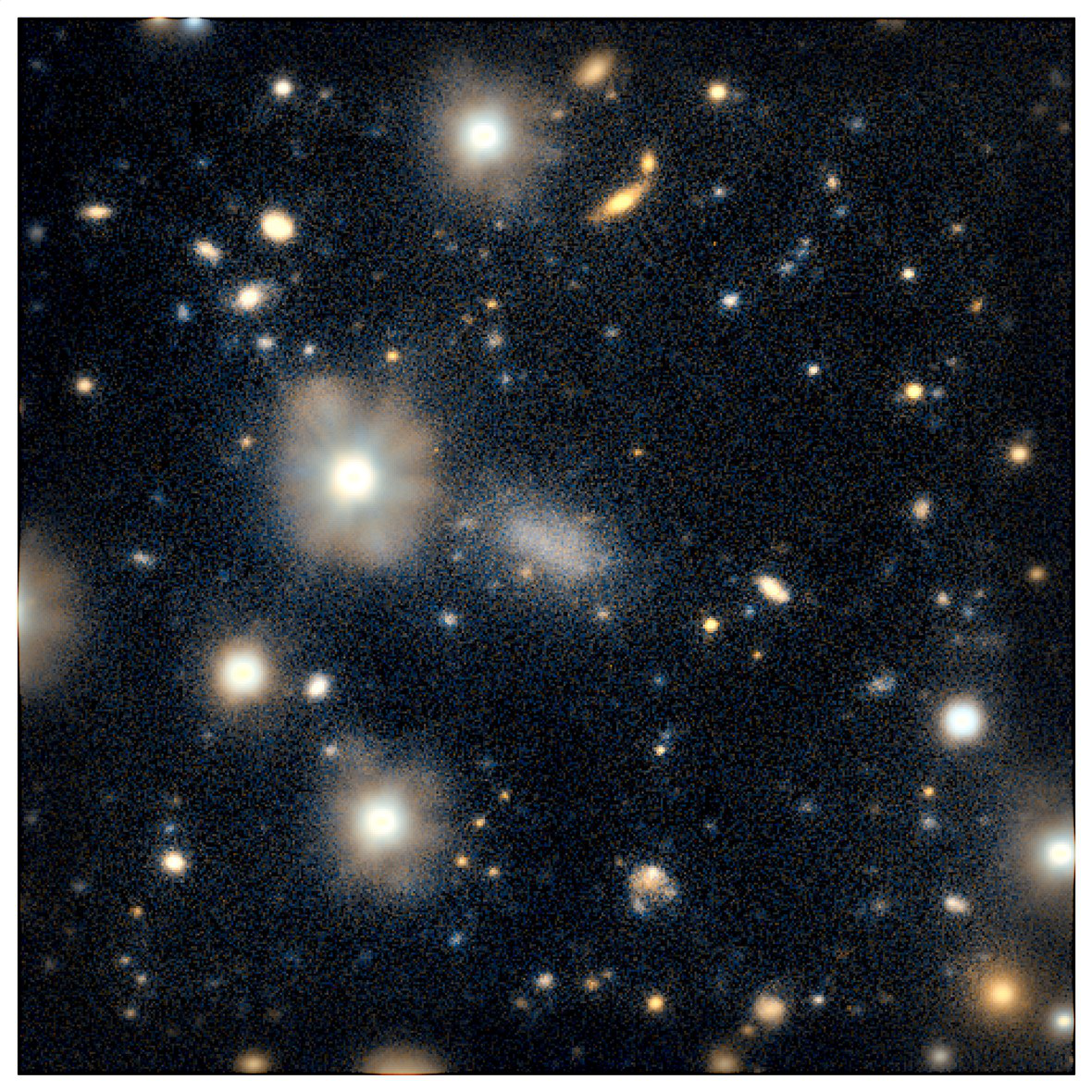
Fig 2: Isophotal analysis of UDG 6. Top panels: MUSE reconstructed white image of UDG 6 with contours (left), bi-dimensional
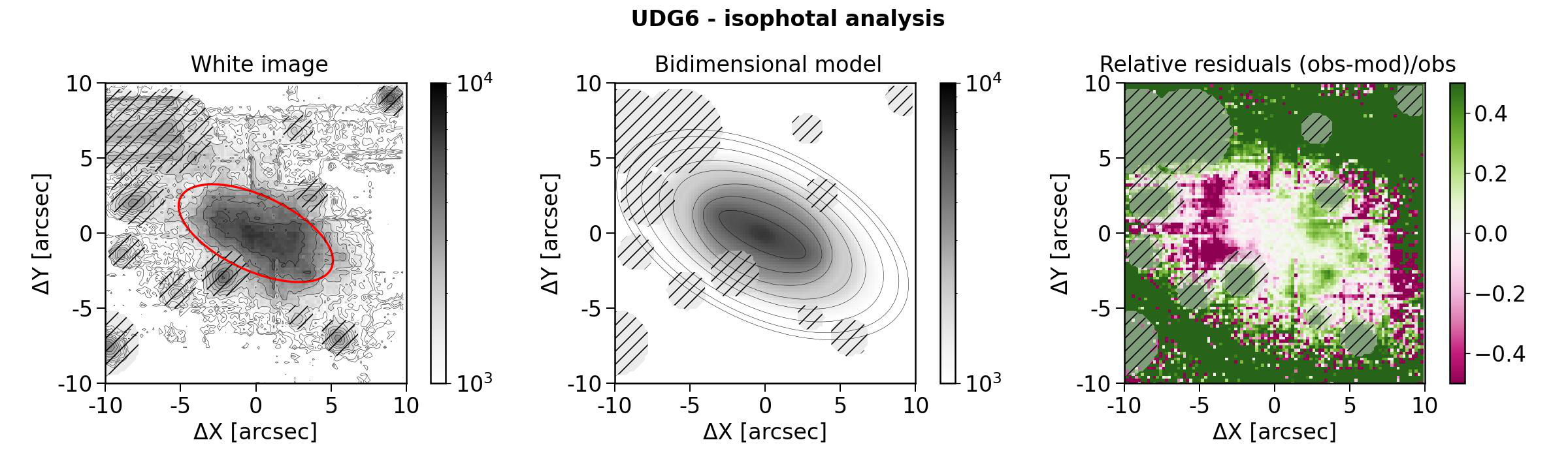
Fig 3: Unsharp mask of UDG 6. Total white image (4800 < λ < 9200 Å, left), blue image (4800 < λ < 7000 Å, centre), and red
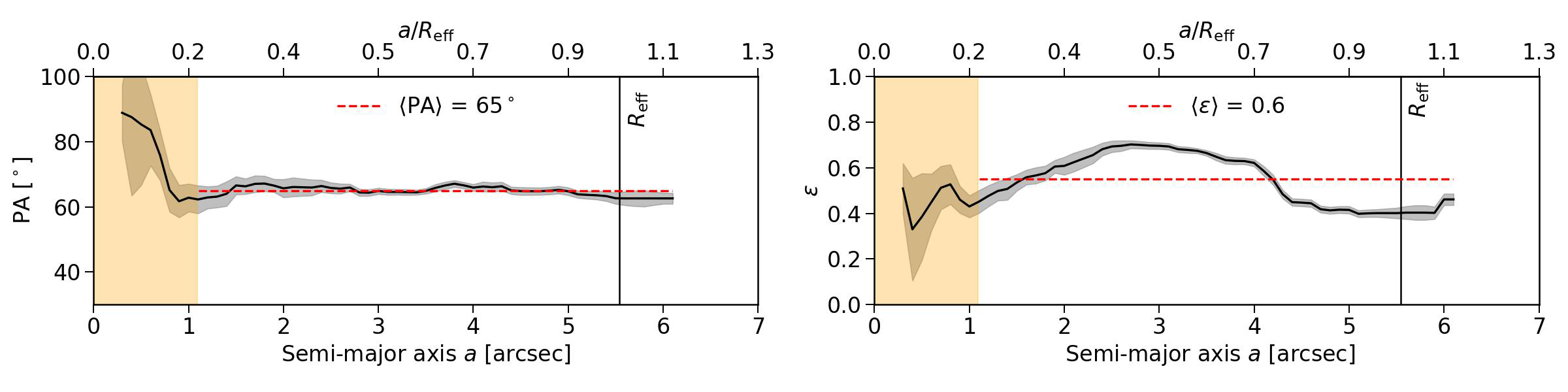
Fig 4: Stacked spectrum of UDG 6 with its best-fit. Top row: the stacked spectrum is shown as a black line, and the best-fit obtained
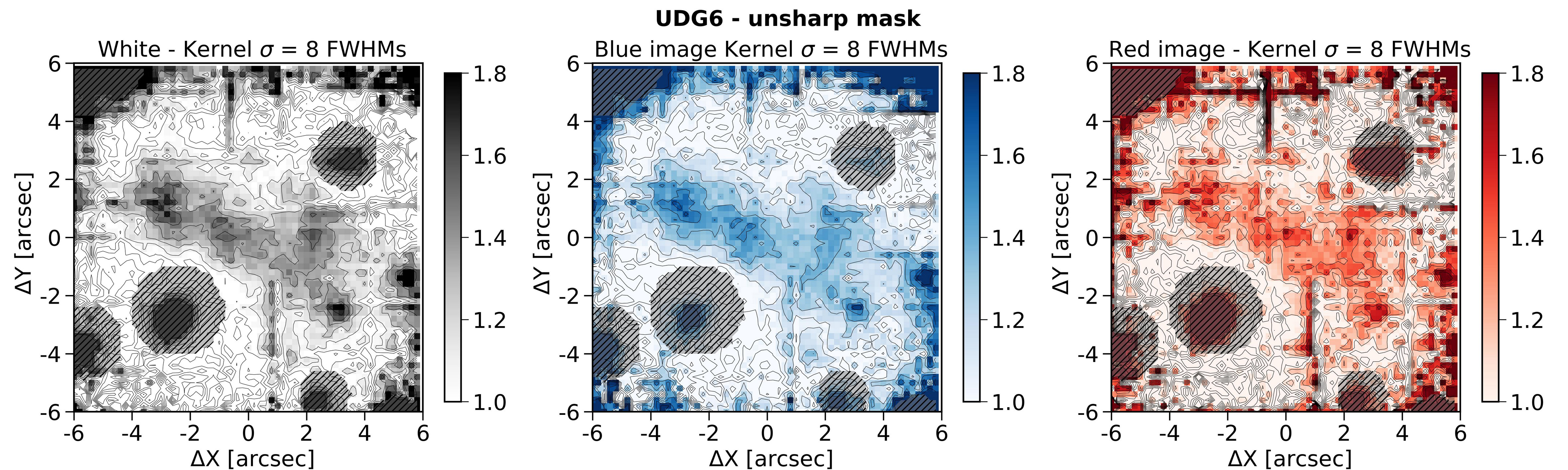
Fig 5: Stellar population analysis of 1D stacked spectrum of UDG 6. Each panel shows the distributions of the stellar population
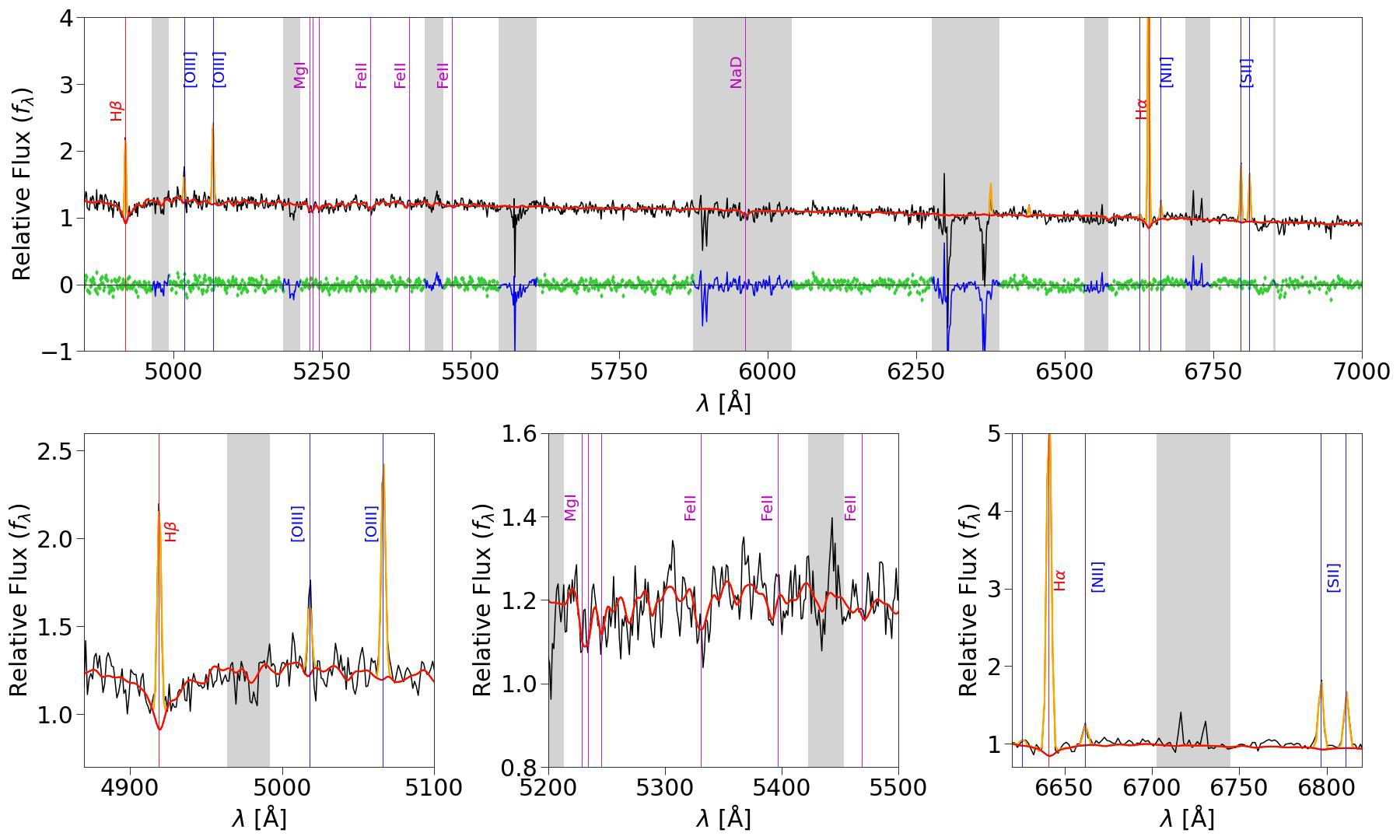
Fig 6: Emission lines analysis of UDG 6. Left panel: the MUSE reconstructed image (grey) superimposed with contours of H α and
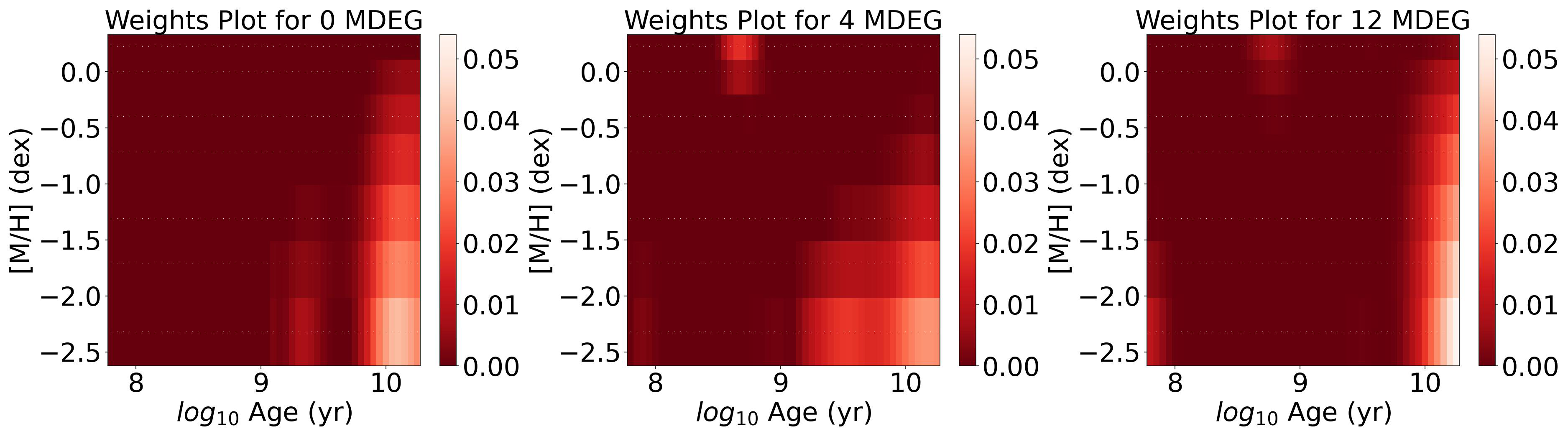
Fig 7: BPT diagram (Baldwin et al. 1981). The red circle is the
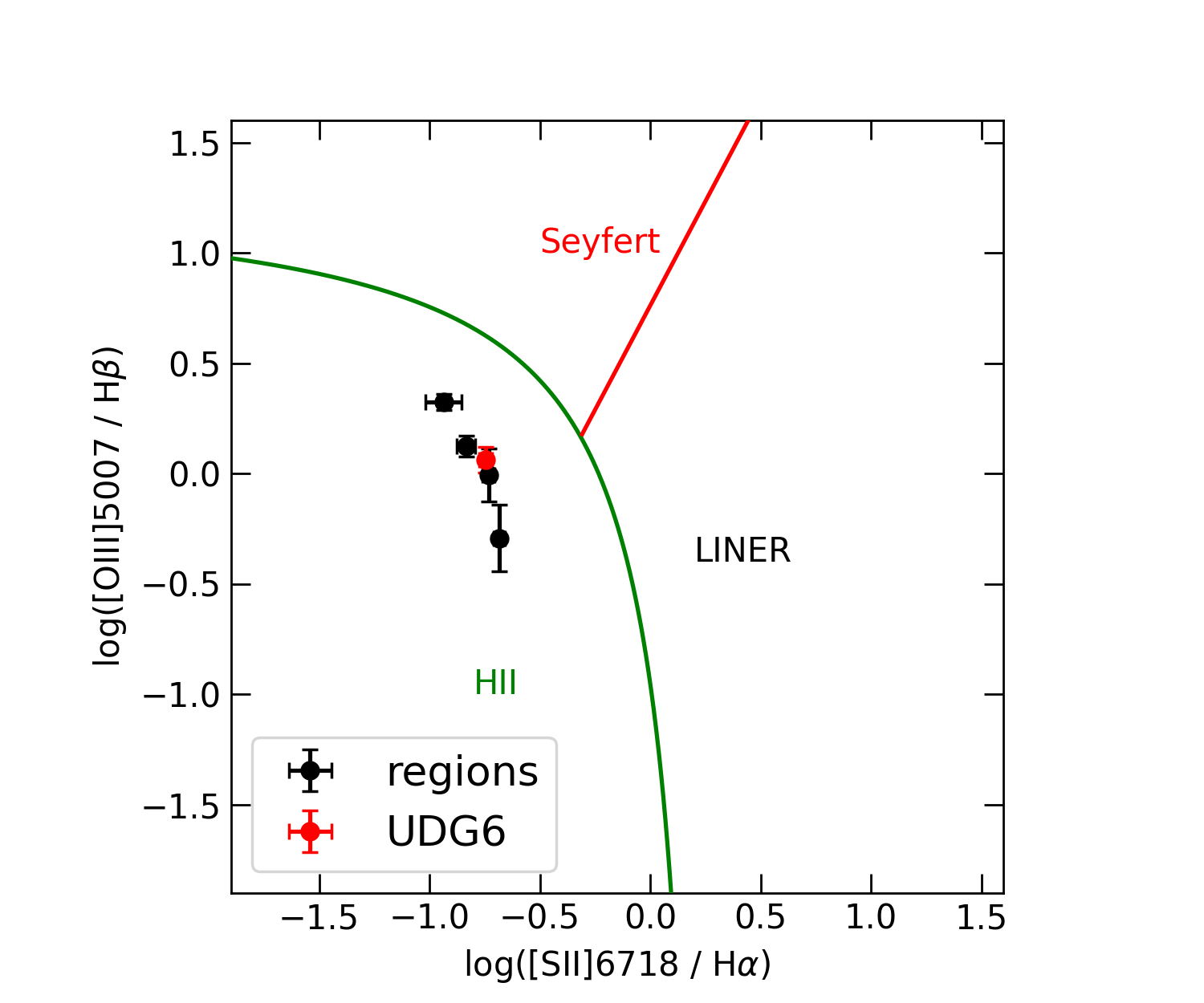
Fig 8: Spatially-resolved gas kinematics of UDG 6. Left panel: Voronoi-binned map of the S/N. Central panel: ionised gas velocity
Limitations
- Stellar velocity dispersion measurement is unreliable due to weak absorption features and noisy spectral regions.
- Metallicity estimate of the stellar population is poorly constrained, insensitive to spectral fitting with polynomial continuum variations.
- No direct neutral HI gas observations included, limiting total gas content assessment.
- Analysis limited to integrated and partial spatial resolution; full 3D dynamics and mass modeling not performed.
- No simulation-based modeling or adversarial tests to validate tidal interaction or gas stripping scenarios.
- SFR estimate does not account for obscured star formation although internal dust is significant; infrared data lacking.
Open questions / follow-ons
- What is the detailed timescale and mechanism by which tidal interactions trigger localized star formation without disrupting gas rotation in UDGs like UDG 6?
- How common are gas-rich, star-forming UDGs in cluster environments, and are they always transitional stages toward quiescence?
- Can deep neutral hydrogen observations complement ionised gas data to fully constrain gas removal and replenishment processes in cluster UDGs?
- How do internal dust content variations affect star formation and spectral fitting constraints in low surface brightness diffuse galaxies?
Why it matters for bot defense
While this astrophysics study is not directly related to bot-defense or CAPTCHA technology, it demonstrates advanced techniques in extracting faint signals from noisy data using integral field spectroscopy combined with multi-component spectral modeling and spatially resolved diagnostics. Practitioners of bot-defense could analogously consider multi-source signal decomposition and sophisticated feature extraction under low signal-to-noise conditions. The use of spectral line diagnostics to identify distinct populations within an overall noisy background may inspire analogous techniques in behavioral signal analysis or anomaly detection in security systems. Environmental perturbations causing subtle but measurable changes could also loosely parallel adversarial influence on interaction patterns that CAPTCHAs aim to detect. Overall, the detailed approach to resolving weak signals and disentangling overlapping contributions offers a methodological analogy to the challenges of bot-activity detection among noisy human traffic.
Cite
@article{arxiv2605_27109,
  title={ Looking into the faintEst WIth MUSE (LEWIS): Exploring the nature of ultra-diffuse galaxies in the Hydra-I cluster. VI. A star-forming UDG in Hydra I: a rare UDG or a transition phase? },
  author={ Luca Rossi and Chiara Buttitta and Goran Doll and Enrichetta Iodice and Marco Gullieuszik and Marc Sarzi and Marco Mirabile and Johanna Hartke and Magda Arnaboldi and Rosa Calvi and Michele Cantiello and Enrico Maria Corsini and Giuseppe D'Ago and Jesús Falcón-Barroso and Francesca Fonzo and Duncan A. Forbes and Michael Hilker and Antonio La Marca and Alessandro Loni and Steffen Mieske and Maurizio Paolillo and Marina Rejkuba and Marilena Spavone and Chiara Spiniello },
  journal={arXiv preprint arXiv:2605.27109},
  year={ 2026 },
  url={https://arxiv.org/abs/2605.27109}
}