
Dissecting the Perseus-Pisces supercluster observed with CFHT-MegaCam: Exploring late-type galaxy shape alignments within the local cosmic web
Source: arXiv:2605.23338 · Published 2026-05-22 · By M. Mondelin, S. Codis, J. -C. Cuillandre, R. Paviot, T. de Boer
TL;DR
This study investigates intrinsic alignments of galaxy shapes within the Perseus-Pisces supercluster (PPSC), a nearby large-scale structure, using deep r-band imaging from CFHT-MegaCam covering 367 deg² and reaching low surface brightness limits (~28 mag/arcsec²). Unlike previous large statistical surveys, this work focuses on shape correlations in a single superstructure, examining how alignments vary with galaxy morphology, stellar mass, and galactocentric radius (three isophotal radii: R23, R25, R27). It detects positive intrinsic alignment signals out to ~1 Mpc/h for both early- and late-type galaxies, with shape-shape correlations stronger than position-shape correlations. The strongest signals come from late-type (spiral) galaxies preferentially residing in filaments and exhibiting higher ellipticities consistent with edge-on inclinations. Early-types cluster near groups/clusters, showing alignment mainly via position-shape correlations, suggestive of tidal stretching in dense environments, whereas late-types align via tidal torquing along filaments. The study highlights morphology and environment dependent alignment mechanisms and provides high-fidelity local-Universe constraints critical for modeling intrinsic alignment systematics in upcoming cosmic shear surveys like Euclid, DESI, and LSST.
Key findings
- Positive intrinsic alignment signals detected for early- and late-type galaxies out to ~1 Mpc/h in comoving space.
- Shape-shape correlation function (ξ+) significantly stronger than position-shape correlation (ξg+), with ξ+ S/N ~10 at ≲0.1 h⁻¹ Mpc.
- Late-type galaxies constitute 86% of strongly correlated galaxies (SCGs) by ξ+ despite being 69% of sample, indicating strong morphology dependence.
- Strongly correlated late-types show elevated ellipticities (⟨e⟩SCG ≈0.41–0.57 vs full sample ⟨e⟩≈0.33), consistent with edge-on disk orientations.
- Early-type SCGs selected by ξg+ have ellipticities similar to full early-type sample, indicating alignment driven by environment rather than shape elongation.
- Strongly aligned late-types preferentially inhabit filaments and are found ~2 Mpc closer to filaments than average, while early-types concentrate near groups/clusters.
- Intrinsic alignment signals show minimal radial dependence across three isophotal radii (R23, R25, R27) despite ellipticity and position angle variations in 10–20% of galaxies.
- Position-shape correlation plateaus at ~4×10⁻³ on large (>1 h⁻¹ Mpc) scales, consistent with two-halo regime tidal alignment seen in SDSS LOWZ sample.
Methodology — deep read
Threat Model & Assumptions: The analysis assumes the intrinsic alignment signal arises from large-scale tidal fields within the cosmic web influencing galaxy shapes and orientations; the adversary is not relevant here. The study focuses on intrinsic shape correlations, distinguishing them from lensing-induced correlations. Galaxy interactions causing local tidal distortions were excluded to avoid contamination.
Data: The galaxy sample originates from a prior study (Paper I), using deep r-band CFHT-MegaCam imaging over 367 deg², mostly from the UNIONS survey. The imaging reaches a surface brightness depth of 28.3 mag/arcsec². The total sample includes 2004 galaxies with log stellar mass >8.6, classified morphologically into early-types (ellipticals and S0; 31%) and late-types (spirals and irregulars; 69%). Galaxies with signs of strong tidal disturbance were discarded (~10%). Spectroscopic redshifts enable 3D comoving separation calculations.
Architecture / Algorithm: Intrinsic alignments are quantified via two-point correlation functions of galaxy ellipticity vectors measured at three isophotal radii (R23, R25, R27 corresponding to surface brightness thresholds of 23, 25, and 27 mag/arcsec²). Ellipticities (e) and position angles (PA) were measured using elliptical isophote fitting (AutoProf and AstroPhot). Two estimators are computed: a shape-shape correlation ξ+(r), and a position-shape correlation ξg+(r). Ellipticities are projected into tangential and cross components relative to the galaxy pair separation vector, following standard weak lensing formulations.
Training Regime: Not applicable as no learning model is trained. Instead, robust bootstrap resampling with 500 realizations assesses uncertainties.
Evaluation Protocol: Correlation functions are computed as averages over galaxy pairs binned logarithmically in comoving separation (0.01–40 h⁻¹ Mpc) using spectroscopic redshifts. Strongly correlated galaxies (SCGs) are identified as those with cumulative correlation contributions exceeding mean plus one sigma within the first significant bins (≲0.1 h⁻¹ Mpc). Morphology and environment dependence are analyzed by comparing SCG locations relative to cluster and filament positions extracted via DisPerSE. Ellipticity distributions and alignment angles relative to filaments and clusters are studied. Consistency between three isophotal radii is checked.
Reproducibility: The paper states detailed methodologies and data provenance. It uses publicly available software (DisPerSE, TreeCorr) and standard photometric tools, but the dataset is from a combination of proprietary and public data (UNIONS). No explicit code repository or frozen weights are referenced. Spectroscopic redshifts come from Paper I, which is publicly referenced. The approach is fully transparent for replication given access to CFHT MegaCam data and the redshift catalogs.
Example: For a pair of galaxies separated by r=0.09 h⁻¹ Mpc, their ellipticities are projected onto the frame defined by their separation vector. Their tangential ellipticities (e+) are multiplied and averaged over all such pairs to compute ξ+(r). Bootstrapping generates error bars. The cumulative contributions from each galaxy are summed to identify SCGs, whose morphology, ellipticity, and distance to filaments and clusters are then analyzed, revealing that spirals closer to filaments contribute disproportionately to the strong ξ+ signal.
Technical innovations
- Leveraging ultra-deep low surface brightness imaging (to 28.3 mag/arcsec²) enabling galaxy shape measurements beyond typical inner isophotes, probing outer stellar envelopes.
- Measuring intrinsic alignments as a function of multiple isophotal radii to test radial dependence of alignments within galaxies.
- Combining 3D spectroscopic redshifts with cosmic-web reconstruction (DisPerSE) to correlate galaxy shape alignments with precise filament spine and cluster/group locations in a single local supercluster.
- Identifying strongly correlated galaxies (SCGs) via cumulative shape correlation contributions, enabling differentiation of alignment drivers among morphological and environmental subpopulations.
Datasets
- Perseus-Pisces Supercluster galaxy catalog — 2004 galaxies with log M* > 8.6 — combination of UNIONS CFHT-MegaCam r-band imaging and spectroscopic redshifts from Paper I.
Baselines vs proposed
- SDSS LOWZ survey: position-shape correlation amplitude ξg+ ~ 10⁻³–10⁻² at 5–100 h⁻¹ Mpc scales vs PPSC ξg+ ~ 4 × 10⁻³ at r > 1 h⁻¹ Mpc (consistent amplitudes).
- Baseline ellipticity mean for late-types: ⟨e⟩=0.33 vs SCG-selected late-types: ⟨e⟩=0.41–0.57 at R25, indicating strong selection/enrichment.
- Mean stellar mass difference between full sample and SCGs <0.06 dex, indicating mass is a minor driver compared to morphology or environment.
Figures from the paper
Figures are reproduced from the source paper for academic discussion. Original copyright: the paper authors. See arXiv:2605.23338.
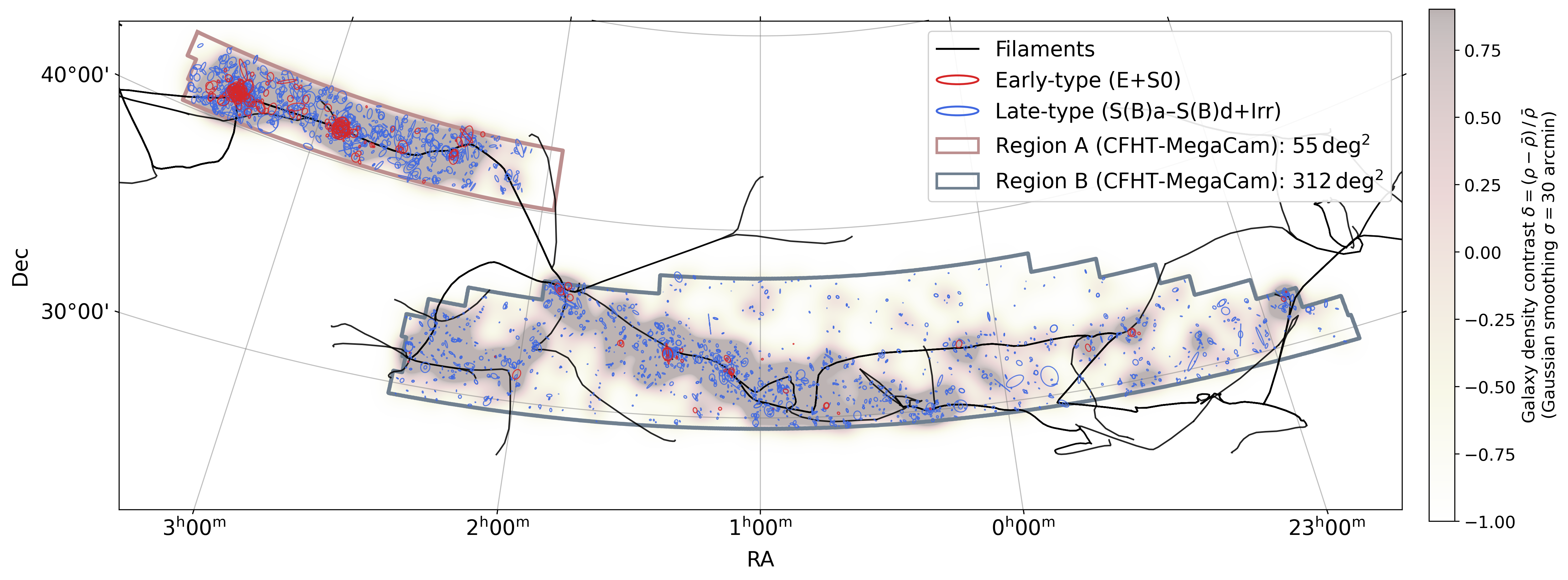
Fig 1: Spatial distribution and cosmic-web structure of the PPSC. Galaxy positions are shown in equatorial coordinates; background
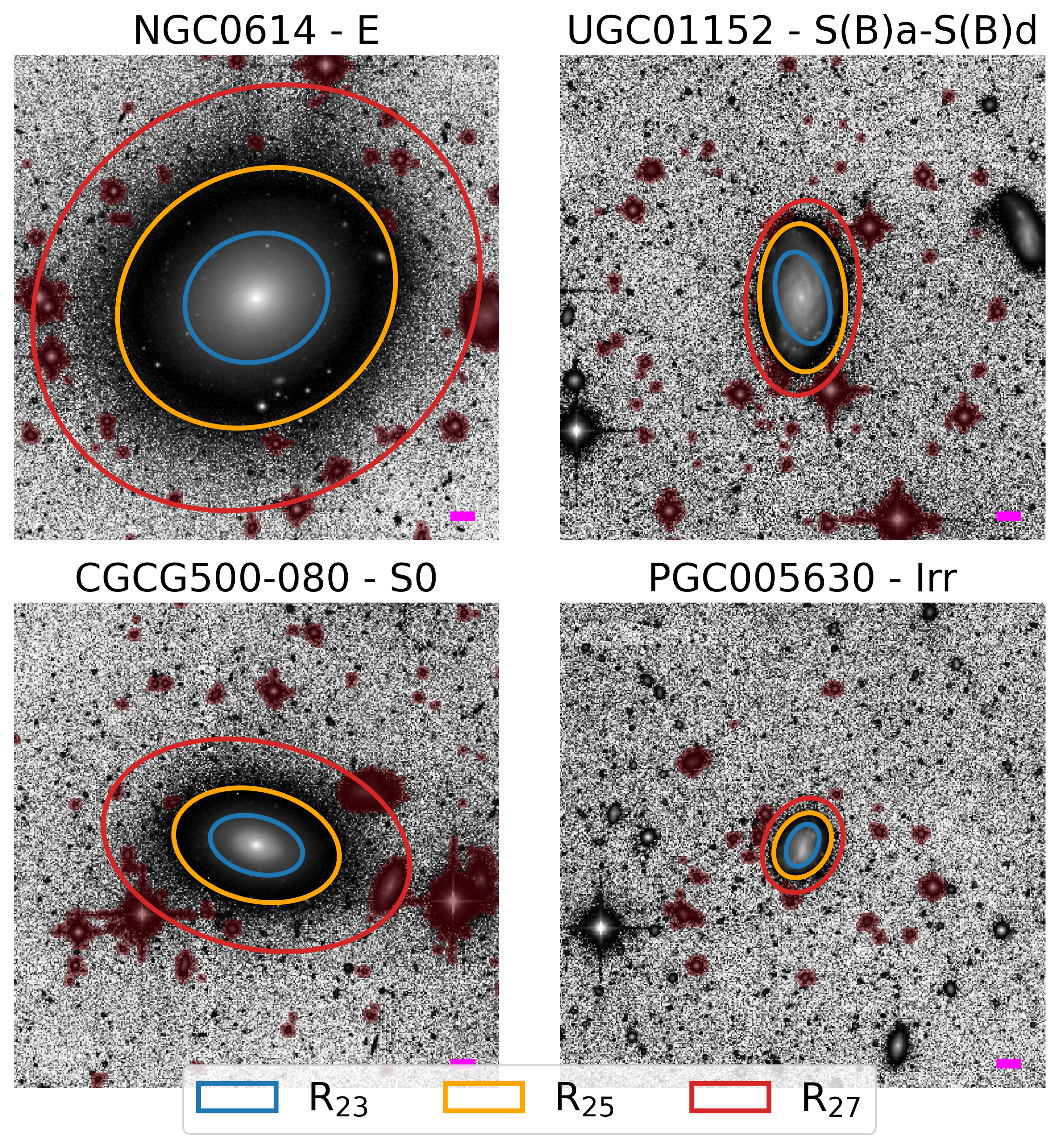
Fig 2: Isophotal shape measurements across morphological
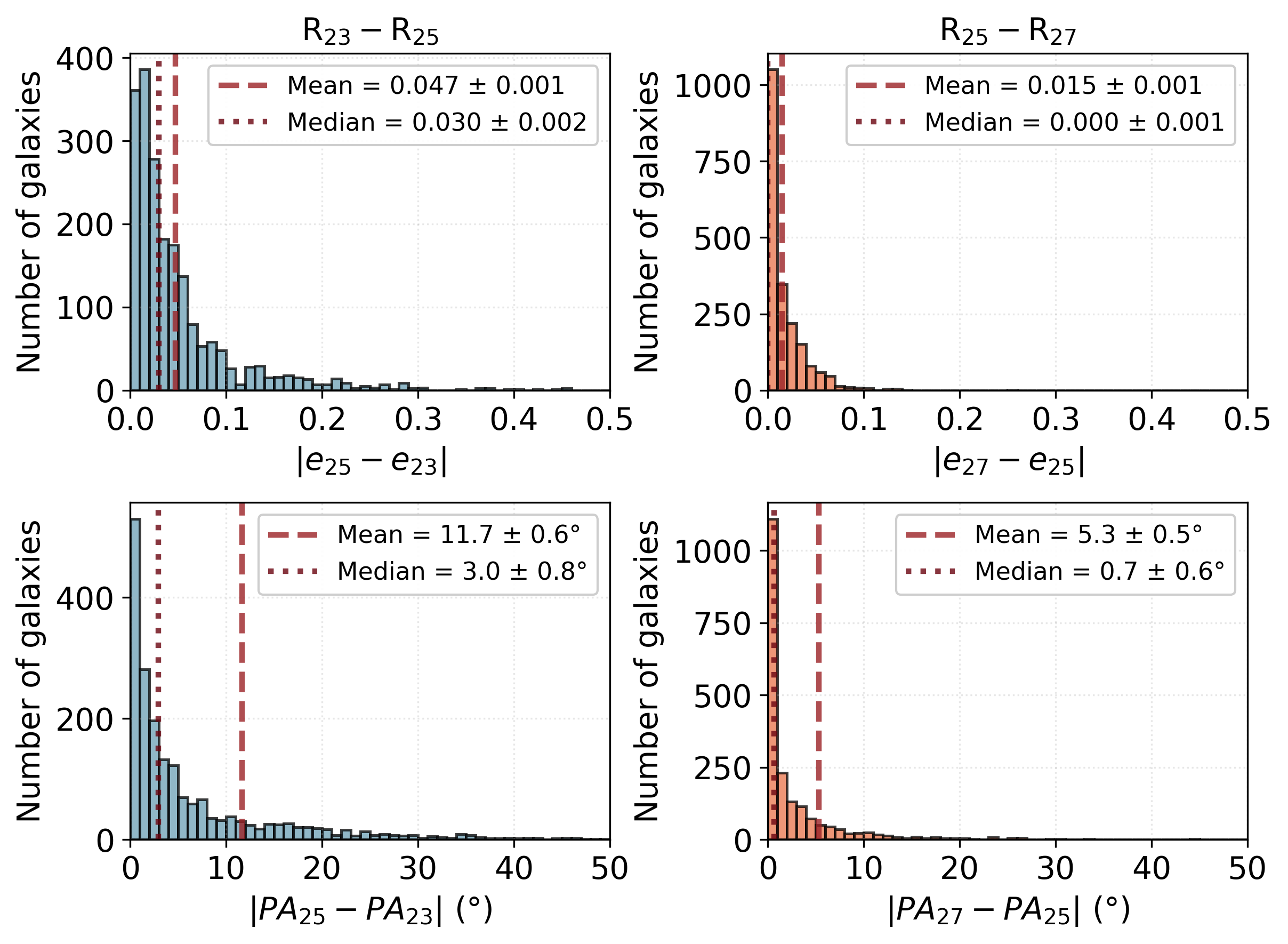
Fig 3: Variation of galaxy shapes between consecutive isopho-
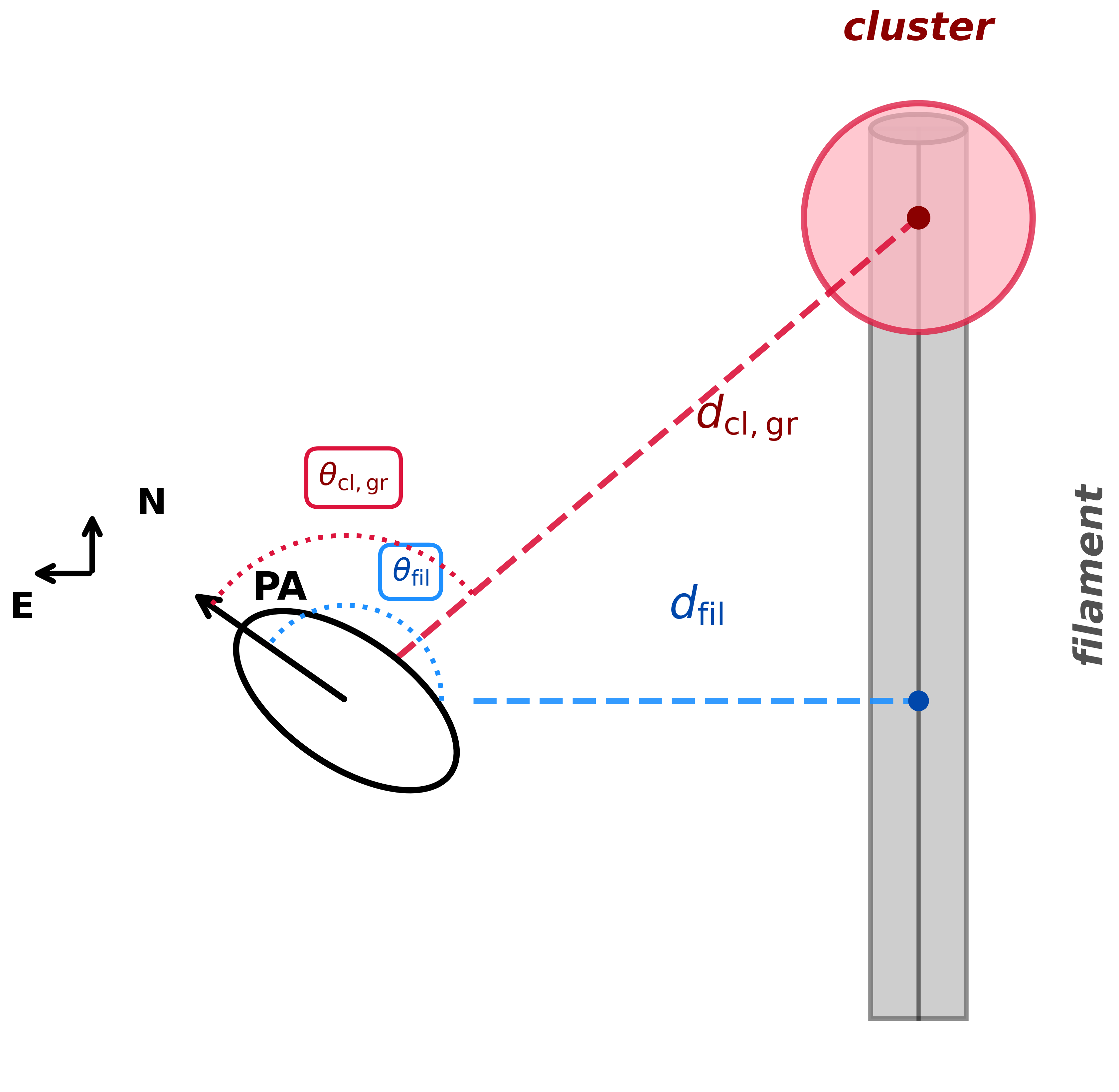
Fig 4: Schematic illustration of alignment measurements and
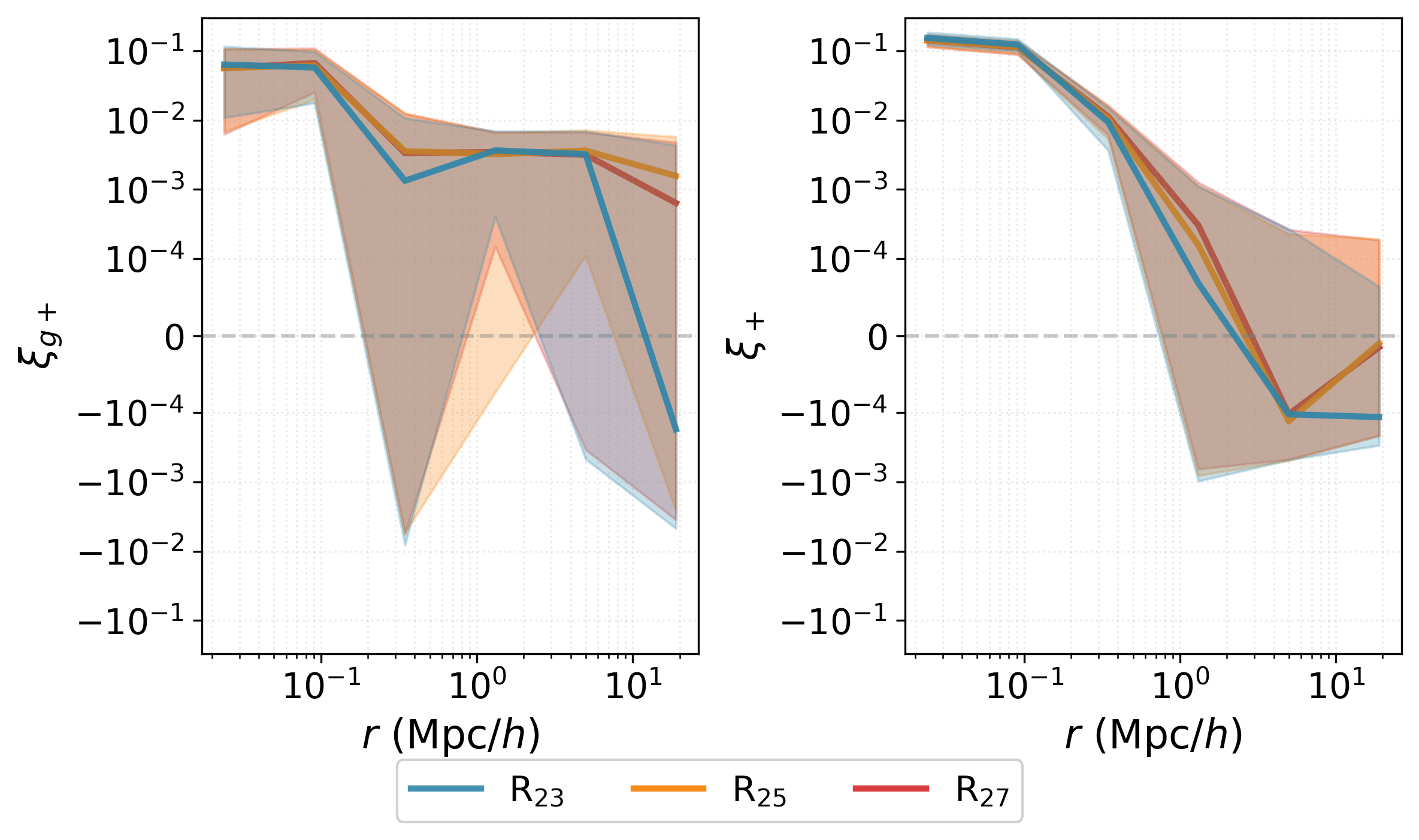
Fig 5: Two-point correlation functions for the full galaxy sam-
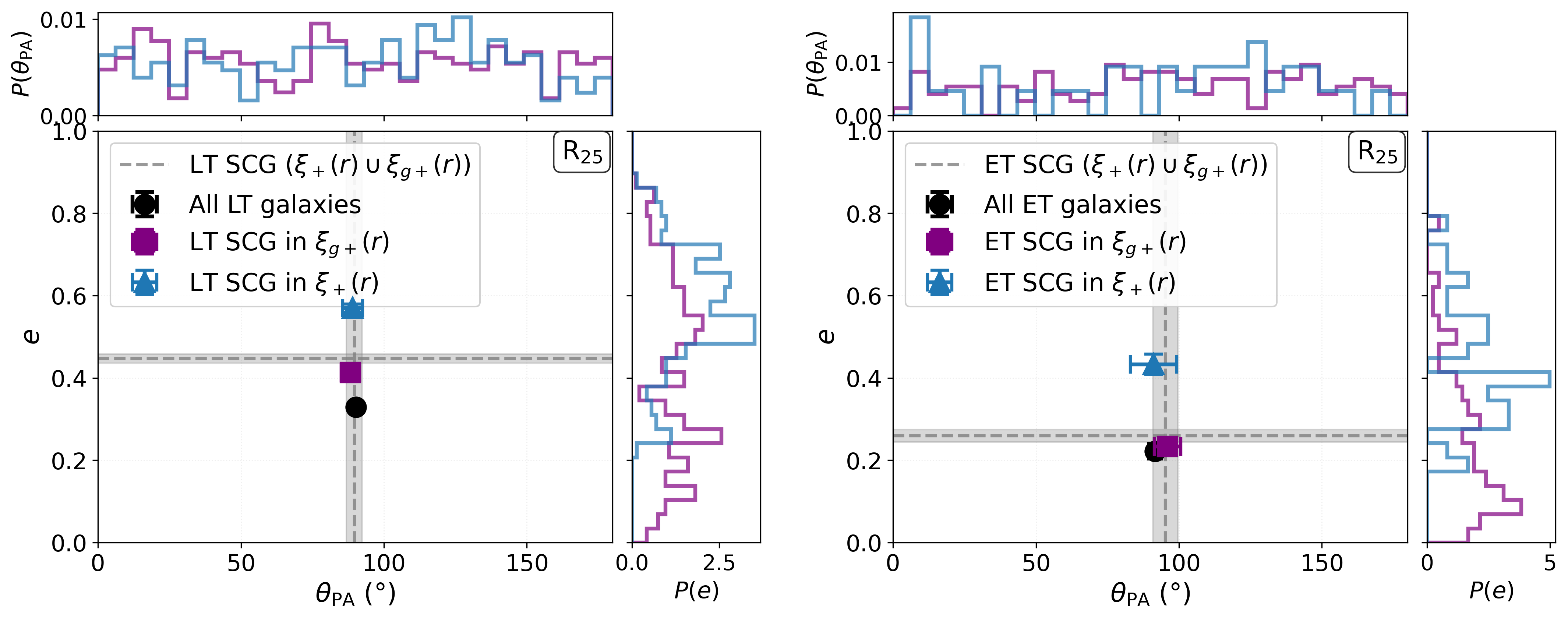
Fig 6: Morphological properties of SCGs in the ellipticity–position angle plane at R25: late-type (left) and early-type (right). Black
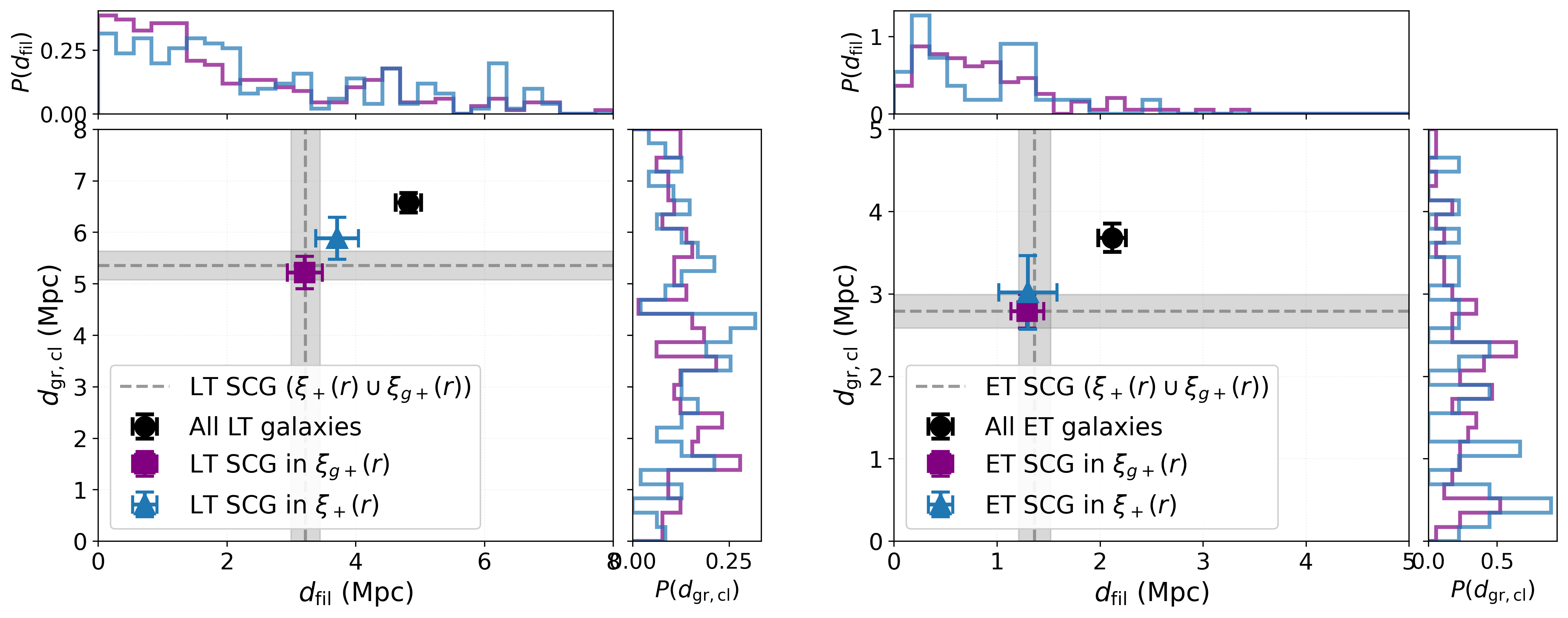
Fig 7: Mean environmental positions of SCGs with shapes measured at R25: distance to the nearest filament (x-axis) vs. distance
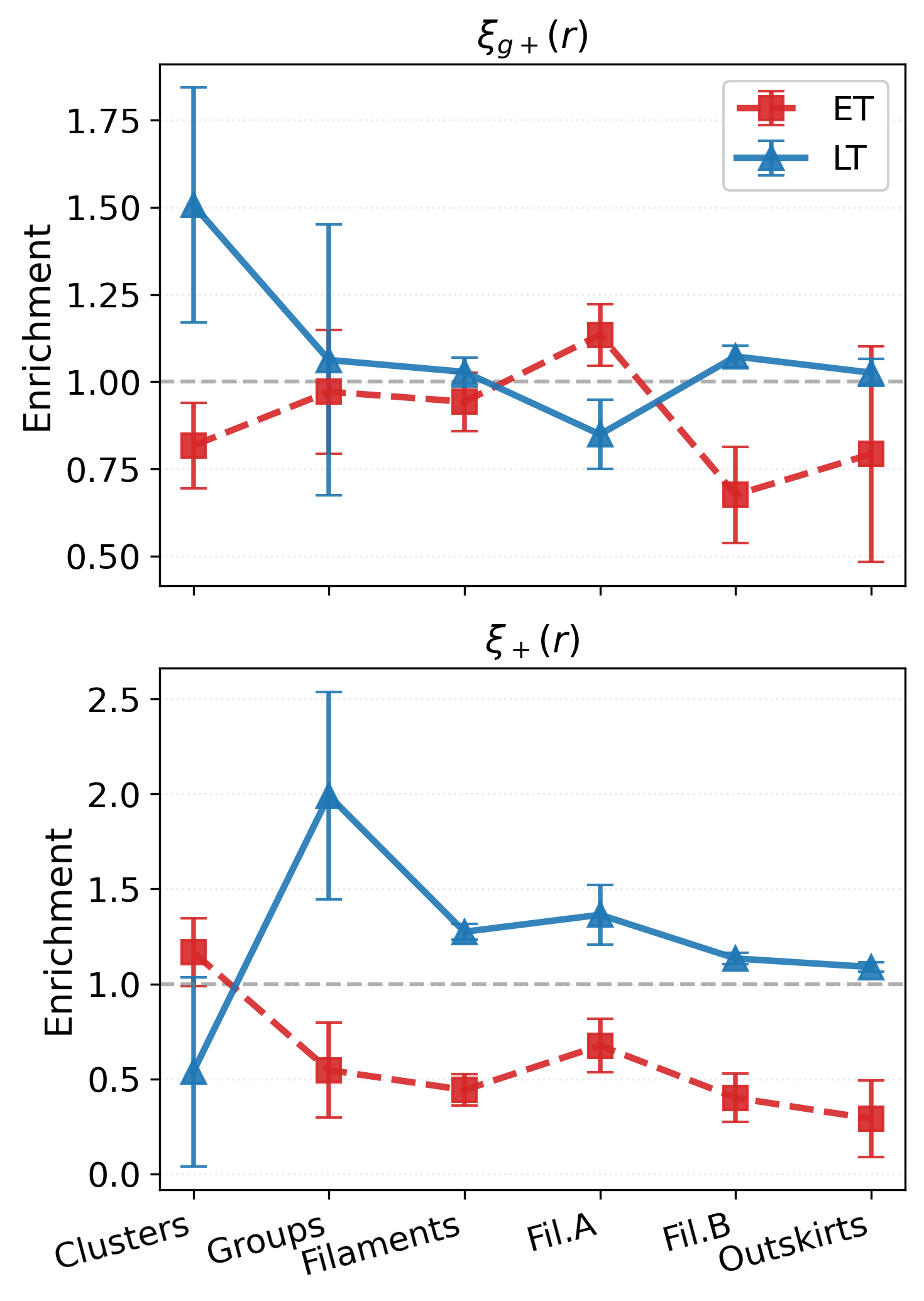
Fig 8: Morphological enrichment of strongly correlated galaxies
Limitations
- Study focuses on a single local supercluster, limiting generalizability to higher redshift or different cosmic environments.
- Sample completeness limited to >50% above log M* = 8.6; fainter low-mass galaxies not probed.
- No direct modeling or test of baryonic feedback effects on alignment signals; interpretation of physical mechanisms is phenomenological.
- No explicit analysis of redshift evolution since sample is limited to z < 0.03.
- No adversarial or noise robustness testing as this is an observational astrophysics analysis rather than a security setting.
- Dependence on spectroscopic redshift accuracy and reconstruction of cosmic web filaments may introduce uncertainties not fully quantified.
Open questions / follow-ons
- How do intrinsic alignment mechanisms and strength evolve with redshift beyond the local universe?
- What is the quantitative impact of baryonic feedback and galaxy formation physics on shape alignment signals, especially in outer stellar envelopes?
- Can multi-radius shape measurements improve cosmological weak lensing systematics mitigation in next-generation surveys?
- What is the role of satellite versus central galaxy alignments within halos across environments?
Why it matters for bot defense
While this paper is astrophysical in nature and not directly related to bot defense or CAPTCHA, the methodology of detecting faint but coherent signals over large spatial scales using statistical correlation functions and morphological stratification may inspire analogous approaches for distinguishing subtle behavioral patterns in bot detection. The authors’ approach of combining multi-scale measurements (here, multiple isophotal radii) and morphology-dependent analysis could conceptually inform defenses that leverage multiple facets or views of user interactions to identify correlations indicative of automated behavior. Furthermore, the careful decomposition of populations into strongly correlated subsets may parallel identifying highly suspicious user cohorts within noisy data. However, the domain-specificity of cosmic-web filamentary structure and galaxy morphologies limits direct applicability. Bot-defense practitioners would benefit primarily from the conceptual rigor in isolating subtle signal amid noise rather than direct technical overlap.
Cite
@article{arxiv2605_23338,
  title={ Dissecting the Perseus-Pisces supercluster observed with CFHT-MegaCam: Exploring late-type galaxy shape alignments within the local cosmic web },
  author={ M. Mondelin and S. Codis and J. -C. Cuillandre and R. Paviot and T. de Boer },
  journal={arXiv preprint arXiv:2605.23338},
  year={ 2026 },
  url={https://arxiv.org/abs/2605.23338}
}