
Cosmic web stripping and starvation of low-mass filament galaxies in TNG50
Source: arXiv:2605.23457 · Published 2026-05-22 · By Daria Zakharova, Gabriella De Lucia, Benedetta Vulcani, Lizhi Xie, Stefania Barsanti, Sean McGee
TL;DR
This work investigates how the cosmic web filaments influence the cold gas properties and star formation activity in low-mass galaxies (8 ≤ log(M_star/M_sun) ≤ 10) using the high-resolution hydrodynamical simulation TNG50-1. By focusing exclusively on galaxies that have remained central and avoiding group or cluster environmental effects, the study isolates filament-driven mechanisms. The authors show that while integrated properties such as stellar and halo mass assembly and quenched fractions are similar between filament and field galaxies, filament galaxies consistently exhibit smaller, more asymmetric cold gas discs. They identify two main physical mechanisms: early infall galaxies experience tidal-field-induced suppression of gas and dark matter accretion, leading to starvation-like slow gas depletion and smaller gas discs; late infall galaxies undergo rapid gas removal by hydrodynamic cosmic web stripping analogous to ram-pressure stripping in clusters. These effects manifest clearly in radial gas disc sizes and cold gas mass evolution but not in central star-forming regions. The results emphasize that spatially resolved gas properties are sensitive probes of environmental processing by cosmic web filaments over cosmic time, with distinct impacts depending on filament infall epoch.
Key findings
- Filament and field galaxies have statistically indistinguishable stellar mass assembly histories and quenched fractions even after segregating by infall time (Section 3, Appendix A).
- Filament galaxies exhibit systematically smaller cold gas disc radii R90%,cold gas, offset by approximately 16-18 kpc at fixed stellar mass, with statistical p-values < 0.05 in all infall-time bins (Fig. 2).
- Sizes of star-forming gas regions R90%,SFR show no significant difference between filament and field galaxies, indicating effects are confined beyond central star-forming cores (Fig. 3).
- Before infall, cold gas disc sizes grow at similar median rates (~4-6 kpc/Gyr) for filament and field galaxies, but after infall, filament galaxies' disc growth slows or reverses depending on infall time (Fig. 5).
- Early infallers (tau_fils > 9 Gyr) show reduced disc growth consistent with suppressed gas accretion (starvation), while later infallers exhibit increasing fractions of gas disc truncation indicative of cosmic web stripping.
- Approximately 25% of early-infall filament galaxies have declining cold gas mass consistent with starvation (gas depletion rate within 3 times star formation rate), whereas late infallers more frequently show rapid gas loss exceeding star-formation-driven depletion, indicative of stripping (Fig. 7).
- Filament tidal fields modify gas and dark matter accretion geometry, increasing tangential motions and reducing disc size for some systems with ongoing accretion, while suppressing accretion in others, producing smaller gas discs and eventual quenching.
- Late-time filament infall galaxies can suffer hydrodynamical gas stripping by the intra-filament medium, rapidly removing gas and truncating discs analogous to cluster ram-pressure stripping.
Threat model
The 'adversary' conceptualized is the cosmic web filament environment exerting tidal gravitational fields and hydrodynamical pressure on low-mass central galaxies. It is assumed the adversary cannot induce major mergers, group or cluster environmental processes, or satellite-specific effects as such galaxies are excluded. The mechanisms considered are suppression of gas and dark matter accretion by large-scale tidal fields and hydrodynamical gas removal (cosmic web stripping) by filament gas pressure.
Methodology — deep read
Threat model and assumptions: The study focuses on low-mass central galaxies (8 ≤ log M_star ≤ 10) that have never been satellites or undergone group processing, isolating filament environmental effects while controlling for stellar and halo mass to avoid confounding influences of more massive hosts. The underlying assumption is that filaments affect galaxy gas and dark matter accretion and internal gas morphology but do not include more violent cluster or group processes. The adversary here conceptually is the cosmic web tidal field combined with hydrodynamical interactions within filaments.
Data provenance and preprocessing: The authors use the TNG50-1 cosmological magnetohydrodynamical simulation (comoving volume 50 Mpc on a side, baryonic mass resolution ~8.5×10^4 M_sun, spatial resolution 70-140 pc), which includes full relevant physical processes (radiative cooling, star formation, stellar and black hole feedback, magnetic fields) and resolves cold gas discs. Galaxies at z=0 with stellar masses in the low-mass range are selected and tracked back in time to z ∼ 4 through their most massive progenitors, keeping only centrals. Filaments are identified in 3D at each snapshot using the DisPerSE algorithm, repeated 10 times per snapshot with 85% random subsampling to define filament spines robustly. Distance < 1 Mpc/h to the nearest filament spine defines filament membership and infall times. Field galaxies are those always farther than this threshold with no filament or group history. Final samples include 431 filament galaxies and 2147 field galaxies after removing ~65% that experienced group processing.
Architecture / algorithm: The analysis applies statistical matching by stellar and halo mass at z=0 between filament and field samples within bins of filament infall time, repeated 100 times to assess robustness. Cold gas is defined as gas particles with temperature < 10^5 K; star-forming gas requires positive instantaneous SFR. Sizes enclosing 90% of cold gas mass (R90%,cold gas) and star-forming gas (R90%,SFR) and corresponding gas masses (M90%,cold gas) are computed per galaxy. Evolutionary trends are assessed by smoothing over snapshots with LOESS regression to reduce shot noise. Growth rates of gas disc radius before and after infall are computed as mean dR/dt. Gas evolution is classified into gas-accreting, starvation-like (gas depletion consistent with star formation consumption), or stripping-like (gas loss exceeding 3× star formation depletion) by comparing observed cold gas decline after infall against star formation driven gas consumption baseline from matched field galaxies.
Training regime: While not a machine learning context, the computational pipeline uses time-resolved halo and galaxy catalogs from TNG50-1 snapshots, with mass-matching and statistical resampling repeated 100 times per bin. The filament finder DisPerSE is run multiple times per snapshot. No hyperparameters beyond DisPerSE persistence threshold and mass thresholds are discussed. Statistical significance is assessed via ANCOVA and Kolmogorov-Smirnov tests across resamplings.
Evaluation protocol: The main metrics are distributions and median trends of cold gas and star-forming gas sizes, cold gas masses, and star formation deviations from the main sequence (dxSFMR). Comparisons between filament and field populations matched in mass and split by filament infall time isolate environmental effects. Significance is quantified by p-values (ANCOVA and KS tests) across 100 realizations. Time-resolved growth rates before and after infall are analyzed to distinguish gradual starvation vs rapid stripping. Robustness includes excluding satellite and group-processed galaxies, ensuring environmental isolation.
Reproducibility: TNG50 is a public simulation suite with data access protocols. The filament finder DisPerSE is a public tool. The study uses internally developed analysis pipelines for sample selection, mass matching, and morphological measurements. Exact code release or seeds is not mentioned. The methodology is sufficiently described to be replicated given access to TNG50 and filament catalogs. The cold gas disc size and gas evolution classification procedures are detailed step-by-step.
Example end-to-end: To illustrate, consider a low-mass galaxy entering a filament at z ~ 1 (∼7.8 Gyr ago). Tracing its progenitor through snapshots, the cold gas disc size R90%,cold gas is measured at each output. Before infall, R90%,cold gas grows steadily. After infall, the growth rate slows or reverses, indicating truncated disc size. The cold gas mass within this radius is computed at each snapshot and compared to expected depletion from star formation. If the gas mass drops sharply exceeding 3× consumption, the galaxy is classified undergoing cosmic web stripping; otherwise, if gas mass declines slowly consistent with star formation rate, it is starvation. This galaxy’s star formation rate is tracked relative to the star-forming main sequence, showing a gradual decline compared to field galaxies matched in mass. Statistically aggregating many such histories reveals filament impact characteristics by infall epoch.
Technical innovations
- Systematic isolation of filament environmental effects on low-mass galaxies by excluding any satellite or group-processed systems within a high-resolution cosmological magnetohydrodynamical simulation.
- Novel classification framework distinguishing between starvation-like and cosmic web stripping mechanisms via detailed cold gas mass evolution compared against star formation-driven depletion baselines.
- Use of repeated mass-matching and 100 bootstrap resamplings combined with ANCOVA and KS statistical tests to robustly quantify environment-driven differences in cold gas disc size and gas evolution as a function of filament infall time.
- Demonstration that filament-induced tidal fields modify gas and dark matter accretion geometry, producing smaller, more tangentially supported gas discs despite comparable accretion rates in some galaxies.
- Identification of time-dependent dominance of mechanisms: early filament infall leads to starvation-like suppressed accretion and smaller gas discs, while late infall causes rapid hydrodynamical gas stripping analogous to cluster ram-pressure effects.
Datasets
- TNG50-1 — cosmological galaxy simulation with 50 Mpc volume, baryonic mass resolution ~8.5×10^4 M_sun, public via IllustrisTNG data release
Baselines vs proposed
- Field galaxies matched in stellar and halo mass: median R90%,cold gas ~16-18 kpc larger than filament galaxies at fixed stellar mass across infall-time bins.
- Star-forming gas disc sizes R90%,SFR show no significant difference between filament and field samples (p>0.05).
- Pre-infall cold gas disc size growth rates dR/dt ~4-6 kpc/Gyr with no statistical difference between filament and field; post-infall, filament median growth rates reduced by ~1.5-2 kpc/Gyr or become negative for late infallers.
- Fraction of filament galaxies with negative post-infall disc growth rates increases from ~9% for early infallers to ~40% for recent infallers; corresponding fractions for field galaxies remain < ~5%.
- Approximately 25% of early infall filament galaxies exhibit starvation-like gas depletion consistent with star formation; later infallers show increasing fractions with stripping-like rapid gas loss (R > 3× star formation depletion rate).
Figures from the paper
Figures are reproduced from the source paper for academic discussion. Original copyright: the paper authors. See arXiv:2605.23457.
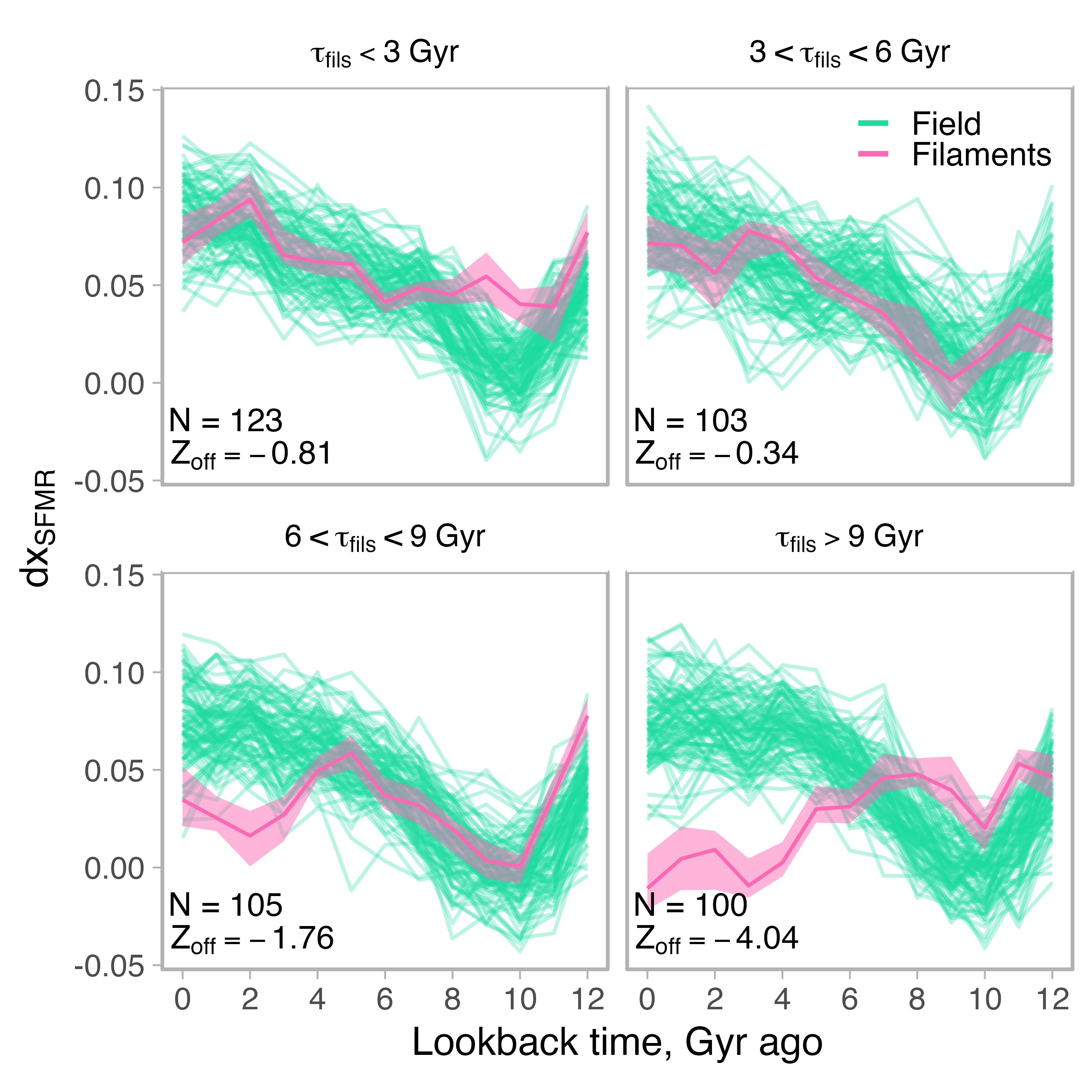
Fig 1: shows the median deviation dxSFMR from the star forma-
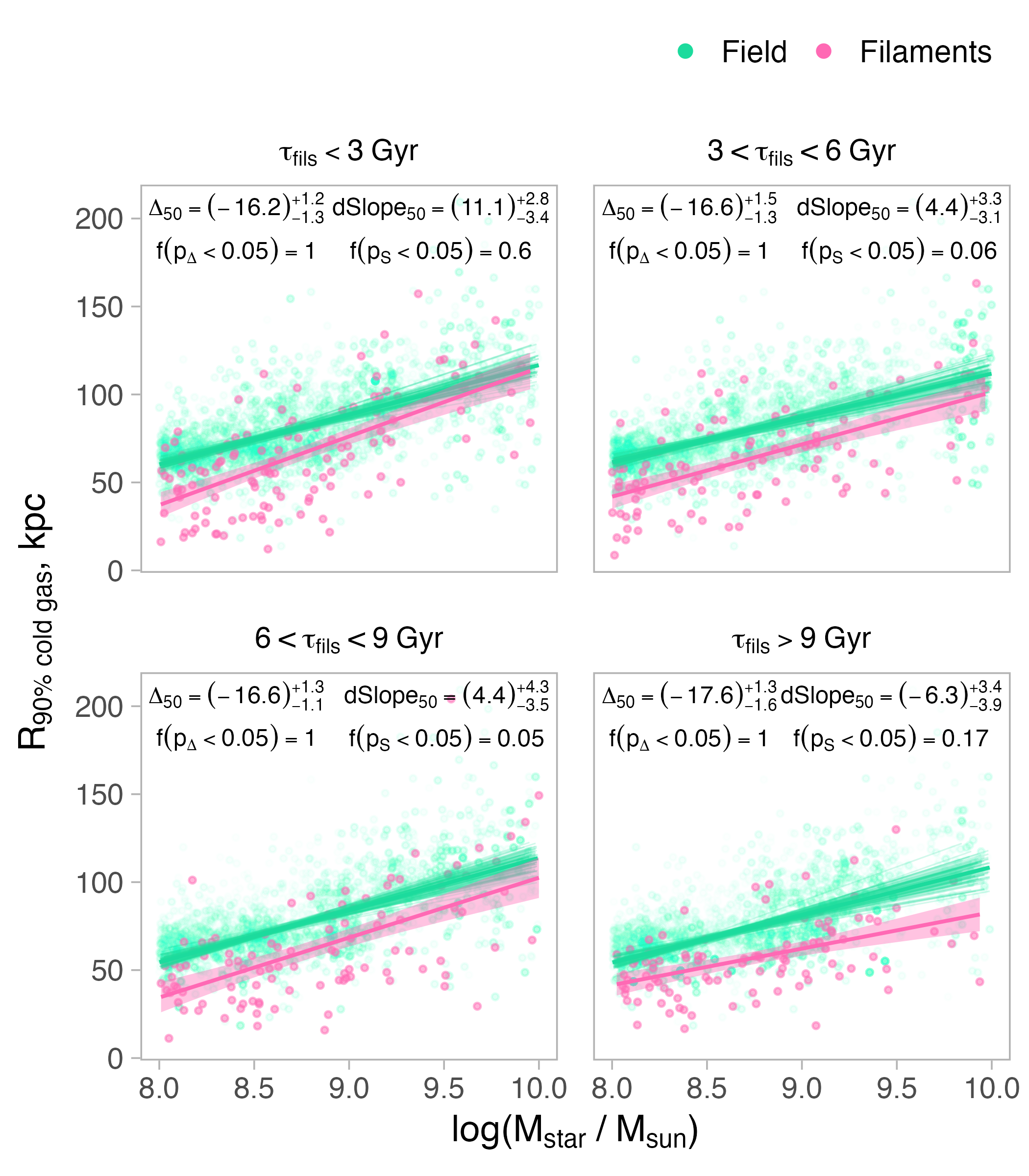
Fig 2: shows the stellar mass–𝑅90%,cold gas relation for
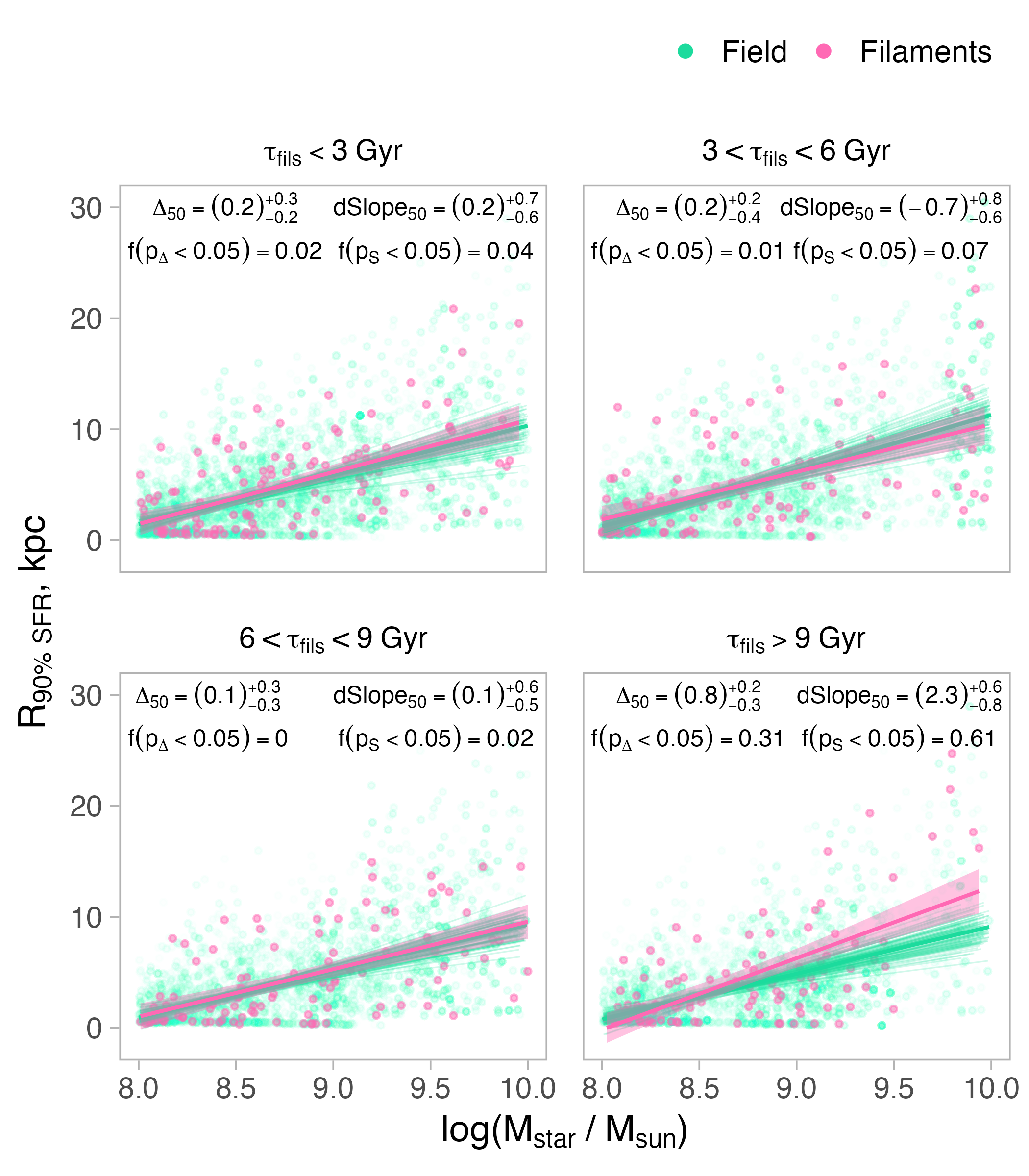
Fig 3: The same as Fig. 2 but for 90% of star-forming gas.
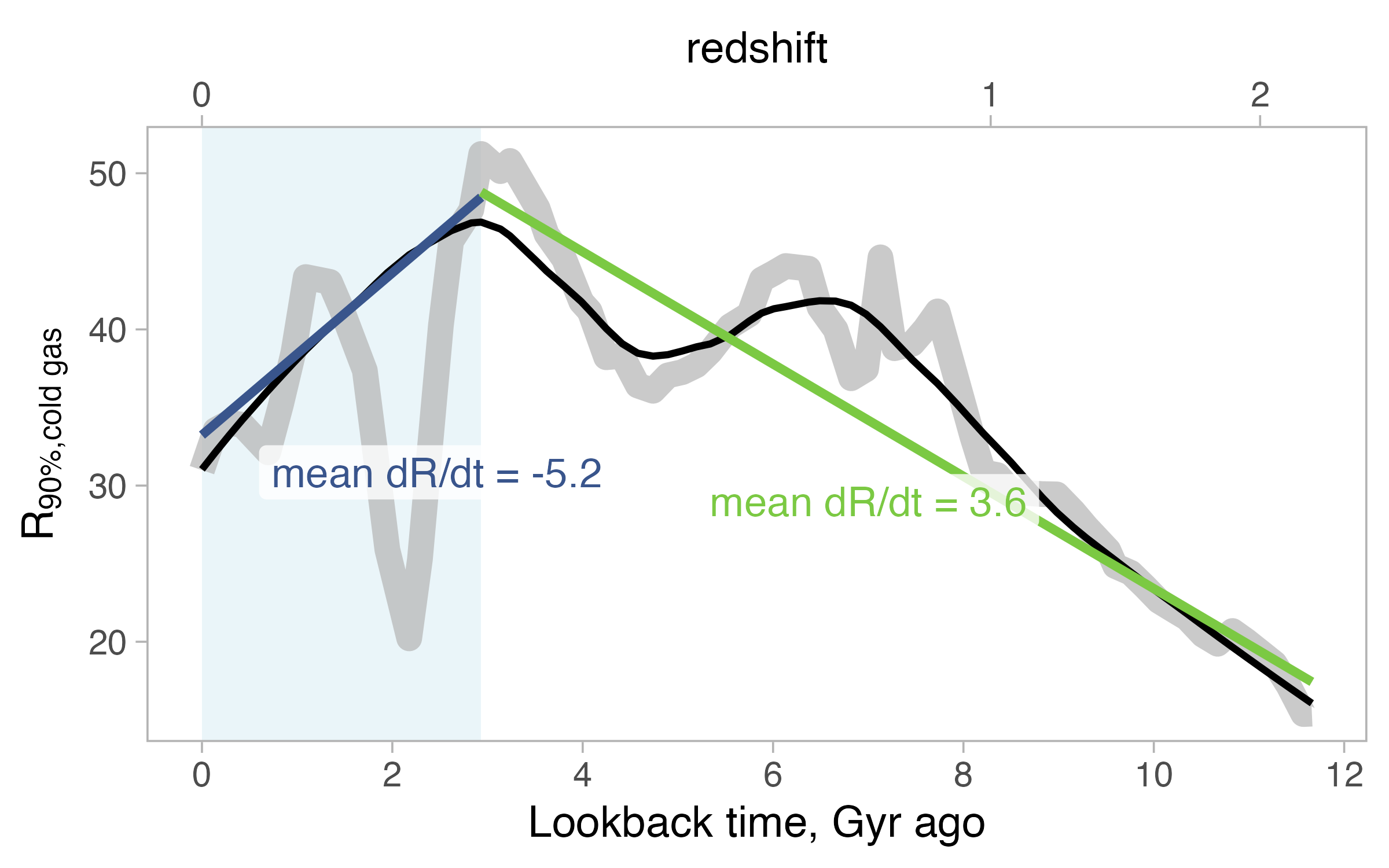
Fig 4: The grey line shows the 𝑅90%,𝑐𝑜𝑙𝑑𝑔𝑎𝑠of the example
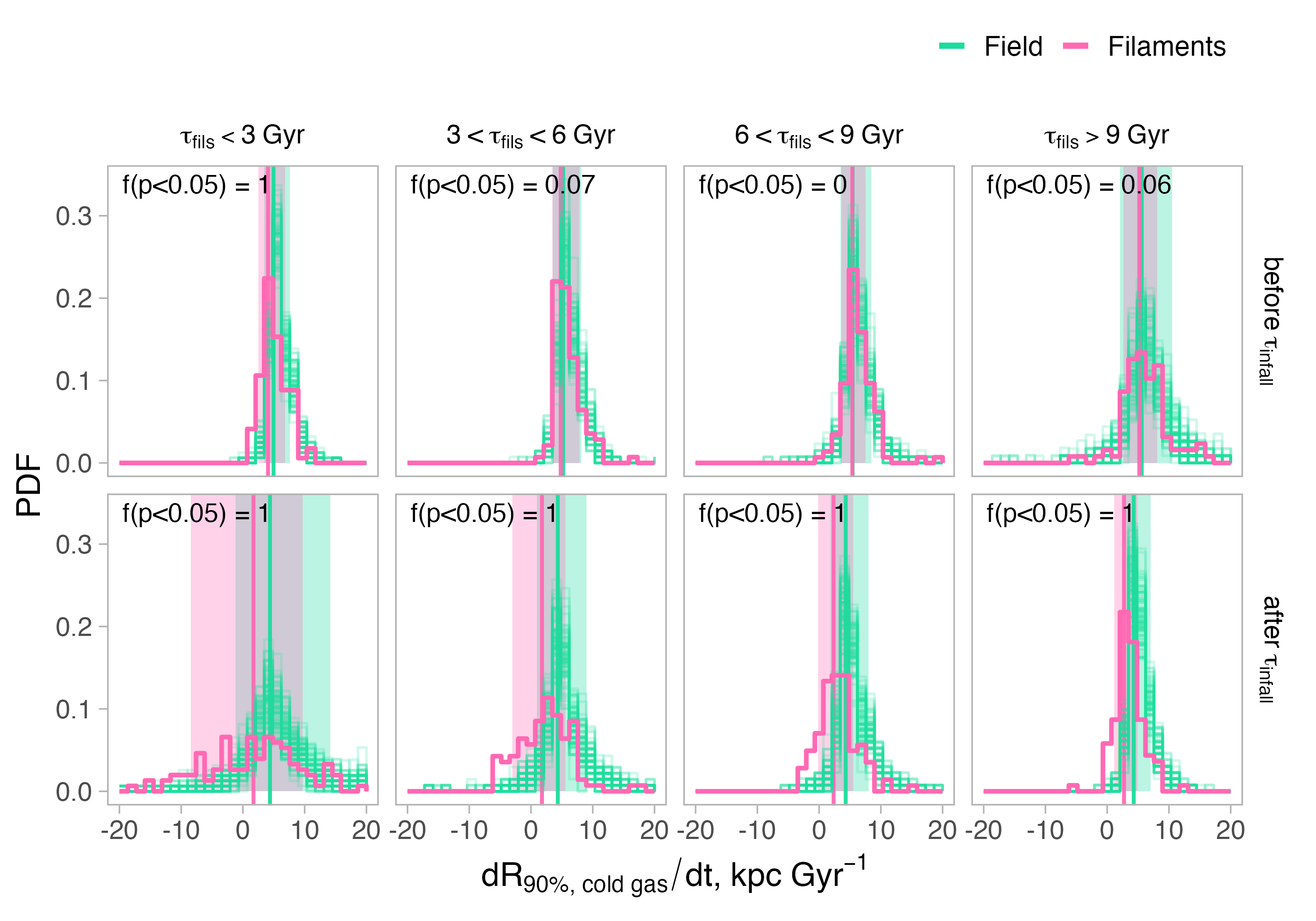
Fig 5: Growth rate of the cold gas disc radius 𝑅90%,cold gas for filament galaxies compared to field galaxies, shown separately before
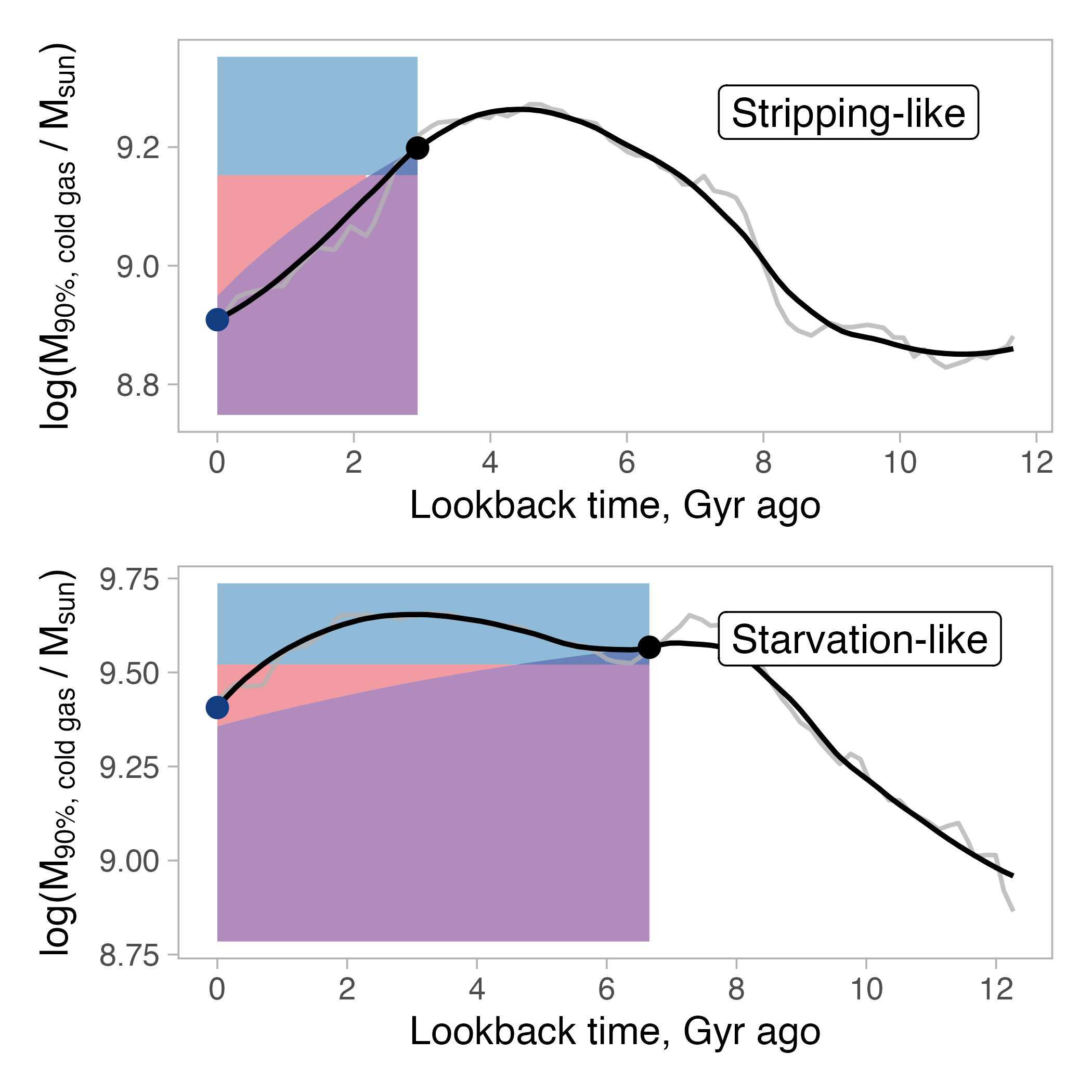
Fig 6: Example illustrating the method used to classify the evo-
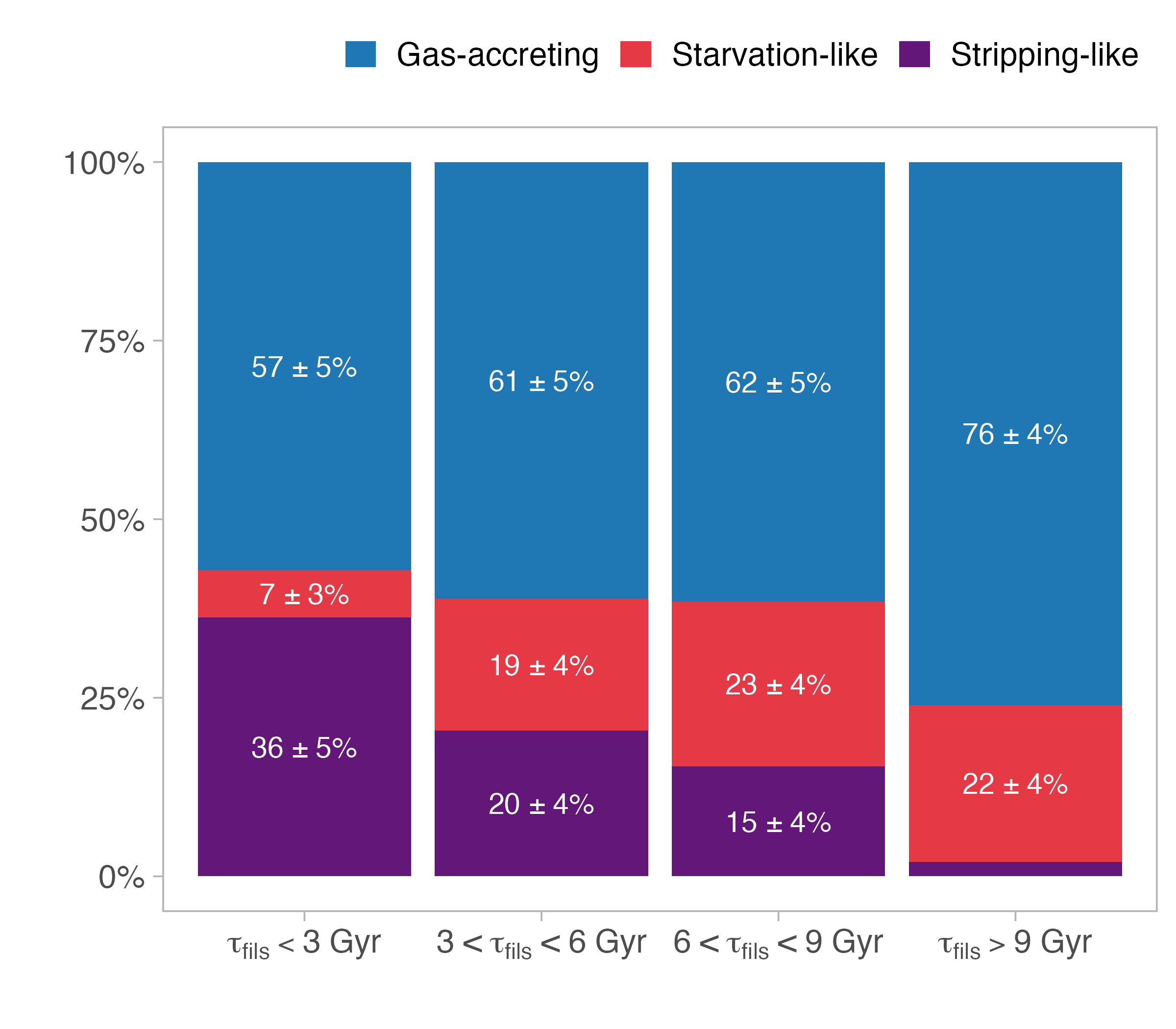
Fig 7: Classification of gas evolution scenarios for filament
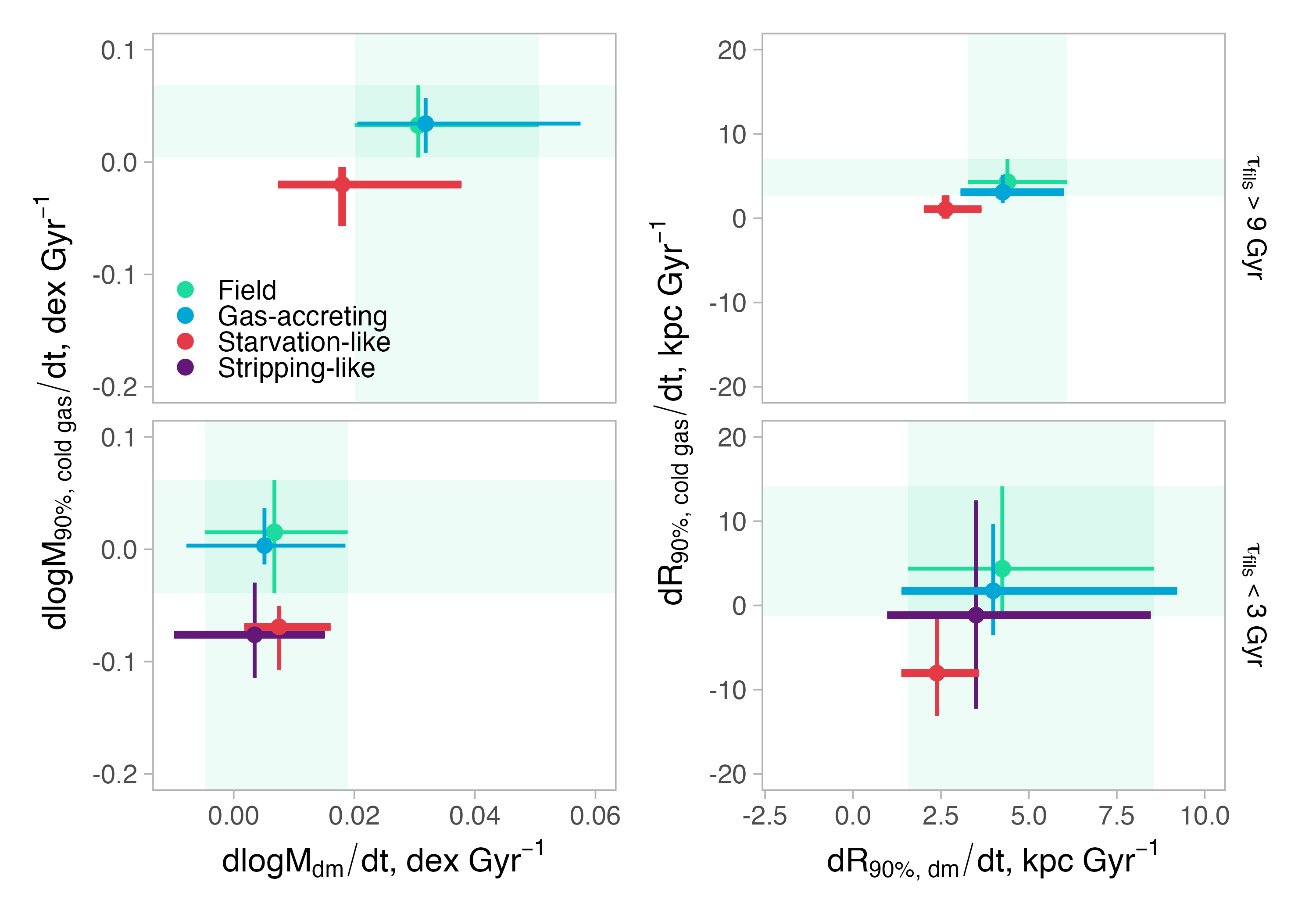
Fig 8: Growth rates of dark matter halo and cold gas disc mass
Limitations
- Excludes satellite and group-processed galaxies, so results do not capture combined effects of filaments and groups/clusters on galaxy evolution.
- Analysis relies on a single simulation (TNG50-1); potential model-dependent biases in feedback, hydrodynamics treatment or filament identification may affect quantitative results.
- Filament identification uses DisPerSE with fixed persistence and sampling assumptions, possibly missing low-density or transient filamentary features influencing galaxies.
- Does not include explicit comparison against observational HI or molecular gas data, limiting direct validation of predicted cold gas disc size asymmetries and truncations.
- Focus exclusively on low-mass galaxies; results may not generalize to higher-mass regime where filament effects differ.
- Does not explore variations in filament gas density or dynamical state that could modulate stripping efficiency and tidal effects.
Open questions / follow-ons
- How do filament-induced environmental effects combine with group and cluster processes in more complex hierarchical settings involving satellites?
- What are the detailed physical properties of filament intra-galactic medium (density, velocity) that modulate stripping efficiency and how do these evolve with cosmic time?
- Can observational spatially resolved cold gas kinematics validate the predicted gas disc asymmetries and truncation signatures associated with filament environmental effects?
- How do feedback models and hydrodynamics implementations impact the quantitative strength of starvation vs stripping processes in filaments?
Why it matters for bot defense
Although this is a galaxy formation study rather than a bot-defense or CAPTCHA paper, the work highlights the importance of subtle environmental effects on morphological features (e.g., gas disc size and asymmetry) that serve as sensitive diagnostics beyond integrated activity levels (e.g., star formation). Analogously, bot-defense practitioners should consider not only coarse activity metrics but detailed spatial or temporal structure (such as click patterns or interaction asymmetries) which might reveal subtle automated behavior. The detailed statistical matching and environmental stratification strategies demonstrated here can inform rigorous feature-ablation and control population design in bot detection. Furthermore, the approach of isolating single environmental mechanisms by carefully excluding confounding factors echoes the principle of designing challenge-response tests to isolate genuine human interaction signals amid complex backgrounds.
Cite
@article{arxiv2605_23457,
  title={ Cosmic web stripping and starvation of low-mass filament galaxies in TNG50 },
  author={ Daria Zakharova and Gabriella De Lucia and Benedetta Vulcani and Lizhi Xie and Stefania Barsanti and Sean McGee },
  journal={arXiv preprint arXiv:2605.23457},
  year={ 2026 },
  url={https://arxiv.org/abs/2605.23457}
}