
ChatMOSP: A Chemistry-Grounded Mobile Agent for Working-State Catalyst Simulations
Source: arXiv:2605.24265 · Published 2026-05-22 · By Sanyang Ye, Rui Qi, Beien Zhu, Yi Gao
TL;DR
This paper addresses the challenge of converting experimentally specified catalytic reaction conditions—such as temperature, pressure, gas composition, and catalyst identity—into physically meaningful, multiscale simulations of catalyst morphology and performance. Existing approaches require specialized computational catalysis knowledge to set up such simulations, limiting accessibility for experimentalists and non-specialists. ChatMOSP is introduced as a chemistry-grounded mobile scientific agent that accepts natural-language and voice inputs describing catalytic requests and automatically translates them into fully parameter-validated simulations using the Multi-scale Operando Simulation Package (MOSP). ChatMOSP maps these experimental conditions to model inputs for multiscale structure reconstruction and kinetic Monte Carlo simulation, retrieves necessary parameters either from a built-in database or by online literature search if missing, executes the workflows, and returns physically interpretable working-state catalyst simulations accessible on mobile devices.
The authors validate ChatMOSP against operando experimental results for CO oxidation on Pd and Pt nanoparticles. For Pd, the agent reproduces the temperature-dependent faceting-to-rounding morphology transitions observed by in-situ TEM. The system can also reconstruct missing simulation parameters through automated online literature retrieval, retaining agreement with experimental morphology trends. For Pt, ChatMOSP simulates local-pressure-dependent morphology and catalytic activity cycles consistent with experimentally observed oscillatory CO oxidation, connecting morphology evolution with kinetic turnover frequencies via a physically interpretable feedback loop. ChatMOSP thus enables non-expert end-users to perform complex operando catalyst state simulations through natural language on mobile devices while preserving scientific rigor and mechanistic fidelity.
Key findings
- ChatMOSP accurately reproduces the temperature-dependent faceting-to-rounding transition of Pd nanoparticles during CO oxidation, consistent with in-situ TEM experiments by Chee et al. (Fig 2b).
- Removal of Pd-CO/O adsorption and interaction parameters from the internal MOSP database was mitigated by automated literature retrieval, enabling recovered parameters to reproduce the same qualitative Pd morphology transitions (Fig 3b).
- ChatMOSP performed end-to-end simulations on mobile devices, linking local CO pressure in Pt CO oxidation to nanoparticle morphology and kinetic Monte Carlo-derived turnover frequency (TOF), capturing a >10× increase in TOF from 150 Pa to 1500 Pa CO (Fig 5a).
- The system’s physical outputs (morphology, coverage, activity) are produced exclusively by MOSP’s physics-based modules; language model backbones affect only task parsing and input generation (Fig S1, S5).
- ChatMOSP facilitated mechanistic interpretation by generating a pressure-coverage-morphology-activity feedback loop and oscillation schematic consistent with experimental oscillatory CO oxidation on Pt nanoparticles (Fig 5b).
- Natural-language inputs via text or voice in multiple languages (English, Chinese) successfully yielded consistent simulation results, demonstrating accessible user interaction.
- ChatMOSP’s hierarchical skill architecture integrates parameter extraction, database retrieval, literature-assisted parameterization, MOSP input generation, and result visualization into an automated mobile workflow (Fig 1).
- Simulation runtime for KMC to reach 20 million steps was ~12 hours on a mobile-accessed remote backend, completing a closed-loop from user request to morphology and kinetics output.
Threat model
Not applicable; this work does not address security threats or adversarial scenarios but focuses on enabling accessible physical simulations of catalyst working states from experimental conditions.
Methodology — deep read
Threat Model & Assumptions: The adversary model is not explicitly defined but implicitly the system assumes users input experimentally relevant reaction conditions (catalyst identity, temperature, pressure, gas composition) and target observables. The agent trusts literature sources and internal database parameters as scientifically validated. It does not attempt adversarial robustness or security evaluation.
Data: ChatMOSP relies on a built-in MOSP parameter database containing energetic, adsorption, and adsorbate interaction parameters for catalyst/gas systems (e.g., Pt-CO/O, Pd-CO/O). When parameters are missing, ChatMOSP performs automated literature retrieval focused on open-access publications (e.g. Nature Communications) filtered via keyword queries combining catalyst element and reaction. Extracted parameters are parsed, formatted, and presented for user validation before simulation execution.
Architecture / Algorithm: ChatMOSP is a hierarchical mobile scientific agent interfaced via Feishu mobile app. It uses the GLM-5 large language model (LLM) for natural-language understanding and task coordination but restricts the LLM to parsing, parameter extraction, and workflow management rather than direct physical prediction. Subskills handle parameter verification, database queries, literature-assisted construction, MOSP-compatible input file generation, MSR morphology reconstruction, KMC kinetic Monte Carlo simulation execution, and results visualization. The underlying MOSP package integrates multiscale structure reconstruction (MSR) and kinetic Monte Carlo (KMC) modules to compute physically validated catalyst morphologies and activities based on input conditions and parameters.
Training Regime: Not applicable—ChatMOSP repurposes existing physical simulation packages combined with an LLM-based natural language and workflow controller. LLM backbone models were tested for performance in parsing but scientific predictions arise from MOSP physics models.
Evaluation Protocol: Key evaluations include reproducing Pd nanoparticle morphology transitions with built-in database parameters compared against operando TEM data (Chee et al.), and reproducing the trend with literature-retrieved parameters after removing key adsorption data internally. For Pt CO oxidation, ChatMOSP performed morphology reconstruction and KMC kinetics at two CO partial pressures (150 Pa and 1500 Pa) at 850 K, comparing morphological features and turnover frequencies (TOF) to published oscillatory catalysis experiments. Multiple language inputs and voice interaction modes were tested to confirm accessibility. Simulation consistency was confirmed across different LLM backbones (GLM-5, DeepSeek-V3.2, MiniMax-M2.5, Kimi-K2.5).
Reproducibility: The MOSP source code and built-in parameter databases appear to be closed but details about public code or weight release are not specified. Literature-retrieval workflows rely on open-access sources, and simulation results depend on physical MOSP modules previously published. Interaction examples and parameter extraction details are in the supplementary info. Computations were performed on a national supercomputing center; mobile devices serve as user interfaces rather than direct simulation hardware.
Example workflow end-to-end: A user inputs "Pd nanoparticles under CO oxidation at 573 K" via mobile app text or voice. ChatMOSP parses this, retrieves the required parameters from its database. It then generates MSR input files and runs MOSP structure reconstruction. The morphology prediction resembling faceted Pd clusters is returned to the user on the mobile device. If parameters are missing, ChatMOSP initiates a literature search, extracts adsorption energies from relevant papers, formats them, obtains user confirmation, then proceeds with MSR simulation. For Pt CO oxidation, pressure-dependent morphology and KMC simulations produce morphology and TOF outputs, followed by a prompt-driven feedback-loop mechanistic interpretation generated by the agent.
Technical innovations
- Introduction of ChatMOSP, a chemistry-grounded mobile scientific agent integrating natural language and voice inputs directly into physically validated multiscale catalyst morphology and kinetic simulations.
- Hierarchical agent skill architecture restricting the language model to task parsing and workflow coordination, delegating all physical predictions to the MOSP simulation package to preserve mechanistic fidelity.
- Automated literature-assisted parameter retrieval workflow that identifies missing simulation inputs, executes web-based searches, extracts energetic and kinetic parameters, and formats them into MOSP-compatible inputs.
- Closed-loop mobile interface enabling end-to-end catalyst working state simulations from natural-language reaction conditions to morphology, adsorbate coverage, and kinetic turnover frequency results accessible on mobile devices.
- Application of ChatMOSP to replicate experimentally observed temperature- and pressure-dependent catalyst morphology transitions and oscillatory catalysis phenomena through integrated MSR-KMC workflows.
Datasets
- Pd-CO/O parameter set — internal MOSP database — closed/internal
- Pt-CO/O parameter set — internal MOSP database — closed/internal
- Literature-derived parameters for Pd-CO/O — various open-access journal articles (e.g., Nature Communications) — publicly available but extracted dynamically
Baselines vs proposed
- Expert-operated MOSP workflow (Pt CO oxidation morphology evolution): morphology trends reproduced by ChatMOSP with built-in parameters (Fig S3, S4)
- ChatMOSP with built-in Pd-CO/O parameters vs. operando TEM data (Chee et al.): morphology faceting-to-rounding transitions match experimental temperature-dependent evolution (Fig 2b)
- ChatMOSP with literature-derived Pd parameters vs. built-in parameters: similar qualitative morphology trends reproduced despite missing internal parameters (Fig 3b)
- Pt CO oxidation TOF at 150 Pa CO (faceted morphology): baseline TOF = low; at 1500 Pa CO (rounded morphology): TOF increased >10× (Fig 5a)
Figures from the paper
Figures are reproduced from the source paper for academic discussion. Original copyright: the paper authors. See arXiv:2605.24265.
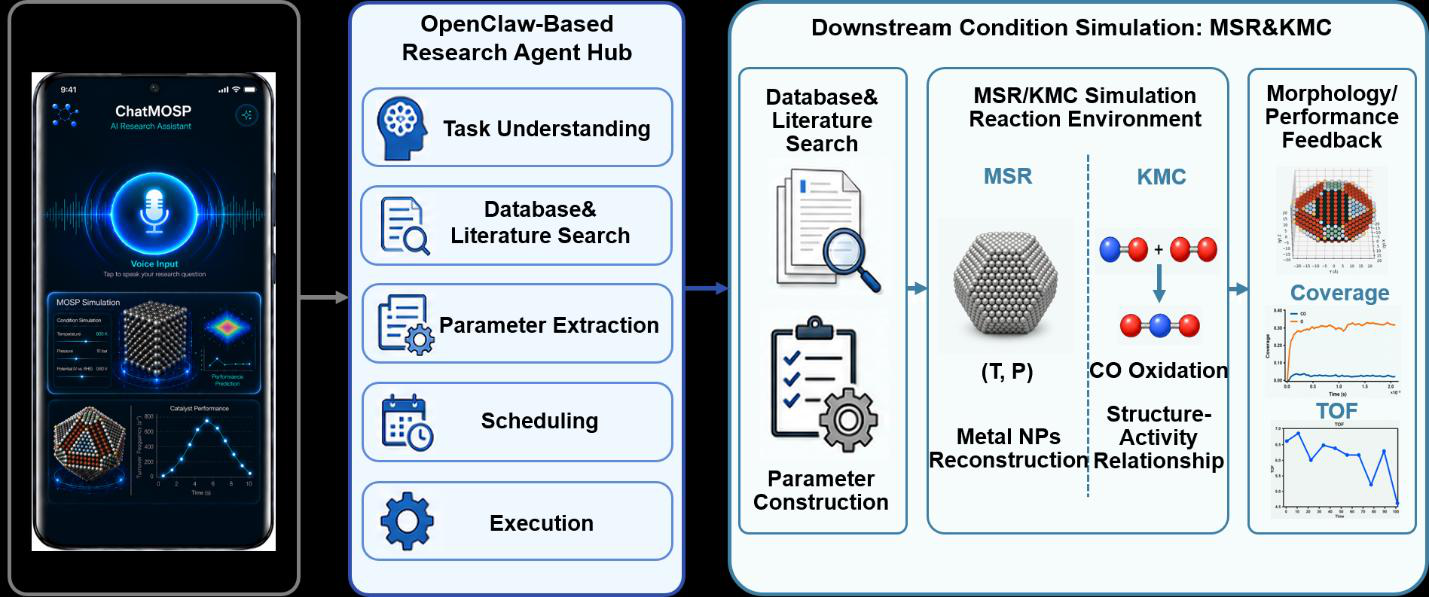
Fig 1: Closed-loop ChatMOSP workflow for mobile catalyst-state simulation.
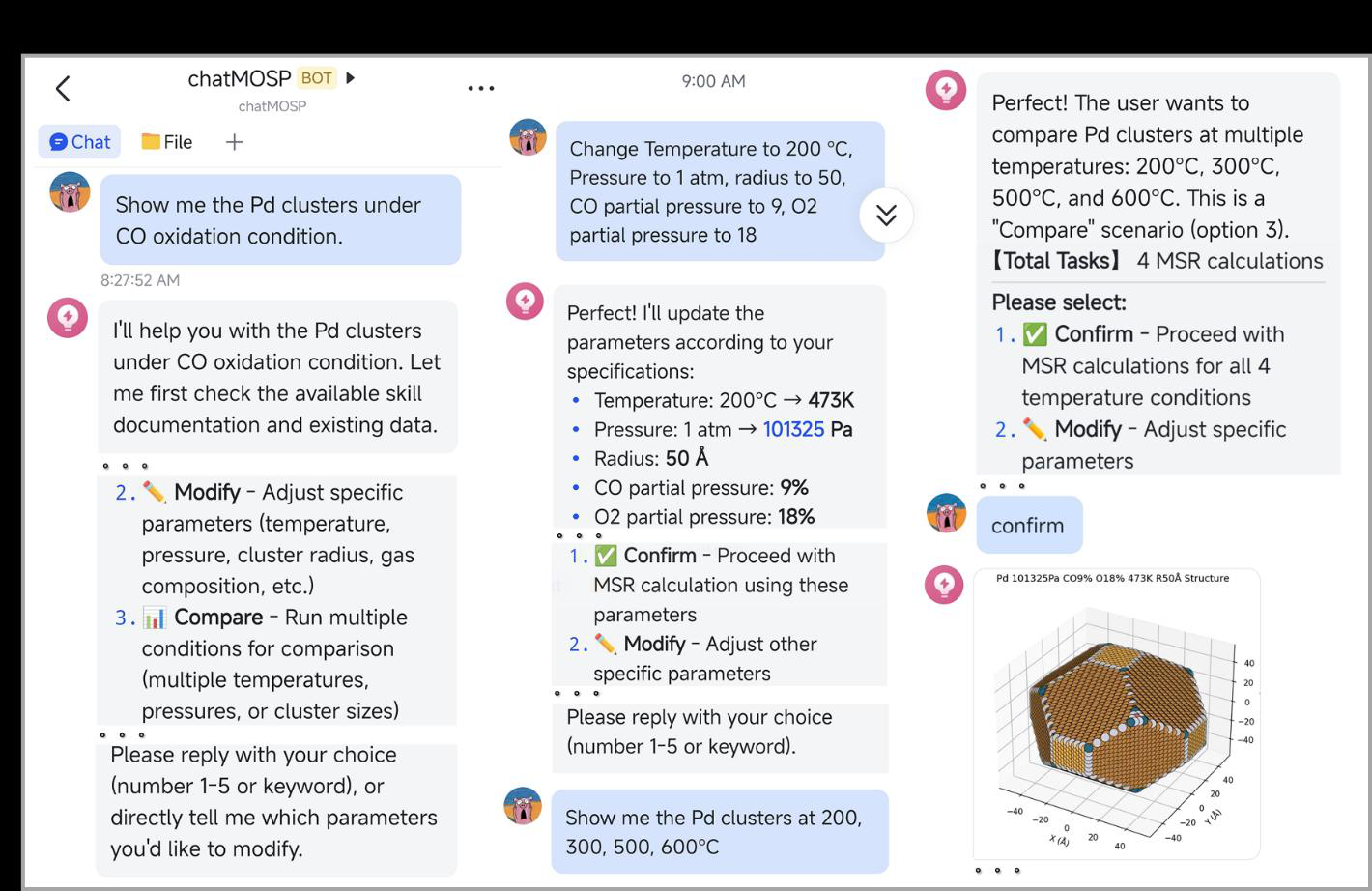
Fig 2: a. Mobile interface dialogue showing parameter display and modification for Pd cluster
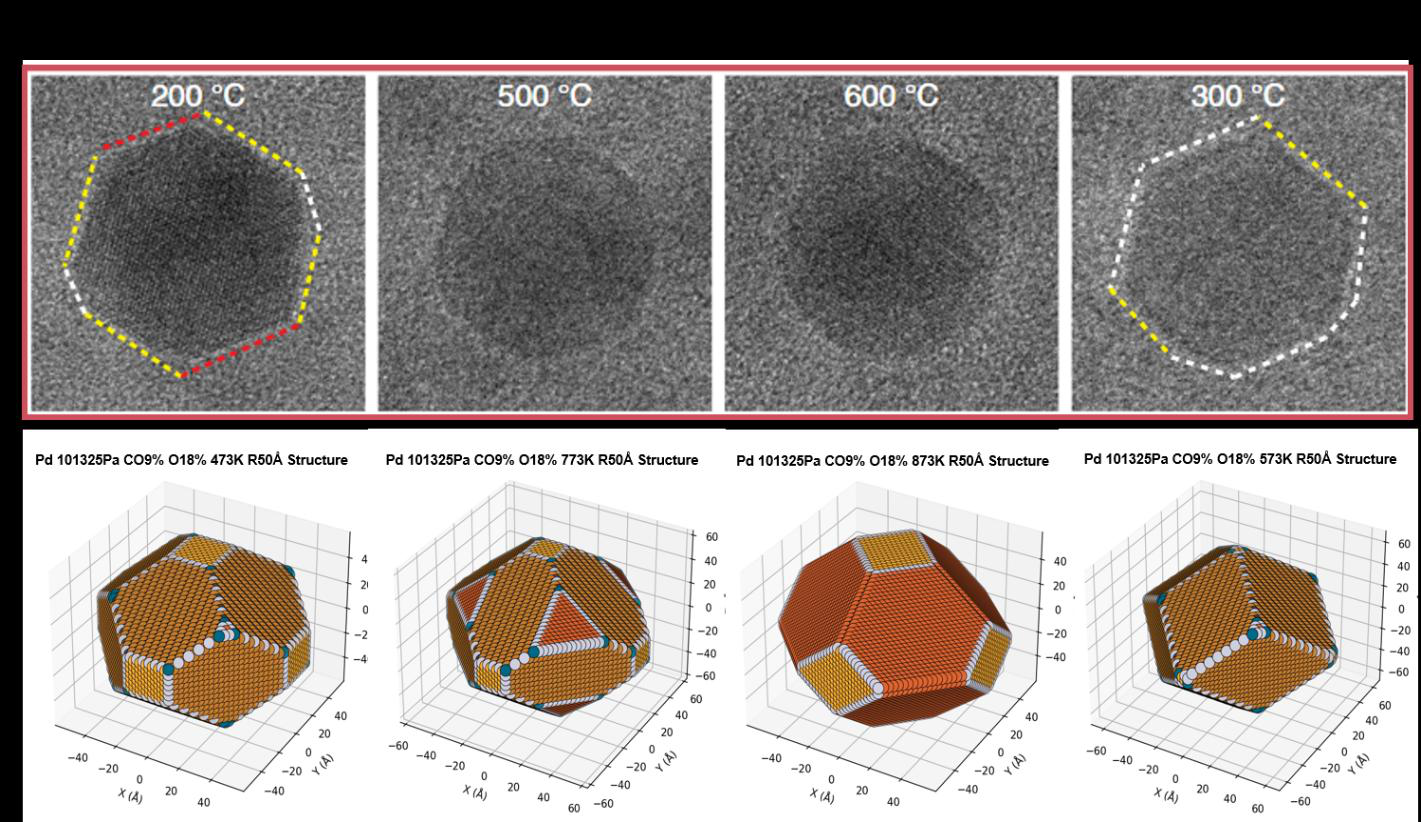
Fig 3 (page 10).
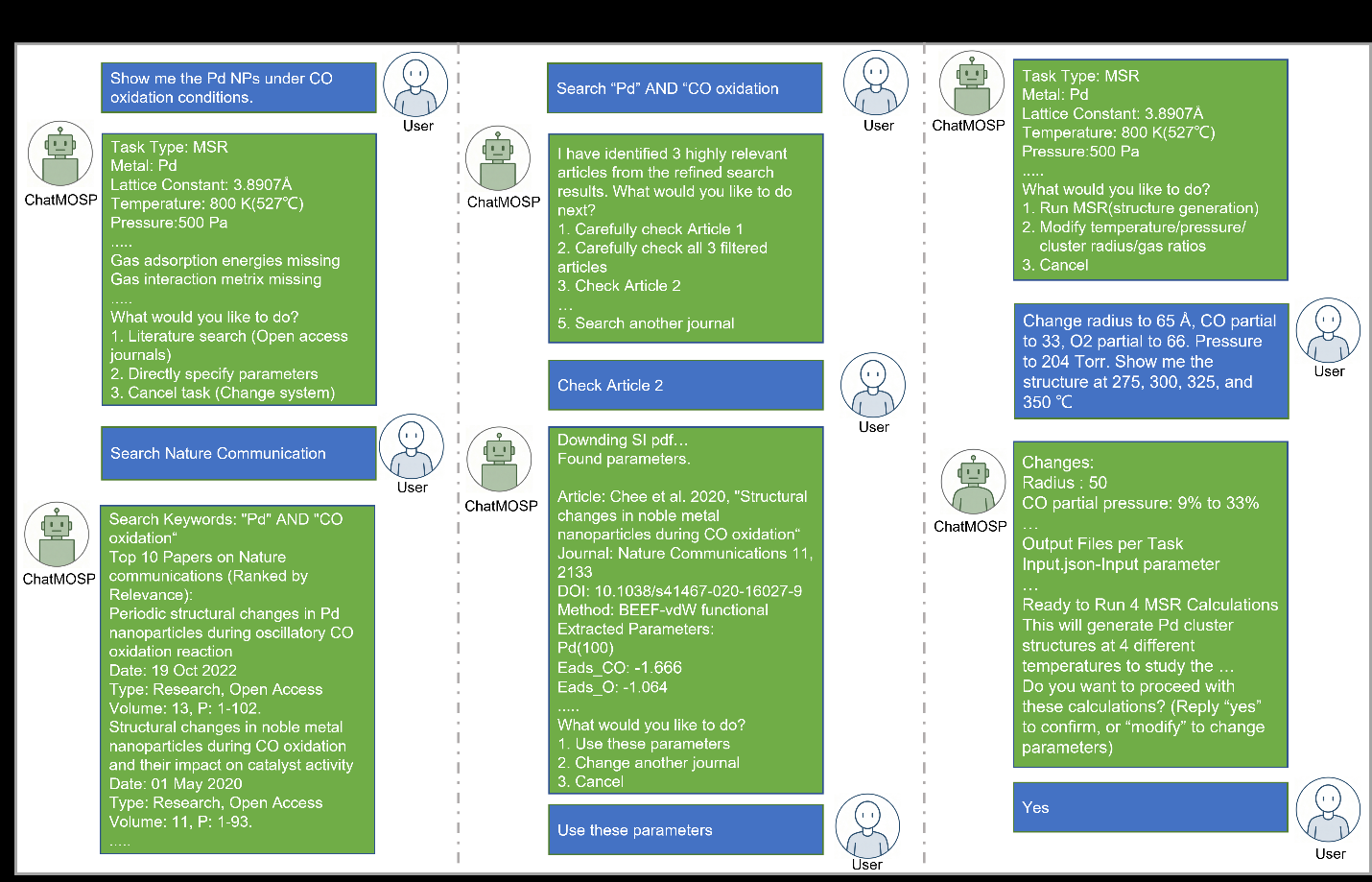
Fig 3: a. Mobile interface showing the parameter retrieval workflow. The system identifies
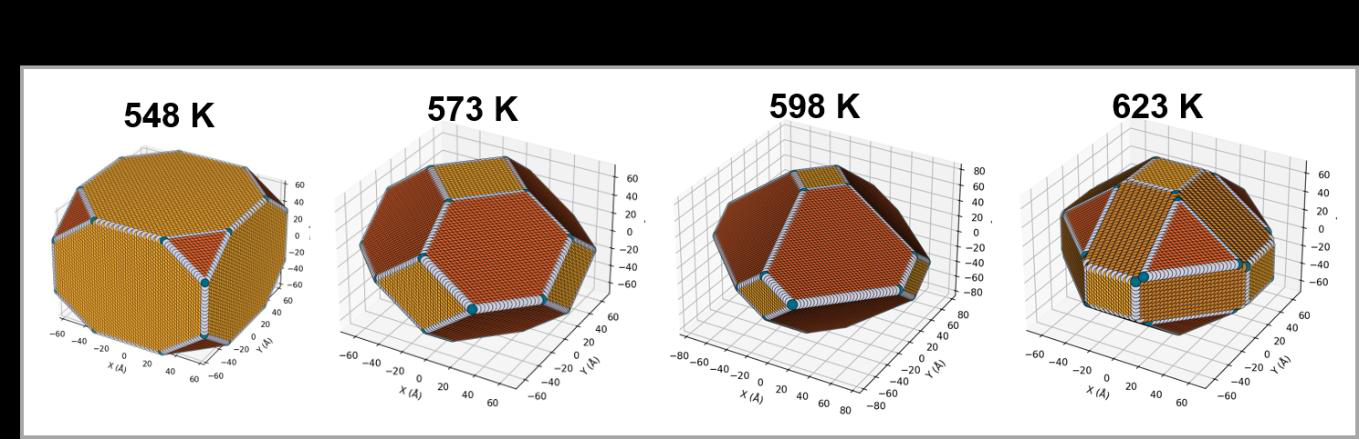
Fig 4: a. Mobile conversational workflow for database-driven Pt MSR/KMC simulations b.
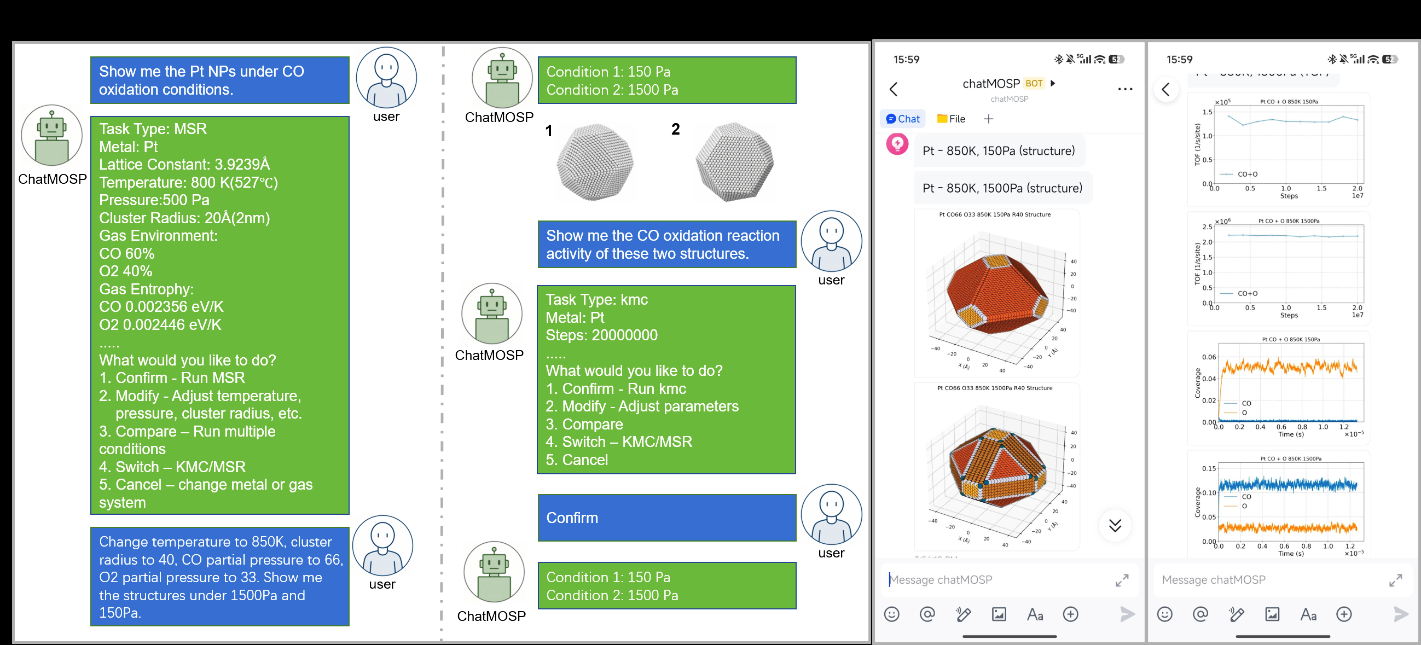
Fig 6 (page 15).
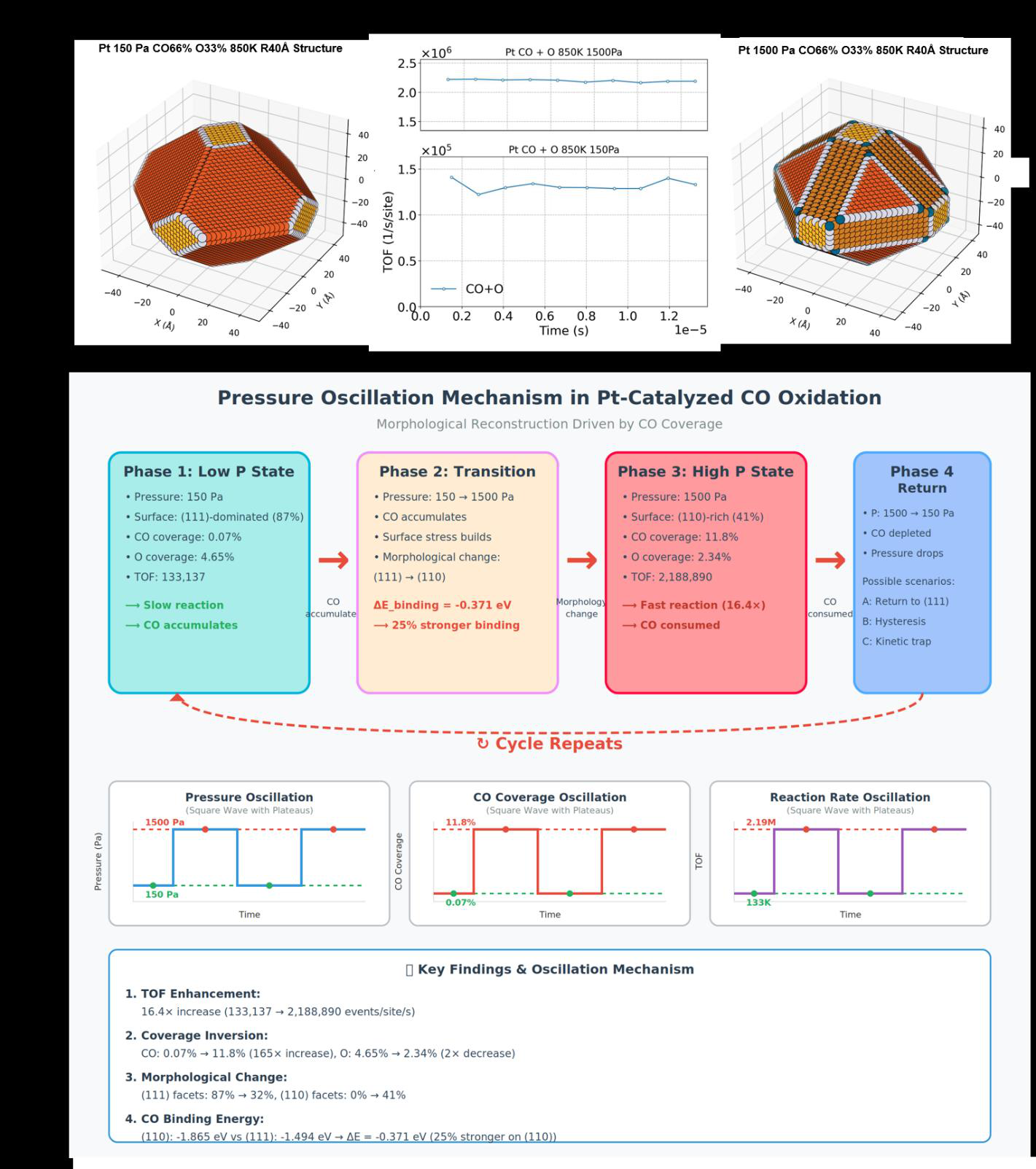
Fig 5: a. The ChatMOSP-generated Pt morphologies and KMC-derived TOFs at 850 K under
Limitations
- Parameter retrieval from literature depends on availability and quality of open-access publications, requiring user validation to prevent erroneous inputs.
- MOSP and ChatMOSP assume quasi-static reaction conditions and do not model detailed transient dynamics beyond defined morphologies and kinetic Monte Carlo simulations.
- Computational expense of KMC simulations (~12 hours for 20 million steps) limits real-time interaction and requires backend supercomputing resources.
- ChatMOSP’s physical accuracy hinges on the fidelity of MOSP parameters and models; inherently approximate DFT-derived energetics and kinetic assumptions remain.
- No adversarial robustness or security threat assessment conducted, limiting assessment of reliability under malicious or out-of-distribution inputs.
- Code and datasets appear closed-access or unavailable publicly, limiting reproducibility outside collaborating groups.
Open questions / follow-ons
- How can literature-based parameter extraction be improved for broader catalyst systems and less studied reactions with sparse data?
- Can ChatMOSP be extended to incorporate real-time operando experimental data feeds for dynamic simulation and feedback-control applications?
- What are the impacts of transient reaction dynamics and more complex reaction networks beyond steady-state MSR-KMC simulations on morphology-performance predictions?
- How generalizable is ChatMOSP to multi-component alloy catalysts, complex supports, or non-CO oxidation reactions?
Why it matters for bot defense
While not directly related to CAPTCHA or bot-defense, ChatMOSP demonstrates the power of a chemistry-grounded mobile agent combining natural-language interface and physics-based multiscale simulation workflows. This methodology exemplifies how domain-specific scientific agents can translate ambiguous human input into validated model executions, leveraging hierarchical LLM task orchestration with constrained physical model outputs. Bot-defense practitioners might draw parallels in developing interpretable domain-aware agents that link natural language commands to robust backend computations or workflows. The modular skill architecture and fallback mechanisms (e.g., online literature retrieval to patch missing parameters) illustrate robust workflow design patterns valuable for scientific agent development. Captchas involving scientific knowledge or adaptive challenge generation might similarly benefit from agents that understand task context and access curated external databases for consistent interpretation. However, ChatMOSP’s key contribution lies in scientific accessibility rather than adversarial interaction or user verification.
Cite
@article{arxiv2605_24265,
  title={ ChatMOSP: A Chemistry-Grounded Mobile Agent for Working-State Catalyst Simulations },
  author={ Sanyang Ye and Rui Qi and Beien Zhu and Yi Gao },
  journal={arXiv preprint arXiv:2605.24265},
  year={ 2026 },
  url={https://arxiv.org/abs/2605.24265}
}