
Extreme Optical Field Confinement and Enhancement in a Plasmonic Picopatch within a Nanoparticle-on-Mirror Resonator
Source: arXiv:2605.22780 · Published 2026-05-21 · By Jinna He, Mario Zapata-Herrera, Xabier Arrieta, Mingli Wan, Yuan Zhang, Javier Aizpurua et al.
TL;DR
This work addresses the challenge of confining optical modes to volumes approaching 1 nm^3 within plasmonic nanogaps, a key goal for enhancing light-matter interactions beyond the diffraction limit. The authors theoretically analyze a Nanoparticle-on-Mirror (NPoM) plasmonic resonator containing a 'picopatch'—a nanoscale patch formed by the upward lifting of a small cluster (~10 atoms) of gold atoms from the metallic substrate into the gap. Using detailed classical electromagnetic simulations combined with analytical modeling, they characterize the plasmonic modes localized at the picopatch and their strong coupling to the NPoM cavity modes. This coupling produces hybrid modes exhibiting an electric field enhancement up to approximately 2000-fold and extremely small effective mode volumes near 1 nm^3. The work highlights the broad tunability of these modes via picopatch size and geometry and verifies their robustness to changes in picopatch shape and increased absorption losses modeling quantum effects. Compared to single-atom picocavities, picopatches offer a promising alternative route to achieve unprecedented light confinement and enhancement in plasmonic cavities.
Key findings
- Picopatch-localized plasmonic modes enable electric field enhancements of ~2000x at the picopatch center, an order of magnitude higher than ~200x for a bare NPoM nanocavity (Fig. 3c).
- Effective mode volumes of hybrid modes formed via strong coupling between picopatch and NPoM cavity modes approach ~1 nm^3 (Fig. 6), close to volumes of a few atomic units.
- Analytical modeling combined with simulations shows strong anti-crossing and hybridization between the picopatch s’01 mode and nanocavity s01 mode near λ ≈ 850 nm and slot radius rslot ≈ 1.4-1.8 nm (Fig. 4a,b).
- Changing picopatch slot radius rslot from ~0.7 nm to ~2.1 nm tunes the picopatch mode resonance from λ ≈ 610 nm to λ ≈ 1100 nm, covering visible to near-IR regimes (Fig. 3d).
- Increasing absorption losses in classical simulations by factors up to 3 (mimicking quantum nonlocality effects) only moderately reduces electric field enhancement of picopatch modes (Fig. 7c).
- The presence of the picopatch induces spectral splitting in absorption and scattering spectra with two hybridized modes, evidencing strong near-field and far-field coupling effects from a volume ~3.8 nm^3 (Figs. 3a,b and 4a,b).
- Comparison of infinite planar waveguide models shows that MIMI modes in the picopatch have in-plane wavevectors q ≈ 100 k0, an order of magnitude larger than MIM gap modes, enabling unprecedented confinement (Fig. 2).
- Classical electromagnetic theory agrees well with ab-initio quantum calculations for δ ≳ 0.2 nm spacer thickness, supporting the validity of the modeling approach.
Methodology — deep read
Threat Model & Assumptions: The study assumes classical electromagnetic theory to characterize plasmonic modes in the picopatch-containing NPoM resonator, neglecting direct electron tunneling or quantum nonlocal effects except phenomenologically via increased absorption losses. The structure is illuminated by a p-polarized plane wave at 45° incidence. The localized picopatch forms a small sub-nanometer feature within an optically accessible nanogap. The analysis focuses on mode formation, confinement, and coupling, under the assumption that the geometry and metal permittivity are known and stable during measurement.
Data and Simulation Setup: The geometry consists of a truncated Au nanosphere (radius 40 nm, flat facet radius 30 nm) suspended over a semi-infinite Au substrate, separated by a 1.1 nm thick dielectric spacer (ε=2.1). The picopatch is modeled as a lifted Au monolayer patch (thickness 0.235 nm, radius rslot ~1.4 nm) separated by 0.2 nm vacuum from the substrate, forming a sub-nanometer vacuum slot. The entire geometry is rotationally symmetric. The gold permittivity is taken from experimental data. Simulations use COMSOL Multiphysics finite-element full-wave solutions with perfectly matched layers. Mesh and domain size were varied to ensure convergence (details in Supplementary Information).
Architecture / Algorithms: Electromagnetic scattering and absorption cross sections and near-field enhancements are computed from simulated fields. Analytical waveguide dispersion relations for infinite planar MIM and MIMI layered structures are solved to obtain plasmonic mode dispersions guiding interpretation of modes in the full 3D nanostructure. The resonant wavelengths of Fabry-Pérot-like transverse-cavity plasmon (TCP) modes are estimated from resonance conditions combining Bessel function roots and waveguide dispersion. Mode hybridization is modeled as two coupled harmonic oscillators characterized by resonance frequencies, dampings, and coupling strength, fitted to absorption spectra.
Training / Computational Regime: Not applicable as this is a physics simulation study. Computations were carried out on standard computational hardware implementing frequency-domain finite element solutions. Parameter sweeps across picopatch radius and frequency were performed.
Evaluation Protocol: Numerical spectra of scattering, absorption, and near-field enhancements are calculated for bare NPoM vs. NPoM with picopatch geometries. Mode splitting and anti-crossing features in spectra are identified to characterize coupling. Near-field distributions are visualized to assign mode symmetries. Effective mode volumes are extracted from field distributions to quantify confinement. Robustness is evaluated by modifying picopatch shape and increasing metal absorption losses. Analytic dispersion relations for infinite waveguides validate interpretation of numerically observed modes. Coupled oscillator model fits to absorption spectra quantify coupling strengths.
Reproducibility: Code and simulation files are not publicly released per the paper. Gold permittivity and geometry parameters are explicitly given. Analytical expressions and numerical strategies are fully described enabling reproduction in principle. Supplementary Information provides convergence and mesh details.
Example Walkthrough: For the picopatch with rslot=1.435 nm, the authors simulate scattering and absorption cross-sections under 45° p-polarized illumination. They observe a splitting of the s01 nanocavity mode at ~900 nm into two hybrid modes due to strong coupling with the localized picopatch mode s’01. Near-field enhancement at the center of the picopatch reaches ~2000, much greater than the ~200 achieved without the picopatch. Mode volumes are then computed from the enhanced fields, found to approach ~1 nm^3 indicating extreme confinement. By systematically varying picopatch size and fitting coupled oscillator models to absorption spectra, the coupling strength g and mode energies are extracted confirming hybridization. Further simulations introducing additional absorption losses confirm robustness and demonstrate only moderate reduction in enhancement, validating the classical electromagnetic treatment in the presence of nonlocal quantum corrections approximated as increased loss.
Technical innovations
- Identification and characterization of plasmonic picopatch modes formed by lifting a nanoscale gold atomic patch inside a NPoM gap yielding mode volumes near 1 nm^3.
- Demonstration of strong coupling and mode hybridization between picopatch localized modes and larger-scale NPoM cavity modes with clear anti-crossing behavior.
- Analytical modeling of localized picopatch transverse cavity plasmons via MIMI planar waveguide dispersions combined with Fabry-Pérot resonance conditions involving reflection phase corrections.
- Quantification of robustness of extreme field enhancements under geometry variations and increased absorption losses mimicking quantum nonlocal effects.
Baselines vs proposed
- Bare NPoM nanocavity: max electric field enhancement |E/E0| ≈ 200 vs. NPoM with picopatch: |E/E0| ≈ 2000 (order of magnitude improvement) (Fig. 3c).
- Effective mode volume Veff for bare NPoM ≈ tens to hundreds of nm^3 vs. NPoM with picopatch hybrid modes approaching ≈ 1 nm^3 (Fig. 6).
- Classical absorption linewidth (γ) baseline from bare NPoM s01 mode: ℏγ = 35 meV; strong coupling with picopatch yields splitting > γ confirming strong coupling regime (Fig. 4c).
- Increasing absorption losses in Au by factor 3 reduces |E/E0| from ~2000 to ~1300, maintaining extreme enhancement (Fig. 7c).
Figures from the paper
Figures are reproduced from the source paper for academic discussion. Original copyright: the paper authors. See arXiv:2605.22780.
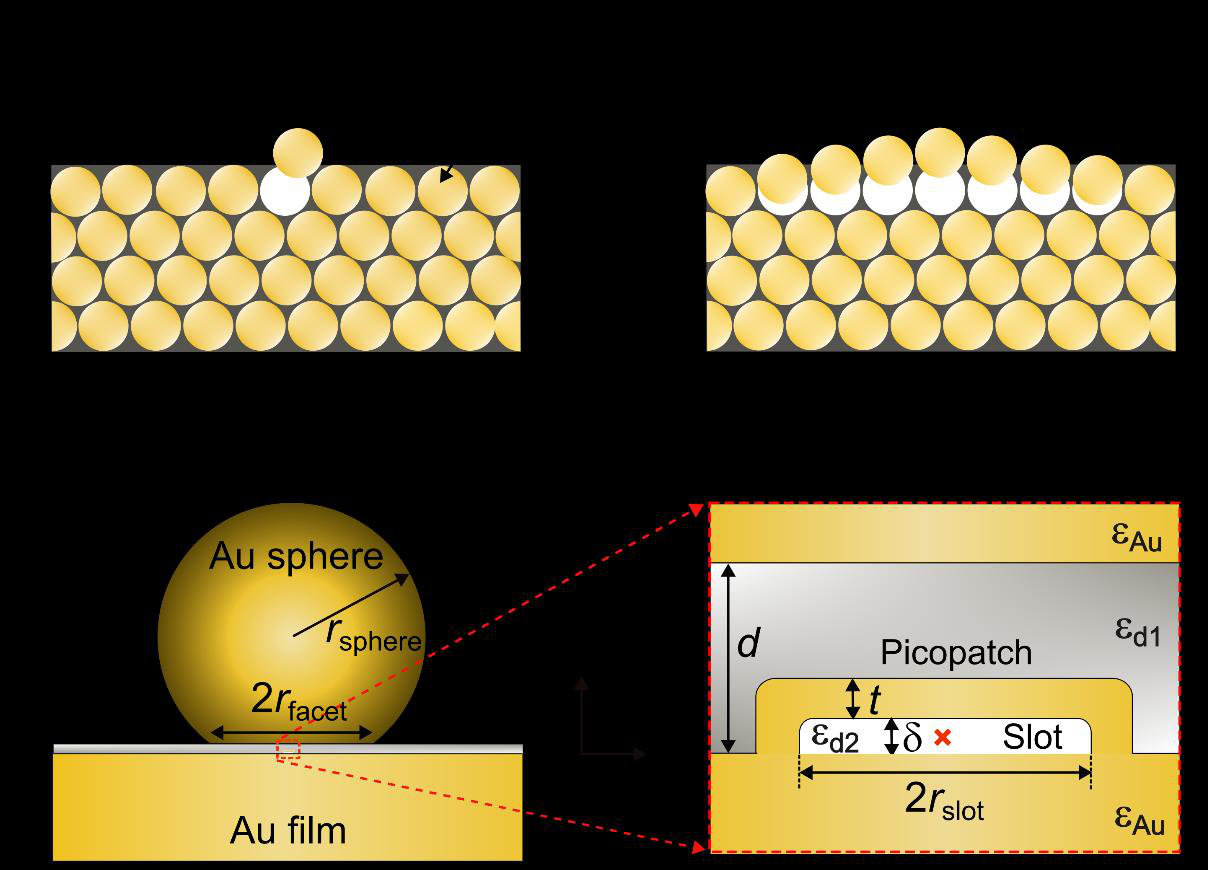
Fig 1: NPoM resonator with picopatch. (a, b) Schematics of an Au interface, showing (a) a single
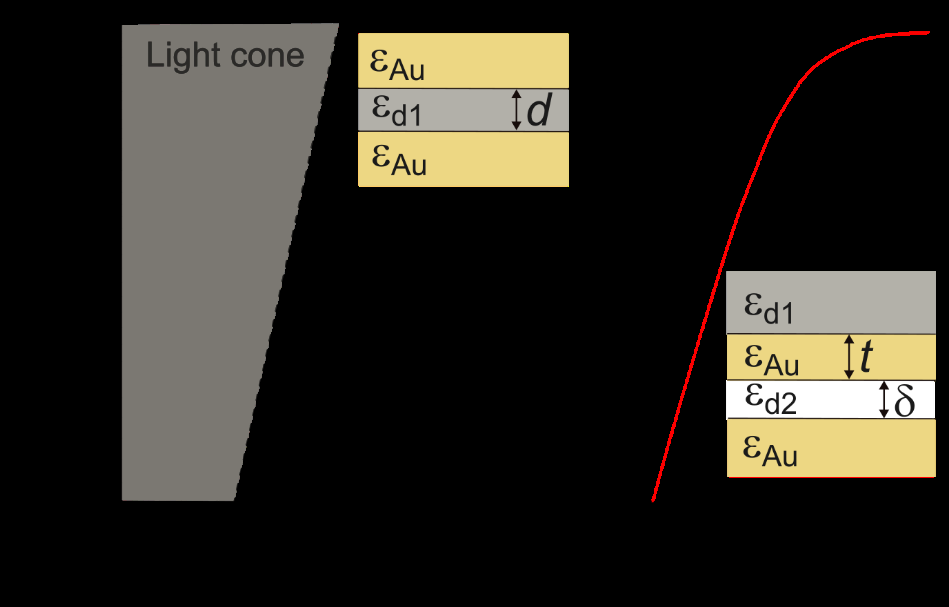
Fig 2: Laterally infinite MIM and MIMI waveguides. Dispersion relationships of propagating
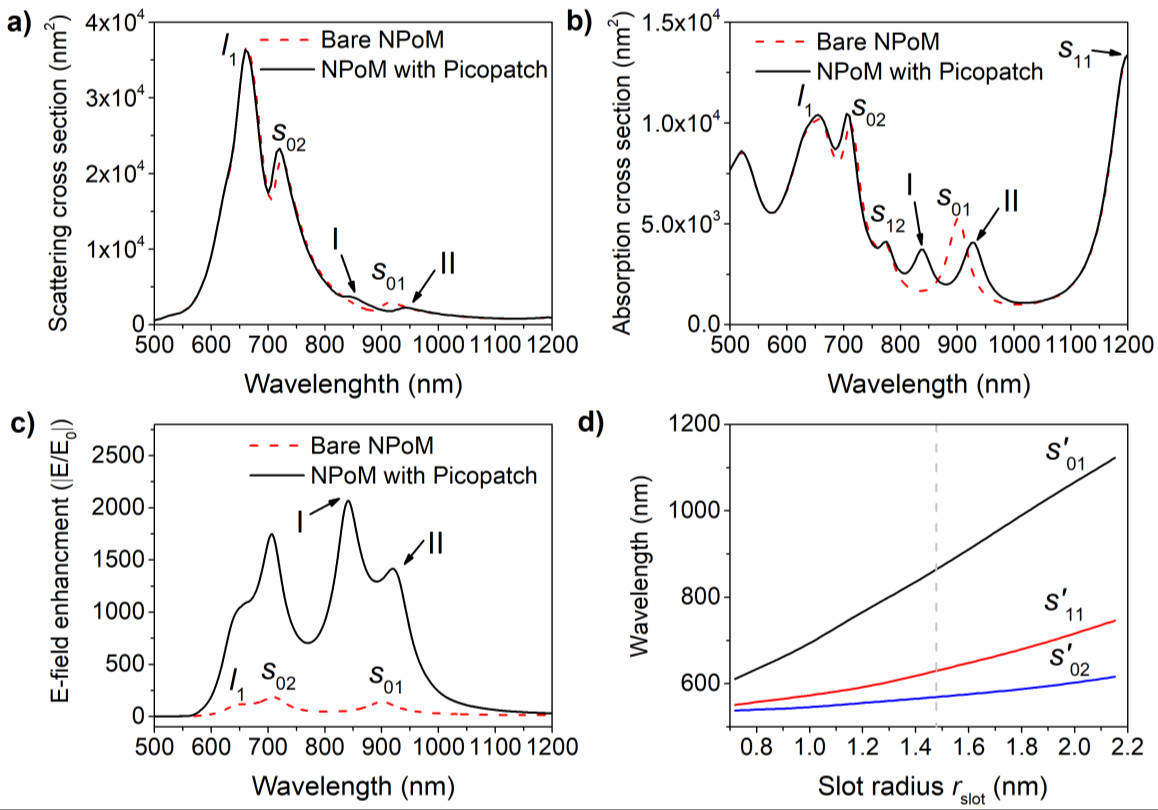
Fig 3: Optical response of bare NPoM and NPoM containing a picopatch. (a) Scattering and (b)
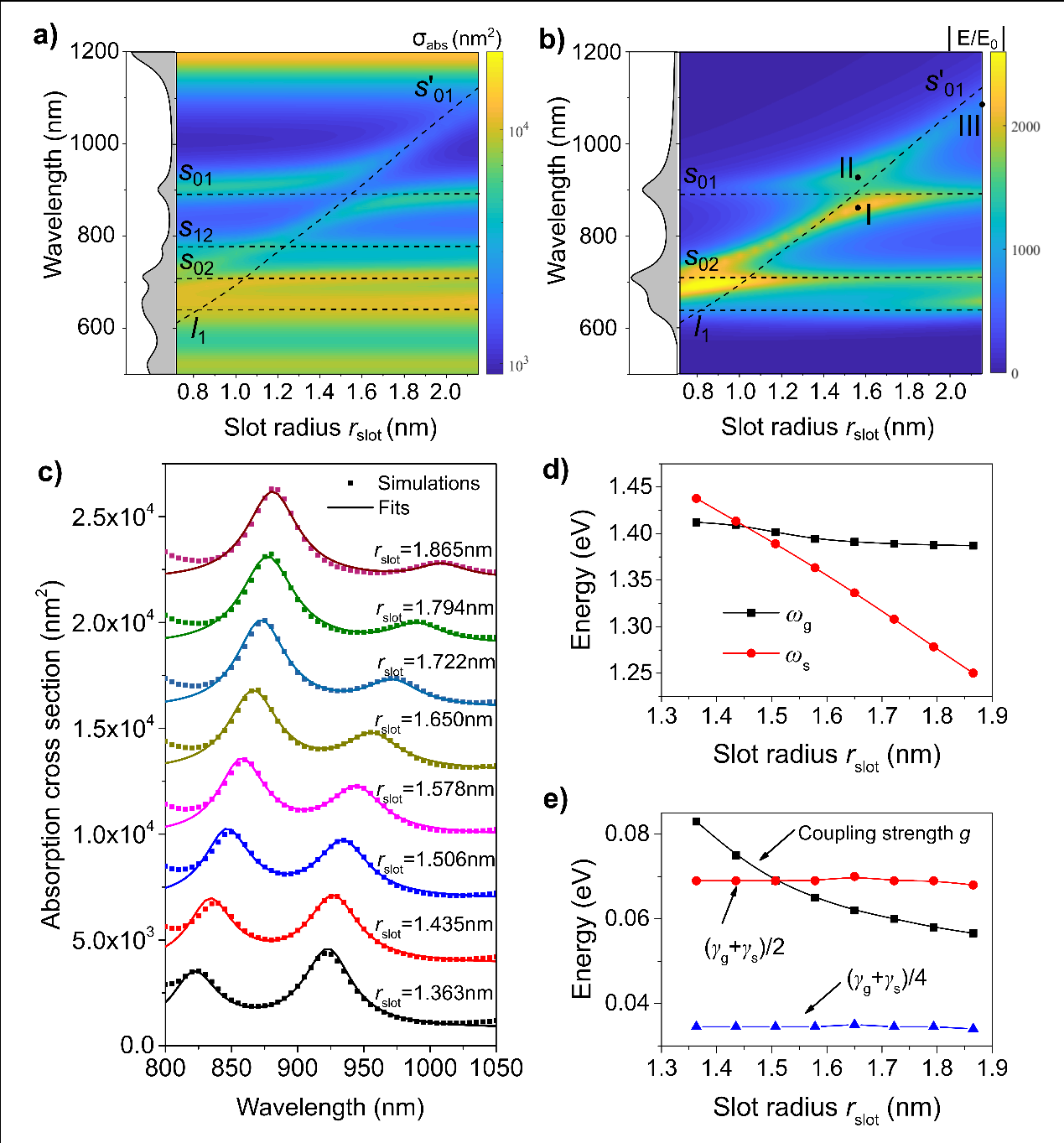
Fig 4: Mode hybridization and fitting based on the two coupled-oscillator model. (a, b) Color
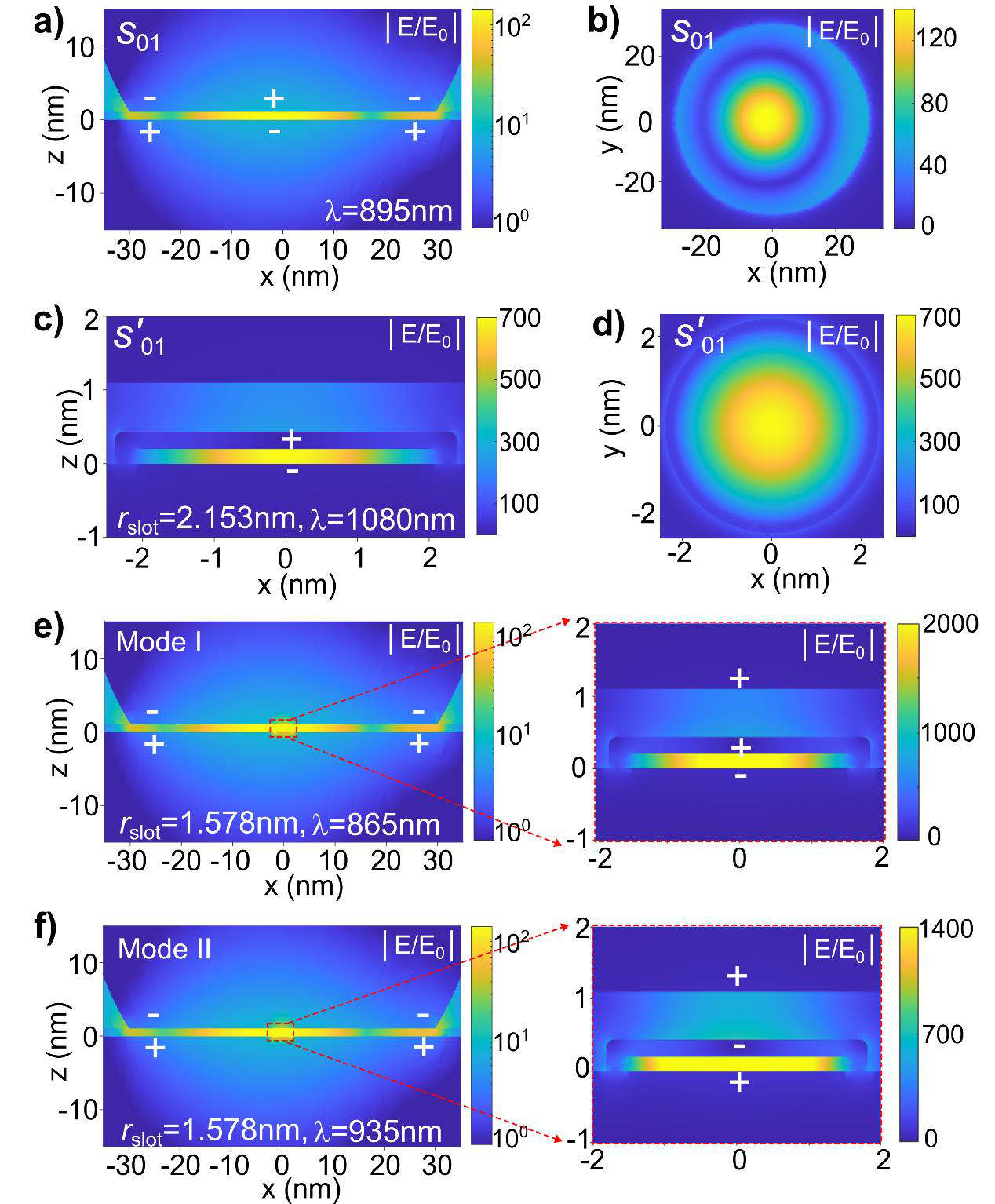
Fig 5: Near-field spatial distributions of different nanocavity and picopatch modes. (a, b) Field
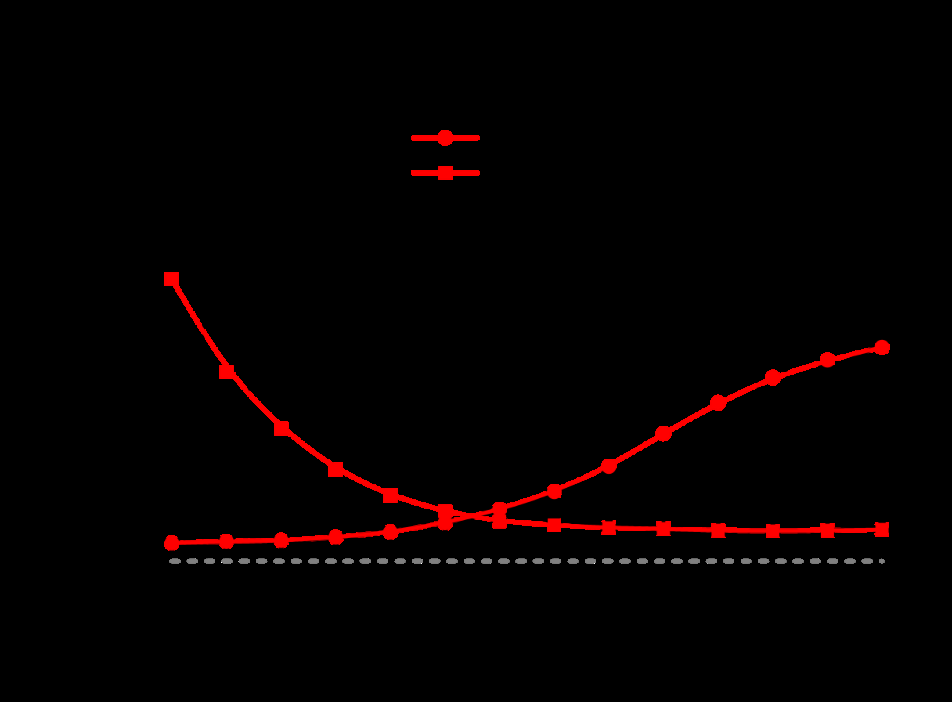
Fig 6: Effective mode volume Veff of the two hybrid modes of the NPoM with picopatch. Veff as a
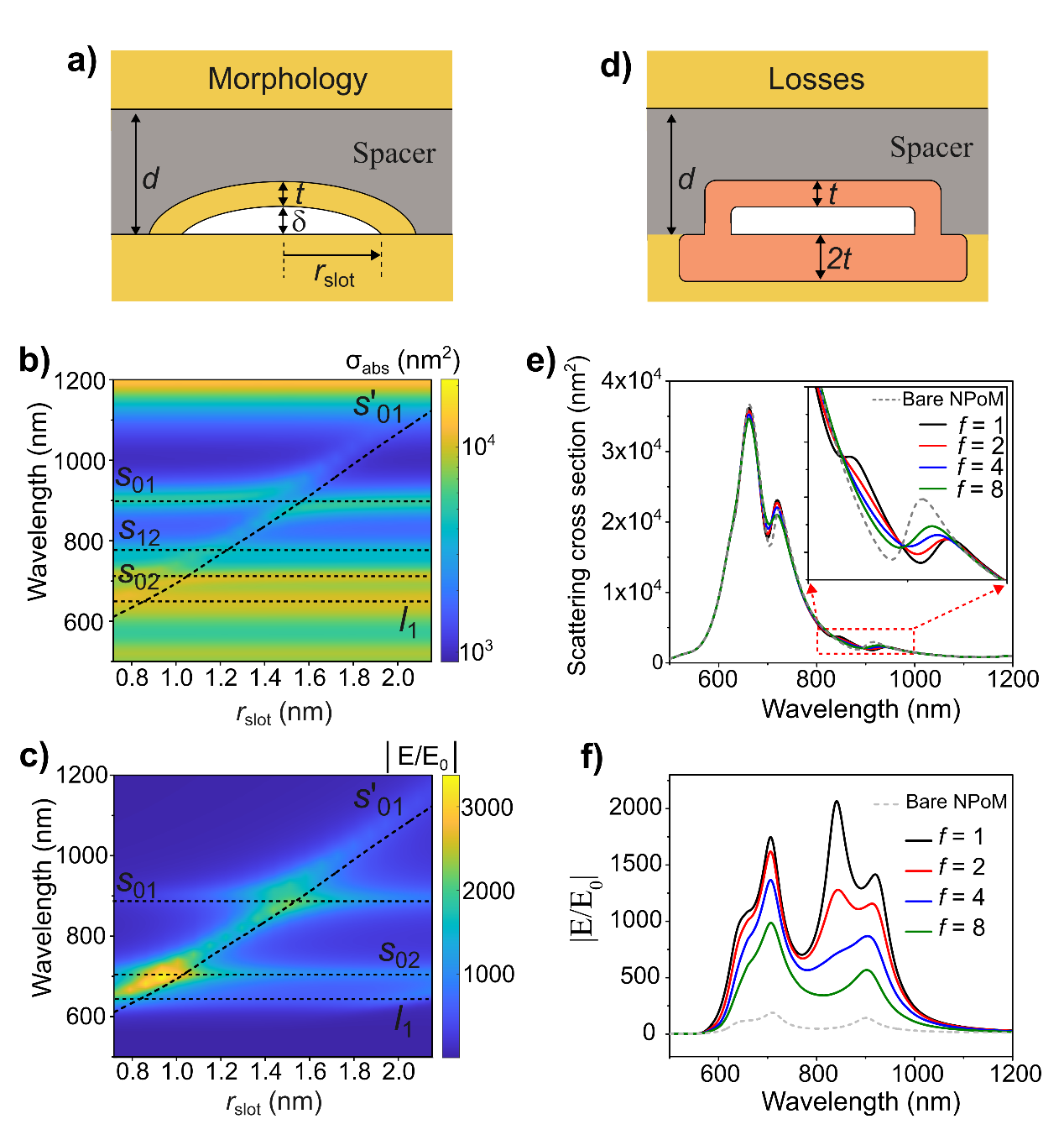
Fig 7: Robustness of the response to the exact shape of the picopatch and to material losses. (a)
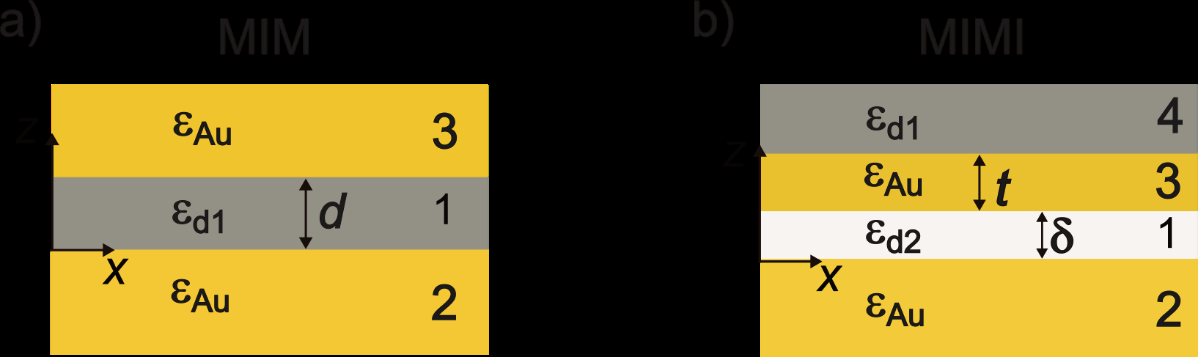
Fig 8 (page 37).
Limitations
- Classical electromagnetic simulations neglect explicit quantum effects like electron tunneling, nonlocality beyond phenomenological loss increase, and electron spill-out.
- Geometry of picopatch modeled as idealized rotationally symmetric patches; actual atomistic morphologies could differ and influence results.
- Absorption losses in classical gold permittivity may underestimate realistic losses at sub-nanometer scales, though authors partially address this by artificial loss increases.
- No experimental validation or direct comparison with measured spectra of picopatch NPoM resonators; predictions are theoretical.
- Simulations do not consider temporal fluctuations or atomic motion dynamics of picopatches under illumination.
- Effect of environmental factors such as temperature, substrate roughness, or molecular adsorbate variability is not assessed.
Open questions / follow-ons
- How do explicit quantum nonlocal and tunneling mechanisms quantitatively modify picopatch mode volumes and field enhancement beyond classical approximations?
- What experimental techniques can reliably fabricate and characterize controlled picopatches with deterministic geometry for validation?
- How stable are picopatch-induced hybrid modes under temporal fluctuations, thermal effects, and laser irradiation in real environments?
- Can picopatch geometries be engineered to optimize coupling to emitters or realize strong plasmon-exciton coupling at the single- or few-molecule level?
Why it matters for bot defense
While this paper focuses on plasmonic nanoresonators and extreme field confinement, its insights into light localization at sub-nanometer scales could inform the design of nanostructured optical elements to enhance nonlinear optical processes, potentially applicable in bot-detection optical sensors or nanoscale labeling techniques. Understanding such strongly confined modes and their tunability aids bot-defense engineers interested in leveraging plasmon-enhanced signals as physical unclonable function elements or anti-bot detectors based on optical scattering signatures. However, the paper does not directly address bot detection or CAPTCHA challenges, and the physical principles relate more to material and nanophotonic sensor design than to algorithmic bot-defense. Nonetheless, the extreme sensitivity of picopatch modes to atomic-scale geometry suggests potential to create nanoscale optical traps or hotspots for detecting anomalous bot-driven interactions mediated by nanoscale optical signatures.
Cite
@article{arxiv2605_22780,
  title={ Extreme Optical Field Confinement and Enhancement in a Plasmonic Picopatch within a Nanoparticle-on-Mirror Resonator },
  author={ Jinna He and Mario Zapata-Herrera and Xabier Arrieta and Mingli Wan and Yuan Zhang and Javier Aizpurua and Ruben Esteban },
  journal={arXiv preprint arXiv:2605.22780},
  year={ 2026 },
  url={https://arxiv.org/abs/2605.22780}
}