
Interlayer electronic coherence links magnetism and superconductivity in Ruddlesden-Popper nickelates
Source: arXiv:2605.18524 · Published 2026-05-18 · By Feiyang Liu, Lixing Chen, Enkang Zhang, Ying-Jie Zhang, Jun Zhao
TL;DR
This paper addresses the unresolved question of how electronic dimensionality influences magnetism and superconductivity in Ruddlesden-Popper nickelates, a family of layered correlated materials structurally analogous to cuprates. The authors report high-precision, crystallographic-axis-resolved dc transport measurements on high-quality single crystals of bilayer La3Ni2O7 and trilayer La4Ni3O10 and Pr4Ni3O10 nickelates. Employing a six-terminal measurement geometry minimizes artifacts from current redistribution inherent to strong anisotropy, enabling self-consistent extraction of intrinsic in-plane (ρ∥) and out-of-plane (ρ⊥) resistivities on the same crystal. This reveals a much stronger electronic anisotropy—up to four orders of magnitude—than prior four-probe measurements suggested. Notably, the out-of-plane resistivity shows a nonmonotonic temperature dependence, reflecting a crossover from coherent interlayer band-like transport at low temperature to incoherent transport at higher temperature. The authors find that the low-temperature resistivity anisotropy inversely correlates with the maximum superconducting Tc observed under pressure, suggesting that enhanced interlayer electronic coherence favors superconductivity in these nickelates. Furthermore, the out-of-plane resistivity ρ⊥ is highly sensitive to spin- and charge-density-wave orders, exhibiting pronounced anomalies absent or weak in ρ∥, indicating a strong coupling between interlayer coherence and magnetism. These findings establish interlayer electronic coherence as a key organizing principle connecting dimensionality, magnetism, and superconductivity in the RP nickelate family and provide crucial experimental constraints for microscopic theories of nickelate high-Tc superconductivity.
Key findings
- Using a six-terminal geometry, intrinsic resistivity anisotropy 𝛾ρ=ρ⊥/ρ∥ of up to ~1.8×10^4 (La4Ni3O10), 1.8×10^3 (Pr4Ni3O10), and 1.7×10^2 (La3Ni2O7) was extracted, orders of magnitude larger than prior four-probe values <10.
- Out-of-plane resistivity ρ⊥ exhibits a nonmonotonic temperature dependence with a maximum at intermediate T, revealing a universal coherent-to-incoherent crossover in interlayer transport linked to loss of single-particle kz coherence.
- Low-temperature ρ∥ and ρ⊥ both follow Fermi-liquid T^2 resistivity below ~50 K across all compounds, consistent with coherent quasiparticle transport.
- Pronounced anomalies appear in ρ⊥ near coupled charge- and spin-density-wave (CDW/SDW) transitions (around 110–158 K), while ρ∥ shows only weak or suppressed signatures, highlighting ρ⊥ as a selective probe of magnetic/density-wave orders.
- Thermal expansion measurements rule out lattice expansion as cause for increased anisotropy below DW transitions; instead, electronic/magnetic reconstruction enhances anisotropy.
- Bilayer La3Ni2O7 has lower anisotropy but higher maximum pressure-induced Tc (~80 K) than trilayer La4Ni3O10 (~15 K Tc) and Pr4Ni3O10 (~43 K Tc), revealing an inverse correlation between resistivity anisotropy and superconducting Tc.
- This trend suggests stronger interlayer electronic coherence (lower anisotropy) promotes higher superconducting Tc in RP nickelates, differing from cuprates where more layers generally yield higher Tc.
- Hysteresis and bifurcation in ρ⊥ vs T in Pr4Ni3O10 between 26 K and DW transition indicate a dimensional crossover in magnetic order and complex spin correlations coupling to interlayer charge transport.
Methodology — deep read
The primary threat model is not adversarial but seeks intrinsic bulk electronic properties without extrinsic measurement artifacts. The authors assume the samples are clean, high-quality single crystals representative of bulk RP nickelates.\n\nHigh-quality single crystals of bilayer (La3Ni2O7) and trilayer (La4Ni3O10, Pr4Ni3O10) RP nickelates were grown via high-pressure optical floating zone technique. Crystals were Laue-oriented and cut into bars approximately 0.8–1.1 mm long, 0.3–0.5 mm wide, and 40–60 µm thick. All faces were mechanically polished flat. Gold stripes sputtered onto polished surfaces enabled fabrication of electrical contacts, with 25-μm gold wires attached by silver paint.\n\nTo overcome challenges of extracting anisotropic resistivity in strongly layered materials—where conventional four-probe measurements suffer from current redistribution and inhomogeneous current flow—the authors employed a six-terminal geometry. Four contacts were patterned evenly spaced on both the top and bottom surfaces along the length axis. Current was applied between two outer contacts on the top surface, while voltages were simultaneously measured on inner top contacts (V_top) and corresponding bottom contacts (V_bot). This geometry allows self-consistent determination of intrinsic in-plane (ρ∥) and out-of-plane (ρ⊥) resistivities by solving inverse problems accounting for anisotropic current flow, using analytic expressions involving rapidly converging series expansions (Eqs. 1 and 2).\n\nFor samples with very large anisotropy at low temperatures and below density-wave transition temperatures, the effective current penetration depth is smaller than sample thickness, causing V_bot to become too small to measure reliably in standard geometry. To address this, an alternative configuration with current applied between opposing top and bottom contacts was used to obtain an independent voltage measurement V_⊥, allowing numerical solution for ρ∥ and ρ⊥. Details are provided in supplemental materials.\n\nTransport measurements were performed over a broad temperature range spanning well above and below coupled charge/spin density wave transition temperatures (~110–158 K) and superconducting transitions under pressure. Both warming and cooling curves were recorded to investigate hysteresis and magnetic crossover phenomena.\n\nThermal expansion measurements of out-of-plane lattice parameter were conducted with a high-resolution capacitive dilatometer to disentangle lattice effects from electronic origin of resistivity anisotropy changes near density wave transitions.\n\nData demonstrated metallic temperature dependence of ρ∥ with Fermi-liquid T^2 scaling below ~50 K, while ρ⊥ exhibited nonmonotonic temperature behavior tracing a crossover from coherent (band-like interlayer hopping) to incoherent transport as temperature increased. Resistivity anisotropy 𝛾ρ=ρ⊥/ρ∥ reached very large values at low temperature, confirming strong quasi-two-dimensionality previously underestimated in standard 4-probe measurements.\n\nThe correlation between low-temperature anisotropy and known maximum superconducting transition temperatures under pressure from prior literature was examined to infer implications for superconducting pairing mechanisms.\n\nWhile no code release is mentioned, the analytic formulas and measurement protocols rely on well-established transport inverse problem theory. Crystals are grown and characterized at Fudan University with reported reproducibility across multiple specimens.
Technical innovations
- Application of a six-terminal dc transport measurement geometry enabling self-consistent extraction of intrinsic in-plane and out-of-plane resistivities in strongly anisotropic layered nickelates, overcoming limitations of conventional four-probe methods.
- Demonstration of a universal coherent-to-incoherent crossover in interlayer transport via observation of nonmonotonic temperature dependence of out-of-plane resistivity ρ⊥ in RP nickelates.
- Identification of pronounced coupling between magnetic/density-wave orders and interlayer transport channel dominated by Ni 3d_z2 orbitals through selective sensitivity of ρ⊥ to these phases versus weak ρ∥ response.
- Empirical correlation establishing inverse relationship between ambient-pressure resistivity anisotropy and maximum superconducting Tc under pressure, revealing interlayer electronic coherence as a key organizing parameter favoring superconductivity in nickelates.
Datasets
- La4Ni3O10 high-quality single crystals — batch size not specified — grown by high-pressure optical floating zone at Fudan University
- Pr4Ni3O10 high-quality single crystals — batch size not specified — grown by high-pressure optical floating zone at Fudan University
- La3Ni2O7 high-quality single crystals — batch size not specified — grown by high-pressure optical floating zone at Fudan University
Baselines vs proposed
- Conventional four-probe resistivity measurements: resistivity anisotropy 𝛾ρ < 10 (ambient, room temperature) vs six-terminal method: 𝛾ρ up to 1.8 × 10^4 (La4Ni3O10 low temperatures)
- Bilayer La3Ni2O7: Maximum superconducting Tc under pressure ~80 K vs trilayer La4Ni3O10: Tc ~15 K, with La3Ni2O7 showing lower anisotropy ~170 vs ~1.8×10^4 for La4Ni3O10
- Out-of-plane thermal expansion measured lattice contraction upon cooling across DW transitions versus observed resistivity anisotropy increase, confirming anisotropy enhancement is not due to lattice spacing changes
Figures from the paper
Figures are reproduced from the source paper for academic discussion. Original copyright: the paper authors. See arXiv:2605.18524.
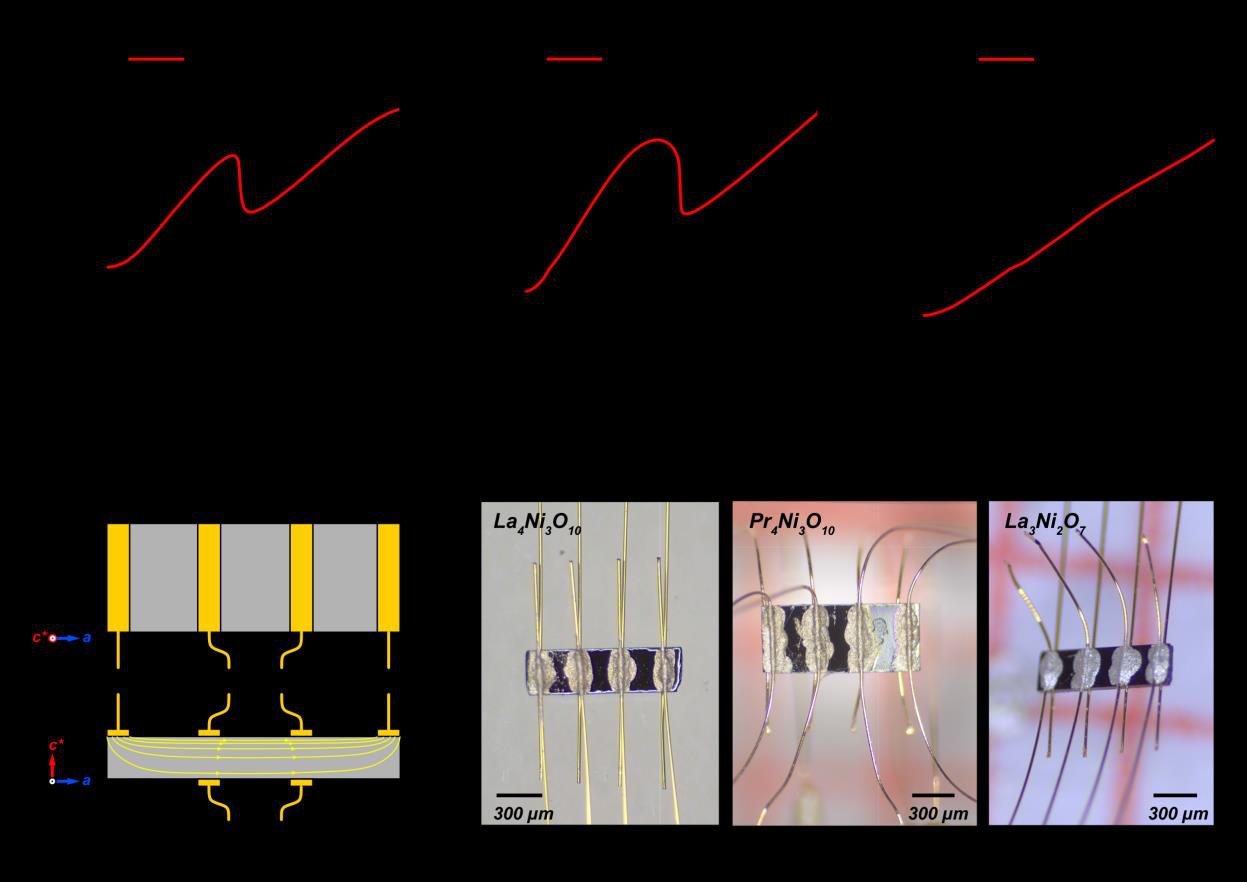
Fig 1: Six-terminal resistivity measurements on La4Ni3O10, Pr4Ni3O10, and La3Ni2O7. (a–c) Nominal
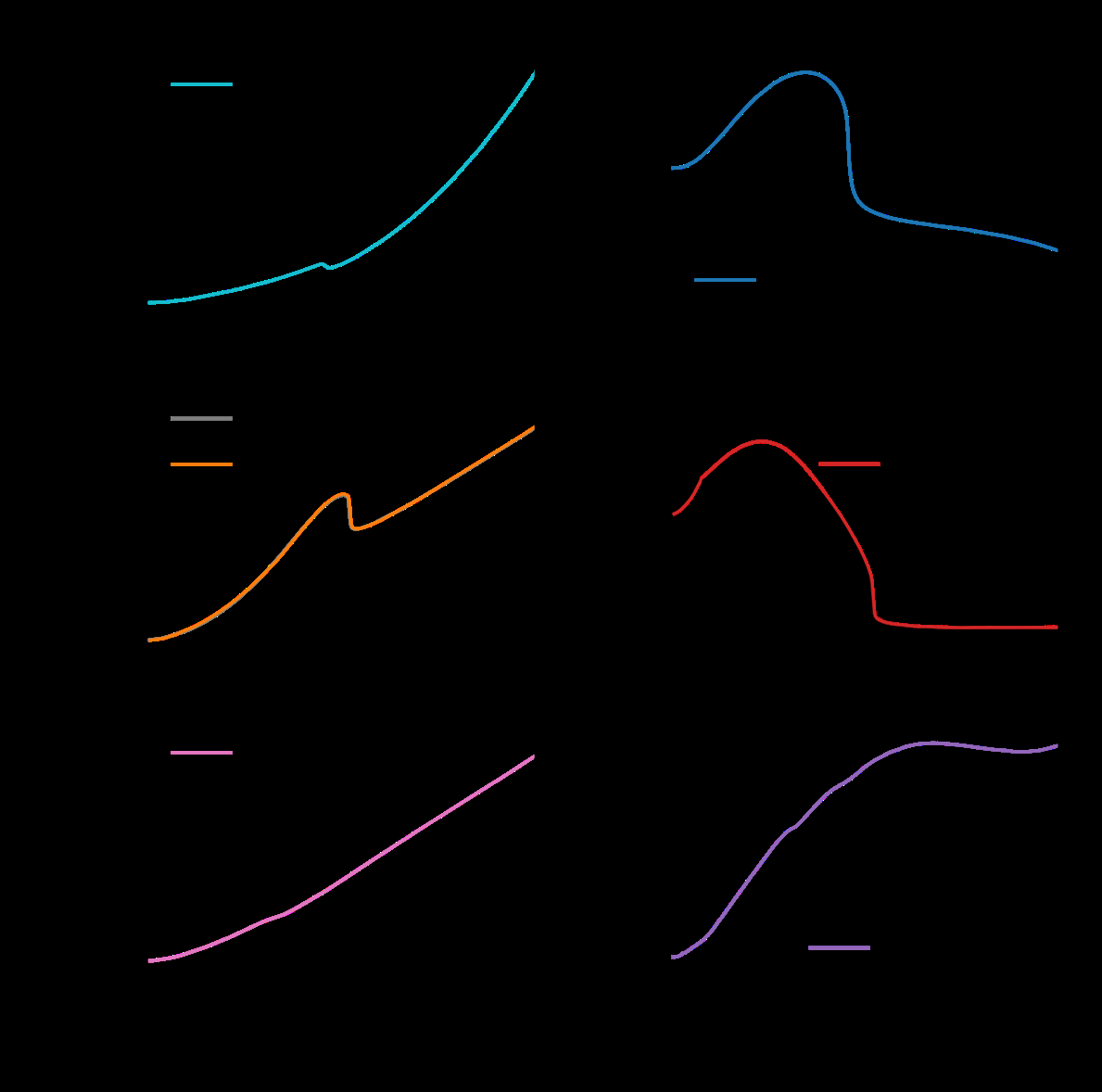
Fig 2: Extracted in-plane and out-of-plane resistivities for La4Ni3O10, Pr4Ni3O10, and La3Ni2O7. (a, c, e)

Fig 3: Low temperature resistivities of La4Ni3O10, Pr4Ni3O10, and La3Ni2O7. Both in-plane and out-of-
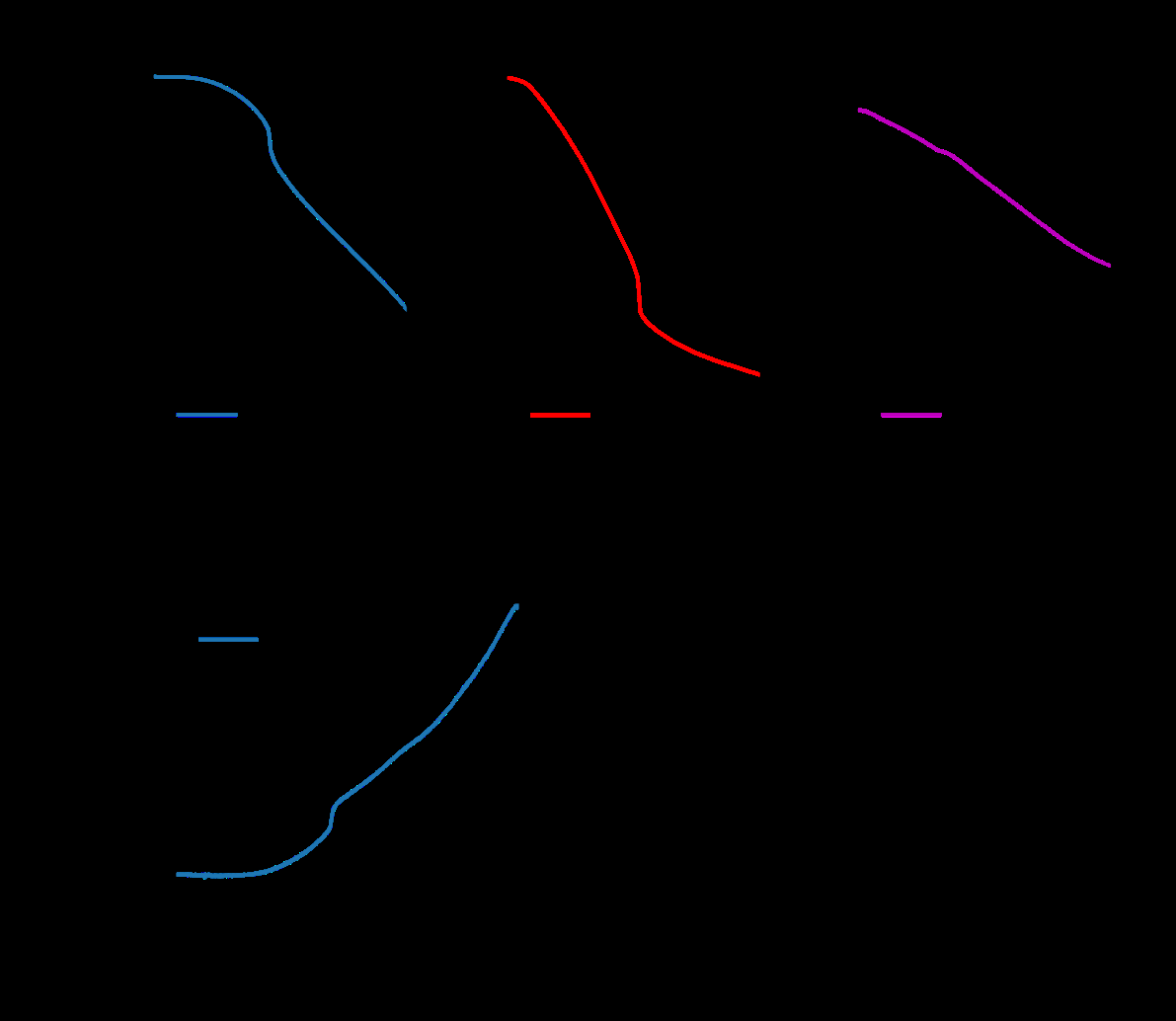
Fig 4: (a) Temperature dependence of the resistivity anisotropy 𝛾𝜌≡𝜌⊥/𝜌∥ for La4Ni3O10, Pr4Ni3O10,
Limitations
- Sample batch sizes and statistical variation between nominally identical crystals are not detailed, limiting assessment of reproducibility across samples.
- Superconductivity measurements are referenced from literature; direct simultaneous transport under pressure was not reported in this study.
- The precise orbital-resolved contributions to interlayer hopping are inferred but not directly measured (e.g., via ARPES or quantum oscillations in this work).
- Potential effects of disorder, defects, or strain on anisotropy and transport signatures remain unexplored.
- No explicit theoretical modeling validating the extracted resistivity values from the inverse problem solution under all regimes is discussed in detail.
- The crossover temperature scale and scattering mechanisms causing coherent-to-incoherent transport transition are phenomenologically described, but microscopic origin remains open.
Open questions / follow-ons
- What is the microscopic mechanism governing the temperature-dependent coherent-to-incoherent crossover in interlayer transport and how do scattering processes selectively destroy kz coherence?
- How do changes in orbital occupancy or hybridization under pressure influence interlayer coherence and the associated superconducting pairing strength?
- Can the anisotropy-Tc anticorrelation be extended to other structural families of nickelates or related correlated materials to establish universality?
- What role do magnetic fluctuations mediated via interlayer channels play in stabilizing or suppressing superconductivity in these layered nickelates?
Why it matters for bot defense
This paper is primarily a condensed matter physics study on transport anisotropy and electronic coherence in layered nickelate superconductors, so direct bot-defense or CAPTCHA system implications are limited. However, the work's deep focus on intrinsic anisotropic transport measurement techniques could inspire approaches in electronic device characterization or in sensing subtle electronic phase transitions that might indirectly relate to hardware security.\n\nFor CAPTCHA researchers, the methodology of resolving transport anisotropy via multi-terminal self-consistent measurements underscores the importance of designing diagnostic measurements that overcome geometric and boundary condition artifacts when assessing layered or anisotropic materials. The insight that subtle variations in out-of-plane transport can sensitively detect electronic orders suggests analogous principles could be employed in novel secure hardware or device fingerprinting techniques where layered electronic coherence phenomena might serve as physical unclonable features. Nevertheless, these applications remain speculative and distant from conventional CAPTCHA challenges.
Cite
@article{arxiv2605_18524,
  title={ Interlayer electronic coherence links magnetism and superconductivity in Ruddlesden-Popper nickelates },
  author={ Feiyang Liu and Lixing Chen and Enkang Zhang and Ying-Jie Zhang and Jun Zhao },
  journal={arXiv preprint arXiv:2605.18524},
  year={ 2026 },
  url={https://arxiv.org/abs/2605.18524}
}