
MusicSynth: An Automated Pipeline for Generating Violin Fingerboard Animations from Sheet Music Using Optical Music Recognition
Source: arXiv:2605.17181 · Published 2026-05-16 · By Abhimanyu Kaushik
TL;DR
MusicSynth addresses a core challenge in violin learning: the violin fingerboard is unmarked, making it difficult for beginners to know exactly where to place their fingers. The system automates the generation of violin fingerboard animation videos from uploaded violin sheet music images or digital score files, providing an accessible visual guide to finger placement synchronized to the music. It integrates three open-source tools—an optical music recognition (OMR) library called Oemer to extract notes from images, a MusicXML parser to extract timing information from digital scores, and a video rendering pipeline to visualize the fingerboard with highlighted notes. The only original component is a violin-specific lookup table mapping musical pitches to string and finger positions based on established violin pedagogy. Tested on 110 public-domain violin scores, MusicSynth correctly recognized 91.2% of notes from clean printed sheet music images and achieved 99.1% correct finger position assignment when given clean digital MusicXML input. This combination of full automation, open-source tools, and browser-based access is novel in the violin education space.
Key findings
- MusicSynth achieves 91.2% note pitch accuracy on clean printed violin sheet music images across 110 public-domain scores.
- When processing digital MusicXML files directly (no image recognition step), fingerboard accuracy reaches 99.1%, confirming the lookup table's reliability.
- Fingerboard accuracy on image input ranges from 75.1% on advanced printed scores to 89.7% on beginner printed scores.
- The OMR processing time averages 14.8 seconds per image upload on an Apple M2 laptop, with total end-to-end processing about 17.1 seconds.
- Direct MusicXML file processing completes in approximately 2.3 seconds end-to-end, making it suitable for near-instant results.
- The fingerboard lookup table covers 91% of unique notes found in Suzuki Violin Method Books 1–3, with 100% coverage on Book 1 beginner exercises.
- OMR errors mainly occur for notes on ledger lines (high E string), accidentals in sharp-heavy keys, and rhythm inaccuracies in fast passages.
- Notes outside the lookup table range are cleanly skipped with warnings rather than producing erroneous finger assignments.
Threat model
The adversary scenario is minimal or n/a here since this is an educational tool rather than a security mechanism. The system assumes users submit clean printed or digital violin scores. It does not address attempts to fool the OMR system, handle adversarial inputs, or resist tampering. Its capabilities focus on accurate note recognition and fingering guidance within the defined violin pedagogy range.
Methodology — deep read
The paper's core methodology is to create a fully automated pipeline that converts violin sheet music images or digital score files into fingerboard animation videos helpful for beginners. The threat model is implicit: the system targets self-learning violin students who lack finger placement visual aids and is designed for well-formed printed scores rather than adversarial or extremely noisy inputs.
Data provenance consists of 110 public-domain violin scores drawn from standard beginner to advanced repertoire, including Suzuki Violin Method Books 1–3. Each score was manually transcribed in MuseScore 4 to provide ground truth. Input formats include smartphone photographs or scans of printed sheet music images and native MusicXML files exported from notation programs. Preprocessing includes scaling uploaded images and error checking for unreadable inputs.
The architecture is a four-stage pipeline: (1) Optical Music Recognition with Oemer analyzes input images to extract notes into MusicXML format. Oemer internally detects staff lines, note heads, flags, and rhythms. (2) MusicXML parsing extracts individual note events with pitch, onset time, and duration using Python's XML library. (3) A novel note-to-finger lookup table maps pitches (G3-G6 standard violin range) to appropriate string (G, D, A, E) and finger position based on Suzuki/Pedagogical conventions. Notes outside this range are skipped. It normalizes accidentals by mapping flats to sharps.
(4) Video rendering uses PIL and MoviePy to generate frame-by-frame images of the violin fingerboard highlighting current and upcoming notes, combining into a 30fps MP4 video. Visual indicators include string and position labels, colored circles for notes, and textual labels.
Training as a machine learning task is not applicable here since the core novelty is data integration and lookup table creation rather than model fitting.
Evaluation uses a manually transcribed ground truth for 110 violin scores divided by difficulty: beginner printed, intermediate printed, advanced printed, Suzuki scanned, and direct MusicXML. Metrics include note pitch accuracy, duration accuracy (within 10%), and fingerboard accuracy for correct string/finger assignment. Timing tolerance for alignment is 50 ms. Average processing times were measured on Apple M2 hardware with multiple runs.
Results report note-level and finger position-level accuracy broken down by input type and difficulty. Error analysis examines note types, accidentals, and rhythmic complexity. The system is fully reproducible, with source code and a browser-hosted web app provided under MIT license. Limitations around range coverage, single-voice music, and lack of real-time feedback are explicitly discussed.
A concrete example walks through processing a smartphone photo of Silent Night sheet music, showing OMR producing 24 detected notes, successful note-to-finger mapping, and final fingerboard video frames illustrating active and upcoming notes.
Technical innovations
- Integration of existing open-source OMR, MusicXML parsing, and video rendering libraries into a seamless pipeline tailored for violin fingerboard animation.
- Creation of a violin-specific static lookup table that maps notes (G3-G6) to string and finger positions consistent with established violin pedagogy.
- Implementation of a browser-based, no-installation workflow allowing end users to upload sheet music images or MusicXML files and receive annotated fingerboard videos.
- Automated handling of accidentals by normalizing flats to sharps in the note-to-finger mapping to reduce lookup table size and complexity.
Datasets
- 110 public-domain violin scores — 110 pieces — IMSLP (public-domain source)
- Suzuki Violin Method Books 1–3 — 67 unique notes in beginner repertoire — standard pedagogy source
Baselines vs proposed
- OMR note pitch accuracy on beginner printed scores: 91.2% vs advanced printed: 76.8%
- Fingerboard accuracy on digital MusicXML input: 99.1% vs beginner printed image input: 89.7%
- Total pipeline processing time on image input: 17.1s vs MusicXML input: 2.3s
Figures from the paper
Figures are reproduced from the source paper for academic discussion. Original copyright: the paper authors. See arXiv:2605.17181.
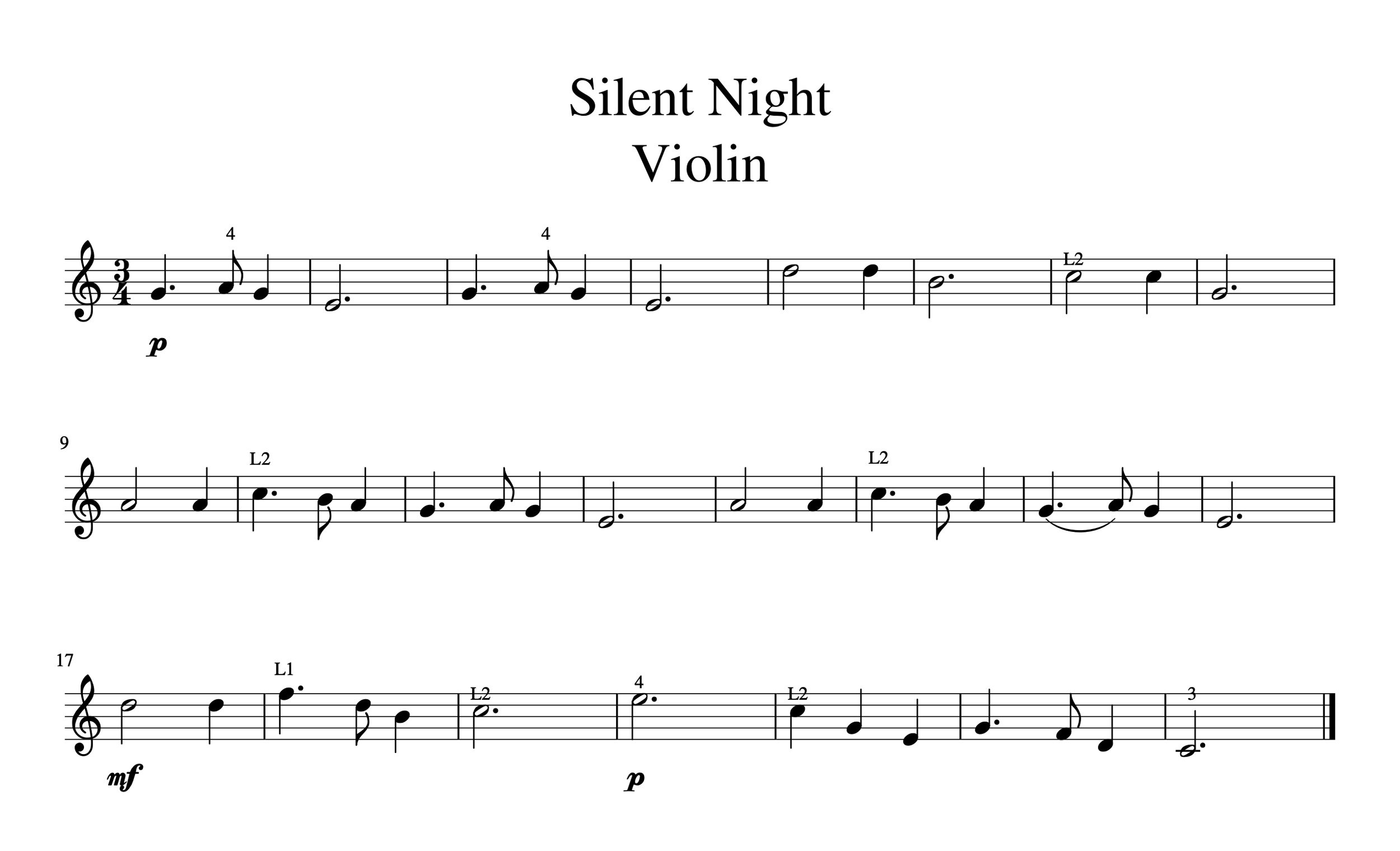
Fig 2: Input: a smartphone photograph of the first page of Silent Night (violin arrange-
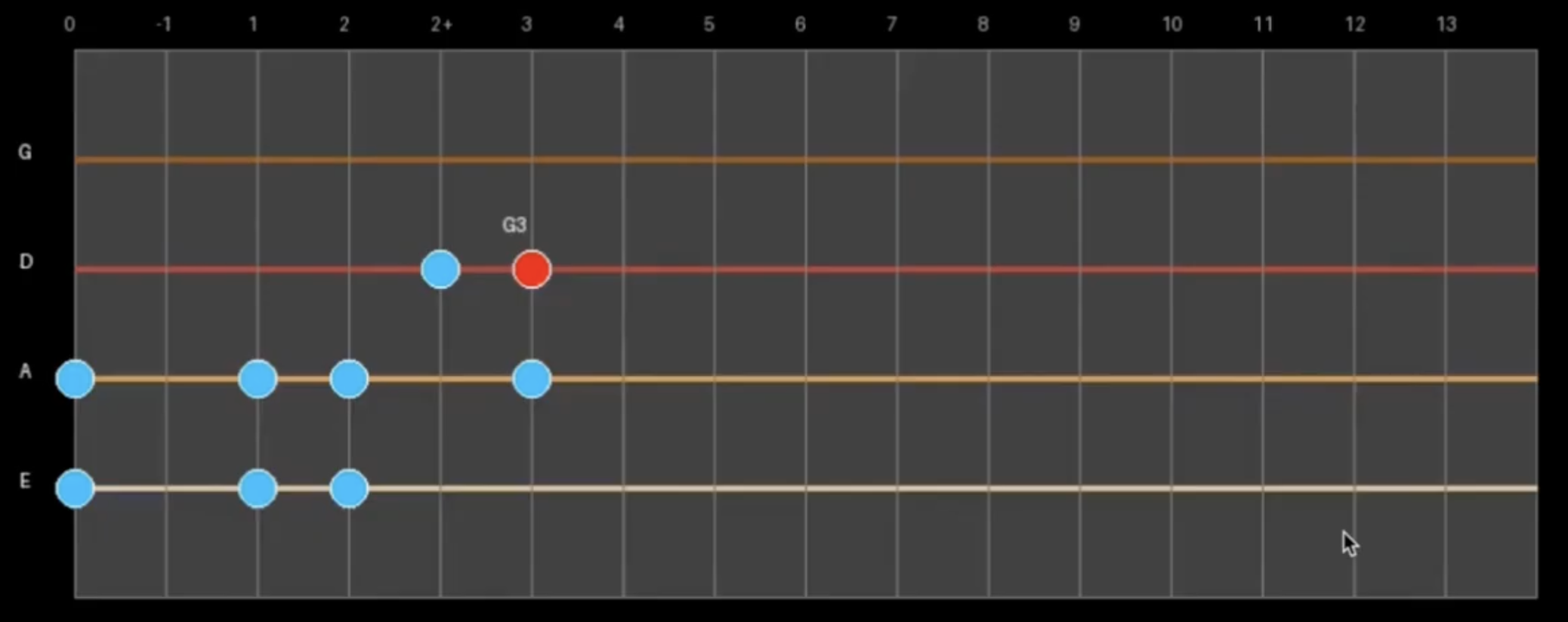
Fig 3: shows three representative frames from the output video. The red circle marks the
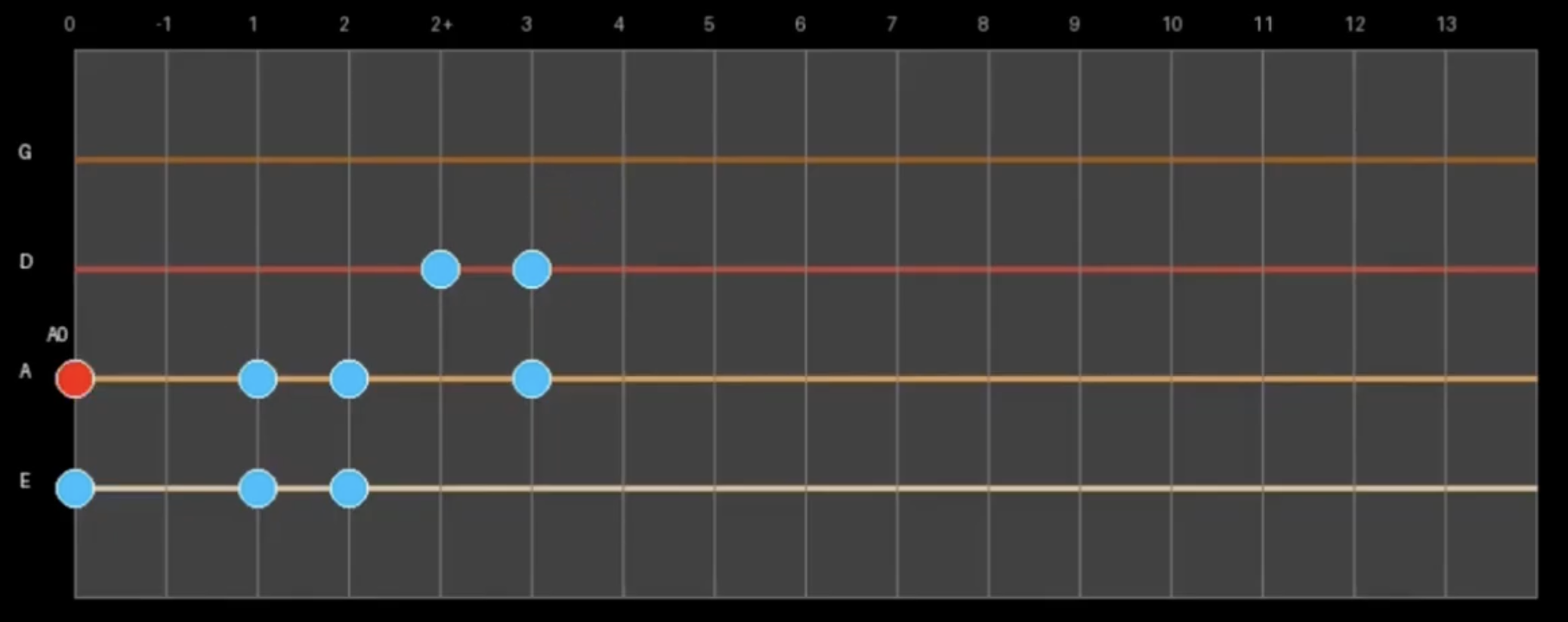
Fig 3 (page 7).
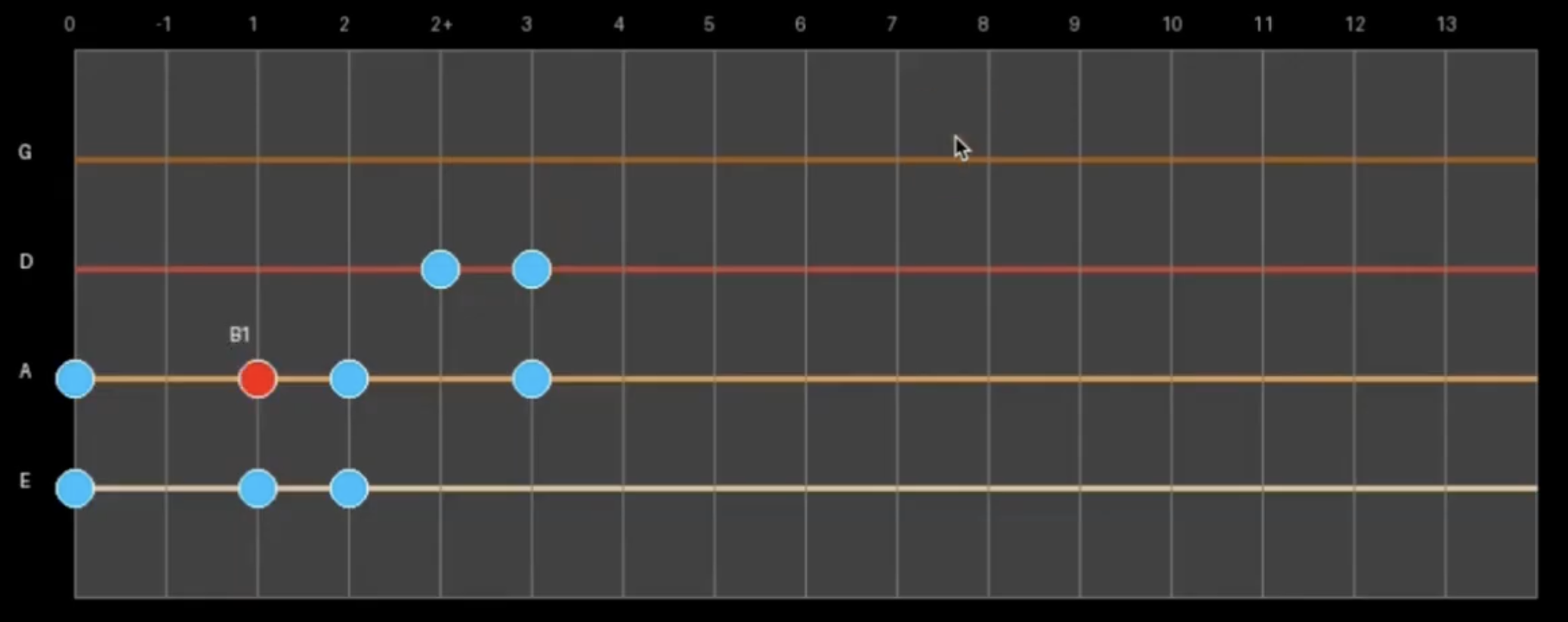
Fig 4 (page 7).
Limitations
- Lookup table covers only first position (G3–G6) and lacks higher finger positions required for more advanced repertoire.
- OMR Step accuracy degrades on handwritten, low-quality, or complex polyphonic scores - recommended to upload MusicXML in those cases.
- Pipeline currently supports only single-voice music; polyphonic passages render notes simultaneously causing clutter.
- No live, real-time playback or interactive feedback; output is a pre-rendered video.
- Finger position assignment uses fixed standard fingering rather than context-sensitive or optimized fingering models.
- Some rare errors arise from unusual key signatures with sharps/flats affecting fingerboard accuracy.
Open questions / follow-ons
- How to extend fingering lookup to cover higher violin positions (2nd to 5th position) and dynamic fingering optimization?
- Could real-time audio input be integrated to provide live fingerboard feedback synchronized to user playing?
- How effective are fingerboard animations compared to traditional method books in accelerating beginner violin learning? (User studies needed)
- How can OMR accuracy be improved for handwritten or complex polyphonic violin scores?
Why it matters for bot defense
For bot-defense and CAPTCHA research, MusicSynth is outside direct scope but exemplifies how integrating multiple open-source components into an end-to-end pipeline enables user-friendly, browser-only applications with real-time feedback constraints. The reliance on optical pattern recognition (OMR) shares conceptual parallels to vision-based CAPTCHA challenges. Understanding error patterns and latency trade-offs in OMR may inform designing human-solvable challenges that balance complexity with speed. The use of lookup tables for mapping detected symbols to actionable outputs highlights a practical strategy to reduce computational load and improve interpretability, analogous to techniques in some bot detection pipelines. While MusicSynth does not directly address adversarial inputs or security-focused robustness, its error analysis and handling strategies may inspire analogous evaluations in CAPTCHA-like systems, especially those relying on image or sequence recognition.
Cite
@article{arxiv2605_17181,
  title={ MusicSynth: An Automated Pipeline for Generating Violin Fingerboard Animations from Sheet Music Using Optical Music Recognition },
  author={ Abhimanyu Kaushik },
  journal={arXiv preprint arXiv:2605.17181},
  year={ 2026 },
  url={https://arxiv.org/abs/2605.17181}
}