
Strong Gravitational Lensing with the James Webb Space Telescope
Source: arXiv:2605.15189 · Published 2026-05-14 · By Adi Zitrin
TL;DR
This paper provides a comprehensive review of strong gravitational lensing and the transformational impact of the James Webb Space Telescope (JWST) on this field. It places gravitational lensing in historical context, reviews the physics behind the phenomenon and its various regimes (strong, weak, microlensing), and explains how lens modeling is performed. The core strength of strong lensing lies in its ability to magnify and multiply image distant astronomical sources, enabling detailed study of faraway galaxies, dark matter distributions, and cosmological parameters. The author highlights how earlier facilities like the Hubble Space Telescope established strong lensing as a powerful tool over the past 2–3 decades. With the superior resolution, sensitivity, and infrared capabilities of JWST, lensing science has entered a new era. JWST combined with clusters acting as cosmic telescopes allows detection of fainter, more distant sources and detailed study of small-scale objects such as stars, star clusters, AGN, and transients. The author reviews recent JWST results in cluster lensing fields, improvements in mass modeling precision, and emerging science such as resolved imaging of early supermassive black holes and faint AGN populations. Near-future prospects include precise cosmology through time delays and deeper study of dark matter substructure. Overall, the paper argues JWST+strong lensing uniquely multiplies scientific return by jointly advancing extragalactic astrophysics, dark matter physics, and cosmology.
Key findings
- Einstein’s General Relativity predicts a light deflection angle twice that of Newtonian physics for gravitational lensing, validated by the 1919 solar eclipse measurement (~1.75 arcseconds for the Sun).
- Strong-lensing by galaxy clusters can produce image separations from a few arcseconds up to tens of arcseconds, with individual image magnifications ranging from a few to tens times.
- The Hubble Frontier Fields program used over 800 orbits of HST time observing 6 massive clusters, enabling discovery of some of the highest redshift galaxies (z > 9).
- JWST imaging of cluster lens AS16063 reached ~31 AB magnitudes per band prior to magnification correction, revealing multiple background lensed images with unprecedented resolution (Fig. 3).
- Lens model accuracies currently achieve positional errors on the order of a few tenths of an arcsecond, limited mainly by unmodeled line-of-sight matter and scaling relation uncertainties.
- Time delays measured between multiple images of variable sources provide a unique, independent route to the Hubble constant and cosmological parameter constraints.
- JWST has revealed unexpectedly faint populations of AGN behind lensing clusters, possibly probing early supermassive black hole growth (Fig. 6).
- Strong lensing combined with JWST enables resolving spheres of influence around distant SMBHs and fine structure of magnified background sources, unachievable otherwise (Fig. 7).
Methodology — deep read
The review begins by clearly laying out the historical and theoretical framework of gravitational lensing grounded in General Relativity, contrasting it with classical Newtonian deflection calculations. It explains the physical optics analogy — how massive bodies curve spacetime and deflect light — and introduces critical lensing concepts such as critical lines, caustics, Fermat surfaces, and Einstein radii. The author then categorizes lensing into strong, weak, and microlensing regimes, delineating their observables and scales.
For practical strong-lens modeling, the review discusses how cluster mass distributions are inferred primarily through identification of multiply imaged background sources, using spectral (photometric or spectroscopic) redshifts to assign distances. The lens equation maps image plane positions to a common source position, constraining lens models. It contrasts parametric schemes (assuming analytic forms for dark matter halos and cluster galaxies) and free-form methods (allowing flexible basis functions), both iterated to minimize chi-squared differences between model-predicted and observed image locations.
The review emphasizes the iterative nature of model building: starting with candidate multiple images, constructing initial mass distributions, refining with more images and redshifts, and quantifying residuals. Although only image positions are typically used, shape, surface brightness, magnification ratios, and time delays can also serve as constraints. Optimizations leverage gradient descent and Markov Chain Monte Carlo.
In terms of data, the paper references deep JWST NIRCam observations of massive clusters like AS16063, reaching AB magnitudes ~31, enabling detection of faint lensed sources and improved constraints on mass models. JWST’s IR capabilities allow spectroscopy of faint, high-redshift galaxies and AGN behind lenses.
Scientific analyses include mapping dark matter distributions at cluster scales, measuring source magnifications, analyzing time delays for cosmological inference (e.g., H0), and probing small-scale lensing substructure via flux ratio anomalies. The paper references large legacy observational campaigns such as the Hubble Frontier Fields and GLIMPSE survey.
The author also mentions ongoing testing and validation of lens models via simulations and comparison with observed flux ratios and time delays, acknowledging residual uncertainties from line-of-sight structures and mass-to-light scaling relations. This review does not contain new empirical experiments but synthesizes methodologies and results from prior studies and JWST early observations to highlight advances and challenges.
Reproducibility depends on publicly available lens modeling codes and publicly released JWST datasets from large teams. However, detailed methodology for each cluster model may vary across research groups and is sometimes proprietary. The review focuses mostly on describing standard modeling approaches and illustrating them with concrete JWST observational examples, like the AS16063 cluster field. The methodology is thorough and technical but acknowledges some parts rely on iterative, heuristic identification of multiple images and assumptions about mass profiles.
To ground this end-to-end, one can envision analyzing a lensed galaxy cluster field with JWST NIRCam: Images are processed to identify multiple image candidates and measure photometric/spectroscopic redshifts; an initial parametric mass model is constructed including cluster galaxies and a smooth halo; iterative optimization minimizes positional residuals between predicted and observed lensed images; the model yields magnification maps and deflection fields used to reconstruct source properties and estimate lensing magnifications; finally, this supports studies like luminosity function measurements, dark matter mapping, or time delay cosmology.
Technical innovations
- Integration of JWST’s superior IR imaging and spectroscopy with cluster lensing to detect fainter, higher-redshift sources than previously possible.
- Advancement in lens modeling accuracy to few-tenths arcsecond positional errors through combined use of multiple-image constraints and sophisticated parametric/free-form methods.
- Exploitation of image multiplicity and lensing geometry (‘nesting effect’) to improve photometric redshift confirmation and high-redshift source validation.
- Application of strong lensing time-delay measurements from multiple variable images as an independent tool to constrain cosmological parameters, especially H0.
- Early demonstration of resolving sphere of influence around distant supermassive black holes behind strong lenses using JWST’s spatial resolution.
Datasets
- AS16063 cluster JWST/NIRCam imaging — AB magnitude ~31 depth per band — public JWST Early Release Science and GLIMPSE survey data
- Hubble Frontier Fields — 6 massive clusters — over 800 HST orbits data publicly available
- Compilation of high-redshift galaxy candidates behind lens clusters from literature (various)
- Strongly lensed quasar and supernova time delay datasets (various from literature)
Baselines vs proposed
- HST imaging depth (~28–29 AB mag) vs JWST NIRCam depth (~31 AB mag) enabling detection of fainter lensed sources
- Lens model positional accuracy: previous generation models ~0.5–1.0 arcsec error vs recent parametric models achieving ~0.2–0.3 arcsec errors
- Magnification factor per image ranges: typical factors of a few to tens with JWST accessing smaller, fainter sources under these magnifications
- Time delay cosmology: established lensing-based constraints on H0 with uncertainties ~3–5% using lensed quasars, expecting improvements with JWST data
Figures from the paper
Figures are reproduced from the source paper for academic discussion. Original copyright: the paper authors. See arXiv:2605.15189.
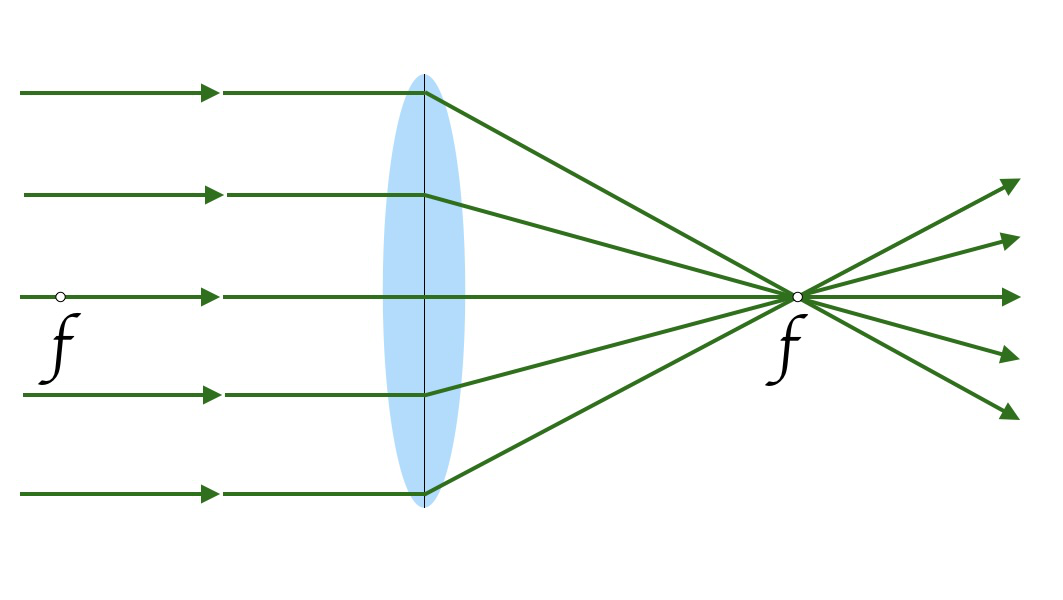
Fig 1: Qualitative description of a magnifying glass. (a) Ray diagram for a convex lens. Parallel rays are
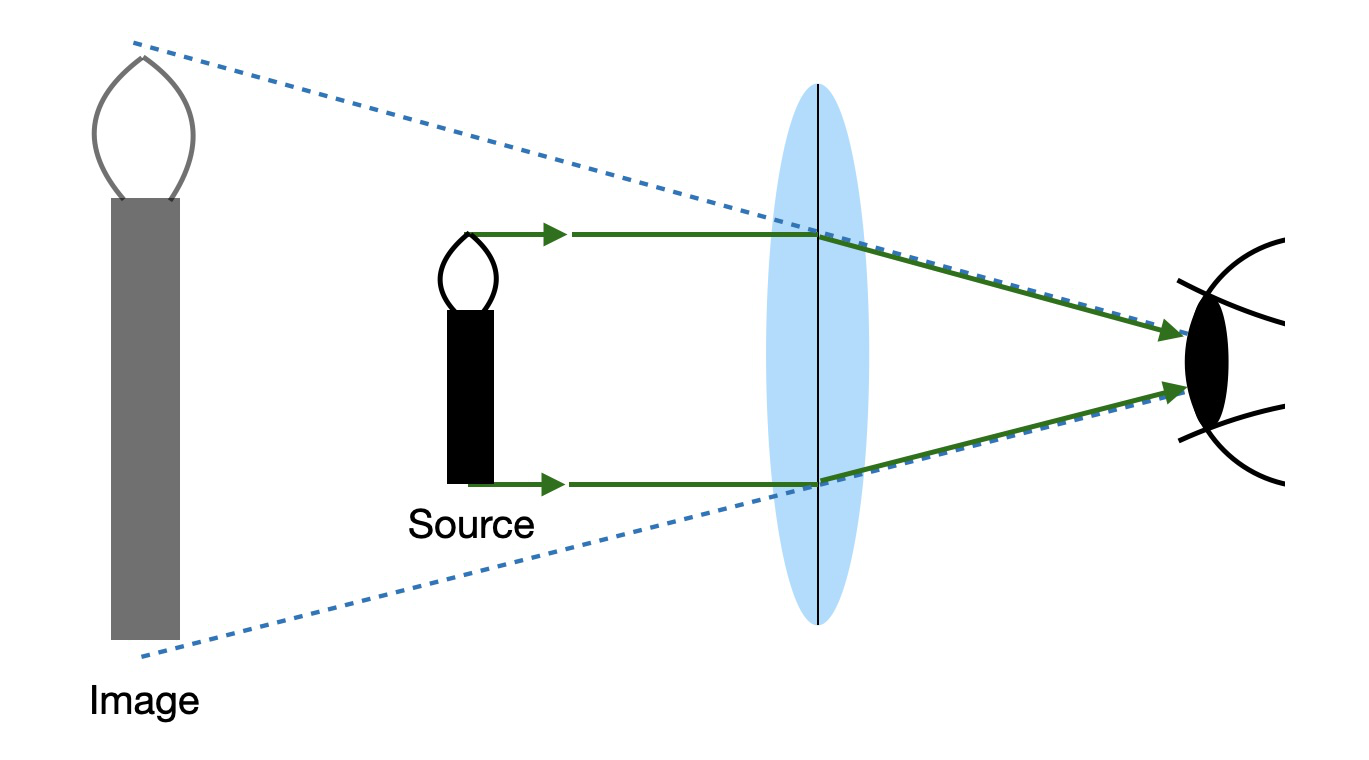
Fig 2: Examples of lensing. Upper row: Image formation by an elliptical lens. The critical curves of the
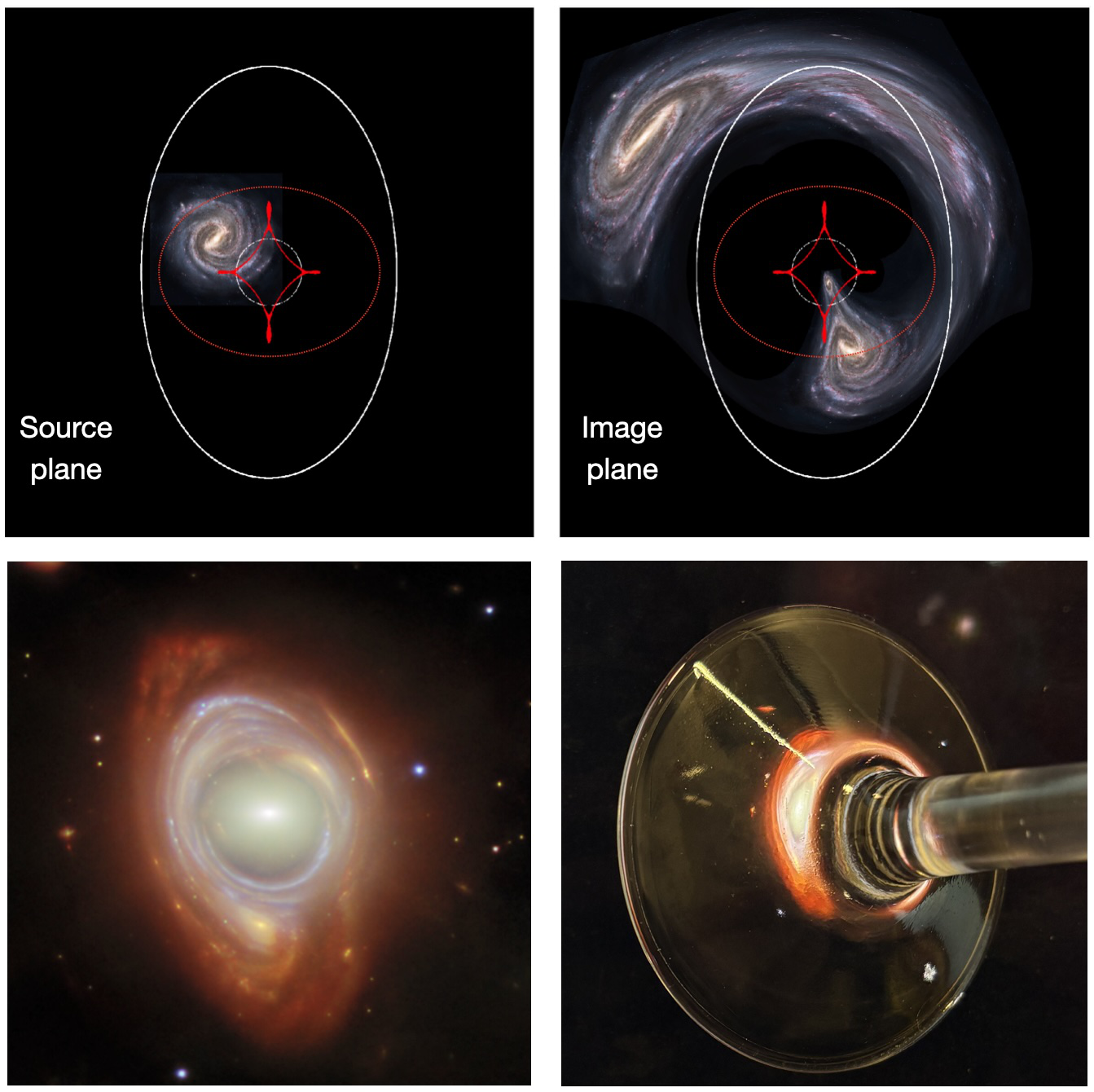
Fig 3 (page 5).
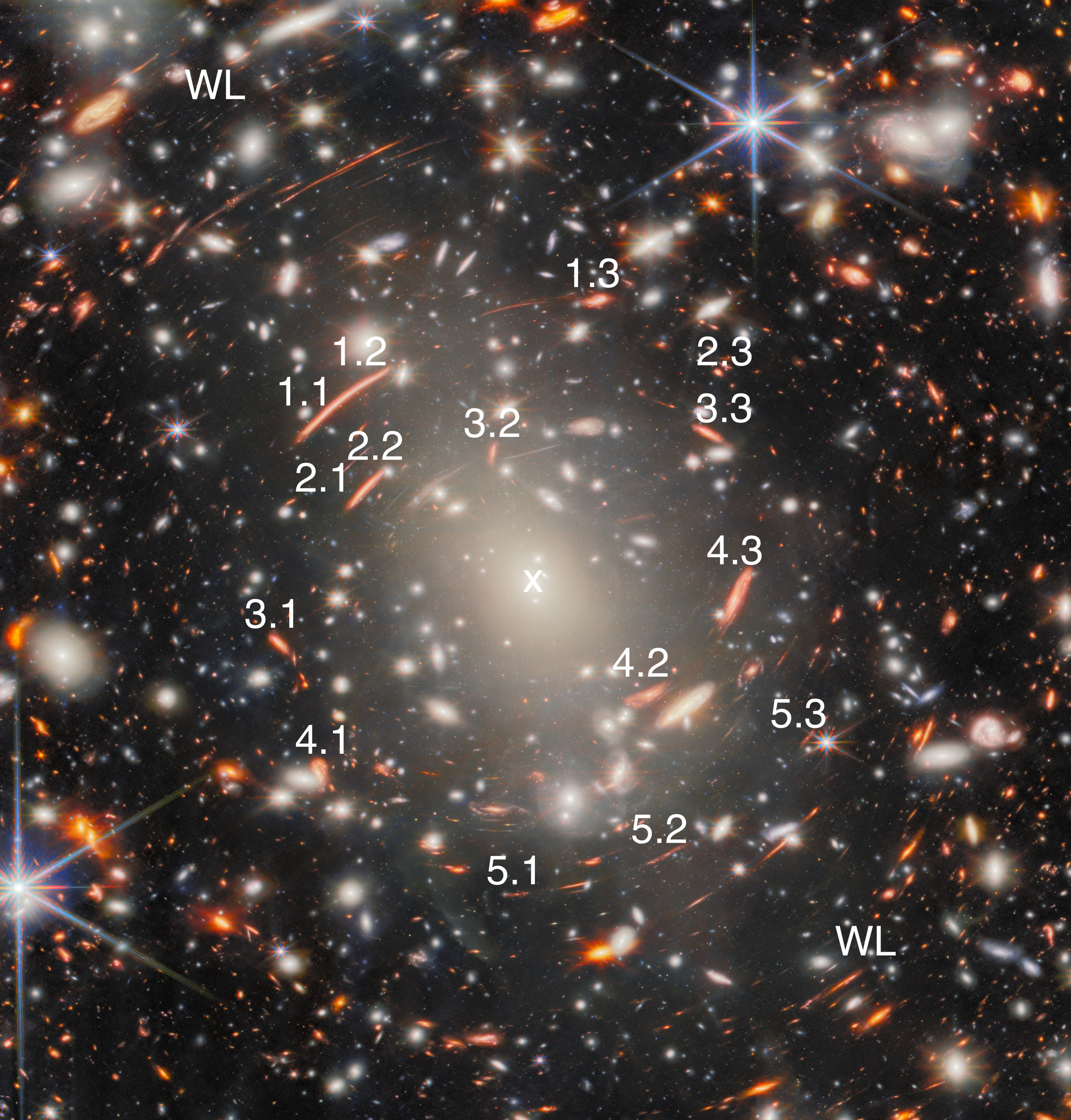
Fig 3: One of the deepest fields imaged with JWST/NIRCam to date, the lensing cluster AS16063. Image
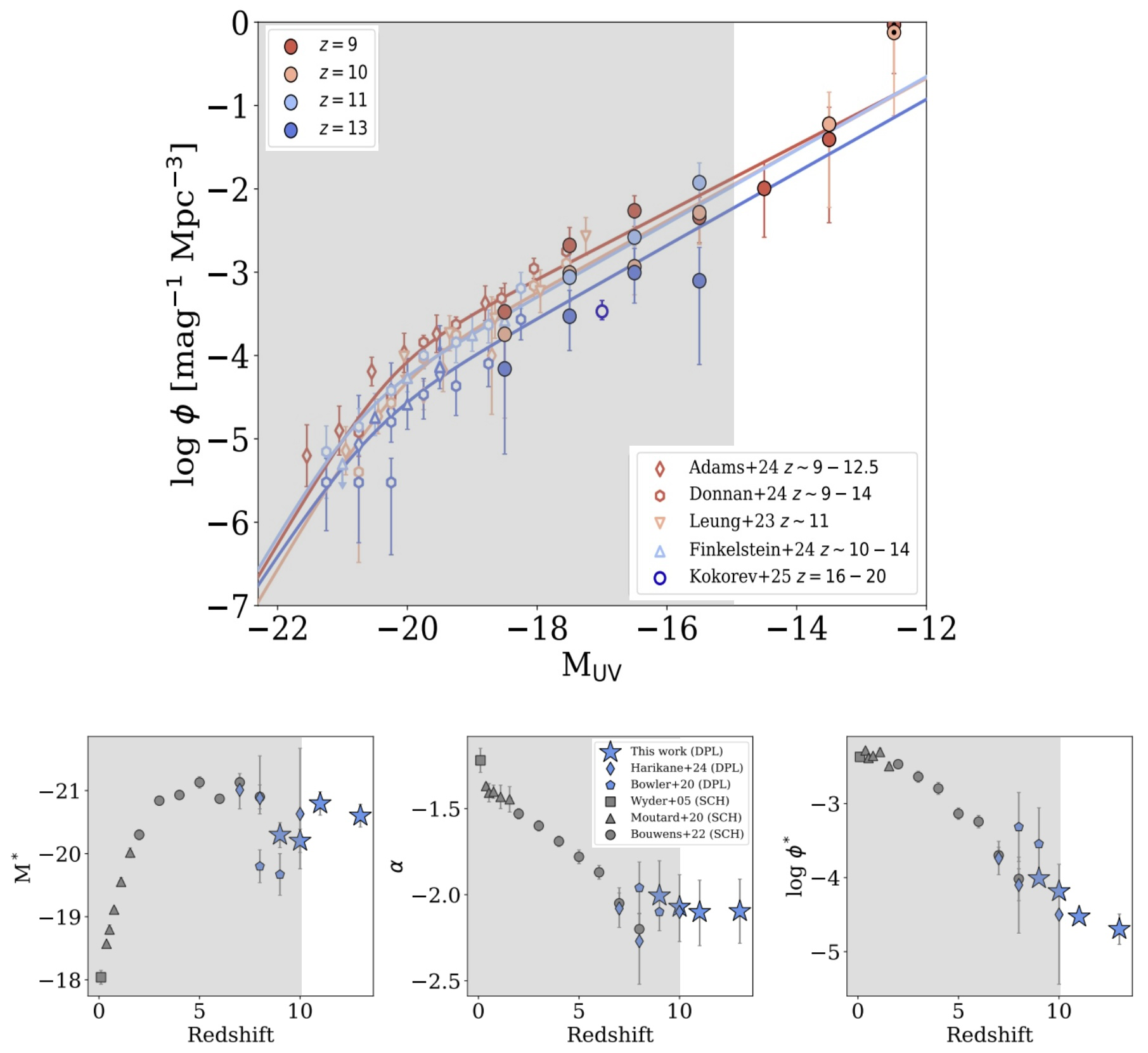
Fig 4: Deep view of the faint end of the luminosity function allowed by JWST+Lensing. The upper
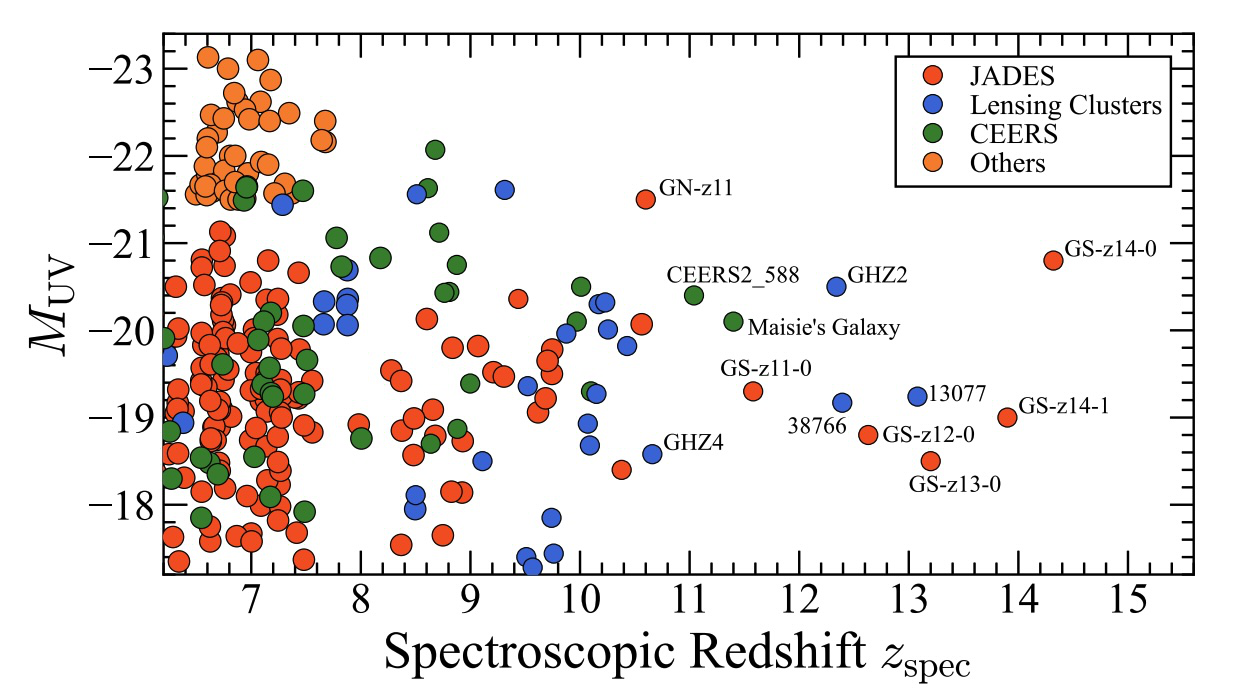
Fig 5: Compilation of high-redshift galaxies from the literature. Figure is taken from [130]; see references
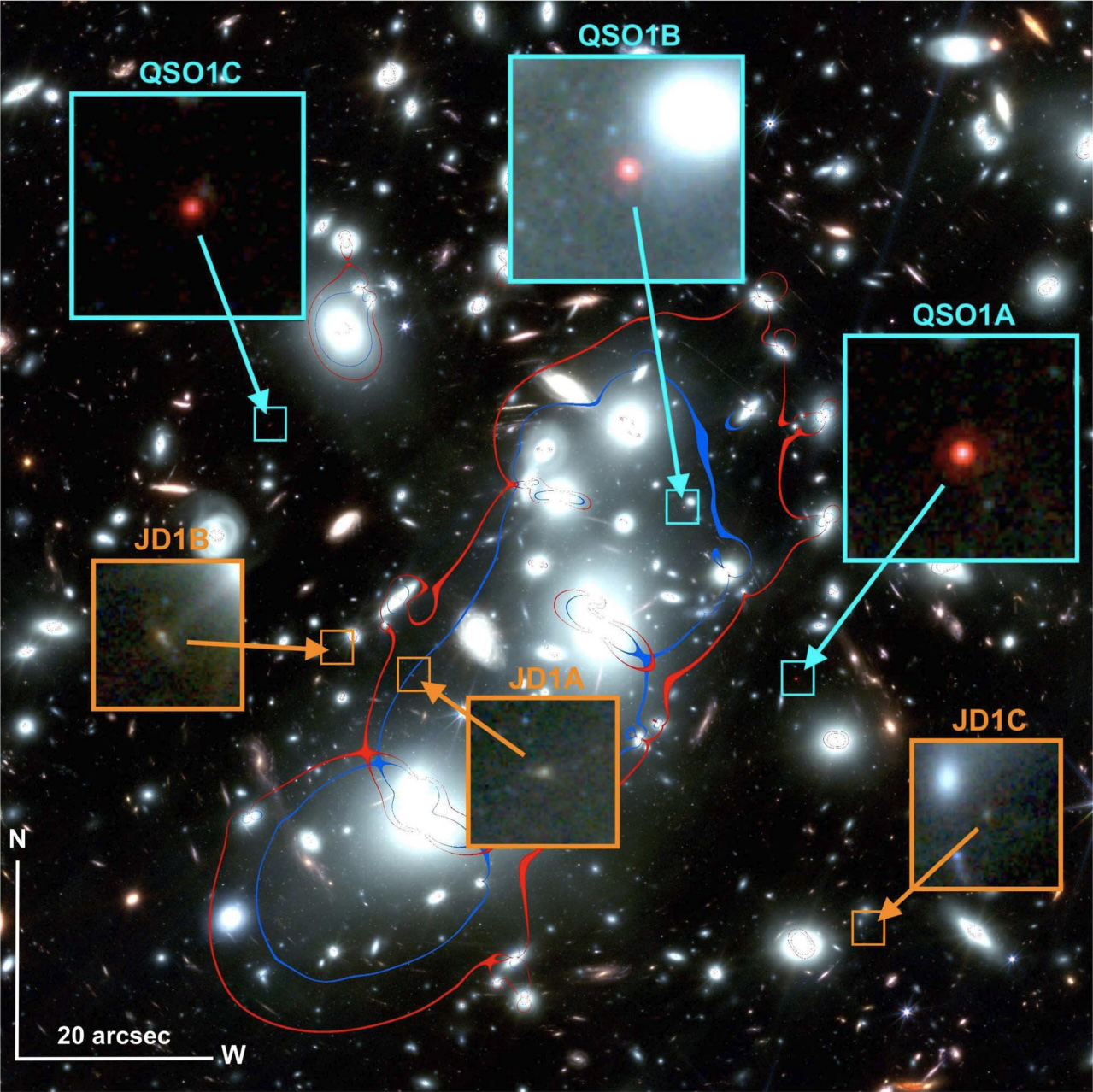
Fig 6: JWST revealed an unexpected population of faint AGN. Left: Image of the lensing cluster Abell
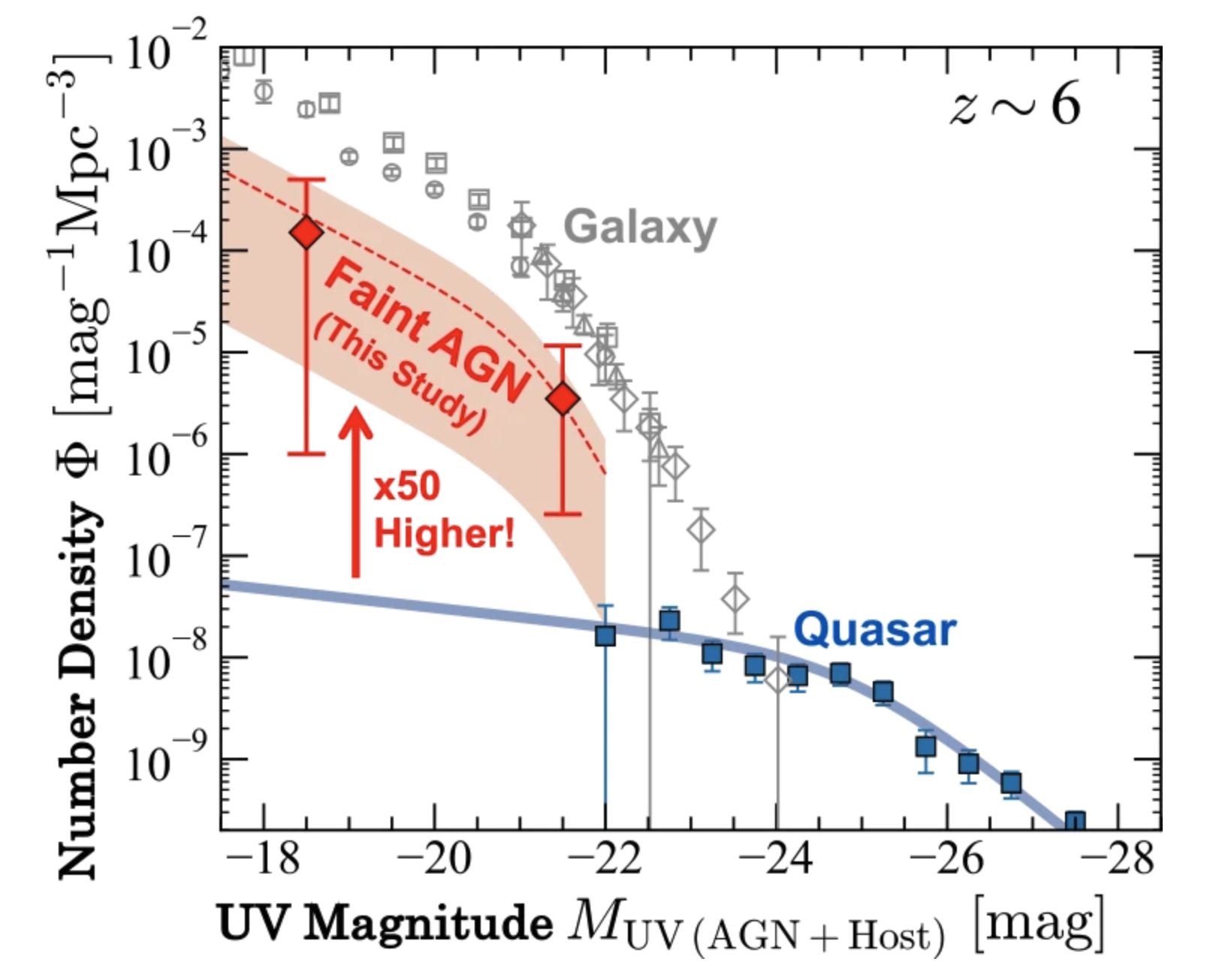
Fig 7: JWST allows to resolve the sphere of influence around strongly magnified SMBHs in the early
Limitations
- Residual lens model uncertainties due to line-of-sight structures and scaling relation assumptions in cluster galaxies limit precision to a few tenths of arcsecond.
- Iterative identification of multiple image families relies partly on subjective criteria, photometric redshifts, and model assumptions, potentially propagating errors.
- Surface brightness conservation and finite source size limit maximal achievable magnifications near critical curves.
- Current datasets focus predominantly on massive clusters; lower mass lenses or galaxy-scale lenses may not benefit equivalently.
- Time delay measurements require variable sources with sufficient monitoring durations, challenging for newly discovered objects.
- JWST observations are limited to fields scanned so far; interpretations await broader data releases and cross-validation.
Open questions / follow-ons
- How to systematically reduce lens modeling uncertainties arising from unmodeled line-of-sight mass contributions?
- What is the completeness and reliability of high-redshift source catalogs identified through lensing with JWST, especially for faint populations?
- Can time-delay cosmology from strong lenses reach sub-percent precision to resolve current tensions in Hubble constant measurements?
- How does dark matter substructure revealed via flux anomalies and microlensing constrain alternative dark matter models beyond collisionless cold dark matter?
Why it matters for bot defense
While not directly related to CAPTCHA or bot-defense, the detailed understanding of strong gravitational lensing methodologies outlined here can inform general approaches in astrophysical modeling of complex systems with incomplete or noisy data. The sophisticated model fitting and uncertainty quantification techniques used for lensing—especially iterative identification of multiple images, optimization of parametric/free-form models, and validation against simulations—reflect broader challenges in building robust detection systems that distinguish signal from noise and adversarial perturbations. Additionally, the concept of analyzing multiple evidentiary paths (image multiplicity analogous to diverse behavioral signals) to confidently verify source identity might be inspirational when designing multi-faceted bot detection schemes. Lastly, the rigorous characterization of systematics and limitations in lensing demonstrates a level of rigor that security-oriented machine learning models should aspire to when addressing adversarial and distributional shifts in bot detection scenarios.
Cite
@article{arxiv2605_15189,
  title={ Strong Gravitational Lensing with the James Webb Space Telescope },
  author={ Adi Zitrin },
  journal={arXiv preprint arXiv:2605.15189},
  year={ 2026 },
  url={https://arxiv.org/abs/2605.15189}
}