
Scylla VI: Parsec-Scale Dust Extinction Maps in the SMC and LMC
Source: arXiv:2605.06925 · Published 2026-05-07 · By Christina W. Lindberg, Claire E. Murray, Christopher J. R. Clark, Caroline Bot, Clare Burhenne, Yumi Choi et al.
TL;DR
This work addresses the problem of mapping dust extinction within nearby low-metallicity galaxies, specifically the Small and Large Magellanic Clouds (SMC and LMC), at an unprecedented parsec-scale resolution (~1 pc). The authors introduce an innovative methodology leveraging kriging—a geostatistical interpolation similar to Gaussian Process regression—combined with Gaussian mixture modeling (GMM) to disentangle line-of-sight extinction contributions and statistically isolate background stars that probe the full galactic dust column. Using multi-band Hubble Space Telescope (HST) photometry from the Scylla and METAL surveys covering 68 fields (23 in SMC, 45 in LMC) and over 400,000 stars, they generate high-resolution 2D dust extinction maps at 4 arcsecond resolution. This spatial scale corresponds to ~1 pc, enabling detailed study of ISM structures, including star-forming regions like 30 Doradus. Validated on simulated 3D dust clouds, the method recovers extinction column densities to an accuracy of approximately 0.1 mag in fields with at least 1000 stars. The resulting maps show strong spatial correlation with independent ISM tracers, reveal log-normal distributions of dust extinction consistent with turbulent ISM theories, and identify systematic offsets relative to dust masses derived from FIR emission. This represents the highest-resolution extinction maps produced for the SMC and LMC, providing crucial benchmarks for constraining dust emissivity, CO-dark molecular gas fractions, and ISM multi-scale structure in low-metallicity environments. The approach balances robust stellar SED fitting, spatial statistical modeling, and rigorous treatment of source completeness to overcome key challenges in extragalactic dust mapping.
Key findings
- Kriging-based extinction maps achieve ~4'' resolution (~1 pc) across 68 HST fields spanning both SMC (23 fields) and LMC (45 fields).
- The method isolates background stars via Gaussian mixture modeling of log(AV), retaining on average 30% of stars (338+238/-167) per field for mapping.
- Simulated 3D dust cloud tests show extinction column density recovery with accuracy ΔAV ≈ 0.1 mag in fields with ≥1000 sources.
- Median intrinsic luminosity cut log(L/L_⊙) ≥ 0.8 ensures source completeness to AV ≈ 3.0 mag, mitigating extinction bias from undetected reddened stars.
- Global extinction distributions follow log-normal profiles with mean extinction e^μ = 0.47 mag for SMC and e^μ = 0.43 mag for LMC, consistent with turbulent ISM predictions.
- Systematic offsets found between dust mass surface densities derived from extinction (ΣD,AV) and far-infrared emission (ΣD,FIR) with ratios ranging 0.6–1.8 across regions.
- Multi-scale ISM structure with correlated small-scale (~1 pc) extinction features aligns well spatially with independent gas and dust emission tracers.
- Bootstrapping stellar classification and multiple sub-region samplings reduce edge effects and improve robustness of dust maps.
Methodology — deep read
Threat Model & Assumptions: The study addresses the challenge of producing accurate 2D dust extinction maps in nearby galaxies at parsec scale resolution without individual stellar distance measurements. Adversarial or malicious threats are not applicable, but observational uncertainties and intrinsic source variability are treated statistically. The method assumes: (a) the ISM dust column follows a log-normal distribution resulting from turbulent ISM structure; (b) stars are distributed along depth with scale heights larger than the ISM scale height; (c) Milky Way foreground extinction can be statistically separated from Magellanic Cloud extinction; and (d) background stars, behind the bulk dust column, can be isolated via statistical modeling to properly sample total dust extinction.
Data: The primary data consists of multi-band photometry from the Hubble Space Telescope (HST) Scylla and METAL surveys. Scylla provides 96 fields with 2–7 bands in optical, near-UV, and near-IR. METAL adds 32 LMC fields with 4–7 bands, overlapping in filter coverage. Only fields with at least 4 bands are selected for accuracy in dust extinction (47 fields in LMC, 25 in SMC). After photometric quality cuts and luminosity-based completeness filtering, the final sample contains 229,005 stars in LMC and 182,780 in SMC. Stellar parameters and line-of-sight extinction values (AV) are estimated with the BEAST Bayesian SED fitting tool, using grids of extinguished stellar models and artificial star tests (ASTs) to assess biases and uncertainties. Detection limits for AV are established in the bluest filter (F336W) using ASTs to avoid biasing extinction low due to missing heavily obscured stars.
Architecture/Algorithm: The method decomposes stars into foreground and background populations using Gaussian Mixture Models (GMM) fitted to the log(AV) distributions within spatially segmented sub-regions of each field. Two-component GMMs identify populations experiencing only Milky Way foreground extinction (foreground) versus those additionally extinguished by the MC ISM (background). Single-component fits default to classifying stars above the Gaussian mean AV as background. Stars tagged as background with ≥90% bootstrap stability are retained. The extinction values of background stars serve as input data points for kriging, a geostatistical interpolation method akin to Gaussian Process regression. Ordinary kriging with a spherical variogram model is applied to log(AV) data to interpolate continuous 2D AV maps over each HST field, capturing spatial correlation and providing predictions with uncertainty estimates.
Training Regime: The method is statistical and does not involve iterative training as in ML. The GMM algorithm uses the scikit-learn Bayesian implementation, and kriging uses the PyKrige package. Bootstrapping (100 iterations) is used for robust classification of background stars. Multiple sub-region sizes (N from 10 to 100 stars per sub-region) are sampled, producing 10 AV maps per field, whose median is taken to reduce sensitivity to sub-region boundaries.
Evaluation Protocol: The method is validated by applying it to 3D MW dust cloud simulations with known AV columns sampled at various stellar densities, demonstrating recovery of AV with ΔAV ~0.1 mag accuracy for fields with ≥1000 stars. Maps are visually and quantitatively compared with alternative dust mapping techniques and ancillary ISM tracers such as 21 cm emission and far-infrared dust emission maps, revealing consistent spatial morphology and detecting systematic offsets in dust surface densities.
Reproducibility: The paper publicly provides an example notebook and custom functions illustrating the dust extinction mapping methodology, supporting reproducibility. The photometric data from Scylla and METAL surveys, as well as the BEAST SED fitting pipeline, are referenced from prior published work. The full dataset used in this study appears available via collaborations but is not explicitly noted as fully public within the text.
Technical innovations
- Application of kriging (Gaussian Process–based geostatistical interpolation) to multi-band stellar extinction data to produce parsec-scale 2D dust extinction maps in external galaxies.
- Combination of Bayesian Gaussian mixture modeling on log(AV) distributions within sub-regions to statistically isolate background stars without individual distance measurements.
- Multi-scale sub-region bootstrapping approach to mitigate edge effects and produce robust dust extinction maps with quantified uncertainties.
- Integration of extensive artificial star tests (ASTs) to rigorously quantify extinction detection limits and source completeness effects, enabling unbiased extinction recovery.
Datasets
- Scylla Survey — ~96 fields in SMC and LMC, 4+ band HST WFC3 photometry, ~400,000 stars combined after cuts
- METAL Survey — 32 LMC fields, 4–7 band HST WFC3 photometry, overlapping filter coverage with Scylla
Baselines vs proposed
- Simulated 3D MW dust cloud baseline: Extinction recovery bias ΔAV ~ 0.1 mag for ≥1000 stars vs proposed kriging-based method achieving similar accuracy in extragalactic fields.
- Previous extinction maps using red giant stars (e.g., Haschke et al. 2011): Spatial resolution limited by ~160 RGB stars per field vs this work’s ~300+ background stars enabling 4'' (~1 pc) resolution.
- Dust mass surface densities: FIR-derived ΣD,FIR vs extinction-derived ΣD,AV ratios range 0.6–1.8, indicating systematic offsets not explained by either method alone.
Figures from the paper
Figures are reproduced from the source paper for academic discussion. Original copyright: the paper authors. See arXiv:2605.06925.
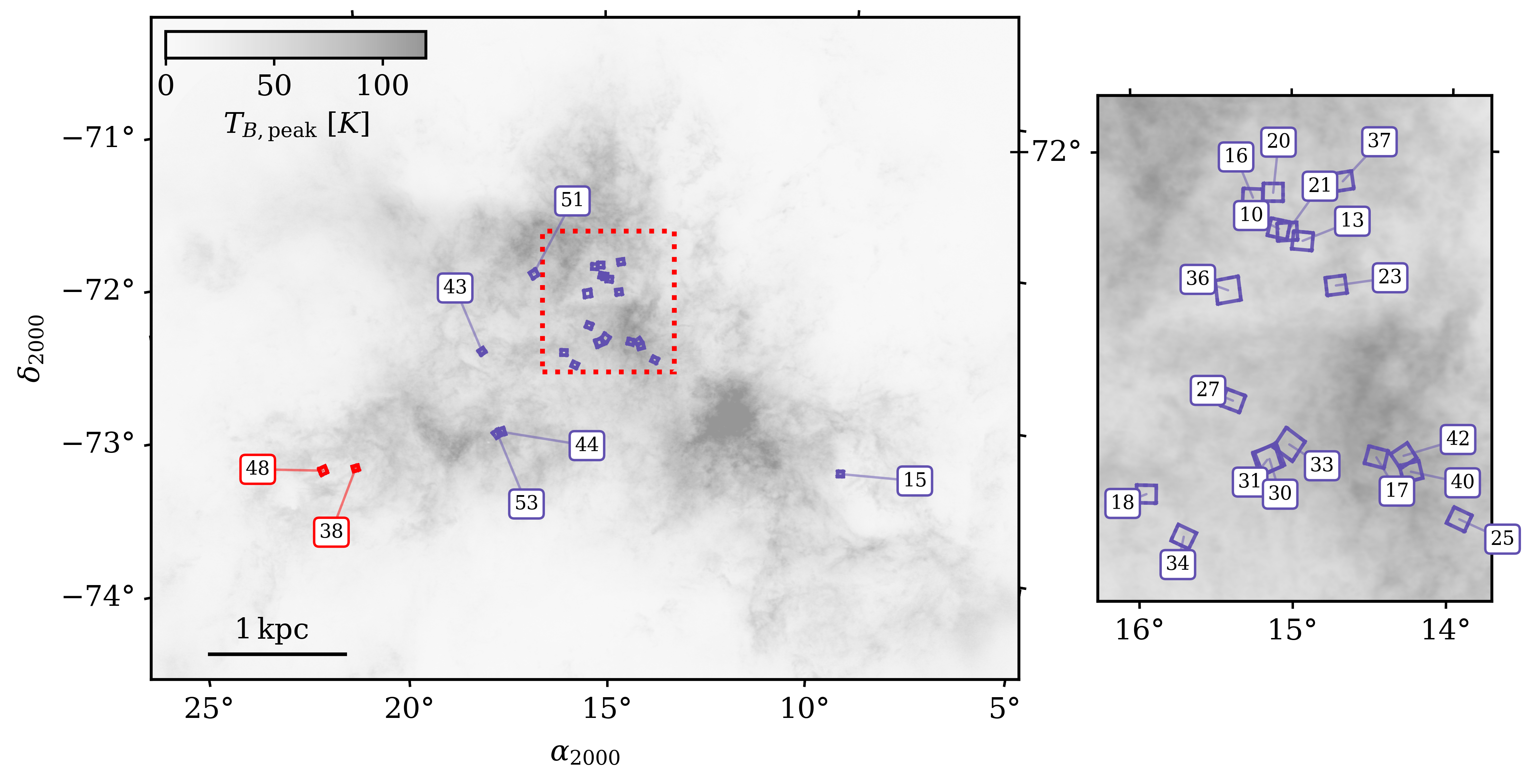
Fig 1: Scylla and METAL dust map locations: Maps of the peak brightness temperature of 21 cm emission in the SMC
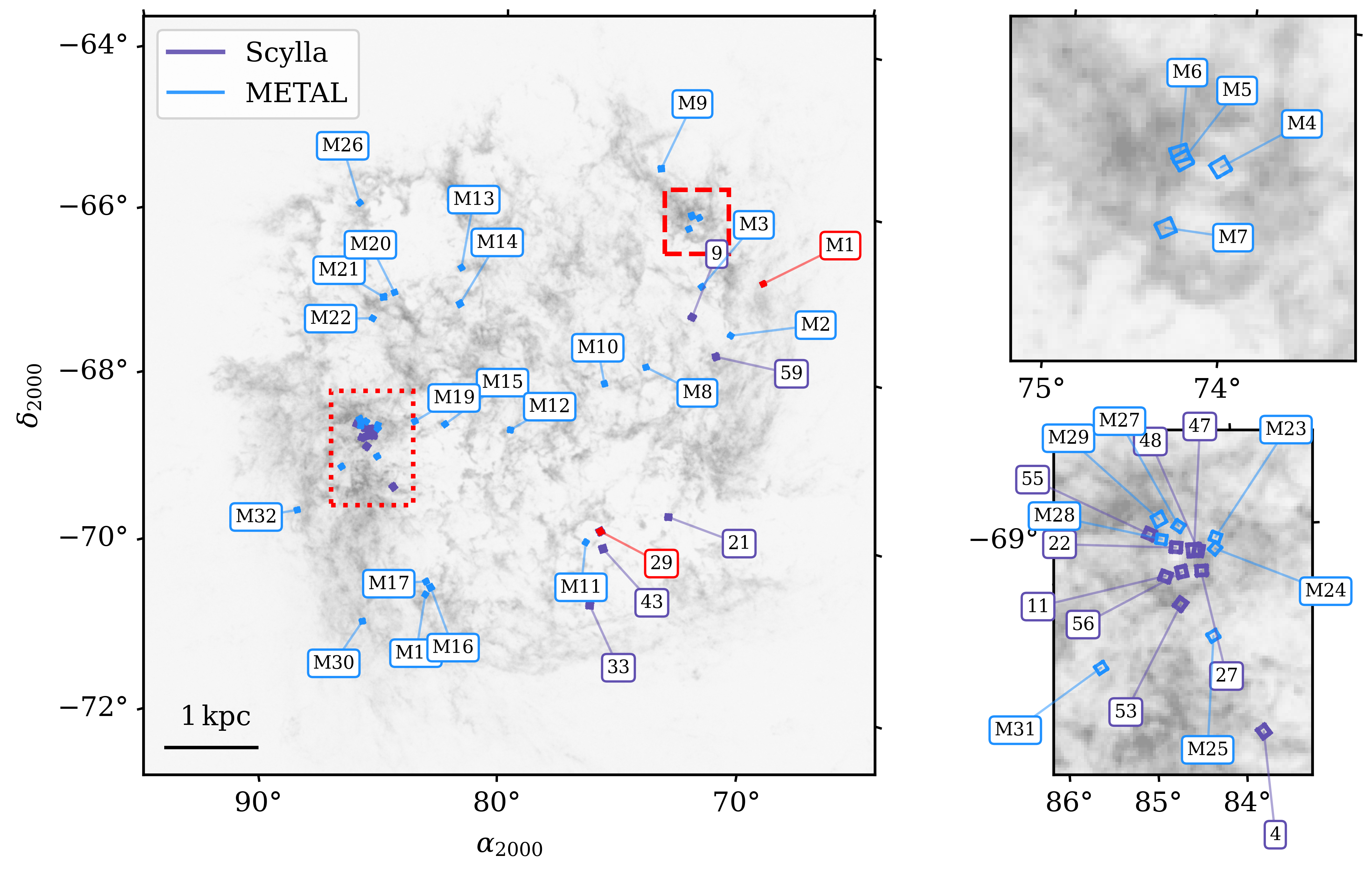
Fig 2: Extinction detection limits and completeness: (Left) Maximum detectable AV (black dashed line) as a function

Fig 3: Line-of-sight geometries: 1. Thin Sheet Geometry: Assuming a Gaussian stellar population distribution where
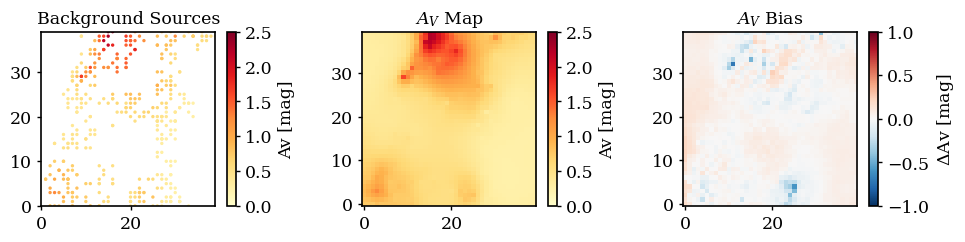
Fig 4: Schematic of validation tests with 3D dust maps: We use MW 3D dust clouds from C. Zucker et al. (2021)
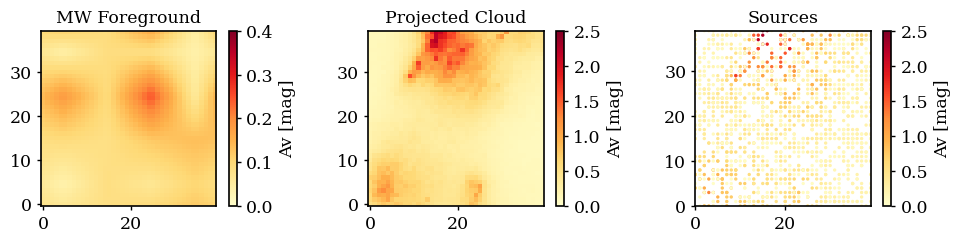
Fig 5: Simulation results: Resultant AV maps (left) and biases (right) simulated with different stellar densities (n⋆) and
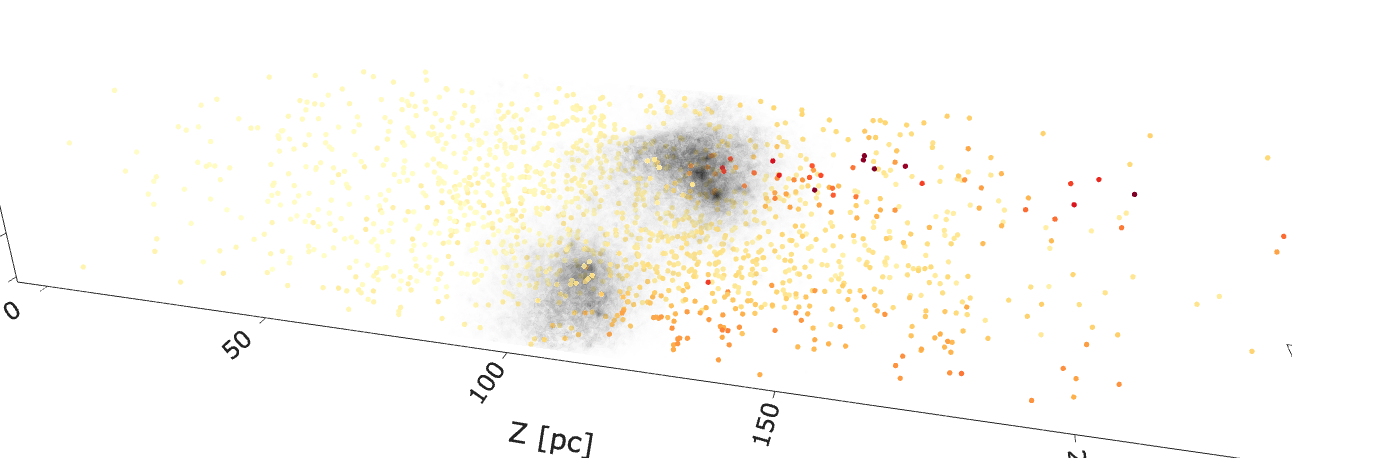
Fig 6: Simulation biases: Median extinction bias (∆AV = AV, sim −AV, true) and the ±1σ spread (shaded regions) as
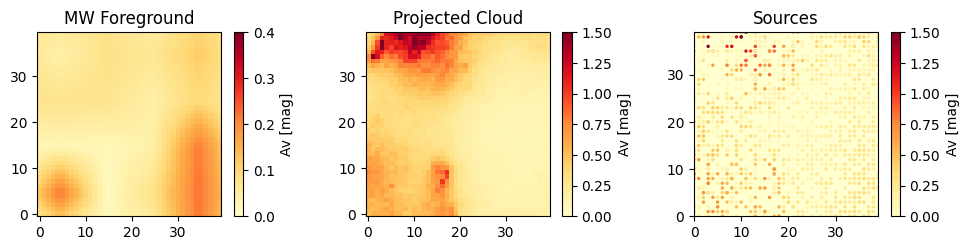
Fig 7: Comparison with alternative methods for dust mapping: We compare AV maps (top) and their resulting
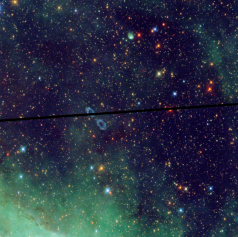
Fig 8: Dust extinction and emission maps: (Left) Three-color images of four Scylla and METAL fields, constructed
Limitations
- The method assumes the ISM column density follows a log-normal distribution and that stellar population scale height exceeds ISM scale height; deviations could bias foreground/background classification.
- Line-of-sight stellar distances are not individually measured; background star isolation relies on statistical modeling, introducing potential contamination and incomplete separation.
- Extinction completeness limited by detection thresholds in the bluest HST filter; stars heavily obscured beyond AV ~3 may be underrepresented despite luminosity cuts.
- Dust mapping is two-dimensional; without precise 3D distances, the constructed maps represent column-integrated extinction but cannot resolve depth variations in dust structures.
- Systematic offsets between extinction-based and FIR-based dust mass estimates indicate uncertainties remain in dust emissivity calibrations and multi-phase dust components.
- The approach requires at least ~1000 background stars per field for accuracy, limiting applicability to regions of intermediate or high stellar density.
Open questions / follow-ons
- How can improved stellar distance measurements, e.g., from Gaia or future facilities, be integrated to refine foreground/background source separation and build fully 3D dust extinction maps?
- What are the physical origins of the systematic offsets between dust masses derived from extinction and far-infrared emission, especially variations in dust emissivity or CO-dark gas fractions in low-metallicity environments?
- Can the kriging and GMM approach be adapted or extended to other nearby galaxies with differing metallicities or morphological types where resolved stellar photometry is available?
- How does temporal variability in star formation and ISM turbulence influence the statistical distributions assumed (log-normal) and ultimately impact dust map accuracy?
Why it matters for bot defense
For bot-defense engineers and CAPTCHA practitioners, this paper primarily serves as a detailed example of applying spatial statistical modeling (kriging) combined with probabilistic mixture models to robustly interpolate sparse, uncertain measurements into high-resolution maps. While the subject matter—mapping astrophysical dust extinction—differs from automated threat detection, the core methodology reflects an approach to handle noisy, heterogeneous spatial data with varying sampling density, and the importance of statistical decomposition of mixed populations (foreground/background) within data.
Principles from this research—such as the use of Gaussian mixture models for population separation, careful treatment of observational biases via artificial source injection, multi-scale bootstrapping for robustness, and kriging for spatial interpolation with uncertainty quantification—could inform strategies in bot detection contexts where signals are spatially correlated and obscured by noise. However, direct application to CAPTCHA log analysis would require domain-specific adaptation. The paper underlines the importance of disentangling multi-source contributions in observed data and carefully modeling detection limits when estimating underlying distributions, key insights relevant when distinguishing human versus automated traffic in challenging environments.
Cite
@article{arxiv2605_06925,
  title={ Scylla VI: Parsec-Scale Dust Extinction Maps in the SMC and LMC },
  author={ Christina W. Lindberg and Claire E. Murray and Christopher J. R. Clark and Caroline Bot and Clare Burhenne and Yumi Choi and Roger E. Cohen and Steven R. Goldman and Karl D. Gordon and Kristen B. W. McQuinn and Julia Roman-Duval and Karin M. Sandstrom and Edward F. Schlafly and Elizabeth Tarantino and Benjamin F. Williams and Petia Yanchulova Merica-Jones and Catherine Zucker },
  journal={arXiv preprint arXiv:2605.06925},
  year={ 2026 },
  url={https://arxiv.org/abs/2605.06925}
}