
Detection of an Extended Ly$α$ Halo around a $\textit{z}=6.64$ Broad Absorption Line Quasar with the Keck Cosmic Web Imager
Source: arXiv:2605.05673 · Published 2026-05-07 · By Raymond P. Remigio, Aaron J. Barth, Feige Wang, Jinyi Yang, Joseph F. Hennawi, Ryan J. Cooke et al.
TL;DR
This paper presents the first result from a KCWI red-channel (KCRM) survey targeting extended Lyman-alpha (Lyα) halos around z > 6.5 quasars, a redshift regime previously inaccessible to ground-based integral field spectrographs (IFS) due to MUSE's wavelength cutoff at 9300 Å. The target is J0910−0414, a z = 6.64 broad absorption line (BAL) quasar with an exceptionally massive black hole (MBH ≈ 3.59 × 10⁹ M☉) residing at the center of a confirmed protocluster. The authors detect a Lyα halo extending to ~11 pkpc, characterize its spatially resolved kinematics, and compare the circumgalactic gas properties to the host galaxy's [C II] emission traced by ALMA.
The key scientific novelty is twofold. First, KCWI's red channel pushes IFS-based Lyα halo searches from z ≲ 6.6 (the MUSE REQUIEM survey ceiling) toward z = 7.1, directly probing the epoch of reionization. Second, the BAL nature of J0910−0414 heavily obscures the nuclear Lyα, meaning roughly 55% of the total detected Lyα flux originates from the extended halo rather than the quasar core — an unusually high fraction that makes the halo detection relatively cleaner but also complicates the interpretation of the quasar's intrinsic ionizing output.
The halo displays a rotation-like SE-to-NW velocity gradient spanning approximately −330 to +530 km s⁻¹ and a velocity dispersion σ_Lyα = 242 ± 9 km s⁻¹, consistent with gravitationally dominated motion. Notably, the Lyα kinematics are kinematically decoupled from the [C II] emission of the host galaxy core, and the Lyα line width is ~0.6× the [C II] FWHM — the reverse of what is typically observed in the REQUIEM sample, where FWHMhalo_Lyα ≳ 2× FWHM[CII]. The authors suggest this reversal reflects dynamically hotter conditions in the compact, rapidly star-forming host core rather than anomalous CGM behavior.
Key findings
- Extended Lyα halo detected around BAL quasar J0910−0414 (z = 6.64) to a maximum radius dr = 11.4 pkpc (dmax = 21.3 pkpc), with a 2D mask area of 222.2 pkpc², at integrated S/N = 17.0.
- Halo Lyα flux F_halo = (4.6 ± 0.3) × 10⁻¹⁷ erg s⁻¹ cm⁻², constituting 55% of the total Lyα flux (F_total = 8.3 ± 0.3 × 10⁻¹⁷ erg s⁻¹ cm⁻²) detected within the 2D spatial mask, attributed to obscuration of the nuclear Lyα by the deep N V BAL trough.
- Halo luminosity L_halo_Lyα = (2.3 ± 0.1) × 10⁴³ erg s⁻¹, within the z ~ 6 range expected for Lyα fluorescence from optically thin CGM clouds (L_Lyα ≲ 10⁴⁴ erg s⁻¹; Farina et al. 2019), consistent with the Hoshi et al. 2025 Lyα halo luminosity vs. quasar ionizing luminosity correlation.
- Lyα halo velocity dispersion σ_halo_Lyα = 242 ± 9 km s⁻¹ and FWHM = 474 ± 74 km s⁻¹, which is ~0.6× the host galaxy [C II] FWHM (783 ± 40 km s⁻¹ from ALMA; Wang et al. 2024b) — the inverse of the REQUIEM survey trend where FWHMhalo_Lyα ≳ 2× FWHM[CII].
- Lyα halo centroid is velocity-shifted by v_halo_Lyα = +203 ± 15 km s⁻¹ relative to the [C II] systemic redshift (z[CII] = 6.6363 ± 0.0003), indicating physical association with the host system.
- The Lyα halo extent (~11.5 pkpc from radial profile 2σ detection) is ~8× larger than the [C II] effective size (R[CII] = 1.48 ± 0.19 pkpc) and ~18× larger than the FIR continuum size (R_cont = 0.62 ± 0.05 pkpc) reported by Wang et al. 2024b.
- KCWI red channel (KCRM) achieves a 5σ surface brightness limit of 2 × 10⁻¹⁸ erg s⁻¹ cm⁻² arcsec⁻² per 200 km s⁻¹ bin in 3.67 h of integration, comparable to the deepest MUSE observations at z ~ 6 but extending coverage to z = 7.1.
- A rotation-like velocity gradient spanning −330 to +530 km s⁻¹ oriented SE-to-NW is detected in the Lyα moment maps, oriented differently from the N-S [C II] rotation gradient (±100 km s⁻¹), indicating kinematic decoupling between CGM and host galaxy core.
Methodology — deep read
The observations were carried out with KCWI's red channel (KCRM) on the Keck II telescope under Program 2024A N061, targeting J0910−0414 at z = 6.64. The instrument configuration used the medium slicer with the RM2 grating and 2×2 binning, yielding a 16.5″ × 20.4″ FoV, wavelength coverage of 8500–10500 Å, slice width of 0.679″, plate scale of 0.291″ px⁻¹, and instrumental dispersion σ_inst ≈ 32 km s⁻¹ (FWHM = 2.4 Å from FeAr arcs). The central wavelength was set to 9500 Å to place Lyα at z ~ 6.6 near the center of coverage. Observations used a five-point dither pattern (center + four corners of a 1″ × 1″ square) executed at two position angles (0° and 90°) to ensure uniform spatial sampling; four 300 s exposures were taken per dither-PA combination, totaling 3.67 h on-source. Seeing ranged from 0.9″–1.3″ with a mean of 1.0″.
Data reduction used PypeIt, which performed bias subtraction, flat-fielding, wavelength calibration (from FeAr arcs), flux calibration, sky subtraction, and cube assembly. Cubes were built using the nearest-grid-point (NGP) algorithm, assigning each detector pixel's flux to a single voxel (λ, RA, Dec) without interpolation, thus preserving uncorrelated voxel noise — a deliberate choice to avoid noise correlation artifacts common in drizzle-based schemes. Final cubes have 0.291″ × 0.291″ × 0.966 Å voxels over a 17″ × 17″ FoV. A wavelength-dependent noise correction factor was derived by comparing the RMS spectrum in an empty sky region against the mean 1σ error spectrum in the same region. A telluric correction was applied using PypeIt's tellfit routine. Galactic extinction was corrected using E(B−V) = 0.0225 with the Gordon et al. 2023 extinction curve (RV = 3.1).
Quasar PSF subtraction followed the REQUIEM survey methodology. A PSF model was constructed by collapsing the cube over a continuum spectral window (9450–10200 Å, excluding absorption features and sky line artifacts) and fitting a 2D Gaussian to the quasar. A circular stamp of radius 5σ_Gaussian served as the empirical PSF template, assumed to contain no extended emission. For each wavelength channel, the PSF template was scaled to the total flux within a 1-pixel radius of the quasar center, and a wavelength-dependent quasar model cube was subtracted from the science cube. This left a residual cube containing only spatially extended emission.
Extended Lyα was detected using a 3D friend-of-friends (FoF) clustering algorithm applied to a smoothed S/N cube, where smoothing used a 3D Gaussian kernel with σ_spat = 0.291″ and σ_spec = 0.966 Å (one voxel each). Seeds were the highest-S/N voxels within 500 km s⁻¹ of the expected Lyα wavelength and within 1″ of the quasar. Neighboring voxels were added if within 2 voxels spatially and above a significance threshold η. This was run for η ∈ {2.0, 3.0, 4.0, 5.0}; a 2D spatial mask was derived by requiring at least two consecutive significant voxels spectrally per spaxel. The threshold η = 3.0 maximized the integrated line S/N (S/N = 17.0), and the corresponding mask and wavelength range (λ_min = 9277.1 Å, λ_max = 9306.1 Å) were adopted for all subsequent analysis.
Spectral measurements (integrated flux, velocity centroid, velocity dispersion) were computed as non-parametric zeroth, first, and second velocity moments over [λ_min, λ_max] using spaxels within the 2D mask. Instrumental dispersion was subtracted in quadrature. FWHM was estimated from the halo spectrum smoothed with a 1D Gaussian kernel (σ_spec = 0.966 Å). For the radial surface brightness profile, annular averages were computed on the PSF-subtracted cube collapsed over the Lyα window; a background noise profile was measured over 9750–9780 Å (no extended emission, no sky lines, similar 5σ limit to the Lyα window). For kinematic maps, each wavelength slice was convolved with a 2D Gaussian (σ_spat = 0.291″, no spectral smoothing) before computing velocity moment maps using only voxels within the 3D mask.
The primary comparison dataset is ALMA [C II] 158 μm observations of J0910−0414 from Wang et al. 2024b, which provide the systemic redshift z[CII] = 6.6363 ± 0.0003, [C II] FWHM = 783 ± 40 km s⁻¹, and host galaxy effective sizes (R[CII] = 1.48 ± 0.19 pkpc, R_cont = 0.62 ± 0.05 pkpc). The KCWI results are also compared against the REQUIEM survey (Farina et al. 2019; z ~ 5.9–6.6, MUSE-based) and QSO MUSEUM (Arrigoni Battaia et al. 2019; z ~ 3.0–3.4). No formal statistical tests (e.g., bootstrap confidence intervals, cross-validation) are reported; all uncertainties are stated to be statistical only. There is no code or data release mentioned; the KCWI program is ongoing and this paper reports results for one target.
Technical innovations
- First IFS detection of an extended Lyα halo at z > 6.62 using KCWI's red channel (KCRM), extending the ground-based IFS Lyα halo search frontier from MUSE's z ≲ 6.6 cutoff toward z = 7.1.
- Adaptation of the PypeIt pipeline and NGP cube-assembly strategy for KCWI red-channel data to preserve uncorrelated voxel noise, as opposed to interpolation-based resampling approaches used in prior MUSE-based surveys.
- Demonstration that a BAL quasar's deep N V absorption trough, which suppresses nuclear Lyα, paradoxically enhances the detectability of the extended halo by reducing the PSF subtraction residuals and boosting the halo-to-total flux ratio to ~55%.
- Application of a 3D FoF clustering algorithm with multi-threshold η optimization (η ∈ {2, 3, 4, 5}) to identify the significance threshold that maximizes integrated halo S/N, following Hennawi & Prochaska 2013 but adapted to KCRM data.
Datasets
- KCWI/KCRM IFS cube of J0910−0414 — single target, 3.67 h integration, 8500–10500 Å — obtained by authors under Keck Program 2024A N061 (not public at time of publication)
- ALMA [C II] 158 μm observations of J0910−0414 — single target — from Wang et al. 2024b (not reacquired by this study; archival/published)
- NIR spectrum of J0910−0414 — single target — from Yang et al. 2021 (archival/published)
- JWST ASPIRE program slitless spectroscopy (GO-2078, PI: Feige Wang) — parent sample for the ongoing KCWI survey — partially public via JWST archive
Baselines vs proposed
- REQUIEM survey (MUSE, z ~ 5.9–6.61, Farina et al. 2019) halo FWHM trend: FWHMhalo_Lyα ≳ 2.0 × FWHM[CII] vs. J0910−0414: FWHMhalo_Lyα ≃ 0.6 × FWHM[CII] (474 ± 74 km s⁻¹ vs. 783 ± 40 km s⁻¹)
- REQUIEM survey halo size range: dr values span ~5–20 pkpc vs. J0910−0414: dr = 11.4 pkpc, dmax = 21.3 pkpc (reported as within REQUIEM range)
- MUSE wavelength ceiling for Lyα halo searches: z ≲ 6.6 vs. KCRM effective ceiling: z ≈ 7.1
- [C II] host galaxy effective size (Wang et al. 2024b): R[CII] = 1.48 ± 0.19 pkpc vs. Lyα halo size (2σ radial profile): dmax_Lyα = 11.5 ± 2.3 pkpc (~8× larger)
- FIR continuum emission size (Wang et al. 2024b): R_cont = 0.62 ± 0.05 pkpc vs. Lyα halo extent: ~11.5 pkpc (~18× larger)
Figures from the paper
Figures are reproduced from the source paper for academic discussion. Original copyright: the paper authors. See arXiv:2605.05673.

Fig 1: Data, QSO point source model, QSO-subtracted, S/N, and smoothed S/N cubes of J0910−0414, as described in
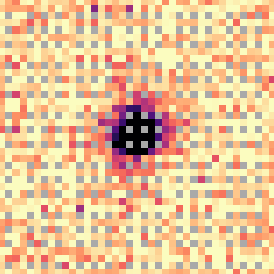
Fig 2: Left panel: The total flux (gray), extended Lyα (red), and 1σ error (blue) extracted over the 2D spatial mask as

Fig 3: Radial surface brightness profile of the extended
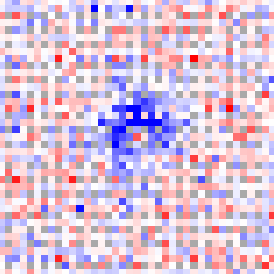
Fig 4 (page 3).
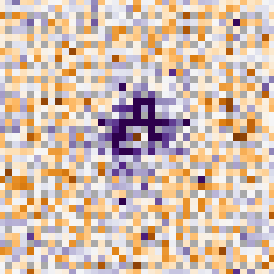
Fig 5 (page 3).
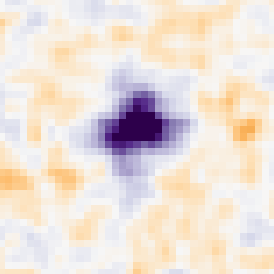
Fig 6 (page 3).
Fig 4: Moment maps of the extended Lyα around J0910−0414.

Fig 5: Top panel: Total flux spectrum (black) and the 1σ error spectrum (blue) extracted from the 2D mask, plotted as a
Limitations
- Single-target pilot result: all findings are based on one quasar (J0910−0414); population-level conclusions about z > 6.5 Lyα halos cannot yet be drawn and await the full KCWI sample analysis promised in future papers.
- Resonant scattering and IGM attenuation at z ~ 6 modify the Lyα line profile in ways the authors acknowledge but cannot correct for, meaning velocity centroid, line width, and kinematic gradient measurements are potentially biased; confirmation requires non-resonant line observations (e.g., Hα with JWST/NIRSpec or ALMA).
- PSF subtraction fidelity is not formally quantified: the empirical PSF is built from a single continuum white-light image, and no injection-recovery tests or PSF residual characterization (e.g., azimuthal PSF variation, temporal PSF stability across the 3.67 h dataset) are reported.
- The BAL nature of J0910−0414 is simultaneously an advantage (reduced nuclear Lyα contamination) and a complication: the deep N V trough partially obscures the Lyα wavelength range, making it impossible to cleanly decompose the nuclear and extended contributions without assumptions about the BAL velocity structure.
- No adversarial or distribution-shift validation of the FoF detection: the significance threshold η = 3.0 was chosen by maximizing S/N on the same dataset used for detection, which risks confirmation bias; no jackknife, bootstrap, or negative-test (inverted cube) validation is described.
- Seeing of 0.9″–1.3″ (mean 1.0″) corresponds to ~5.4 pkpc at z = 6.64, meaning the inner halo structure is resolution-limited and the morphological asymmetry and velocity gradient could be partially PSF-subtraction artifacts rather than physical features.
Open questions / follow-ons
- Can non-resonant emission line observations (e.g., Hα with JWST/NIRSpec IFS, or [C II] at higher spatial resolution with ALMA) confirm the rotation-like velocity gradient and kinematic decoupling, and disentangle intrinsic halo kinematics from resonant scattering and IGM attenuation effects?
- Is the unusually low FWHMhalo_Lyα / FWHM[CII] ≃ 0.6 ratio (compared to ≳2 in REQUIEM) specific to BAL quasars, to the protocluster environment of J0910−0414, or to the z > 6.6 epoch where IGM attenuation is more severe — and will the rest of the KCWI sample show similar inversions?
- What fraction of the observed Lyα halo luminosity is powered by fluorescence vs. collisional excitation vs. resonant scattering of star-formation-driven Lyα, given the extreme SFR estimates (100–1000 M☉ yr⁻¹) for the host galaxy?
- Do the 12 confirmed Lyα emitters and three [C II] companions in the J0910−0414 protocluster contribute to or shape the extended Lyα halo morphology, and can future wide-field IFS mosaics (e.g., with BlueMUSE or KCWI in large-slicer mode) map the filamentary gas connecting these members?
Why it matters for bot defense
This paper has no relevance to bot defense, CAPTCHA systems, or web traffic authentication. It is a pure observational astrophysics study focused on circumgalactic medium properties of a high-redshift quasar using an integral field spectrograph. There are no machine learning models, behavioral signals, adversarial settings, or detection/classification pipelines applicable to bot defense engineering.
The only extremely peripheral methodological note of marginal interest is the use of a friend-of-friends clustering algorithm with multi-threshold significance scanning to isolate faint signal from a noisy 3D data cube — a pattern loosely analogous to anomaly detection in high-dimensional sparse data. However, the context, scale, and specifics are sufficiently different that a bot-defense engineer would derive no actionable insight from this paper.
Cite
@article{arxiv2605_05673,
  title={ Detection of an Extended Ly$α$ Halo around a $\textit{z}=6.64$ Broad Absorption Line Quasar with the Keck Cosmic Web Imager },
  author={ Raymond P. Remigio and Aaron J. Barth and Feige Wang and Jinyi Yang and Joseph F. Hennawi and Ryan J. Cooke and Eduardo Banados and Xiaohui Fan and Emanuele Paolo Farina },
  journal={arXiv preprint arXiv:2605.05673},
  year={ 2026 },
  url={https://arxiv.org/abs/2605.05673}
}