
Multi-Regional Traffic Control with Travel and Charging Demand Co-Management
Source: arXiv:2605.00726 · Published 2026-05-01 · By Yixun Wen, Stelios Timotheou, Boli Chen
TL;DR
This paper addresses the growing challenge of urban traffic congestion exacerbated by the proliferation of electric vehicles (EVs) and their charging demands. It proposes a novel multi-regional traffic coordination framework that jointly optimizes route guidance and charging management while regulating external vehicle inflows through demand management. The framework leverages a macroscopic fundamental diagram (MFD) model to capture regional traffic dynamics and congestion levels efficiently at a system scale. By explicitly modeling different vehicle groups according to their charging needs and estimated charging times, it enables integrated management of travel and charging demands.
The technical novelty lies in reformulating the inherently nonconvex MFD-based and charging constraints into a convex optimization problem, ensuring scalability and tractability for large multi-region networks. Simulation experiments on a representative 16-region Manhattan-style urban network under light, moderate, and heavy traffic demonstrate that the proposed method reduces average total vehicle time in the network by up to 5.2% compared to variants without demand management and substantially outperforms shortest-path and nearest-charging heuristics with respect to travel time and queue lengths. Results also show better spatial balance of vehicle distribution and more efficient charging station utilization, particularly under heavy congestion.
Key findings
- Under heavy traffic conditions, the proposed method achieves a 5.2% reduction in average travel time compared to the case without demand management (WDM).
- Compared to the Nearest Charging (NC) benchmark, the proposed method reduces average total time by 30.4% (light traffic), 37.5% (moderate traffic), and 35.6% (heavy traffic).
- Shortest Path (SP) routing leads to persistent congestion in certain regions and highly uneven traffic distribution, while the proposed approach achieves better spatial balance (Fig. 5).
- The charging station utilization under the proposed strategy is more balanced across all regions, with significantly lower queue lengths than other cases (Fig. 7).
- The convex reformulation of MFD and charging constraints enables solving the joint routing and charging management problem efficiently at regional scale.
- Demand management (limiting inflow vehicles) becomes increasingly important as traffic intensity grows, contributing notably under heavy congestion.
- Charging demand is fulfilled when EVs connect to chargers and remain connected for the required charging duration, enabling a more realistic modeling of charging queues.
Threat model
Not applicable; the study models traffic and charging demand management rather than security threats. The 'adversary' is the urban traffic system's congestion and resource limitations. There is no malicious actor targeting the system.
Methodology — deep read
Threat Model & Assumptions: The framework assumes a central traffic coordinator with real-time information on incoming vehicle origins, destinations, and charging demands. Vehicles are classified into groups based on charging time requirements. The adversary model is not adversarial but models typical urban traffic and EV charging demand patterns. It assumes homogeneous spatial distribution of charging stations within each region and no boundary restrictions besides region adjacency and capacity limits.
Data: The model is applied to a synthetic 16-region urban network modeled after Manhattan, with specified origins and destinations. Each region has parameters like critical density (30 veh/km), jam density (130 veh/km), critical flow (1800 veh/h), and free flow speed. Charging station capacity per region is limited (50 EVs charging, 10 queue spots). Traffic demand scenarios span light (~3000 veh/h), moderate (~4000 veh/h), and heavy (~5000 veh/h).
Architecture/Algorithm: The core is a macroscopic traffic flow model based on the macroscopic fundamental diagram (MFD), relating vehicle density and flow with a triangular shape. Vehicles are grouped by charging time, with associated charging station and queue dynamics modeled as buffer systems with finite capacity. The joint optimization variables include admitted demand, inter-region flow, charging inflow/outflow, and queue management. The original nonlinear MFD and flow-density constraints are convexified via inequalities bounding the flow by piecewise linear constraints to formulate a convex optimal control problem.
Training Regime: Not applicable (optimization-based). The problem is solved over a finite horizon T with sampling interval Ts. Decision variables u(k) include demand admission, routing flows, charging station in/outflows, and queue handling. Convex optimization methods can solve the problem efficiently.
Evaluation Protocol: The proposed method is compared against three benchmarks: WDM (no demand management), NC (nearest-charging only), and SP (shortest path routing). Evaluations consider average travel time, waiting time (in buffers and queues), total time, traffic density distributions over time and space, charging station occupation, and queues. Three traffic intensity scenarios test performance under varying congestion levels.
Reproducibility: The paper does not state code release or public dataset availability; network model details and parameters are provided, enabling replication with similar synthetic data.
Example End-to-End: Consider heavy traffic with 5000 vehicles/h entering specified origin regions. Vehicles are grouped by charging demand. The optimizer calculates demand admission rates to avoid excessive inflows, routes vehicles across the 16 regions to balance load while respecting boundary and charging station capacities, and schedules EV charging/queue allocations to meet charging times. This results in spatially balanced traffic densities and reduced queues. Key convex constraints ensure flows lie below MFD boundaries and charging queue limits. Simulation results show up to 5.2% reduction in average travel time and more efficient charger usage compared to WDM and other baselines.
Technical innovations
- Integration of EV charging demand and queue dynamics into a macroscopic fundamental diagram framework for regional traffic coordination.
- Convex reformulation of original nonconvex MFD flow-density and charging constraints to enable tractable large-scale optimization.
- Joint optimization of demand admission, routing guidance, and charging station scheduling within a multi-region urban network.
- Modeling charging stations as buffers with both queue and charger dynamics, explicitly coupling charging duration with traffic flow evolution.
Datasets
- Synthetic 16-region urban network (Manhattan-style) — simulation-based — network parameters detailed in paper
Baselines vs proposed
- Without Demand Management (WDM): heavy traffic average total time = proposed -3.0%, travel time = proposed -5.2%
- Nearest Charging (NC): average total time under light/moderate/heavy traffic = proposed -30.4% / -37.5% / -35.6%
- Shortest Path (SP): consistently longer travel and waiting times than proposed method across all traffic scenarios
Figures from the paper
Figures are reproduced from the source paper for academic discussion. Original copyright: the paper authors. See arXiv:2605.00726.
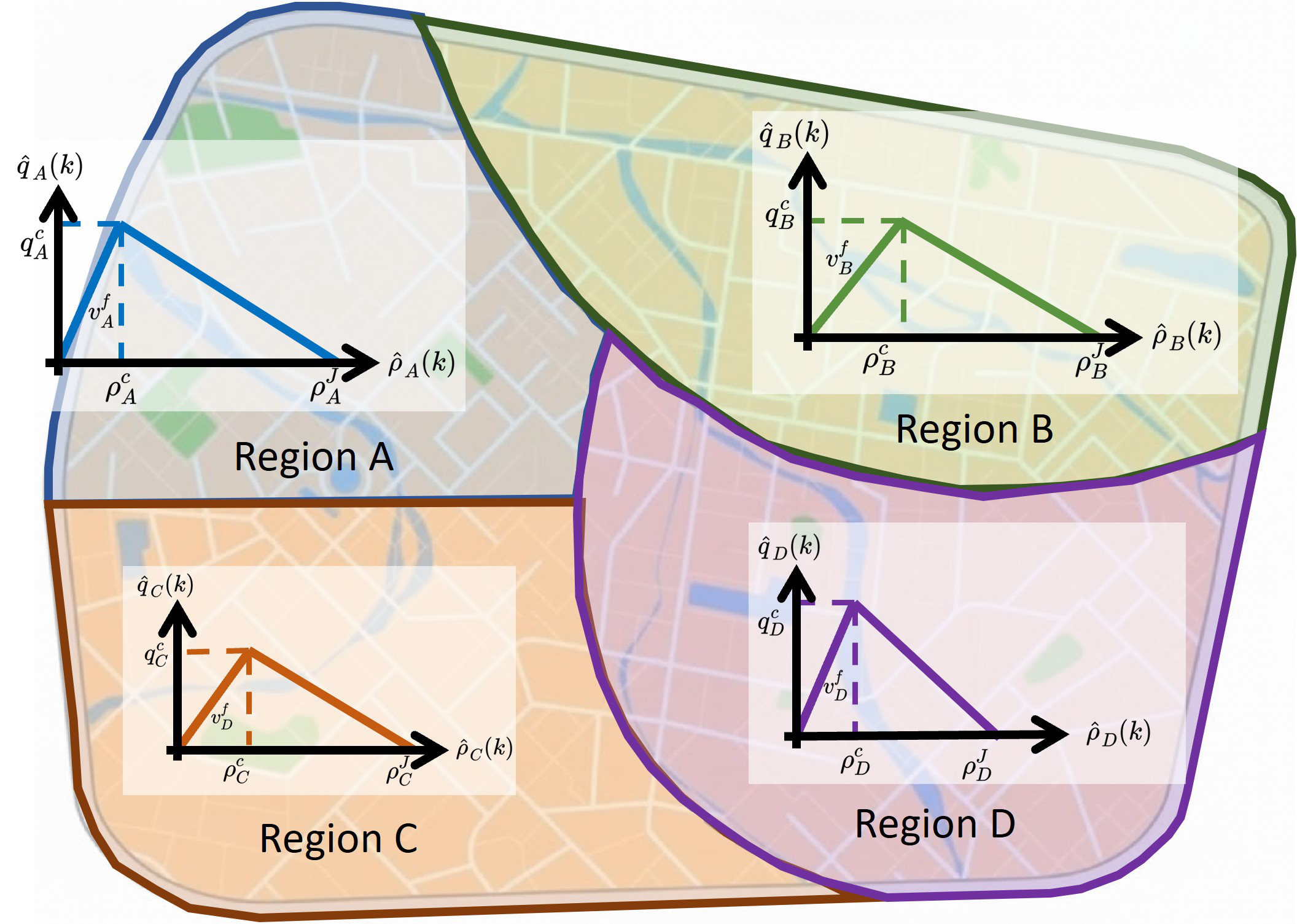
Fig 1: An urban area which is separated into four subre-
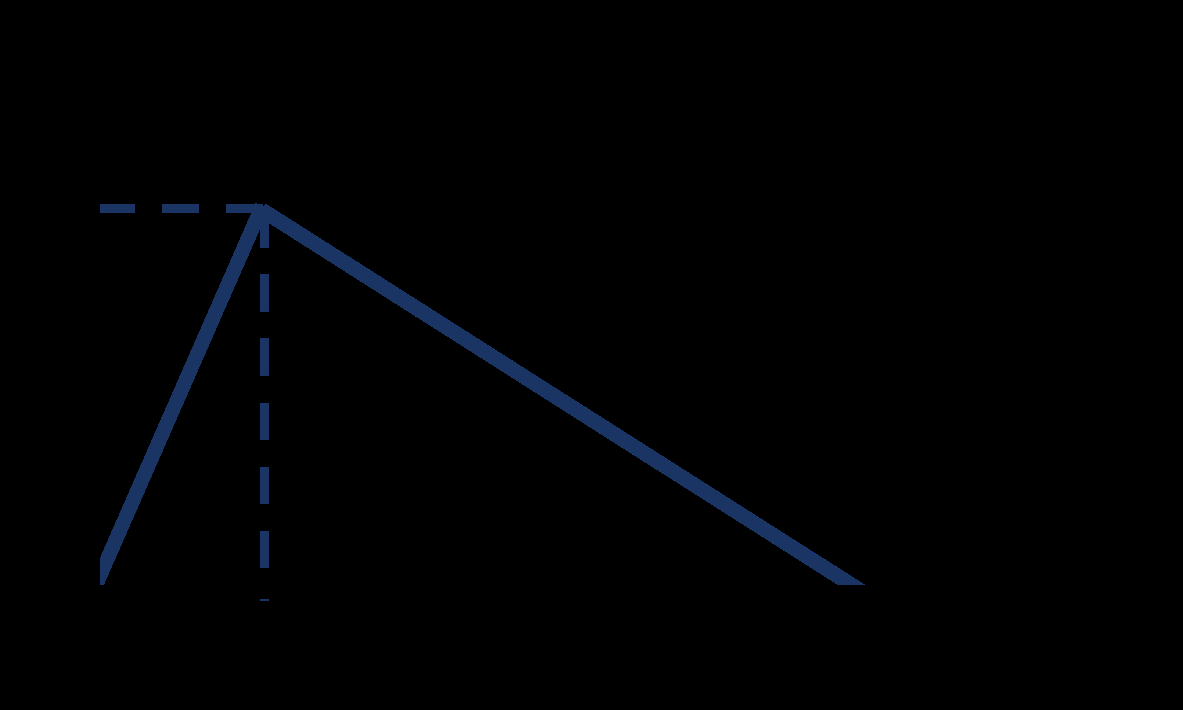
Fig 2: A triangular MFD function that illustrates the
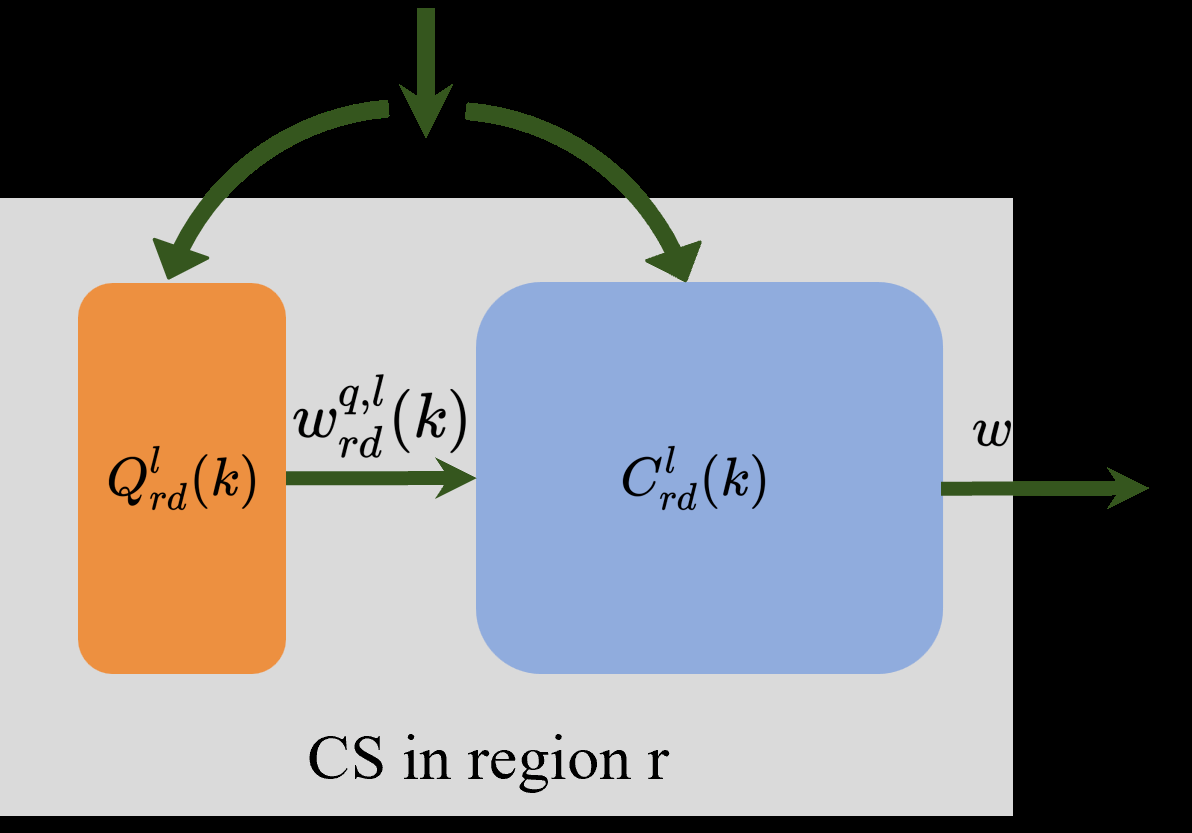
Fig 3: Operation of a regional-level charging station and
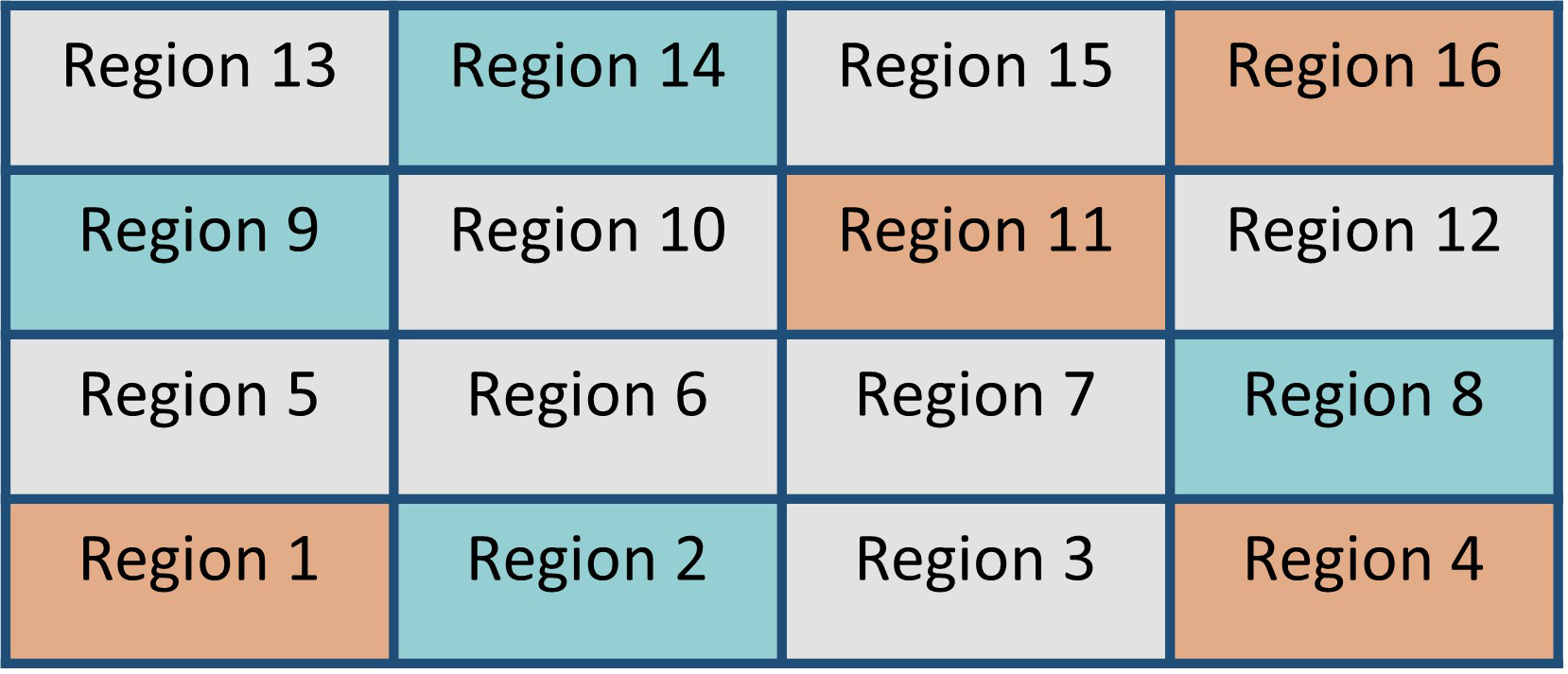
Fig 4: The simulation area consisting of 16 regions, with
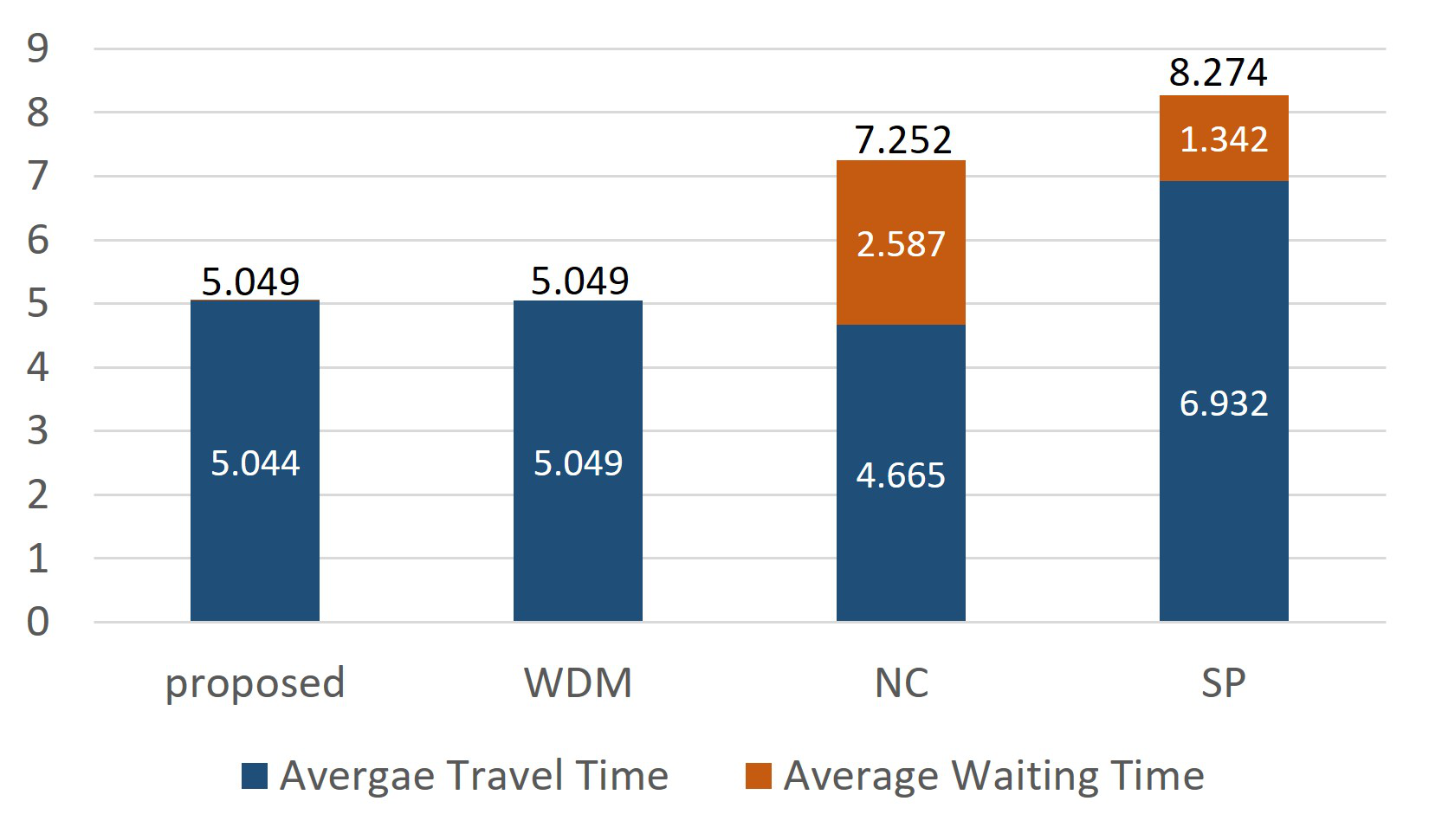
Fig 6: Comparison of the control strategies under varying traffic conditions. The total average time [min] (sum of travel
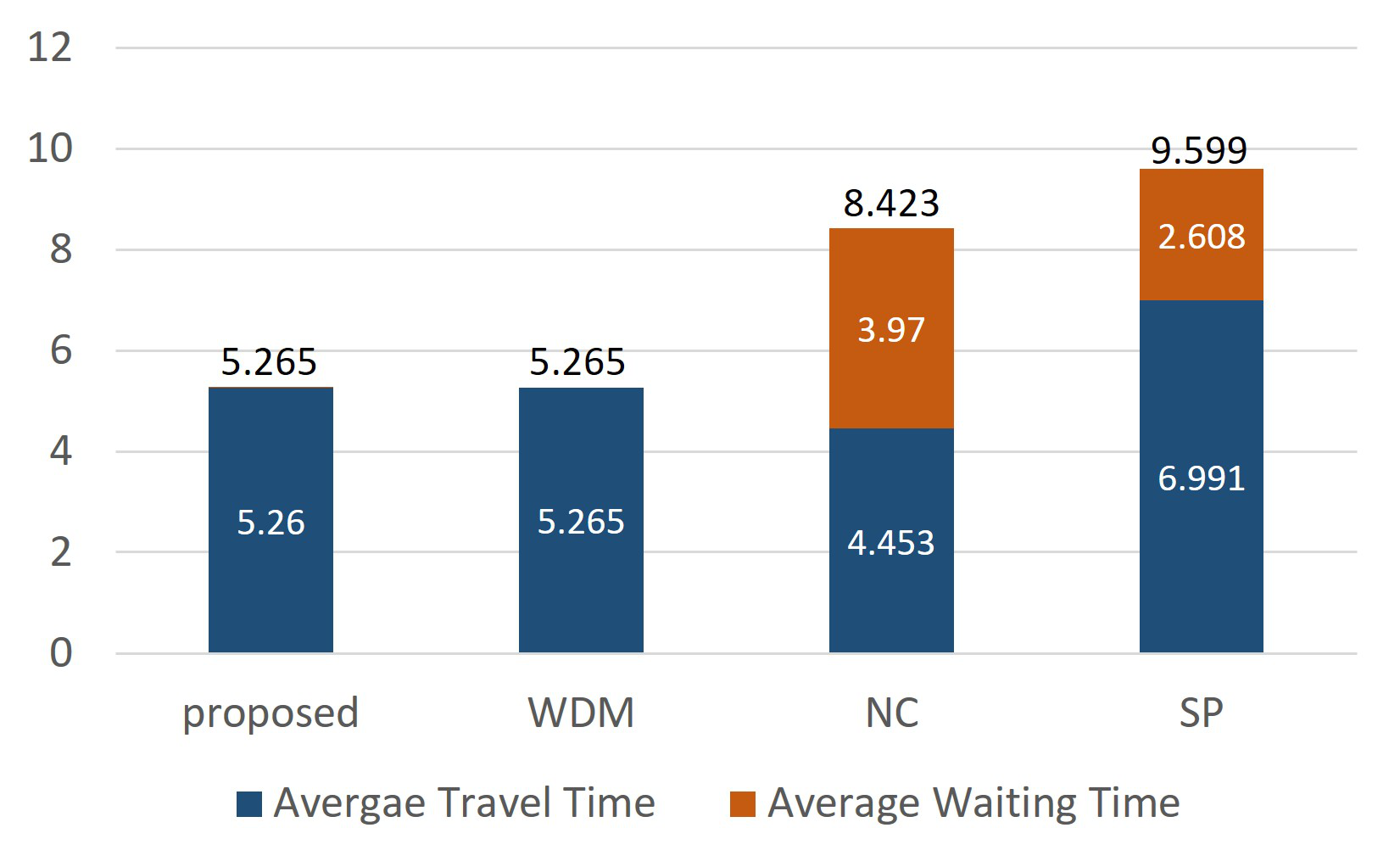
Fig 7: The occupation rate of CS for each region in each
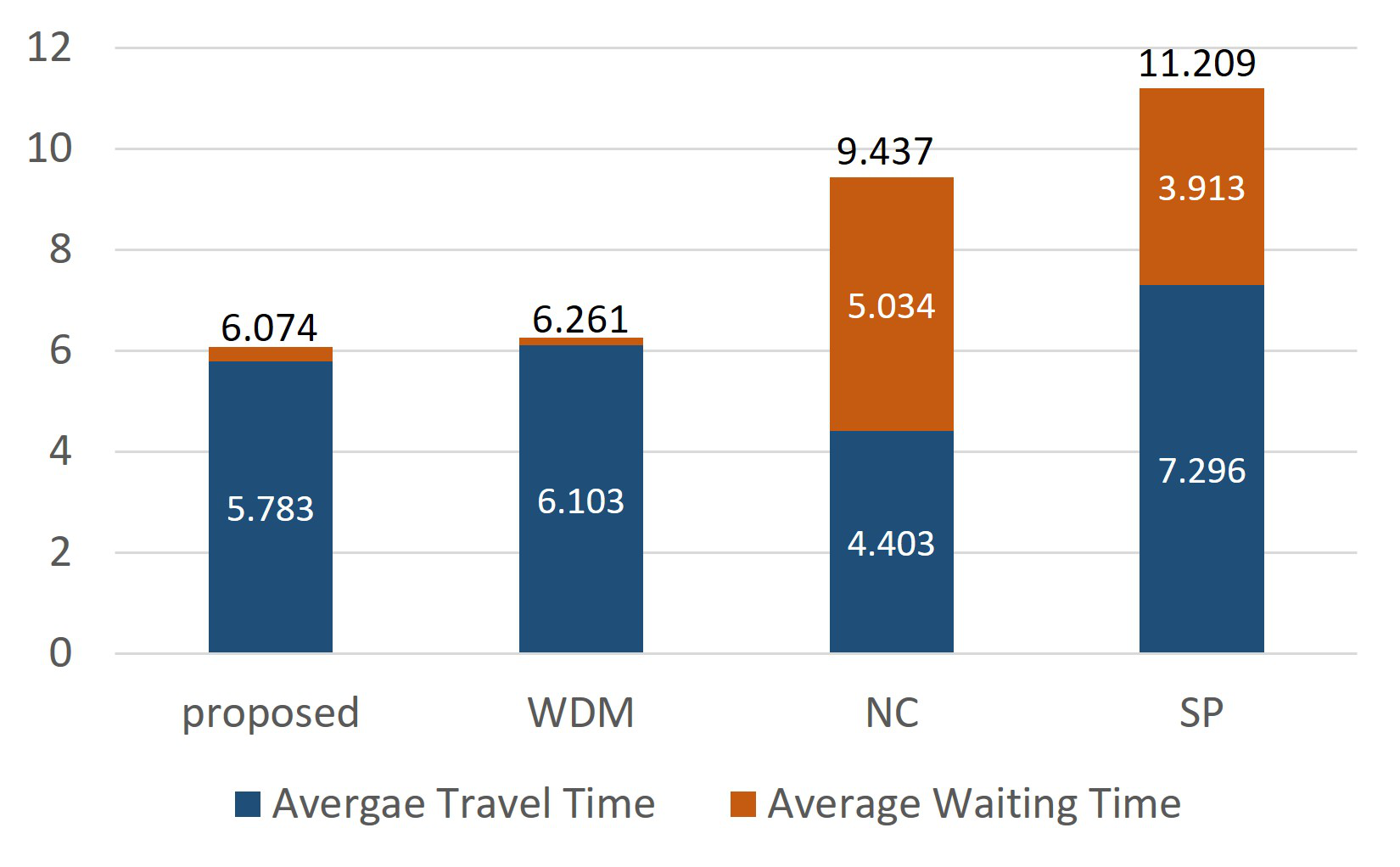
Fig 5: Traffic density ρ [veh/km] for each region in each time slot for every case in three traffic conditions. The
Limitations
- Synthetic network and demand scenarios limit real-world generalizability without validation on real city traffic data.
- No adversarial or worst-case traffic pattern tested; robustness under unexpected events unknown.
- Charging station modeling assumes homogeneous spatial distribution within regions, potentially oversimplifying real charging infrastructure.
- No consideration of heterogeneous EV battery states or more complex charging behaviors beyond fixed average charging times.
- Implementation details on solving the convex program at real-time scale are not discussed.
- Scalability beyond the tested 16-region network and impact of model parameter inaccuracies are not addressed.
Open questions / follow-ons
- How robust is the proposed framework to inaccuracies or delays in real-time traffic and charging demand data?
- Can the method be extended to incorporate heterogeneous EV states of charge and variable charging rates?
- How would the approach perform on real-world urban networks with more irregular topology and charge station distributions?
- What are the computational requirements and feasibility of deploying this coordination online in a real traffic management center?
Why it matters for bot defense
For bot-defense and CAPTCHA practitioners, this paper offers insights into large-scale multi-agent demand management relevant for managing load on congested resources—in this case, urban traffic networks and EV charging stations. The approach of convexifying a complex, nonlinear system for tractable joint optimization could inspire similar frameworks in bot mitigation where multi-stage resource allocation is required.
Additionally, the notion of regulating external demand admission to prevent internal overload parallels CAPTCHA gating mechanisms that modulate user inflow under suspected attack. However, the paper focuses on traffic networks rather than adversarial bot detection and does not directly address bot behavior or security dynamics. Practitioners may study the modeling and optimization techniques as a case of coordinating large populations with heterogeneous demands and shared infrastructures.
Cite
@article{arxiv2605_00726,
  title={ Multi-Regional Traffic Control with Travel and Charging Demand Co-Management },
  author={ Yixun Wen and Stelios Timotheou and Boli Chen },
  journal={arXiv preprint arXiv:2605.00726},
  year={ 2026 },
  url={https://arxiv.org/abs/2605.00726}
}