
Tooling for digital accessibility in mathematics: Quickly build compliant course websites that benefit all students
Source: arXiv:2603.28494 · Published 2026-03-30 · By Matthew McMillan, Eli Boyden
TL;DR
This paper tackles a critical practical barrier for digital accessibility compliance in mathematics education following 2024 Title II ADA updates in the US. Standard LaTeX-to-PDF workflows fail to produce screen-reader compatible math content, yet MathML, the accessible web standard, is underadopted by instructors due to workflow complexity or unfamiliarity. The authors contribute a taxonomy categorizing existing DA-compliant math content approaches by output type (print PDF vs web HTML) and instructor tradeoffs. They then present a freely available, moderately technical but user-friendly workflow based on Obsidian (Markdown with TeX), Quartz (static site generator), GitHub, and Cloudflare Pages that automates MathML generation and online deployment with a 1-2 hour setup and rapid iterative updates. Lastly, an empirical study analyzing 31 Calculus II sections over 6 semesters finds that sections using this system improved student performance significantly—reaching 2.4 standard deviations above control groups in the final semester—while a student survey shows no negative experience impact. This suggests that a well-designed DA-compliant math website can simultaneously benefit accessibility and overall learning outcomes. A planned follow-up study will investigate adoption barriers at other institutions.
Key findings
- The proposed Markdown+TeX to MathML web-based workflow requires ~1–2 hours to set up for instructors with no web development background.
- Student sections using the system outperformed control sections by 2.4 population standard deviations (σ_fall) in GPA in the final semester (Fall 2025).
- Student A-band grade percentages increased and DFW rates decreased progressively in treatment sections after transitioning to website delivery.
- The same instructor teaching treatment sections showed no performance gains when using PDF-only materials, linking gains to website use rather than instructor effect.
- Two other new instructors on the same course without the system showed no similar performance improvement across semesters.
- A prerequisite policy change requiring formal Calculus I credit improved student preparation but did not significantly affect control section performance.
- Student experience surveys (55 treatment, 16 control responses) showed no statistically significant differences on perceived helpfulness or navigation ease, indicating no negative impact.
- The workflow supports modular courseware features such as transclusion, internal linking, and batch publishing of homework solutions.
Threat model
Adversary model is primarily regulatory compliance-driven rather than adversarial: the goal is to ensure digital accessibility for students with disabilities by producing screen-reader compatible math content. The adversary is effectively the regulatory body enforcing ADA guidelines and students requiring accessible content. There is no adversary with malicious intent modeled.
Methodology — deep read
The authors target public university math courses required to meet 2024 ADA Title II digital accessibility standards (WCAG 2.1 AA), specifically focusing on screen-reader compatibility of math content. Their threat model is a general accessibility compliance scenario, not adversarial. They collected data from 31 Calculus II sections over 6 semesters (2023–2025) at a large public university, with average section size ~38 students. Six instructors taught the course with consistent exams and mostly overlapping homework problems.
Control sections (26 total) provided materials as PDFs via the LMS (Canvas). Treatment sections (5 total) were led by a single instructor who adopted the proposed system starting Fall 2024, transitioning from PDF delivery to a MathML-compliant course website by Spring/Fall 2025. A phased rollout included F24 PDF generation from Markdown+TeX sources (no website), followed by full website deployment.
The workflow uses Obsidian, a Markdown-based note-taking app, where instructors write math in TeX syntax with autocompletion, create modular content using internal linking and transclusion, and store source files locally. The Obsidian Git plugin synchronizes content changes to a private GitHub repository. Quartz, a static site generator tailored for Obsidian, converts Markdown+TeX to HTML embedded with MathML using KaTeX and a custom Temml plugin. Cloudflare Pages automatically builds and deploys the site on Git commit.
The one-time setup involves installing the four components and connecting them; the process is approximated at 1–2 hours. After setup, content edits and publishing are done entirely in Obsidian by triggering a commit command that syncs and rebuilds the site in 2–5 minutes without instructor intervention.
Evaluation used three primary metrics derived from institutional data: average section GPA, percentage of students with A-band grades, and percentage with DFW (D, F, Withdrawal) grades. Survey data on student experience—ease of use, navigation, and helpfulness of materials—was collected through a university-administered survey with 55 treatment and 16 control respondents.
Performance comparisons were done semester-by-semester. To control for instructor effects, the F24 semester used the treatment instructor but PDF-only delivery, allowing isolation of the website’s impact. Additional controls included comparing other new instructors’ learning curves and noting that a prerequisite policy change affected treatment and control groups equally.
Student surveys were analyzed using collapsed (agreement vs neutral vs disagreement) and full Likert scale codings and tested with Welch’s t test. The analysis found no statistically significant differences, though small control sample size limits conclusions.
All setup tools and the tutorial are publicly available, ensuring reproducibility. Source data was from institutional records but individual grades were anonymized. The study does not include accessibility testing with disabled or screen reader users; it focuses on general student outcomes.
Concretely, the workflow allows a math instructor to write in Markdown+TeX via Obsidian, commit changes, which automatically triggers cloud builds that generate an accessible course website with MathML-rendered math. This site supports modular courseware management, hyperlinked content, and fine-grained control over solution visibility.
The empirical study shows that transitioning from PDFs to a web-based MathML format correlates with improved student performance, without evidence of harm to student experience, though the single-instructor, non-randomized design limits causal claims. Future work will explore deployment at other schools and barriers to widespread usage.
Technical innovations
- A practical and documented end-to-end Type W3 workflow enabling math instructors to produce accessible MathML course websites directly from familiar TeX-like Markdown files.
- Integration of Obsidian for content creation with plugins supporting Git-based version control and connection to a static site generator (Quartz) customized with KaTeX and Temml plugins to maximize MathML coverage.
- Use of Cloudflare Pages for automated site building and private hosting preventing exposure of sensitive course materials (e.g. homework solutions), addressing security concerns common in similar workflows.
- Development of courseware-specific features such as modular transclusion, linked question banks, and batch publishing functionality built on top of generic Markdown-based CMS technology.
Datasets
- Calculus II course sections data — 31 sections over 6 semesters, average class size ~38, total enrollments ~197 per semester — institutional records from a large public US university
- Student experience survey — 71 responses total (55 treatment, 16 control) — centrally administered university survey
Baselines vs proposed
- Control sections GPA (average across semesters): baseline varying between cohorts
- Treatment instructor, F24 PDF delivery GPA: approximately 1 standard deviation below Fall control cohort mean
- Treatment instructor, S25 web delivery GPA: exceeds Spring control mean by over 1 standard deviation
- Treatment instructor, F25 full system GPA: 2.4 standard deviations above Fall control mean
- Percentage of A-band grades higher and DFW rates lower in treatment vs control particularly post website deployment
- Student survey: No statistically significant difference between treatment and control groups on ease of use and helpfulness metrics, p-values > 0.15
Figures from the paper
Figures are reproduced from the source paper for academic discussion. Original copyright: the paper authors. See arXiv:2603.28494.
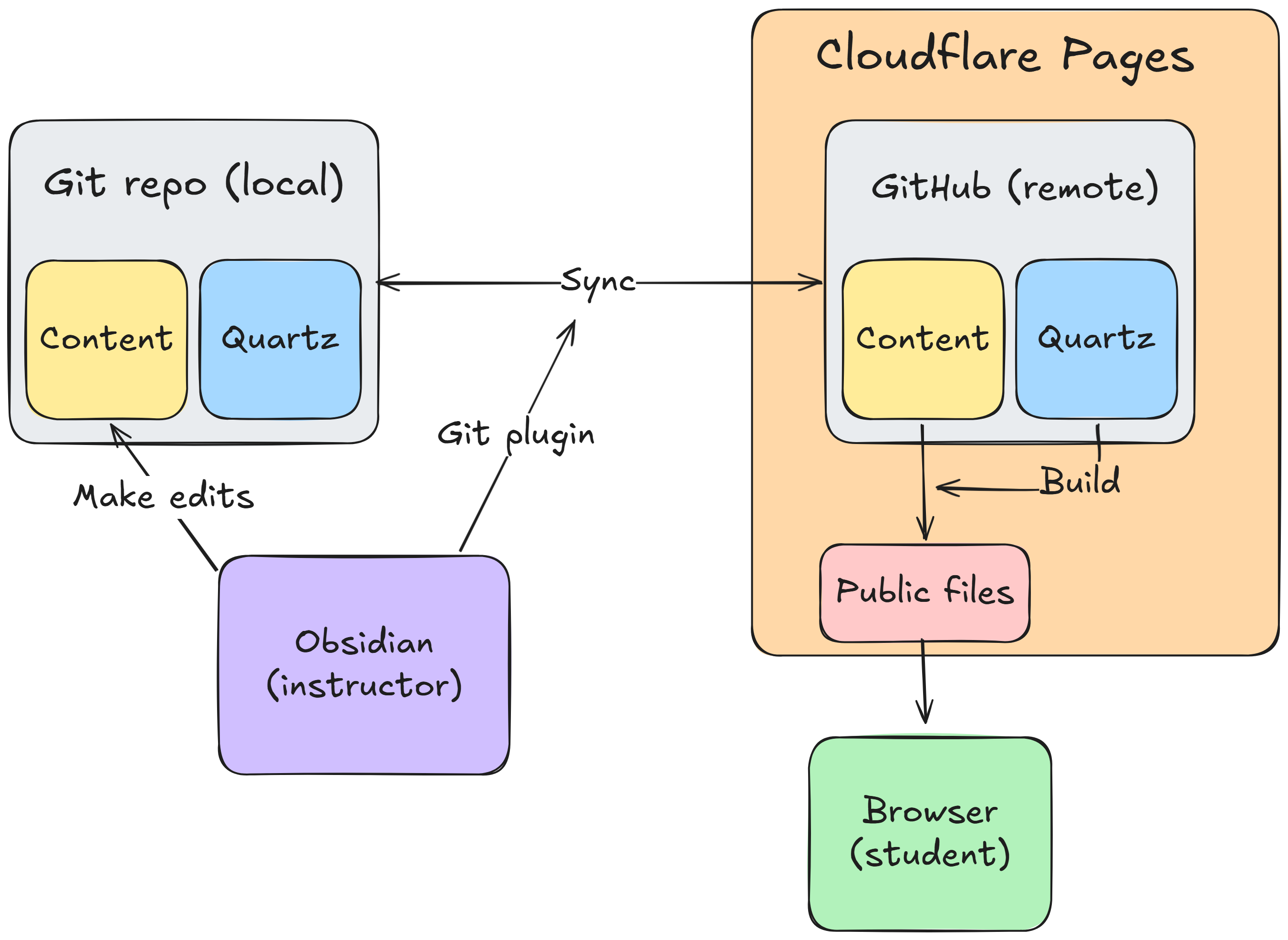
Fig 1: System workflow. The instructor interacts only with Obsidian (left). A single “Commit
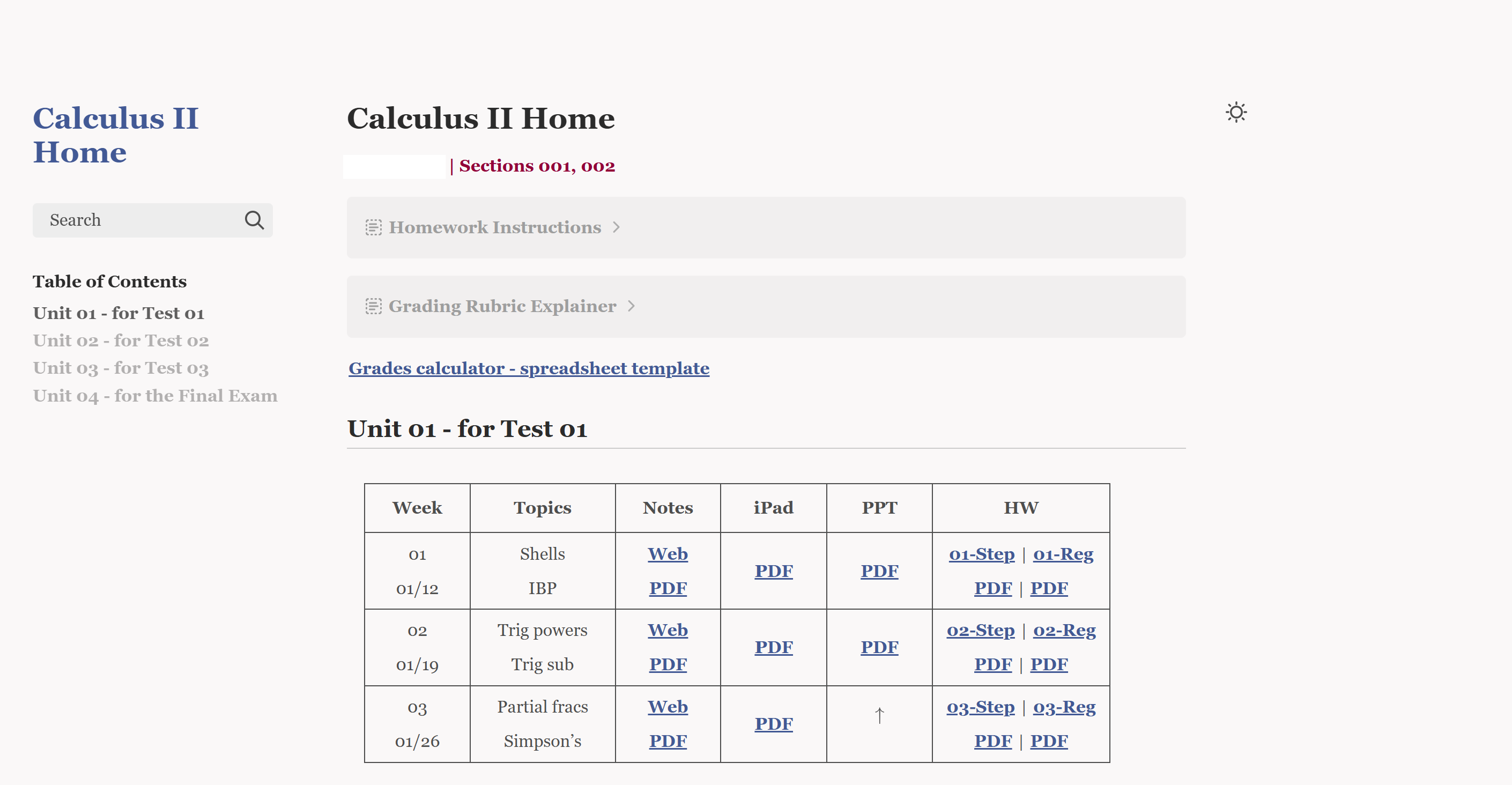
Fig 2: Course website: Calculus II home page with links to materials pages arranged by week.
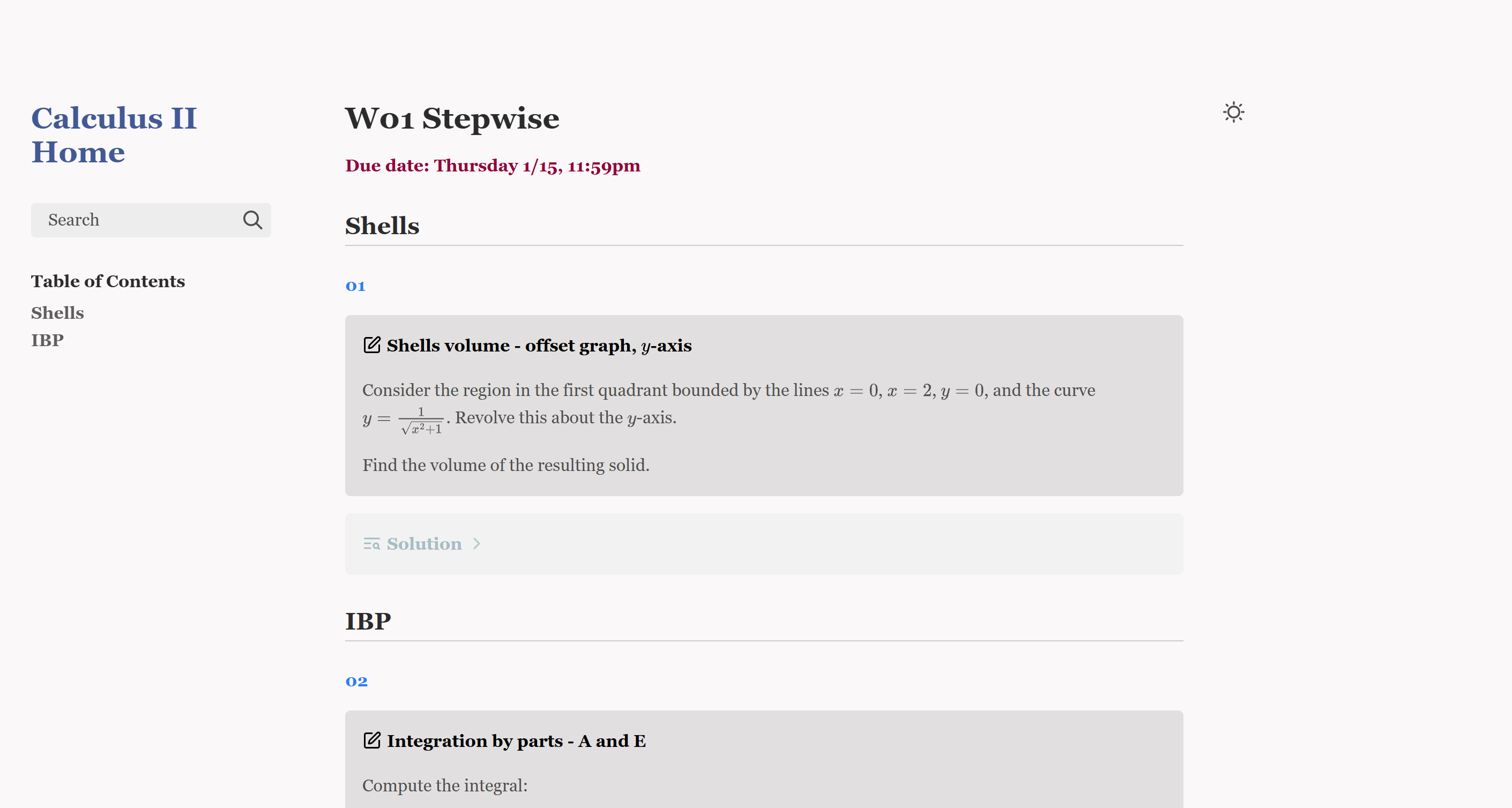
Fig 3: Course website: Sample homework page showing expandable solution callouts. Solution
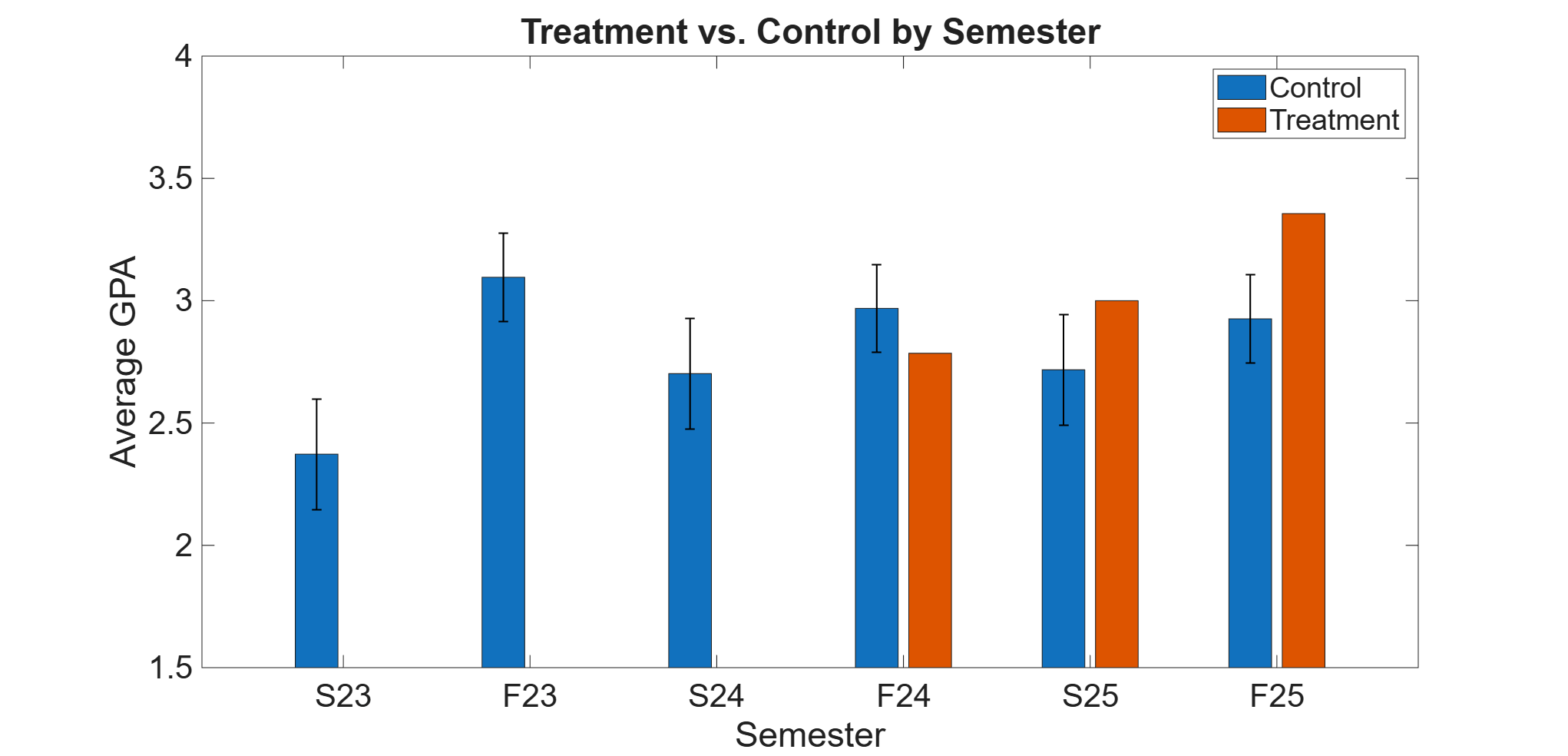
Fig 4: GPA by semester. Blue bars: control sections; red bars: treatment sections. Error
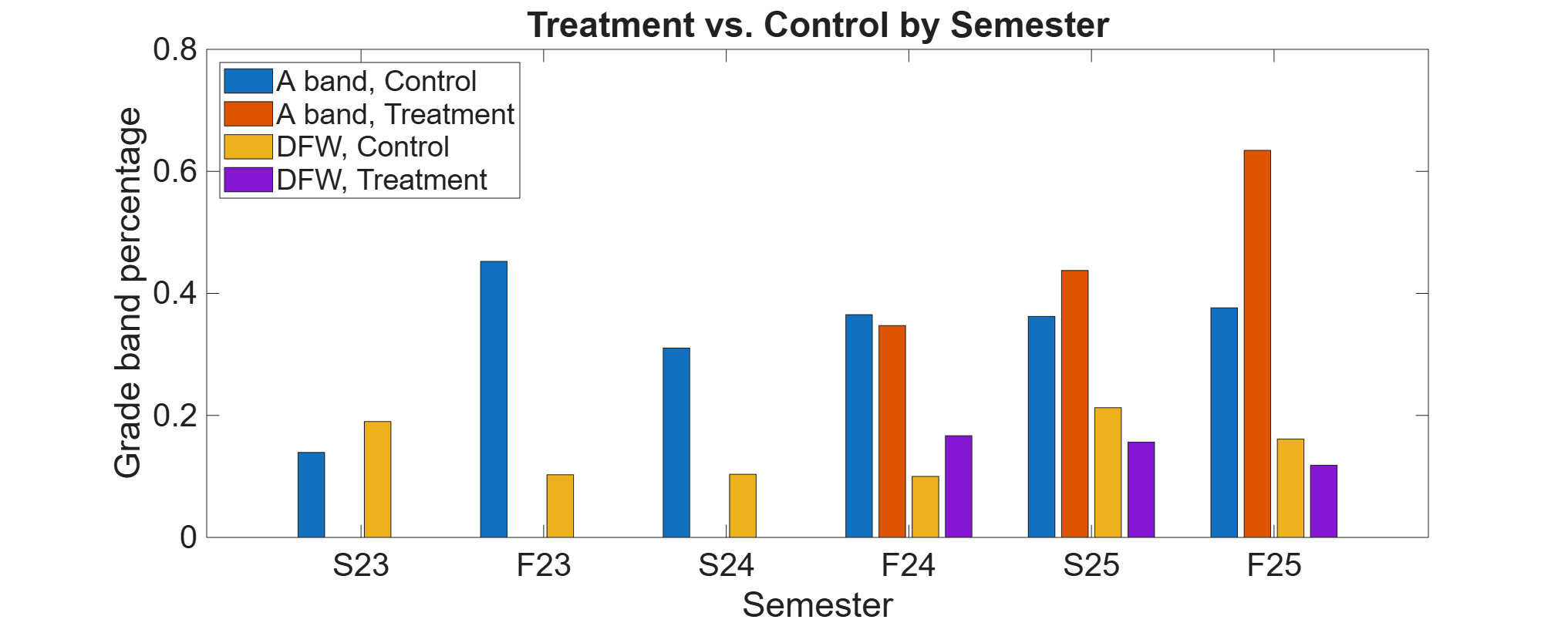
Fig 5: A-band and DFW percentages by semester
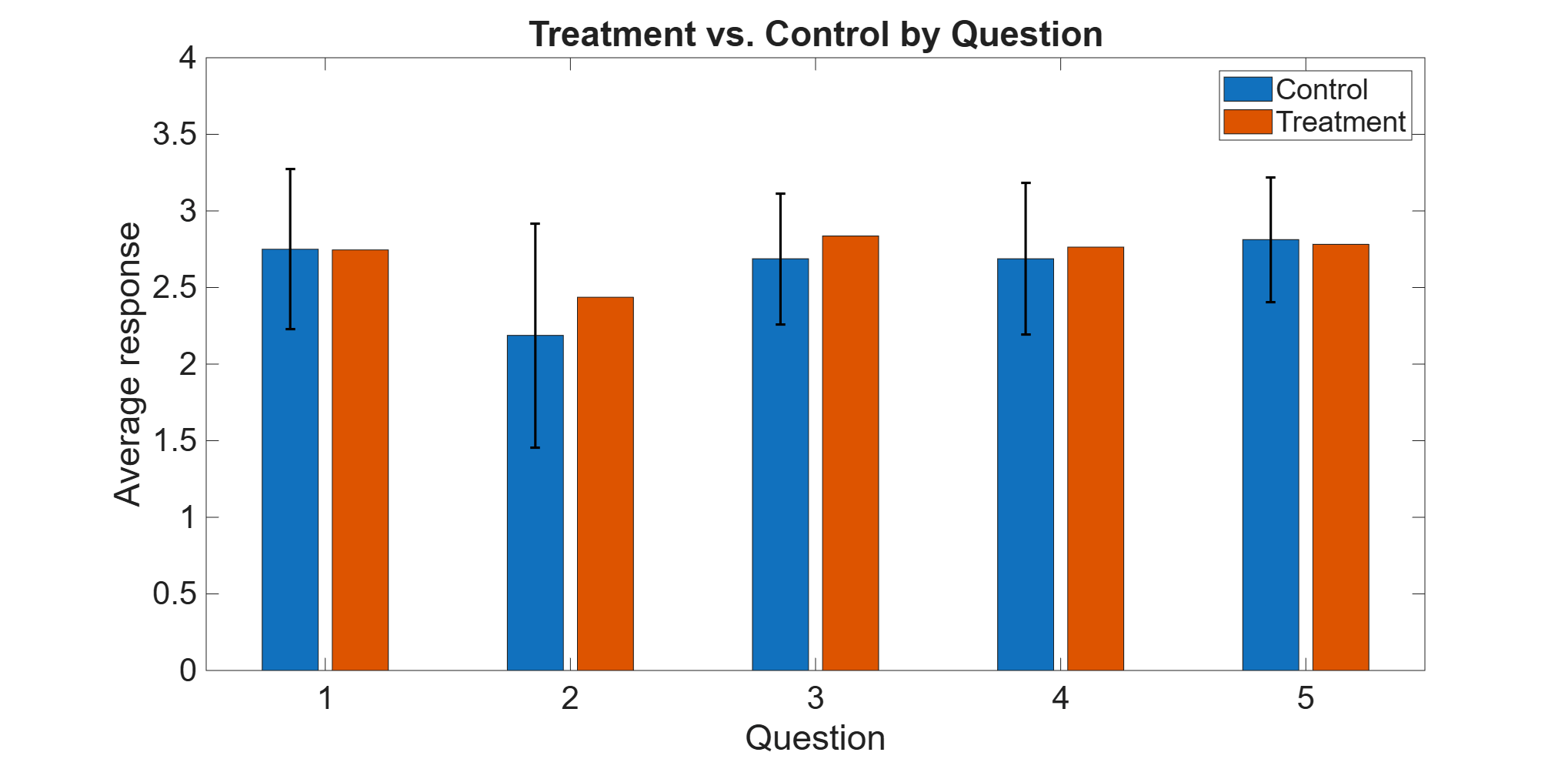
Fig 6: Survey responses by question (collapsed coding).
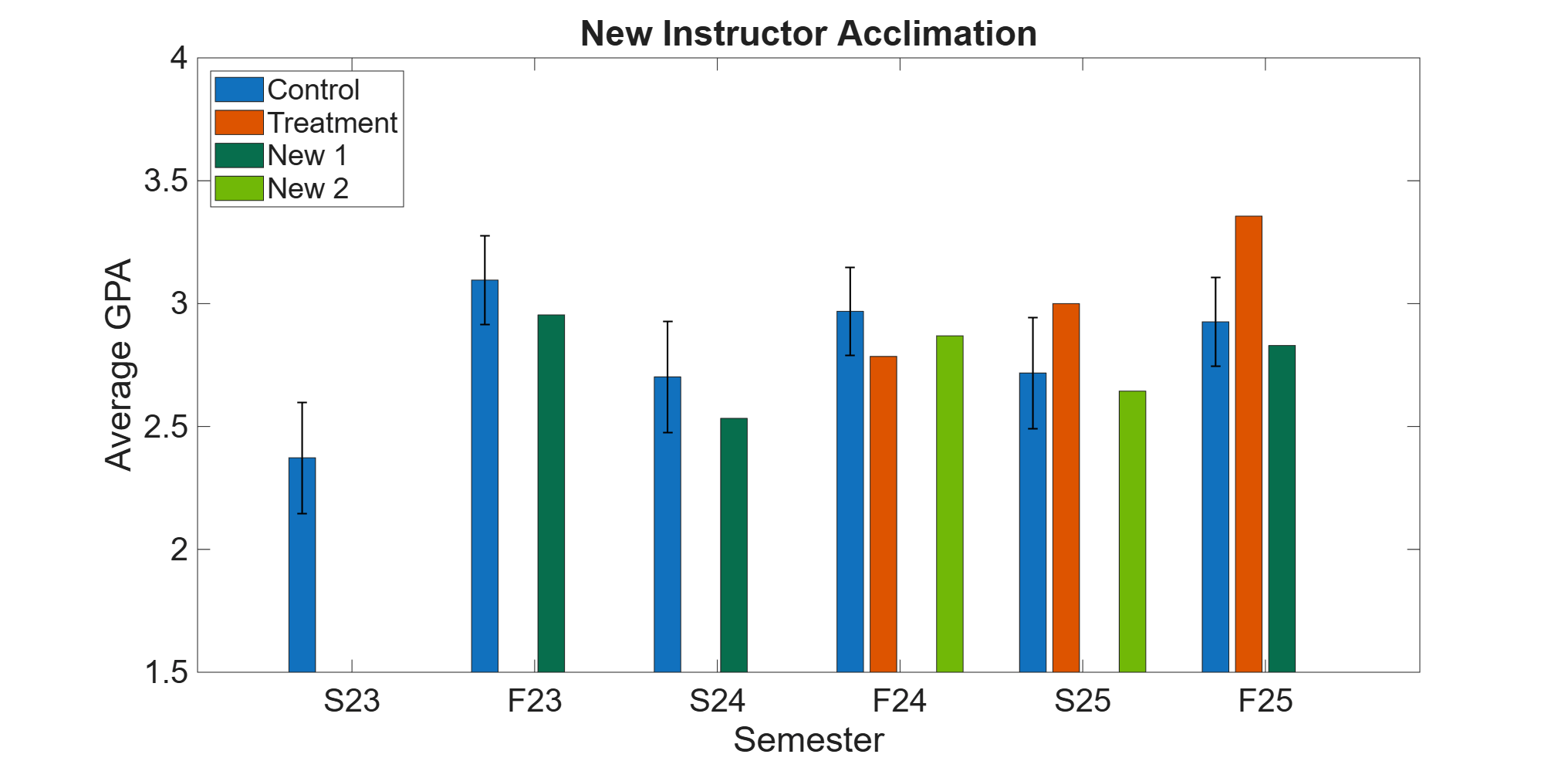
Fig 7: Semester-by-semester performance for two other instructors who were new to this course
Limitations
- Single treatment instructor; no random assignment—cannot fully separate instructor effects from system effects.
- Small control group size in student experience survey (16 respondents) limits statistical power.
- No specific evaluation of the system’s accessibility for students with disabilities or screen reader users.
- Possible confounding institutional changes (prerequisite policy) though analysis suggests limited impact on controls.
- PDF versions still provided to students during phased rollout may blur treatment effects.
- The system emphasizes web-first delivery; PDF output quality is lower than dedicated LaTeX-to-PDF workflows.
Open questions / follow-ons
- What are the key barriers to wider adoption of this workflow among math instructors at diverse institutions?
- How does the system impact low-vision or screen reader-dependent students specifically in terms of usability and learning outcomes?
- Can the system be extended to better support PDF production without sacrificing accessibility or revision efficiency?
- How well does the system scale with larger course sites, or courses with multiple instructors collaborating?
Why it matters for bot defense
Bot-defense and CAPTCHA engineers can learn from this study about the critical role of practical tooling and workflow efficiency in adoption of technical standards, such as accessibility compliance. Just as MathML adoption lagged due to workflow hurdles despite browser support, security and bot-detection methods face challenges in deployment without seamless integration and low friction workflows for practitioners.
This paper’s thorough taxonomy and pragmatic design emphasize that compliance or defense technologies must meet real user needs with minimal training and maintenance overhead, which resonates with CAPTCHA system design and deployment. Although not directly about bot-defense, the methodology of evaluating both technical feasibility and user impact through real-world deployment and empirical outcomes applies widely. Lessons on modular content management, automation via cloud builds, and multi-stakeholder tradeoffs can inform future tooling for security engineers seeking adoption among web developers and content creators.
Cite
@article{arxiv2603_28494,
  title={ Tooling for digital accessibility in mathematics: Quickly build compliant course websites that benefit all students },
  author={ Matthew McMillan and Eli Boyden },
  journal={arXiv preprint arXiv:2603.28494},
  year={ 2026 },
  url={https://arxiv.org/abs/2603.28494}
}