
Symmetry-controlled thermal activation in pyramidal Coulomb clusters: Testing Kramers-Langer theory
Source: arXiv:2601.04883 · Published 2026-01-08 · By Akhil Ayyadevara, Anand Prakash, Shovan Dutta, Arun Paramekanti, S. A. Rangwala
TL;DR
This work investigates thermally activated configurational switching in a mesoscopic system of five laser-cooled trapped ions arranged in a square pyramidal cluster. The authors demonstrate bistable inversion dynamics between two opposite pyramid orientations, realized in a Paul trap with controllable anisotropy. For five identical 40Ca+ ions, switching occurs via a novel Berry pseudo-rotation mechanism that utilizes permutation symmetry to significantly reduce the activation energy compared to typical umbrella inversion pathways known from molecular analogues like ammonia. By substituting the apex ion with a heavier isotope 44Ca+, permutation symmetry is broken, suppressing the low-barrier pseudo-rotation channel and forcing a high-barrier turnstile rotation, leading to strongly reduced inversion rates. The authors quantitatively test the multidimensional Kramers-Langer (K-L) theory of rare-event escape rates by combining precise minimum energy path (MEP) calculations, Langevin molecular dynamics simulations, and detailed experimental rates spanning two orders of magnitude. They find excellent agreement between theory, simulation, and experiment at a cluster temperature of approximately 1.8 mK, validating the K-L formalism in this strongly coupled many-body setting. Altogether, this establishes laser-cooled ion clusters as a versatile platform to experimentally explore symmetry-controlled thermally activated collective dynamics and kinetic isotope-like effects in highly tunable mesoscopic Coulomb landscapes.
Key findings
- The pseudo-rotation pathway reduces the activation barrier by approximately two orders of magnitude (~1 K down to ~20 mK) compared to the umbrella inversion.
- Experimental inversion rates for the (40Ca+)5 cluster span over two decades and follow the Kramers-Langer rate prediction accurately at a fitted temperature 1.8 ± 0.1 mK (Fig. 3).
- Isotope substitution by replacing apex 40Ca+ with 44Ca+ breaks permutation symmetry, suppressing thermal inversions and increasing the barrier to ~270 mK via a turnstile rotation mechanism (Fig. 1g,h; Fig. SF2).
- Molecular dynamics simulations of Langevin equations with realistic friction and noise parameters quantitatively match Kramers-Langer predictions without parameter tuning (Fig. 3 inset).
- Background gas collisions impose a baseline inversion rate of Rbg = 0.10 ± 0.03 s−1, saturating rates above trap anisotropy threshold αth ∼ 1.1 (Fig. 3).
- The rotational symmetry leads to a zero-frequency Goldstone mode which is properly excluded in Hessian determinants for Kramers-Langer rate calculations.
- Four equivalent low-barrier inversion pathways exist due to permutation symmetry, resulting in a multiplicative factor N=4 in the escape rate formula.
- Rapid barrier recrossings in low-friction (underdamped) Langevin dynamics create short-time dwell peaks but do not contribute to effective inversion rate.
Threat model
n/a — The study concerns fundamental thermally activated transitions in a strongly interacting mesoscopic ion cluster under controlled laboratory conditions without adversarial threats.
Methodology — deep read
Threat model and assumptions: The study treats the ion cluster as a classical, many-body system in contact with a thermal bath modeled by Doppler laser cooling, considered Markovian with viscous damping and Gaussian white noise. The adversary in this context is the thermal environment causing stochastic activation over energy barriers. No active adversary or external driven attack is considered.
Data: Experimental data consists of fluorescence images capturing the cluster configuration of five laser-cooled Ca+ ions in a radio-frequency Paul trap. The key observable is the parity-odd octupole moment ψ30 extracted from the ion charge distribution, which changes sign upon inversion. Data spans ~60,000 image frames per trap anisotropy α setting, enabling detection of rare inversion events. Numerical data include extensive Langevin molecular dynamics (MD) simulation trajectories (thousands of runs, >10^9 timesteps each) and minimum energy path computations.
Architecture / Algorithm: The physical model uses the full multi-dimensional classical Hamiltonian including harmonic secular trap potentials and Coulomb repulsion among ions. Inversion pathways are identified by computing minimum energy paths (MEP) between bistable minima using climbing image Nudged Elastic Band (cNEB) methods. The multidimensional Kramers-Langer theory formula is applied to compute escape rates from equilibrium via the saddle point using Hessians of the potential energy at these points. The Langevin dynamics equations include friction coefficient γ and stochastic forces satisfying the fluctuation-dissipation relation, integrated through a modified velocity Verlet integrator adapted for Langevin dynamics.
Training regime: N/A (this is a physics experiment and numerical simulation, no machine learning). Parameter sweeps over trap anisotropy α, temperature T, and isotopic substitution are explored. MD simulations use a time step ∆t = 10^(-8) s with 10^9 steps per run and multiple independent runs for statistics.
Evaluation protocol: Inversion rates κ are extracted from exponential fits to dwell time histograms of the octupole moment sign changes, carefully excluding short-time recrossings. Theoretical Kramers-Langer rates computed from barrier heights, Hessians, and damping match MD extracted rates verify the applicability of the theory. Experimental inversion rates are measured at various α settings and compared to K-L predictions to estimate cluster temperature. Effects of isotopic substitution confirm the role of symmetry in opening/closing reaction channels.
Reproducibility: The authors provide detailed numerical procedures including cNEB initialization paths, Hessian calculations, and Langevin integration algorithms. The dataset is experimental ion trap measurements plus public known isotope masses. The cNEB and MD methods are standard physics algorithms. There is no explicit mention of open-source code or frozen models, but sufficient methodological detail allows reproduction by experts.
Concrete example: For α ≈ 1.09, the five 40Ca+ ions form a bistable pyramidal cluster. The minimal energy path found via cNEB shows a pseudo-rotation inversion mechanism with a barrier ~20 mK. Langevin MD simulation at ~2 mK produces stochastic inversions with a dwell time distribution matching the Kramers-Langer predicted rate. Experimentally, fluorescence images over 30 minutes capture the octupole moment switching sign with inversion rate consistent with theory, directly confirming the multidimensional Kramers-Langer formalism in a strongly coupled many-body trap system at millikelvin temperatures.
Technical innovations
- Identification and experimental control of a low-barrier Berry pseudo-rotation inversion pathway in a Coulomb cluster enabled by permutation symmetry, contrasting with conventional umbrella inversion.
- Application and quantitative parameter-free validation of the multidimensional Kramers-Langer escape rate theory to rare thermal switching events in a strongly interacting, high-dimensional trapped ion system.
- Use of isotope substitution to break permutation symmetry and experimentally realize a structural analogue of a giant kinetic isotope effect in a controllable mesoscopic Coulomb cluster.
- Combined use of climbing-image Nudged Elastic Band (cNEB) methods with Langevin molecular dynamics and precise Hessian eigenmode analysis to map complex multidimensional reaction pathways.
Datasets
- (40Ca+)5 Coulomb cluster inversion timeseries — ~60,000 frames of fluorescence images per α setting — experimental measurements
- Langevin dynamics simulated trajectories — thousands of runs with >10^9 steps each — numerical data generated by authors
Baselines vs proposed
- Umbrella inversion pathway: activation barrier > 1 K — proposed pseudo-rotation pathway: barrier ~20 mK
- MD simulation inversion rates at 1.5–3 mK: match Kramers-Langer theory predictions without fit parameters
- Isotope-substituted (44Ca+ apex) cluster: inversion rate strongly suppressed compared to identical ion cluster at same trap settings
- Background gas collision induced inversion rate baseline Rbg = 0.10 ± 0.03 s−1 observed experimentally; rates saturate above αth ~ 1.1
Figures from the paper
Figures are reproduced from the source paper for academic discussion. Original copyright: the paper authors. See arXiv:2601.04883.
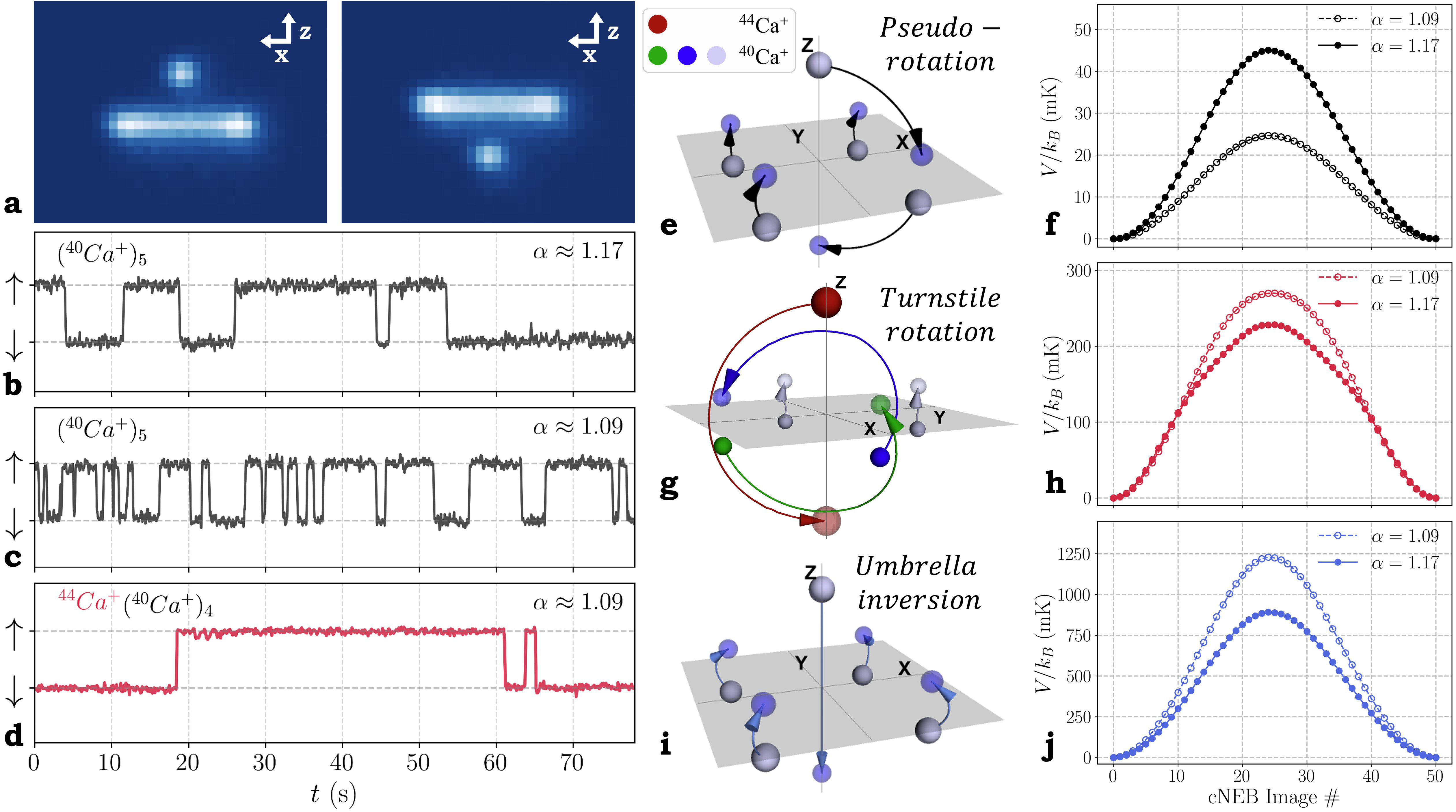
Fig 1: Inversion mechanisms for a pyramidal ion cluster. (a) Fluorescence images of the two symmetry-broken pyramidal
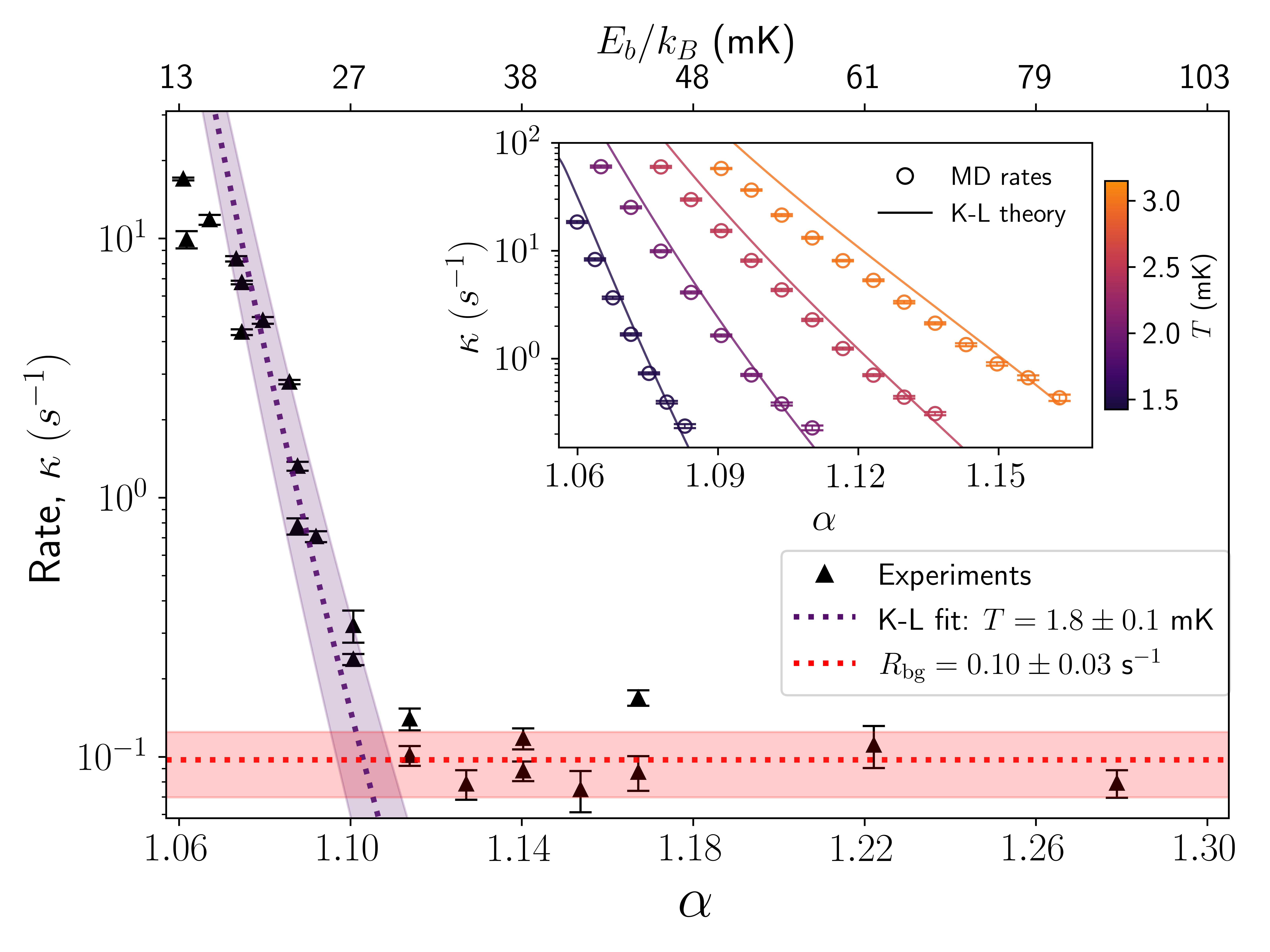
Fig 2: (a) Trajectory obtained from an MD simulation
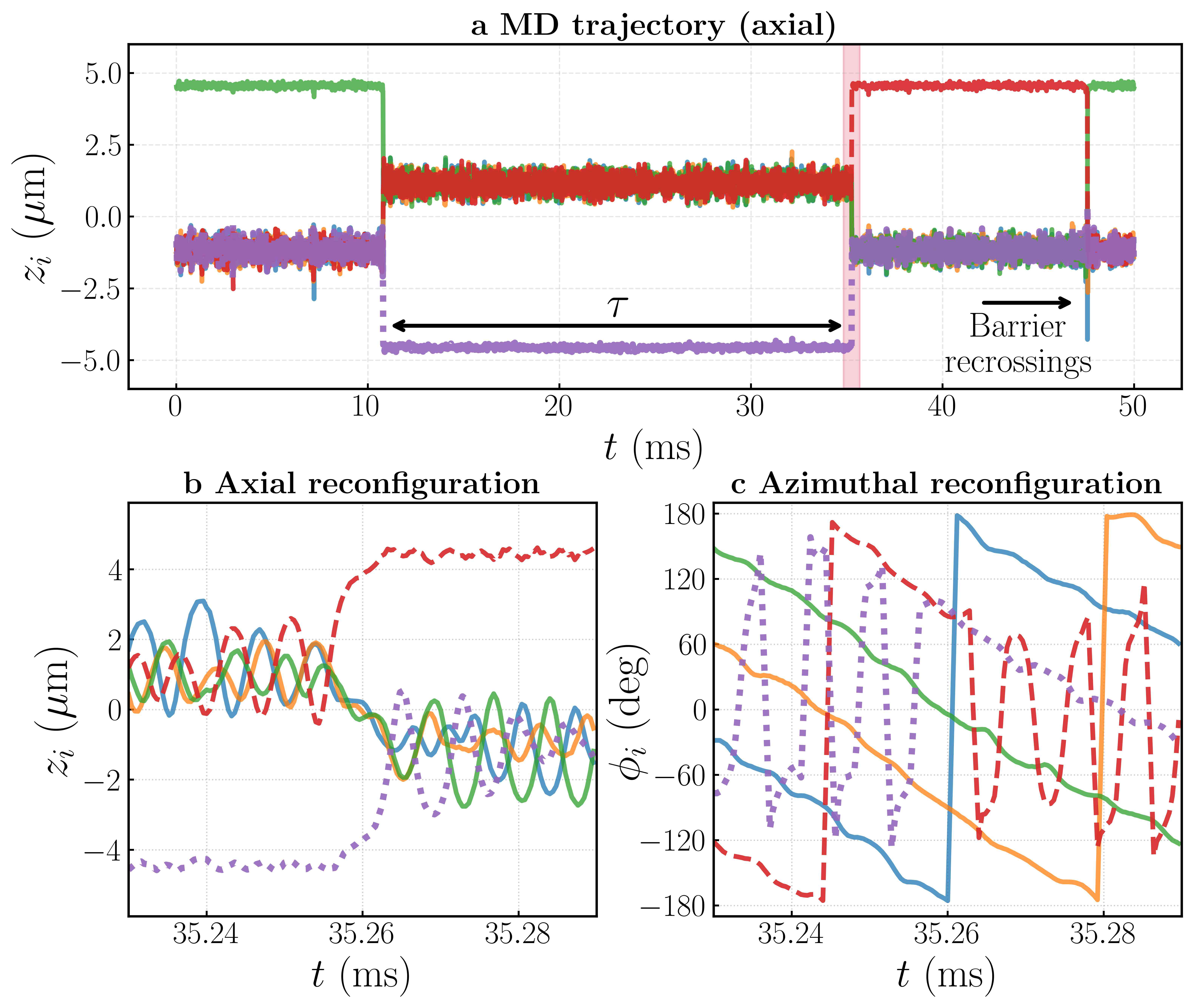
Fig 3: Experimentally measured pyramidal inversion rates
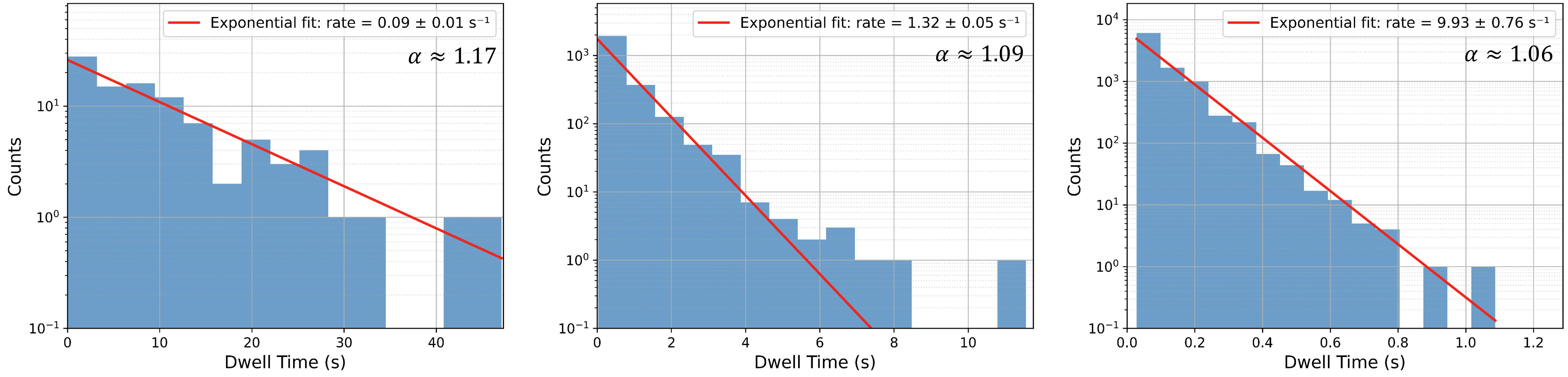
Fig 4 (page 6).
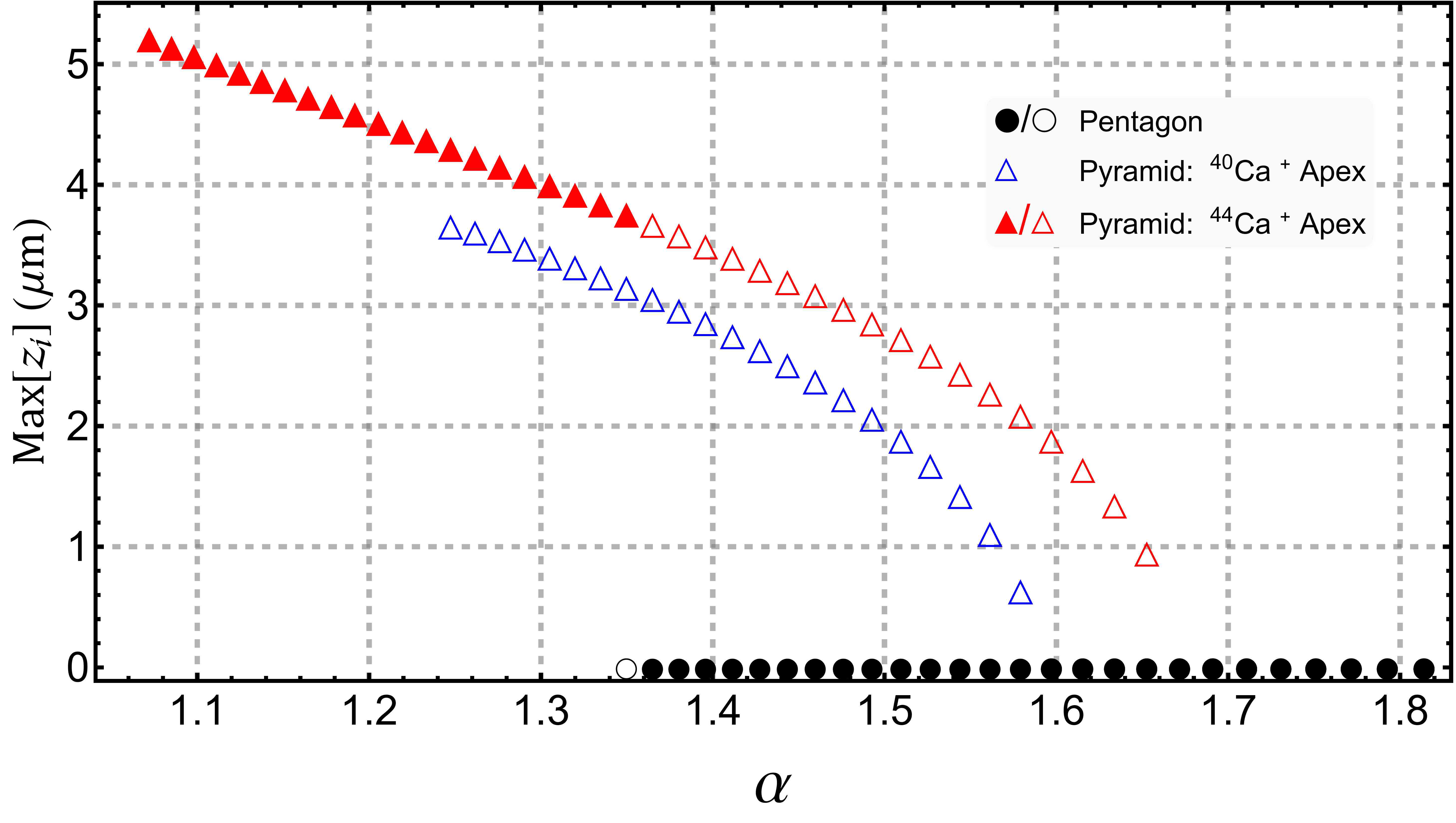
Fig 5 (page 7).
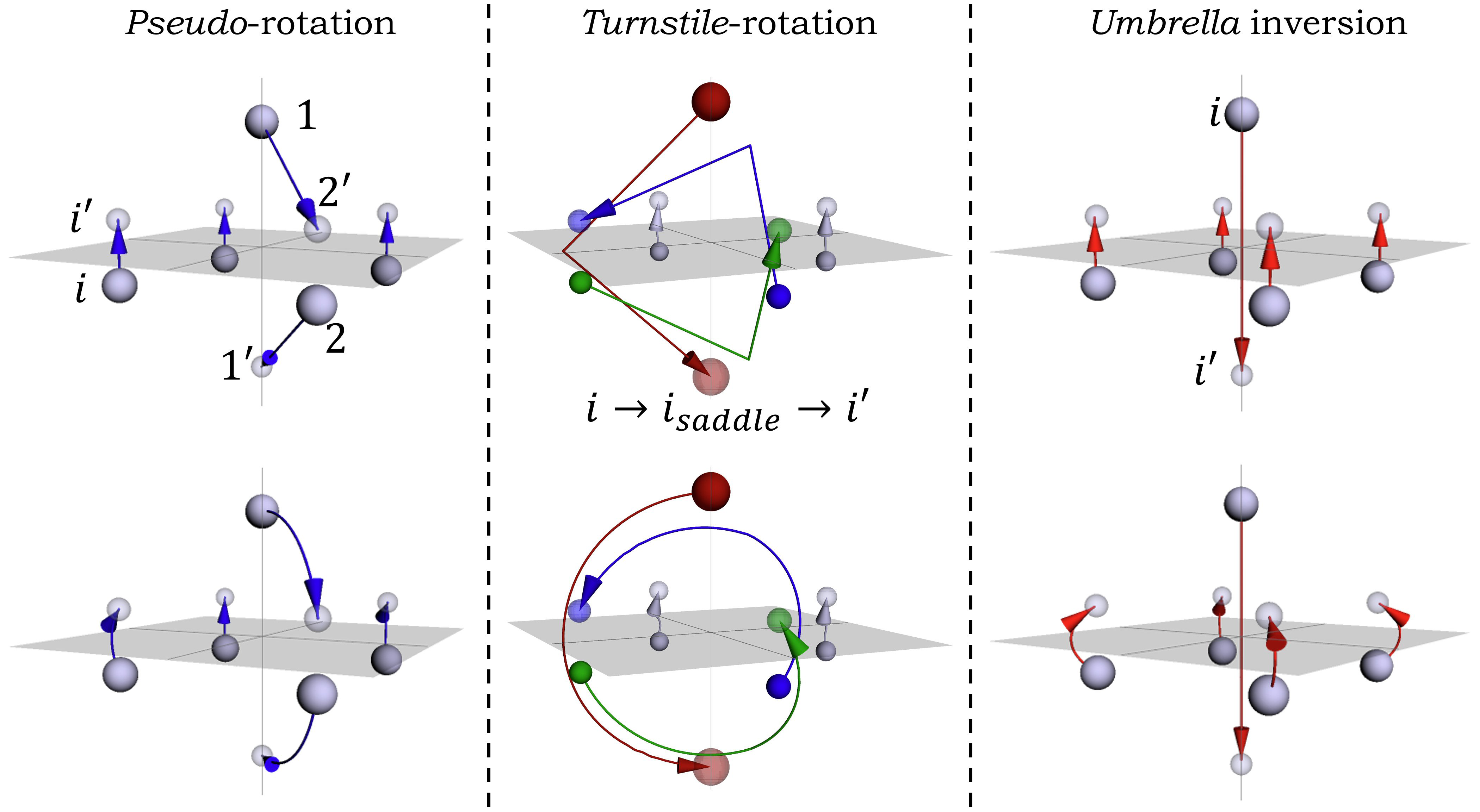
Fig 6 (page 8).
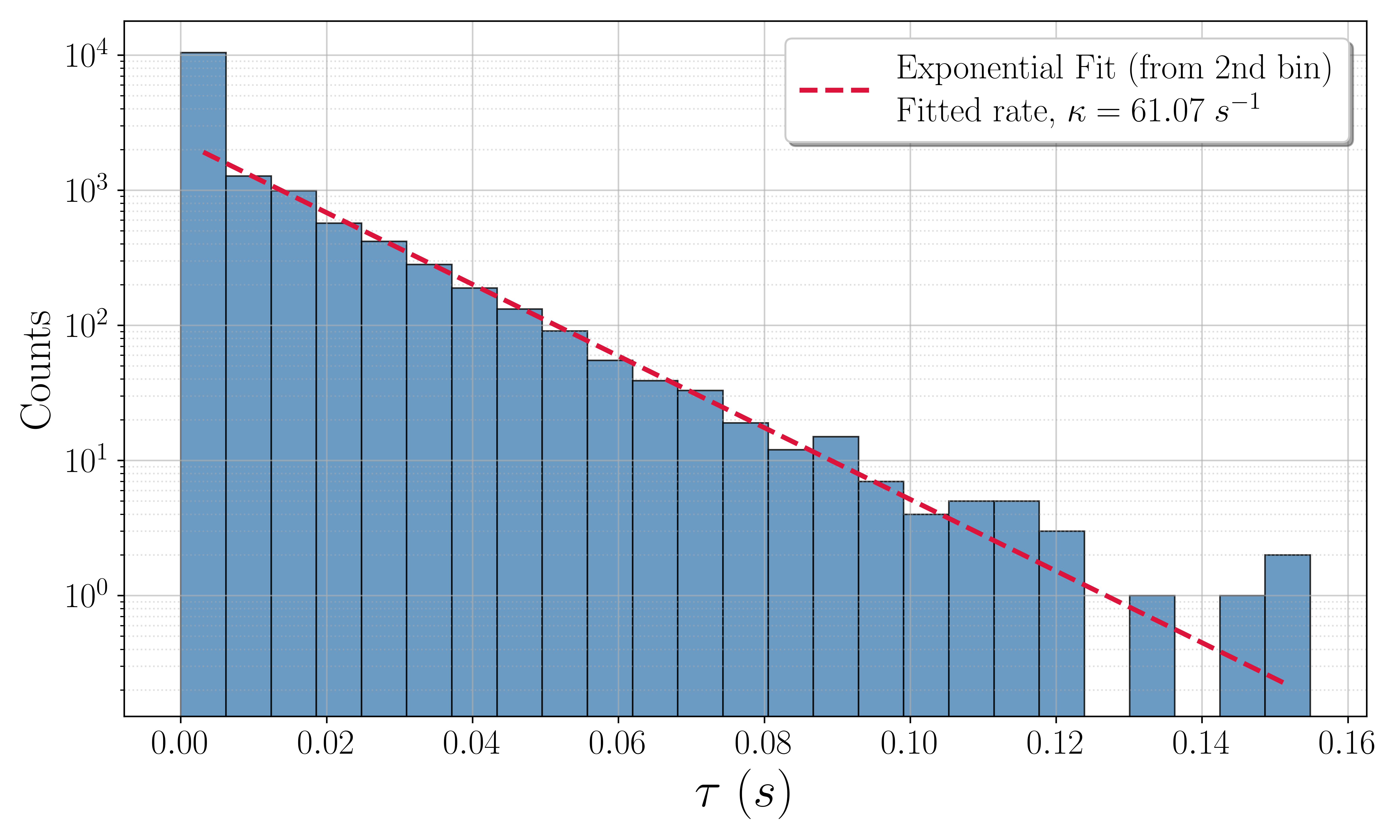
Fig 7 (page 10).
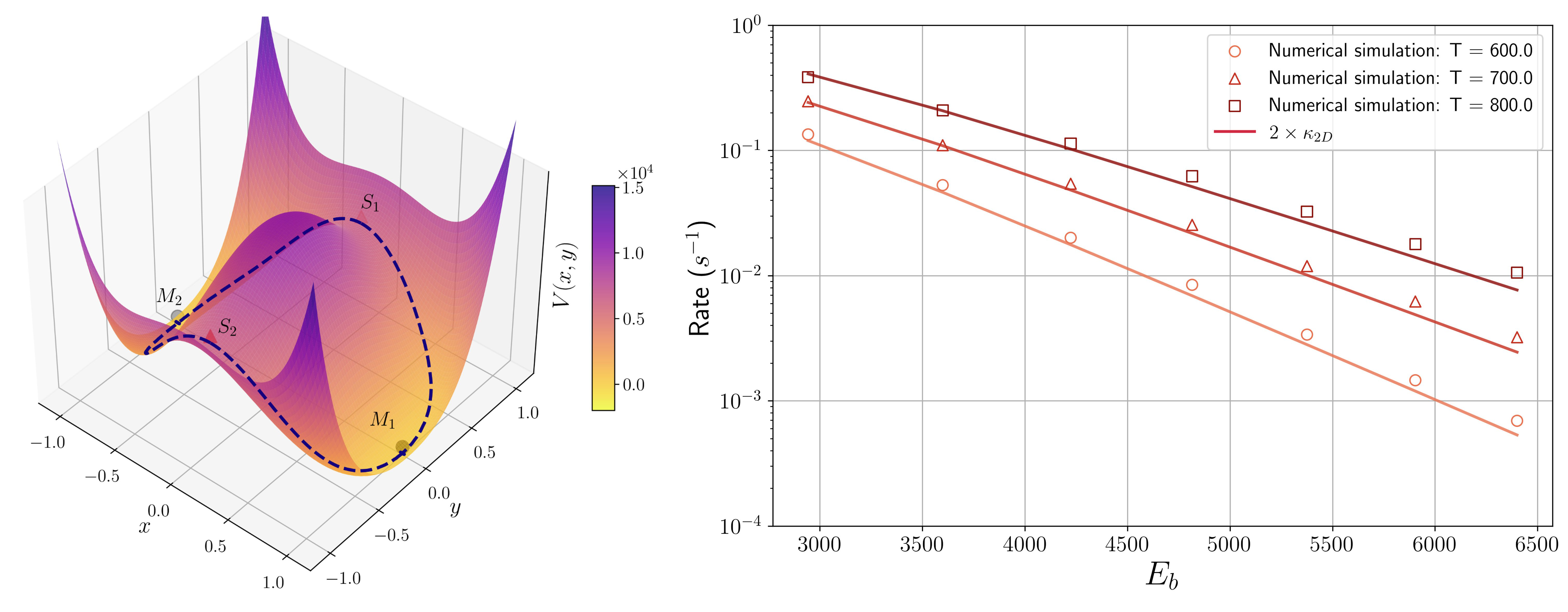
Fig 8 (page 11).
Limitations
- Microscopic inversion mechanism cannot be directly observed experimentally; inferred from theory, simulation, and isotope substitution effects.
- Background gas collisions impose a floor on inversion rates, complicating precise measurement of very low thermal activation rates.
- Analysis assumes Markovian, constant Doppler cooling environment; effects of non-Markovian or active cooling not explored.
- Isotope substitution only alters mass; electronic or other internal degrees of freedom remain unchanged, limiting generality of symmetry breaking.
- Current study limited to five-ion clusters; scaling to larger clusters with more complex energy landscapes remains an open challenge.
Open questions / follow-ons
- How do active or non-Markovian laser cooling protocols affect multidimensional escape dynamics and inversion rates?
- Can permutation symmetry breaking via internal electronic or vibrational state preparation implement programmable reaction pathways and active control of rare-event kinetics?
- What are the inversion dynamics and rate scaling laws in larger Coulomb clusters with more complex topologies and energy landscape features?
- How do background gas collisions and continuous cooling interplay in driving rare thermal inversions under non-equilibrium conditions?
Why it matters for bot defense
While not directly related to classical bot detection or CAPTCHA generation, this work offers insight into controlling rare-event transitions in complex, high-dimensional systems through symmetry and energy landscape engineering. Bot-defense mechanisms often rely on detecting anomalous transitions or behaviors over time, where rare events may indicate automated or adversarial activity. Understanding how symmetries open or close low-energy pathways could inspire design of systems or challenges with tunable difficulty profiles or multiple metastable states. Additionally, the demonstrated validation of multidimensional Kramers-Langer theory and sophisticated rare-event rate modeling could inform the theoretical underpinning of underlying stochastic processes in bot behavior analysis or CAPTCHA-breaking attempts. Engineers developing CAPTCHA challenges might consider analogous symmetry and activation barrier concepts to create puzzles that exhibit tunable robustness against automated solvers exploiting low-barrier transition paths.
Cite
@article{arxiv2601_04883,
  title={ Symmetry-controlled thermal activation in pyramidal Coulomb clusters: Testing Kramers-Langer theory },
  author={ Akhil Ayyadevara and Anand Prakash and Shovan Dutta and Arun Paramekanti and S. A. Rangwala },
  journal={arXiv preprint arXiv:2601.04883},
  year={ 2026 },
  url={https://arxiv.org/abs/2601.04883}
}