
If you’re looking at bot detection Ticketmaster-style traffic, the short answer is this: you need layered bot defense, not just a checkbox CAPTCHA. Ticketing pages attract fast automation, credential stuffing, seat-holding abuse, inventory scraping, and form abuse, so effective protection has to inspect behavior, device consistency, request patterns, and server-side validation together.
The goal is not to block every automation attempt with one hurdle. It’s to make abuse expensive enough that your real users can still search, reserve, and pay without friction. That means combining client signals, challenge orchestration, token validation, and rate-aware backend controls.

Why ticketing flows attract bot pressure
Ticketing and event-commerce flows are unusually attractive because they have clear scarcity, predictable timing, and obvious monetization paths. When inventory is limited, even a small automation advantage can create outsized impact: faster page navigation, repeated cart holds, or rapid checkout retries.
From a defender’s point of view, common abuse patterns include:
- High-frequency search and seat-map polling
- Account creation bursts ahead of on-sale windows
- Credential stuffing against saved accounts and loyalty profiles
- Cart and checkout abuse that ties up inventory
- Scripted form submissions that test promo codes, payment retries, or queue endpoints
What makes this hard is that not all “botty” traffic is obviously malicious. A mobile app can legitimately retry requests. A partner integration may generate repeated lookups. A user on a flaky network may refresh several times. Good bot detection has to score context, not just block volume.
This is where a platform like CaptchaLa fits well: it lets you add a challenge layer and validate the response server-side, so your app can decide whether to allow, throttle, or step up a request based on risk.
What good bot detection actually checks
Strong bot detection for ticketing usually combines several signals rather than depending on one. The more important your event or drop, the more you want to treat bot defense as a workflow, not a single widget.
Practical signals to combine
- Request velocity per IP, account, device, and payment instrument
- Session continuity across page loads and checkout steps
- Browser integrity and client-side execution consistency
- Time-to-submit patterns on forms and queue pages
- IP reputation and ASN clustering
- Challenge completion patterns and token freshness
- Correlation between search behavior and purchase attempts
A simple mental model:
| Layer | What it tells you | Why it matters |
|---|---|---|
| Client challenge | Can the browser/device complete an interaction? | Filters out low-effort automation |
| Token validation | Was the challenge passed recently and legitimately? | Prevents replay and stale passes |
| Server-side context | Does the request fit normal site behavior? | Catches abuse that “passes” one step |
| Rate controls | Is the caller moving too fast for human use? | Limits scale even when signals are noisy |
The biggest mistake is trusting only the client. If a client challenge is presented, you should still validate its result on the server and make the backend enforce the decision. With CaptchaLa, validation happens by calling POST https://apiv1.captcha.la/v1/validate with {pass_token, client_ip} plus X-App-Key and X-App-Secret. That makes the proof usable by your backend logic, not just by the browser.
A defender-friendly implementation pattern
A clean pattern for ticketing flows is: challenge early, validate server-side, then gate the sensitive action. You do not need to challenge every page view. You do want to protect the highest-value steps: account creation, login, seat selection, cart reservation, promo redemption, and payment initiation.
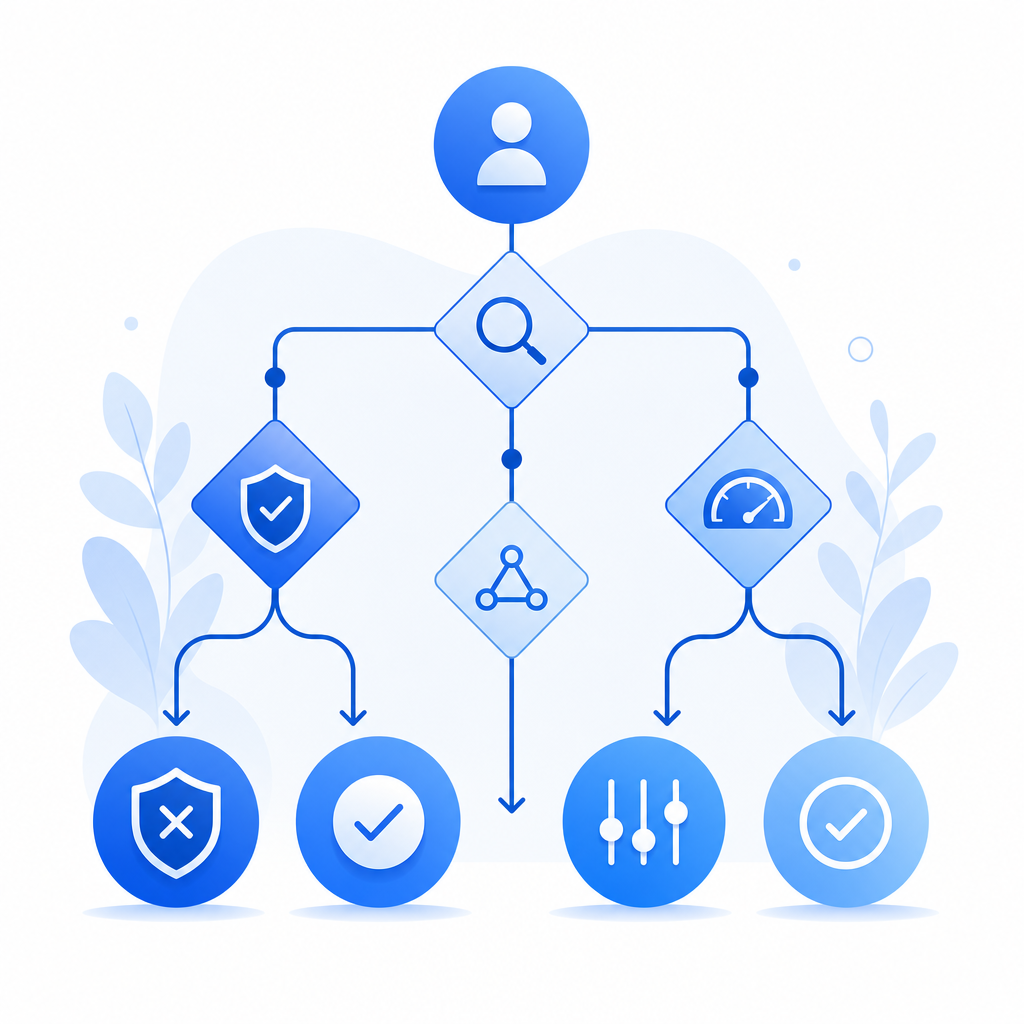
A typical flow looks like this:
- User loads the page and the loader script initializes.
- The app presents a challenge when risk or action sensitivity warrants it.
- The browser receives a pass token.
- The backend validates that token before accepting the action.
- The backend applies rate limits, inventory rules, or step-up checks.
For CaptchaLa, the loader is served from https://cdn.captcha-cdn.net/captchala-loader.js, and there are SDKs across common stacks: Web (JS/Vue/React), iOS, Android, Flutter, and Electron. If your ticketing product spans web and mobile, that matters because abuse often crosses channels.
Example server-side validation sketch
// English comments only
// Validate the pass token before accepting a sensitive request
async function validateTicketAction(req, res) {
  const passToken = req.body.pass_token;
  const clientIp = req.headers["x-forwarded-for"] || req.socket.remoteAddress;

  const response = await fetch("https://apiv1.captcha.la/v1/validate", {
    method: "POST",
    headers: {
      "Content-Type": "application/json",
      "X-App-Key": process.env.CAPTCHALA_APP_KEY,
      "X-App-Secret": process.env.CAPTCHALA_APP_SECRET
    },
    body: JSON.stringify({
      pass_token: passToken,
      client_ip: clientIp
    })
  });

  const result = await response.json();

  if (!result.valid) {
    return res.status(403).json({ error: "challenge_failed" });
  }

  // Continue with reservation, checkout, or account action
  return next();
}
If you need server-issued challenge orchestration, CaptchaLa also exposes POST https://apiv1.captcha.la/v1/server/challenge/issue, which can be useful when your backend wants to decide when a challenge should be presented.
Comparing common defenses for ticketing traffic
Different products solve different parts of the problem. For many teams, the right answer is a combination rather than a replacement.
| Option | Strengths | Tradeoffs |
|---|---|---|
| reCAPTCHA | Familiar, widely supported | Can add friction, and some flows need more tuning |
| hCaptcha | Good for challenge-based protection | Still needs backend logic and risk orchestration |
| Cloudflare Turnstile | Lower-friction challenge model | Best when your edge stack already uses Cloudflare |
| CaptchaLa | First-party data only, flexible SDK coverage, server validation, readable integration path | You still need to design sensible site rules |
A fair way to think about this: if your site already uses an edge security platform, Turnstile may fit naturally. If you need a broader bot-defense layer across web and mobile, and you want straightforward server validation plus SDK support, CaptchaLa docs are worth a look.
Ticketing teams should also make sure their abuse controls are aligned with product behavior. For example, if users can legitimately hold seats for a few minutes, the anti-bot system should understand reservation windows and not punish normal abandonment. If login is sensitive but browsing is not, then a stepped approach is better than a blanket challenge on every page.
Deployment details that matter more than people expect
Bot defense usually fails because of small integration mistakes, not because the concept is wrong. A few details make a real difference:
- Keep pass-token lifetimes short enough to reduce replay value
- Validate on the backend for every sensitive endpoint, not just the first one
- Tie risk decisions to account, device, and IP context
- Log challenge outcomes with request metadata so you can tune thresholds later
- Use first-party data only, especially if your compliance posture is strict
- Test with mobile webviews, app embeds, and low-connectivity scenarios
For cross-platform teams, native support reduces integration drift. CaptchaLa includes SDKs for Web, iOS, Android, Flutter, and Electron, plus server libraries like captchala-php and captchala-go. There are also package references such as Maven la.captcha:captchala:1.0.2, CocoaPods Captchala 1.0.2, and pub.dev captchala 1.3.2.
If you are planning rollout by traffic tier, a simple deployment sequence helps:
- Enable passive logging on high-risk endpoints.
- Add challenge presentation only for suspicious or sensitive actions.
- Require server validation for checkout, login, and reservation.
- Tune thresholds using conversion and false-positive data.
- Expand protection to API endpoints that support the ticketing UI.
That staged approach keeps customer friction under control while still shrinking the abuse window.
Where to go next
If you’re hardening a ticketing or event-commerce flow, start by mapping the few endpoints that matter most and put server-side validation in front of them. Then add challenge logic only where risk justifies it.
To explore setup details, see the docs or review pricing for the plan that fits your traffic level.