
Bot detection open source software refers to tools and libraries available freely to identify and block automated web traffic. These solutions provide transparency and customization but also require maintenance, expertise, and infrastructure. For many organizations, bot detection open source options are a starting point or supplement to commercial SaaS providers that offer turnkey bot defense. Understanding their advantages and drawbacks will help you choose the right approach.
What Is Bot Detection Open Source?
Open source bot detection software typically involves code libraries or frameworks that analyze traffic patterns, user behavior, IP reputation, and other signals to flag likely bots. Popular open source projects range from network-level filters to JavaScript-based client-side detection.
The key appeal of open source bot detection is control. Developers can modify algorithms, integrate tightly with in-house systems, and avoid vendor lock-in. Additionally, transparency enables security audits to verify the detection logic.
However, there’s a tradeoff. Open source requires significant setup and ongoing tuning to keep pace with evolving bot tactics. Maintaining servers, updating detection models, and monitoring false positives take time and expertise that many teams find challenging.
Popular Open Source Bot Detection Tools
While no single open source tool perfectly matches commercial solutions, several options provide foundational capabilities:
| Tool | Approach | Language | Focus Areas | Ease of Use |
|---|---|---|---|---|
| BotSentry | Behavioral analysis | Python | Traffic classification, rate-limiting | Moderate |
| OpenWAF | Network-level WAF | C / Lua | IP reputation, signature matching | Complex |
| Project Honey Pot | IP reputation | API & Database | Known malicious IP tracking | Easy (API) |
| OpenBotHunter | JS browser scripts | JavaScript | Client-side behavior monitoring | Moderate |
None offer comprehensive end-to-end suites that cover challenge issuance, adaptive risk scoring, and seamless reporting the way SaaS platforms like CaptchaLa do.
Challenges With Open Source Bot Detection
- Continuous Updates: Malicious bots constantly evolve, requiring new mitigation techniques. Open source projects may lag without active maintainer communities or corporate backing.
- False Positives/Negatives: Balancing user friction and security is difficult. Out-of-the-box rules may be too strict or too lenient, necessitating ongoing tuning.
- Infrastructure Costs: Running your own detection servers or updating client-side scripts consumes engineering resources.
- Scalability: Handling millions of requests with low latency is a challenge if you self-host. Commercial services provide distributed architectures optimized for scale.
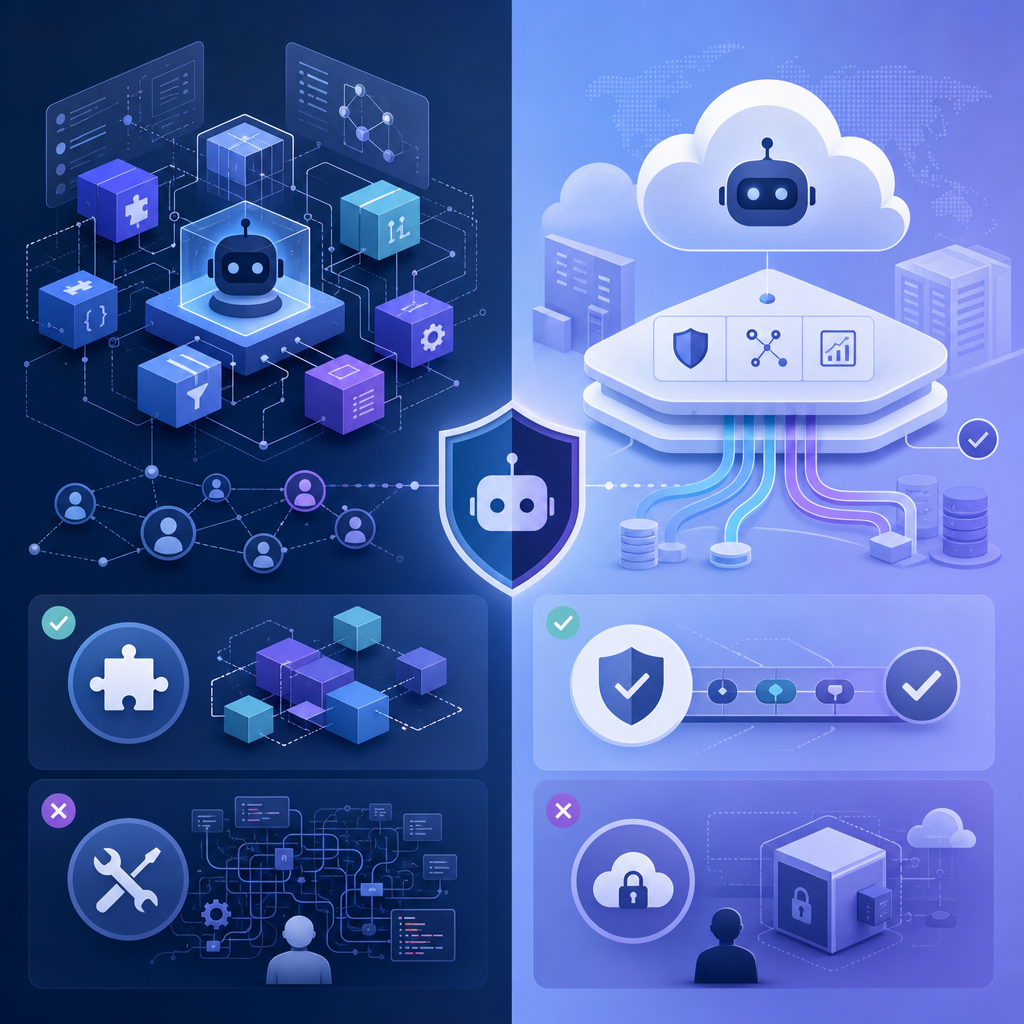
How SaaS Bot Detection Differs
Services like CaptchaLa offer bot detection as a fully managed platform. They typically provide:
- Easy integration with SDKs for Web, iOS, Android, Flutter, Electron
- Native support for multiple UI languages
- Server-side SDKs (
captchala-php,captchala-go) for smooth backend validation - Cloud-hosted challenge issuance and validation endpoints (
https://apiv1.captcha.la/...) - Adaptive risk-based challenge flows minimizing user friction
This means fewer operational burdens on your internal teams and rapidly updated detection models informed by aggregated threat data.
Competitors like reCAPTCHA and hCaptcha also operate SaaS models. Cloudflare Turnstile is another newer player emphasizing privacy-preserving approaches without challenges. Each offers different tradeoffs in terms of user experience, privacy, and coverage.
When to Consider Bot Detection Open Source
Open source bot detection can make sense if:
- Your team has strong security engineering resources
- You require deep customization or want to keep data fully on-premises
- You want to experiment or integrate detection tightly with other open source tools
- Budget constraints limit SaaS subscriptions
Otherwise, managed SaaS platforms often reduce total cost of ownership and provide higher detection efficacy with less friction.
Basic Example: Integrating CaptchaLa Validation Server-Side
This snippet shows how to validate a CAPTCHA pass token from your server using CaptchaLa’s API—easy to pair with open source detection scripts on the client side.
// Node.js example for server-side validation
const fetch = require('node-fetch');

async function validateCaptcha(passToken, clientIp) {
  const response = await fetch('https://apiv1.captcha.la/v1/validate', {
    method: 'POST',
    headers: {
      'X-App-Key': process.env.CAPTCHA_APP_KEY,
      'X-App-Secret': process.env.CAPTCHA_APP_SECRET,
      'Content-Type': 'application/json'
    },
    body: JSON.stringify({ pass_token: passToken, client_ip: clientIp })
  });

  const data = await response.json();
  return data.success === true;
}
This relies on first-party data and secure server calls to determine if the interaction is human or bot-driven.

Final Thoughts
Bot detection open source projects provide transparency, flexibility, and cost advantages for certain use cases. However, they come with maintenance overheads, scaling challenges, and often limited feature scope compared to managed SaaS platforms like CaptchaLa.
Choosing between open source and SaaS depends on your technical capacity, budget, compliance requirements, and risk appetite. Organizations often combine the strengths of both—leveraging open source tools internally while outsourcing complex challenge and evaluation workflows to specialized vendors.
Where to go next? Check out CaptchaLa’s pricing and explore the developer docs to see how you can integrate a seamless, scalable bot defense solution without reinventing the wheel.