
Bot detection in PHP is essential for safeguarding websites from automated abuse such as spam, credential stuffing, and scraping. By integrating reliable bot detection mechanisms, developers can distinguish between legitimate human users and malicious bots. This often involves CAPTCHAs, device fingerprinting, behavior analysis, or a combination of these techniques. PHP offers flexible options to implement bot defense strategies that improve security without disrupting user experience.
In this post, we explore practical approaches to bot detection using PHP, compare popular CAPTCHA services, and provide guidance on implementing a server-side validation workflow. Whether you're building a contact form, login system, or API endpoint, understanding bot detection PHP methods can dramatically reduce abuse and improve trust in your applications.
Why Use Bot Detection in PHP?
PHP powers many websites and web applications, making it a common vector for automated attacks. Bots can submit fake registrations, scrape content, or perform brute force attempts. Bot detection is critical because:
- It prevents spam and fraudulent submissions that degrade data quality.
- Protects user accounts from automated hacking attempts.
- Reduces server load caused by excessive bot traffic.
- Ensures analytics data reflect genuine user behaviour.
Unlike client-side JavaScript-only solutions, PHP-based bot detection validates user interactions on the server, increasing security. This also avoids relying solely on client environment controls that bots can manipulate.
Common Bot Detection Techniques Usable with PHP
- CAPTCHA Challenges: Present puzzles or challenges that are easy for humans but difficult or costly for bots, such as image recognition or interactive puzzles.
- Behavioral Analysis: Monitor mouse movements, typing speed, or interaction patterns to detect anomalies.
- Device Fingerprinting: Identify unique device/browser characteristics to spot suspicious or repeat bot activities.
- Rate Limiting: Track requests and throttle suspicious IPs or sessions.
CAPTCHA remains the most widely adopted due to ease of use and broad compatibility.

Integrating CAPTCHA for Bot Detection in PHP
Using a CAPTCHA service simplifies the bot challenge and verification process. Popular providers include CaptchaLa, Google reCAPTCHA, hCaptcha, and Cloudflare Turnstile. Each supports PHP integration with slight differences in API design and user interaction models.
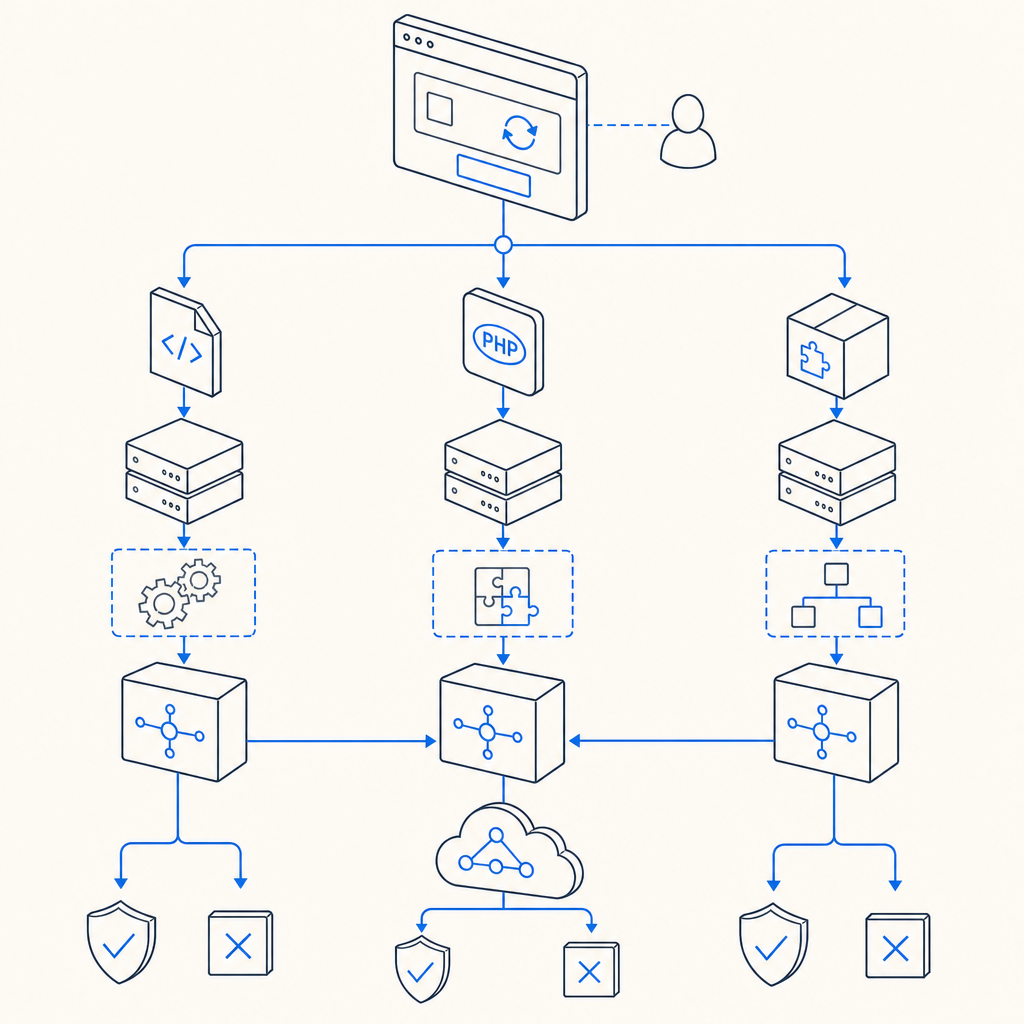
How CAPTCHA Works with PHP
- Display the CAPTCHA Widget: Include JavaScript from the provider to show the challenge on HTML forms.
- User Interaction: Visitor completes the CAPTCHA challenge on the client-side.
- Token Submission: The generated response token is sent to your PHP backend along with the form data.
- Server-Side Validation: Your PHP server calls the CAPTCHA provider's API to verify the token and confirm it was solved successfully.
- Process Form: If validation passes, continue processing the request; otherwise, reject or ask to try again.
Example PHP Validation with CaptchaLa
// PHP example for verifying CAPTCHA response with CaptchaLa API
$passToken = $_POST['pass_token'] ?? '';
$clientIp = $_SERVER['REMOTE_ADDR'];

// Prepare API request to validate CAPTCHA token
$apiUrl = "https://apiv1.captcha.la/v1/validate";
$appKey = 'YOUR_APP_KEY';
$appSecret = 'YOUR_APP_SECRET';

$payload = json_encode([
    'pass_token' => $passToken,
    'client_ip' => $clientIp,
]);

$ch = curl_init($apiUrl);
curl_setopt($ch, CURLOPT_POST, true);
curl_setopt($ch, CURLOPT_POSTFIELDS, $payload);
curl_setopt($ch, CURLOPT_HTTPHEADER, [
    'Content-Type: application/json',
    "X-App-Key: $appKey",
    "X-App-Secret: $appSecret",
]);
curl_setopt($ch, CURLOPT_RETURNTRANSFER, true);

$response = curl_exec($ch);
curl_close($ch);

$result = json_decode($response, true);

if (!empty($result['success']) && $result['success'] === true) {
    // CAPTCHA passed, proceed with form processing
} else {
    // CAPTCHA failed, deny or retry
}
This server-side validation is critical to ensure the CAPTCHA token was legitimately solved.
Comparing Popular CAPTCHA Services for PHP
| Feature/Service | CaptchaLa | Google reCAPTCHA | hCaptcha | Cloudflare Turnstile |
|---|---|---|---|---|
| Server SDK in PHP | Yes (captchala-php) | No official SDK, manual API integration | No official SDK, manual API calls | No official SDK, manual API calls |
| User Experience | Customizable widget, supports 8 UI languages | Familiar challenge, sometimes intrusive | Focus on privacy, GDPR-friendly | Minimal friction, invisible by default |
| Pricing | Free tier 1000/mo, paid tiers for scale | Free, usage limits apply | Free with paid enterprise | Free with Cloudflare accounts |
| Privacy Focus | First-party data only | Google collects user data | Designed for privacy-conscious sites | Cloudflare-integrated, some data sharing |
| Integration Complexity | Lightweight SDKs & APIs | Widely documented, but can be complex | Straightforward API, fewer SDKs | Easy inclusion with Cloudflare services |
Given these options, CaptchaLa offers a developer-friendly PHP SDK and APIs, making integration smooth for PHP applications requiring bot defense without relying on third-party user data.
Best Practices for Bot Detection in PHP
- Combine Multiple Detection Layers: Use CAPTCHA alongside rate limiting and behavioral checks to improve bot detection accuracy.
- Keep User Experience in Mind: Choose CAPTCHA types that balance security and usability. Avoid overly difficult challenges.
- Validate Server-Side Always: Never trust client-side validation alone. Always verify CAPTCHA tokens on your PHP backend.
- Monitor and Adapt: Analyze logs and CAPTCHA pass/fail rates to adjust configurations and detect emerging threats.
- Leverage First-Party Data When Possible: Solutions like CaptchaLa utilize first-party metrics, enhancing privacy and reliability.
Using SDKs and documentation can speed up development. For example, CaptchaLa provides SDKs for Web (JS/Vue/React), iOS, Android, Flutter, and server-side support that easily integrates with PHP projects. Visit their docs for detailed implementation guides.
Conclusion
Bot detection PHP solutions are crucial to protect web forms, authentication systems, and APIs from harmful automated traffic. Using CAPTCHAs combined with server-side validation strengthens your defenses without frustrating legitimate users. Comparing providers like CaptchaLa, Google reCAPTCHA, hCaptcha, and Cloudflare Turnstile helps tailor your approach based on privacy, developer experience, and pricing.
For PHP developers seeking a straightforward integration with reliable bot detection, CaptchaLa offers native PHP SDK options and flexible API endpoints. Explore their pricing and documentation to find the best fit for your project.
Ready to fortify your website? Start implementing bot detection in PHP today with these strategies and tools.