
Bot detection mouse movement is a critical technique used in identifying automated scripts versus real human users. By analyzing subtle details like cursor speed, trajectory, and pauses, security systems can flag suspicious activity and stop bots from abusing online services. Mouse movement patterns offer a natural, low-friction way to differentiate human users because bots tend to leave behind predictable or unnatural traces that automated scripts struggle to mimic convincingly.
What Is Bot Detection Mouse Movement?
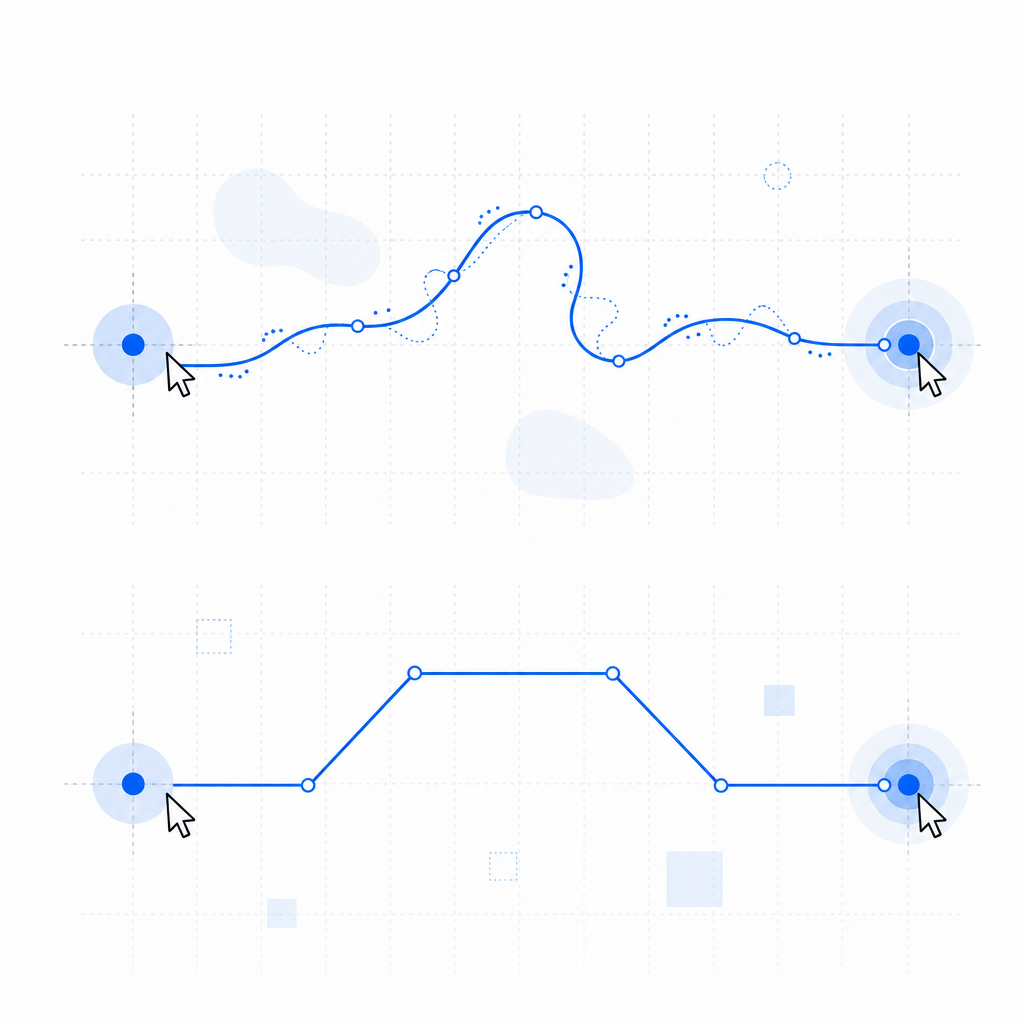
Bot detection based on mouse movement involves collecting and analyzing data about how users move their cursor on web pages or in apps. Humans typically generate smooth, somewhat erratic, and varied mouse motions — with hesitations, overshoots, and irregular pauses. In contrast, bots follow rigid, scripted input with perfectly straight lines or uniform speed that feel unnatural.
The patterns tracked often include:
- Speed changes: Humans tend to speed up, slow down, or stop briefly.
- Curves and jitter: Natural hand movement creates subtle curves rather than perfectly linear paths.
- Click timing: The intervals between cursor movement and clicks vary.
Security platforms like CaptchaLa incorporate mouse movement analysis into their bot detection arsenal to complement other signals like IP reputation, browser fingerprinting, and behavioral biometrics. This approach elevates accuracy without interrupting users with traditional CAPTCHAs.
Key Features of Mouse Movement Analysis in Bot Detection
1. Continuous Behavioral Profiling
Unlike one-off CAPTCHA challenges, mouse movement tracking is passive and continuous. It collects data as users interact naturally, creating a behavioral profile over time. This helps detect bots that adapt and bypass single-point tests.
2. Low User Friction
Because mouse movement can be monitored silently, it reduces reliance on visible challenges that frustrate users and increase abandonment. This aligns well with user-friendly anti-bot solutions such as CaptchaLa that rely on first-party data without intrusive friction.
3. Integration with Other Signals
Mouse movement analysis is often combined with other signals like keystroke dynamics, touchscreen events, or network parameters for layered detection. This multi-dimensional approach better separates sophisticated bots from humans.
4. Cross-Platform Support
Solutions supporting native SDKs—such as CaptchaLa’s Web (JS/Vue/React), iOS, Android, Flutter, and Electron—can capture mouse or touch events in various environments. This is essential as bot attacks span devices and platforms.
How Mouse Movement Detection Compares Among Popular Solutions
| Feature | CaptchaLa | reCAPTCHA | hCaptcha | Cloudflare Turnstile |
|---|---|---|---|---|
| Mouse Movement Analysis | Yes, integrated with other signals | Limited, relies mainly on heuristics | Basic behavioral heuristics | Limited to challenge-response |
| SDKs & Platform Support | Web, iOS, Android, Flutter, Electron | Mostly Web & mobile SDKs | Web only | Web only |
| User Friction | Low, mostly passive tracking | Higher friction due to visible challenges | Moderate, with invisible options | Low, invisible challenges |
| Privacy Preferences | First-party data, GDPR friendly | Collects extensive Google data | Mixed; partners with advertisers | Privacy-focused, minimal data |
| Free Tier & Volume Plans | 1000/mo free; scalable paid plans | Free with limits | Free with limits | Part of Cloudflare paid plans |
While reCAPTCHA and hCaptcha are widely known, they often rely heavily on visible challenges or heuristics that can inconvenience users. Cloudflare Turnstile focuses on invisible challenges but does not emphasize mouse movement analytics as part of detection. CaptchaLa's dedicated mouse tracking and broad SDK support provide flexible integration options that improve accuracy while minimizing disruption.
Technical Specifics: How to Implement Mouse Movement Bot Detection
Here’s a simplified overview for developers interested in how mouse movement data can be captured and analyzed:
Event Collection
- Track native mouse events:
mousemove,mousedown,mouseup - Log cursor coordinates (x,y), timestamps, and click states
- Track native mouse events:
Feature Extraction
- Calculate speed = distance / time between points
- Identify acceleration and deceleration phases
- Detect trajectory curvature and pauses
- Record click timing relative to movement
Behavioral Modeling
- Use heuristic thresholds or ML models trained on labeled human vs bot datasets
- Score risk factors like “too linear” movement or unrealistic speeds
Decision & Actions
- Combine movement score with other inputs (IP reputation, device fingerprint)
- Flag suspicious sessions for challenge or block
- Pass legitimate users seamlessly
// Example: Basic mouse movement tracking (JavaScript)
// Collects coordinates and timestamps on every mousemove event

let movementData = [];

document.addEventListener('mousemove', e => {
  movementData.push({
    x: e.clientX,
    y: e.clientY,
    time: Date.now()
  });
});

// After some time or event, send data to server for analysis
function sendMovementData() {
  fetch('https://apiv1.captcha.la/v1/validate', {
    method: 'POST',
    headers: {
      'Content-Type': 'application/json',
      'X-App-Key': 'your-app-key',
      'X-App-Secret': 'your-app-secret'
    },
    body: JSON.stringify({
      pass_token: 'user-session-token',
      client_ip: 'user-ip-address',
      movementData: movementData
    })
  });
}
For developers using CaptchaLa, native SDKs simplify this process by capturing and processing mouse and touch inputs out of the box. This reduces the complexity around managing raw event data and score interpretation.
Limitations and Evasion Considerations
While mouse movement detection is valuable, attackers continually evolve. Some sophisticated bots simulate natural cursor paths using scripts designed to mimic human patterns. Others try to bypass mouse tracking by scripting only keyboard interactions or utilizing headless browsers with no real cursor.
That’s why mouse movement should be one component within a layered defense system incorporating device fingerprinting, network analysis, challenge-response, and anomaly detection. CaptchaLa implements such multi-signal strategies to maintain a robust bot defense posture.

Conclusion: Why Bot Detection Mouse Movement Matters
Mouse movement provides a behavioral biometric uniquely tied to human motor control, making it a powerful signal for bot detection. When integrated thoughtfully, it:
- Offers near-transparent, continuous verification
- Improves detection accuracy without harming user experience
- Works across devices and platforms with appropriate SDKs
- Enhances multi-layered bot defense frameworks
Whether you’re building your own bot defense or exploring solutions, understanding and leveraging mouse movement analysis can reduce fraud, spam, and abuse effectively.
Where to go next? Learn more about implementation details and pricing options by visiting CaptchaLa's documentation and pricing page.