
A bot detection model estimates whether a session, request, or interaction is human, automated, or somewhere in between, then helps your app decide what to do next. The practical goal is simple: reduce fraud and abuse without creating friction for legitimate users.
That sounds straightforward, but the best models are rarely just a single score. They combine signals from the browser, device, network, timing patterns, and challenge outcomes to produce a decision that your backend can trust. If you treat the model as a one-time gate instead of a live signal, you usually end up either blocking too much or letting too much through.
A useful way to think about it is: the model does not “catch bots” in a vacuum; it helps you measure risk well enough to adapt your controls. That could mean stepping up to a challenge, rate limiting, requiring extra verification, or simply letting the request pass.
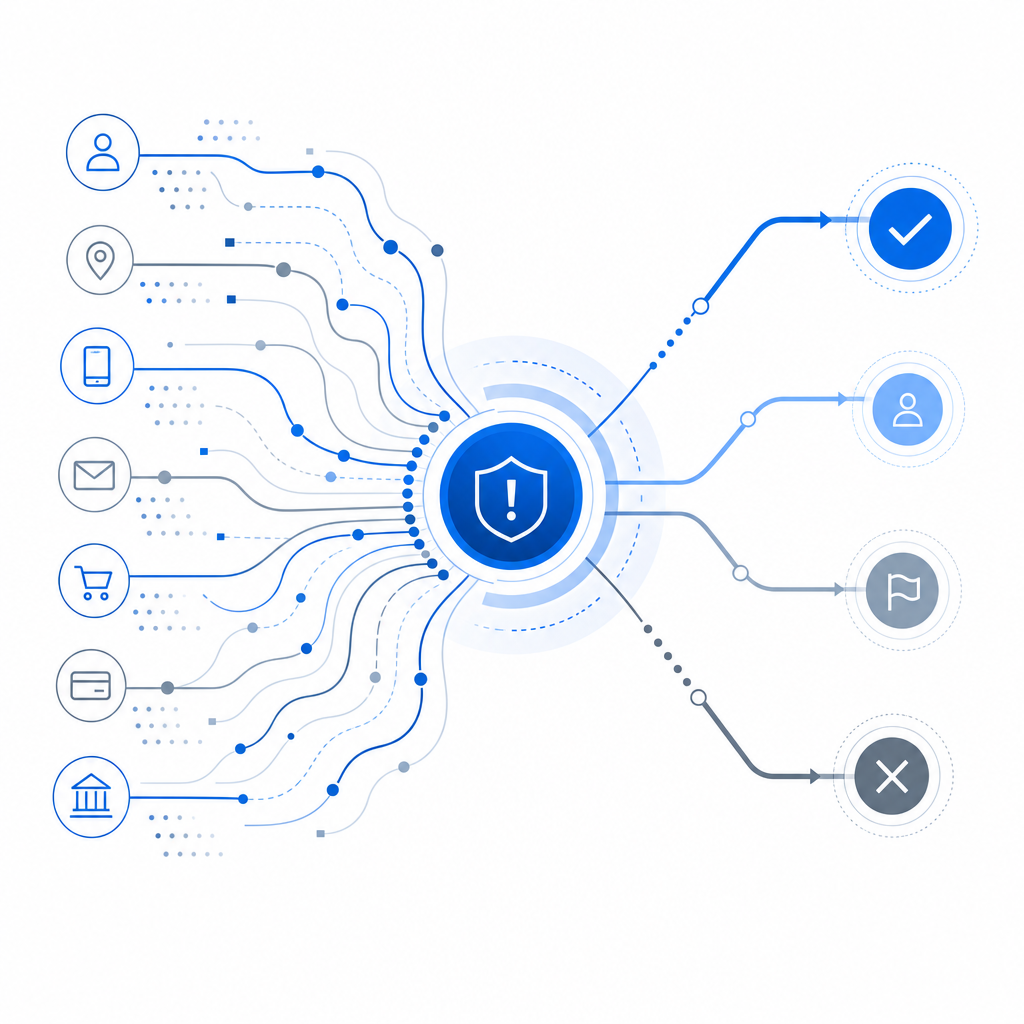
What a bot detection model actually uses
Most bot detection systems start with a stream of signals rather than a single “bot/not bot” label. Those signals usually fall into a few groups:
Behavioral timing
- Mouse movement cadence
- Keystroke intervals
- Touch gestures on mobile
- Time between page load and form submission
Technical fingerprints
- User agent and browser feature consistency
- Headless browser artifacts
- WebGL, canvas, or font patterns
- Cookie and storage behavior
Network and request context
- IP reputation and ASN patterns
- Proxy/VPN signals
- Request burstiness
- Geo-velocity anomalies
Challenge results
- Whether a challenge was solved
- How quickly it was completed
- Whether the session reused tokens in suspicious ways
A strong model does not rely on any single feature. A fast form fill is not automatically malicious, and a weird user agent is not automatically a bot. The value comes from combining weak signals into a useful risk estimate.
How the model turns signals into action
At a high level, the model outputs a score or class that your application can translate into policy. The policy part matters just as much as the model itself.
A common decision pipeline looks like this:
| Model output | Typical meaning | Example action |
|---|---|---|
| Low risk | Likely human | Allow request |
| Medium risk | Uncertain or high-variance session | Show challenge or step-up check |
| High risk | Likely automated abuse | Block, throttle, or require stronger verification |
In practice, you want the decision to be context-aware. A login endpoint, a signup flow, and a ticket checkout page may all use the same underlying model, but the threshold and remediation can differ.
Example backend flow
1. User loads the page and receives a session token.
2. The client completes the challenge or gathers telemetry.
3. The frontend submits the pass token with the request.
4. Your server validates the token and checks the client IP.
5. Your app applies a policy based on risk, route, and account history.
This is where a product like CaptchaLa fits naturally. It gives you a challenge and validation flow that you can place in front of sensitive endpoints while keeping the enforcement logic on your server.
For validation, the server can POST to:
https://apiv1.captcha.la/v1/validate
with a body like:
{
  "pass_token": "token-from-client",
  "client_ip": "203.0.113.10"
}
and the X-App-Key and X-App-Secret headers. If you need to issue a server token first, there is also:
POST https://apiv1.captcha.la/v1/server/challenge/issue
That separation is useful because it keeps the final trust decision on the backend, where it belongs.
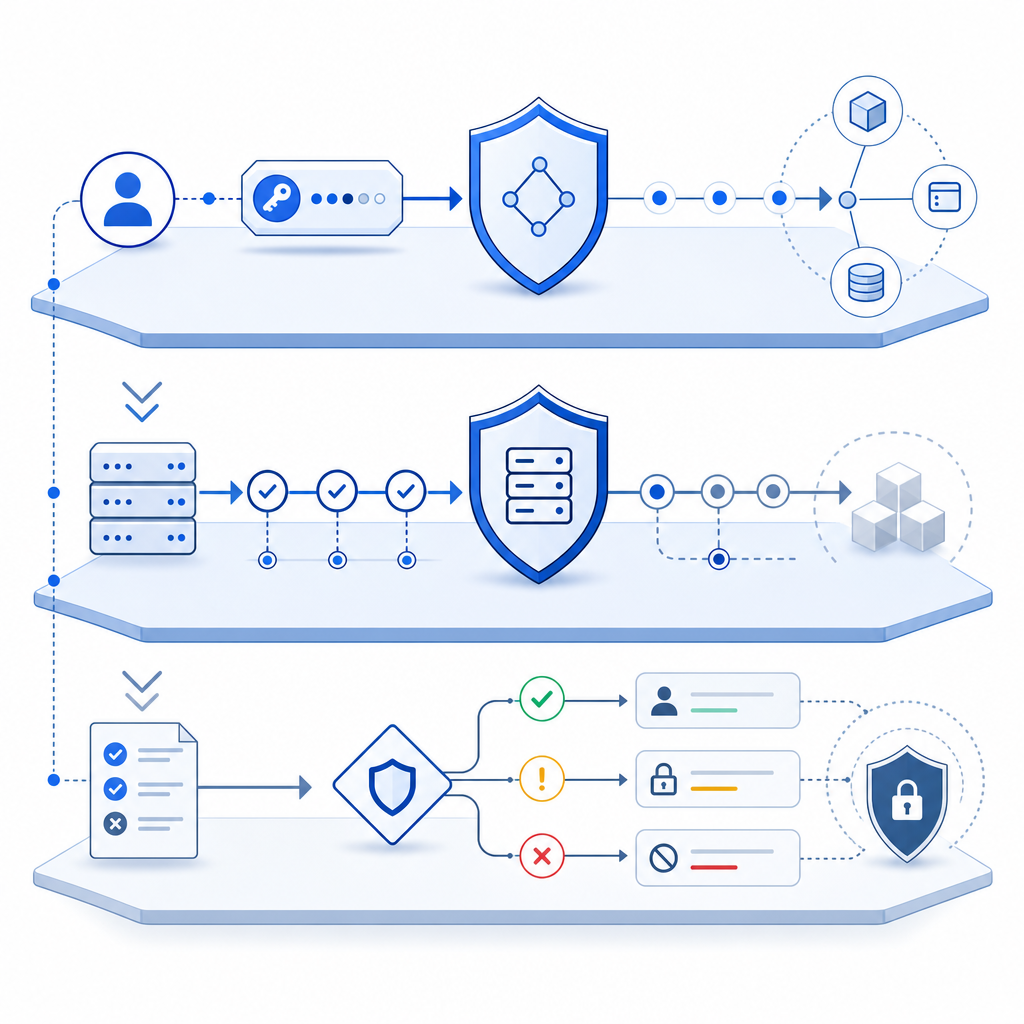
Build vs. buy: what changes with a managed model
Some teams build their own bot detection model from telemetry and internal rules. Others use a managed challenge and validation layer. Both can work, but they differ in operational burden.
| Approach | Strengths | Tradeoffs |
|---|---|---|
| In-house model | Maximum customization, direct access to raw data | Requires data science, tuning, monitoring, and continuous retraining |
| Managed CAPTCHA / bot defense | Faster rollout, simpler maintenance, less model drift to manage | Less freedom to invent custom features from scratch |
| Hybrid approach | Good balance of control and speed | Still needs careful policy design |
A managed system is often a better starting point if your goal is abuse reduction rather than research. You still get to define the business logic, but you do not need to maintain a model pipeline, retraining cadence, or device-fingerprint infrastructure from day one.
That said, even if you use a managed challenge layer, the model thinking still matters. You should ask:
- Which routes are truly sensitive?
- Which signals are safe to collect under your privacy policy?
- What is the acceptable false-positive rate?
- What should happen when the model is uncertain?
CaptchaLa’s documentation makes it easier to map those decisions to implementation details, including SDKs and server validation patterns. If you want a quick look, docs is the right place to start.
Implementation details that matter in production
A bot detection model is only useful if it integrates cleanly with your stack. Integration friction is one of the main reasons teams delay deployment or ship weak enforcement.
Some practical details to watch:
Use server-side validation for trust
- Never rely only on client-side signals.
- Validate the pass token on your backend before accepting sensitive actions.
Bind the token to the request context
- Include the client IP where appropriate.
- Tie token freshness to a short acceptance window.
- Reject replayed or stale tokens.
Instrument outcomes
- Log challenge pass/fail rates.
- Track the downstream abuse rate by route.
- Compare false positives across device classes and locales.
Keep the user experience local
- CaptchaLa supports 8 UI languages.
- Native SDKs are available for Web (JS, Vue, React), iOS, Android, Flutter, and Electron.
- Server-side libraries include
captchala-phpandcaptchala-go.
That mix matters if you support multiple platforms. A mobile-first app may care more about native SDKs than about a JavaScript embed. A desktop client may prefer Electron support. And if you are shipping from Java, CocoaPods, or Flutter ecosystems, the published package versions are easy to pin: Maven la.captcha:captchala:1.0.2, CocoaPods Captchala 1.0.2, and pub.dev captchala 1.3.2.
Here is a simple way to think about deployment strategy:
If endpoint is low risk:
  Allow by default, monitor anomalies

If endpoint is medium risk:
  Challenge when score is uncertain

If endpoint is high risk:
  Validate server-side and enforce stricter policy
That policy layer is where a bot detection model becomes operationally valuable. Without it, scores are just numbers.
Choosing thresholds without hurting real users
The biggest mistake teams make is optimizing only for bot catch rate. A stricter threshold can reduce abuse, but if it frustrates legitimate users, the cost shows up as lost conversions, more support tickets, and weaker retention.
A better approach is to tune by route and outcome:
- Signup: prioritize abuse reduction and fake account suppression
- Login: balance account takeover protection with low friction
- Checkout: minimize payment fraud and carding
- Comment or form submission: reduce spam without blocking legitimate contributors
Use a few metrics to guide threshold changes:
- Challenge pass rate by platform
- False-positive rate by country or network type
- Conversion rate after challenge
- Abuse rate after token validation
- Repeat-offender rate across sessions
If you need a starting point for pricing and capacity planning, pricing is the simplest reference. CaptchaLa includes a free tier at 1,000 validations per month, with Pro tiers in the 50K–200K range and Business at 1M, which makes it easier to test traffic patterns before you commit to a larger rollout.
Where the model fits in a broader defense stack
A bot detection model should not be your only control. It works best alongside rate limits, anomaly detection, account risk scoring, and human review for edge cases. That layered approach is important because attackers adapt quickly; if one signal gets noisy, the others still provide context.
For many teams, the ideal setup looks like this:
- A lightweight client challenge to collect trustworthy session proof
- Server-side token validation
- Route-specific policy enforcement
- Logging for continuous tuning
- A privacy posture based on first-party data only
That last point matters. If you can solve your abuse problem using first-party data, you reduce complexity and avoid leaning on brittle external datasets. It also keeps the model aligned with what your own product actually sees, which is usually more relevant than generic internet telemetry.
If you are evaluating bot defense options, the real question is not “Can a model detect bots?” It is “Can we make reliable decisions fast enough, with enough confidence, without making life harder for real users?” That is the standard worth aiming for.
Where to go next: review the docs for integration details, or check pricing if you want to estimate a rollout against your traffic.