
Bot detection meaning refers to the process of identifying automated scripts, programs, or "bots" that interact with websites or online services, often with intentions ranging from benign data indexing to malicious activities such as credential stuffing, spam, or scraping. Essentially, bot detection is about distinguishing human users from automated agents to protect digital assets, maintain service integrity, and ensure a fair online experience.
What Is Bot Detection and Why Does It Matter?
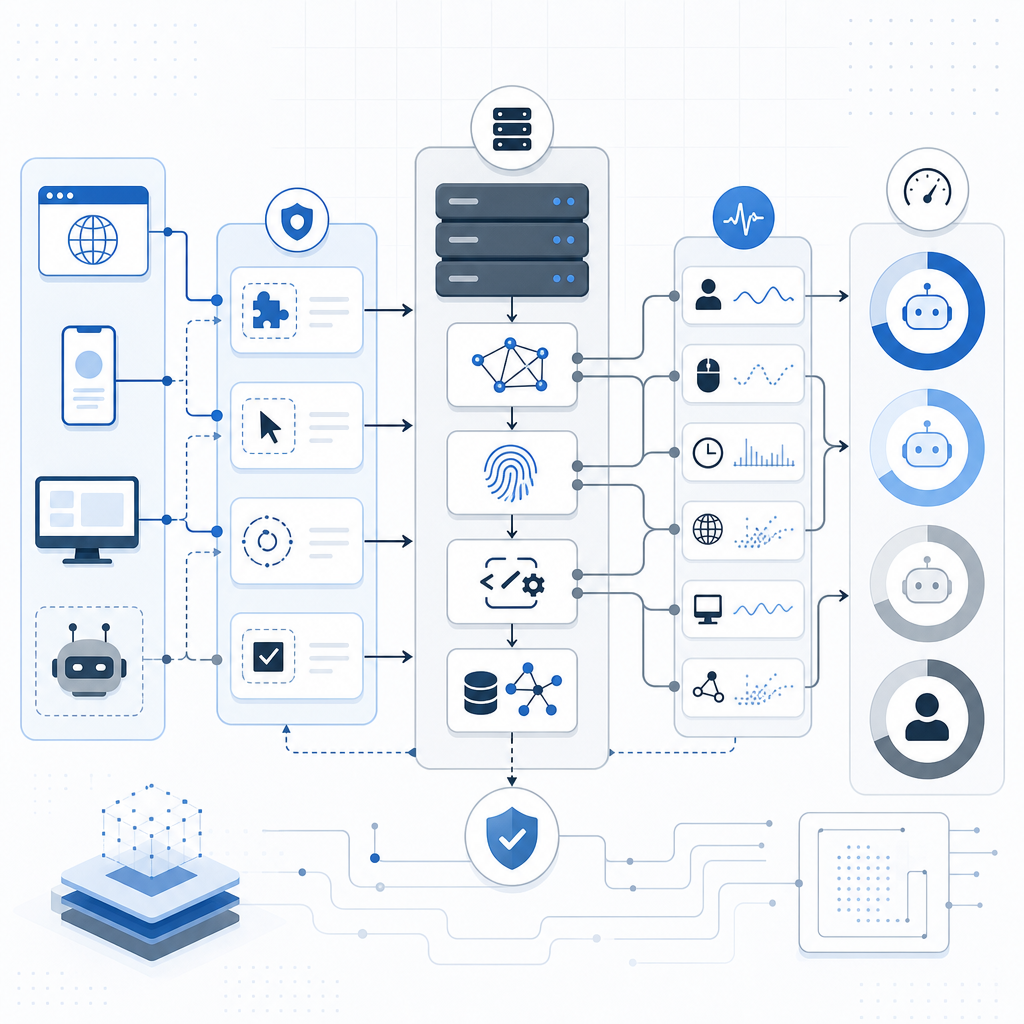
At its core, bot detection involves analyzing visitor behavior and technical signals to determine whether a user is a human or a bot. Bots might be legitimate crawlers like search engine spiders or hostile actors attempting to abuse services. Bot detection systems employ various techniques including behavioral analysis, IP reputation checks, device fingerprinting, challenge-response tests (e.g., CAPTCHAs), and machine learning models.
Without effective bot detection, websites face risks such as:
- Account takeovers using stolen credentials
- Fake account creation that skews analytics or promotes fraud
- Competitive data scraping
- Distributed denial-of-service (DDoS) attacks
- Spam submissions and fraud
Identifying and mitigating bot traffic is critical for web operators to preserve user trust and operational stability.
Common Bot Detection Techniques Explained
Behavioral Analysis
Behavioral signals like mouse movements, scrolling speed, typing patterns, and navigation flow are monitored to detect non-human-like activity. Bots tend to perform repetitive, overly rapid, or highly scripted interactions that differ from human behavior.
Device and Network Fingerprinting
Fingerprinting collects information about the user's device configuration (browser type, screen resolution, installed fonts, plugins) and network attributes (IP address, headers). While individual signals can be spoofed, combined fingerprints create unique profiles that help flag suspicious visitors.
Challenge-Response Tests (CAPTCHAs)
Challenges like image recognition or text entry serve as gating mechanisms to verify humanity. Popular services include Google’s reCAPTCHA, hCaptcha, and Cloudflare's Turnstile. Each varies in usability and security; for example, Turnstile aims for a frictionless experience with invisible scoring.
Rate Limiting and IP Reputation
Limiting requests per IP or client and consulting known proxy/bot IP databases block potentially abusive sources early on.
Machine Learning Models
Modern platforms train algorithms on vast traffic data to identify anomalies and evolving bot tactics more accurately.
Comparison of Popular Bot Detection Services
| Feature | CaptchaLa | reCAPTCHA | hCaptcha | Cloudflare Turnstile |
|---|---|---|---|---|
| Supported Platforms | Web (JS/Vue/React), iOS, Android, Flutter, Electron | Web, mobile SDKs | Web, mobile SDKs | Web, limited SDKs |
| Challenge Types | Various CAPTCHAs, adaptive risk scoring | Image challenges, invisible CAPTCHA | Image challenges, privacy-focused | Invisible, user-friendly test |
| Privacy | First-party data only | Google data policies apply | Focus on privacy | Focus on privacy and no cookies |
| Free Tier | 1000/month | Unlimited (with usage limits) | Usage-based free tier | Included with Cloudflare plans |
| Server SDKs Available | PHP, Go, Java, iOS, Android, Flutter | Official and third-party SDKs | Official SDKs | Limited SDKs available |
Compared to competitors, CaptchaLa emphasizes first-party data privacy and native SDK support across multiple platforms, enabling tailored bot detection integration with control over sensitive data.

Implementing Bot Detection with CaptchaLa: Technical Insights
Integrating bot detection can vary from simple checkbox CAPTCHAs to sophisticated multi-layered approaches. CaptchaLa provides flexible tools and SDKs to facilitate integration:
- Frontend Loader Integration
Include CaptchaLa’s JavaScript loader to initiate challenges and tokens for user interactions:
// Load CaptchaLa script asynchronously
const script = document.createElement('script');
script.src = 'https://cdn.captcha-cdn.net/captchala-loader.js';
document.head.appendChild(script);
User Challenge and Token Generation
Upon challenge success, CaptchaLa returns apass_tokento verify user authenticity.Server-Side Validation
Verify the user’s response by POSTing to the validation endpoint with secure headers:
POST https://apiv1.captcha.la/v1/validate
Headers:
 - X-App-Key: YOUR_APP_KEY
 - X-App-Secret: YOUR_APP_SECRET

Body:
{
  "pass_token": "user-challenge-token",
  "client_ip": "user-ip-address"
}
Servers then receive a verdict on whether the client is likely human or bot, allowing adaptive enforcement like blocking, throttling, or CAPTCHA challenges.
- Server Token for Challenges
Optionally request server-issued tokens for custom challenge flows:
POST https://apiv1.captcha.la/v1/server/challenge/issueThis separation between client and server workflows increases flexibility and security.
Challenges and Considerations in Bot Detection
Balancing Security and User Experience: Aggressive bot detection tools can create friction, leading to false positives that frustrate legitimate users. Solutions are moving toward invisible or low-friction detection layers, like CaptchaLa’s adaptive approaches or Cloudflare's Turnstile.
Evolving Bot Sophistication: Bots increasingly mimic human behavior, use headless browsers, or automate CAPTCHA solvers. Continuous updates and machine learning are essential to keep pace.
Privacy Compliance: Handling user data for fingerprinting or behavioral analytics must align with regulations like GDPR or CCPA. First-party data models, such as CaptchaLa’s, minimize exposure to third-party tracking.
Integration Complexity: Developers benefit from SDK availability, clear documentation, and multi-platform support to deploy bot detection effectively. CaptchaLa offers native SDKs for Web, mobile, and desktop environments, plus server libraries in PHP and Go to simplify backend validation.
Conclusion
Bot detection meaning encompasses a broad set of techniques aimed at distinguishing human traffic from automated bots to protect websites and apps from abuse. As bots grow more sophisticated, combining behavioral analytics, fingerprinting, challenge-response mechanisms, and machine learning improves detection accuracy while balancing user convenience.
Solutions like CaptchaLa provide comprehensive, privacy-conscious bot detection tools with rich SDK support and scalable plans, fitting diverse use cases beyond common frameworks such as reCAPTCHA, hCaptcha, or Cloudflare Turnstile.
To explore detailed integration options or evaluate which tier suits your needs, visit the CaptchaLa pricing page or consult the comprehensive docs for technical guidance. Implementing effective bot detection today secures your services against automation threats and enhances genuine user trust tomorrow.