
Bot detection Kaggle competitions and datasets provide valuable insights into how machine learning can identify and block malicious automated traffic. Kaggle’s public challenges and notebooks showcase techniques ranging from behavioral feature engineering to deep learning models, offering a practical playground for anyone interested in bot and fraud detection. In this post, we’ll explore common approaches used in Kaggle bot detection projects, discuss key datasets, compare popular bot detection methods, and highlight how integrating CAPTCHA solutions, such as CaptchaLa, can enhance your defense strategy beyond just model predictions.
Understanding Bot Detection in Kaggle Contexts
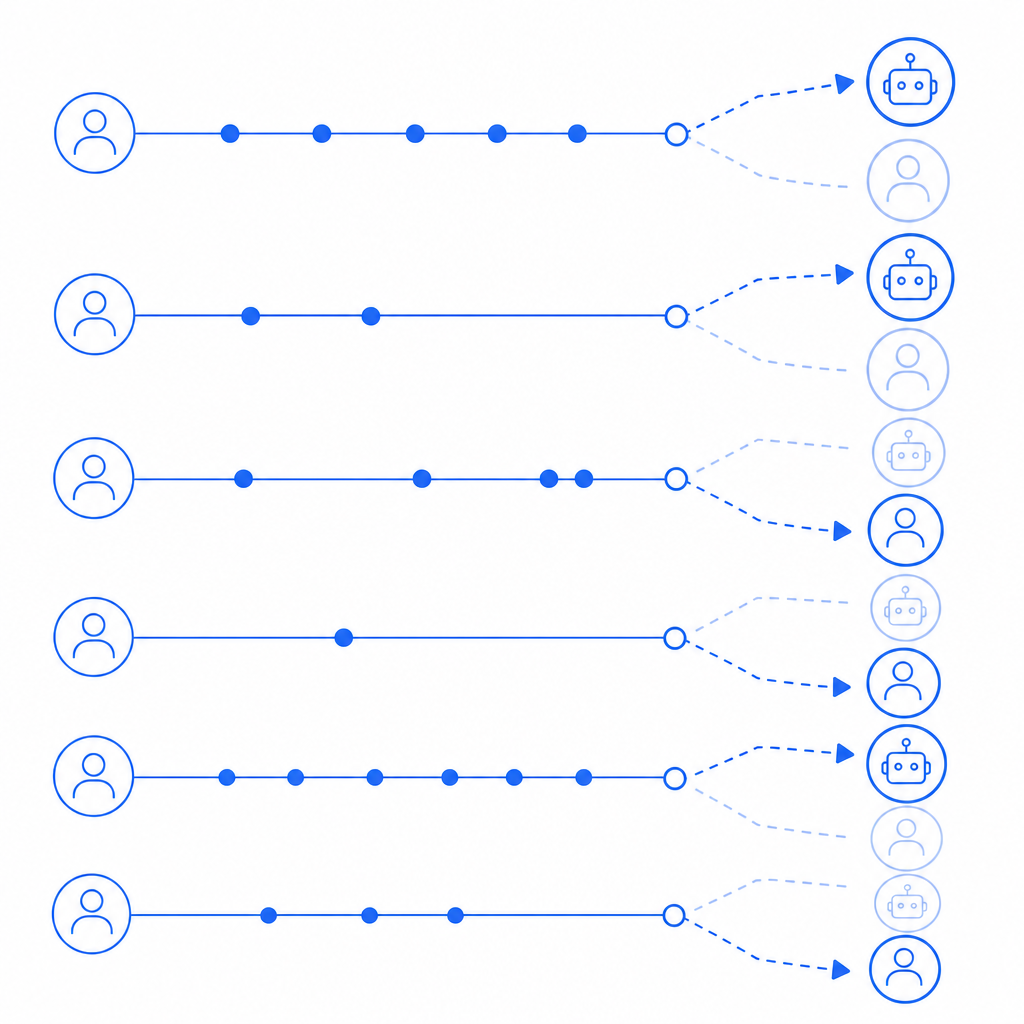
Kaggle bot detection tasks usually involve distinguishing between legitimate users and automated scripts by analyzing traffic logs, user behavioral patterns, or event metadata. Successful detection relies on extracting meaningful features like session time, mouse movements, click intervals, and user-agent fingerprints, then applying classification algorithms to identify suspicious activity.
Common datasets used in Kaggle bot detection include:
- Clickstream event logs: Contain sequences of user actions with timestamps, URLs, and device info.
- User metadata: IP addresses, browser fingerprints, and other environment indicators.
- Task-specific synthetic/sampled datasets: Designed to mimic bot-like behavior for training purposes.
These datasets form the foundation for data preprocessing and feature engineering, the most critical steps in any bot detection pipeline.
Popular Machine Learning Models for Bot Detection on Kaggle
Kaggle participants experiment with a variety of models to separate bots from humans:
| Model Type | Strengths | Weaknesses | Typical Use Case |
|---|---|---|---|
| Random Forest / XGBoost | Handles tabular data well, interpretable | May not capture sequential patterns | Baseline and strong performer on static features |
| LSTM / RNN | Captures sequences and timing data | Requires more tuning and data | Analyzing user event sequences in time order |
| Transformer models | Very good with high-dimensional sequential data | More complex and resource-heavy | Advanced feature interactions from event sequences |
| Autoencoders | Unsupervised anomaly detection | Requires careful thresholding | Detecting unusual behavior deviating from normal |
| Ensemble approaches | Combines strengths of multiple models | Can be complex to maintain | Improving accuracy and generalization |
In Kaggle notebooks, it’s common to see multi-model pipelines layered with feature boosting and stacking to improve detection metrics like AUC-ROC and F1 score.
# Example: Basic XGBoost training snippet
import xgboost as xgb

# X_train, y_train are preprocessed features and labels
model = xgb.XGBClassifier(n_estimators=100, max_depth=5, learning_rate=0.1)
model.fit(X_train, y_train)

preds = model.predict(X_test)
Feature Engineering Highlights
- Time-based features: Time between clicks, session length, and interaction frequency.
- Behavioral metrics: Scroll depth, mouse movement randomness, keystroke speed.
- Device/browser data: User agent strings, IP geolocation, and referral URLs.
- Historical user activity: Frequency and pattern changes over time.
Careful normalization and handling of missing or outlier data are essential since bots often generate noisy logs.
CAPTCHA vs. Pure ML Bot Detection: Complementary Strategies
While Kaggle competitions focus heavily on data-driven machine learning approaches, real-world bot detection benefits from supplementing these models with interactive challenges like CAPTCHAs. Services like CaptchaLa offer bot detection through user interaction tests, providing a second layer beyond pattern recognition.
In contrast, well-known competitors in the CAPTCHA and bot defense space include:
- reCAPTCHA: Broadly adopted Google service leveraging risk analysis and behavioral cues.
- hCaptcha: Focuses on privacy and monetization options.
- Cloudflare Turnstile: A lightweight, privacy-friendly invisible CAPTCHA alternative.
| Aspect | CaptchaLa | reCAPTCHA | hCaptcha | Cloudflare Turnstile |
|---|---|---|---|---|
| Supported platforms | Web, iOS, Android, Flutter, Electron | Web, Mobile | Web | Web |
| SDKs & integration | Native SDKs & server-side APIs | JavaScript + REST APIs | JavaScript + REST APIs | JavaScript SDK |
| Languages | 8 UI languages | Multiple languages | Multiple languages | Multiple languages |
| Pricing | Free tier + scalable paid plans | Free and Enterprise | Free + pay-for-service | Included in CDN plan |
| Detection methods | Behavioral challenges + ML | User behavior + challenge | Challenge + ML | Invisible challenge + heuristic |
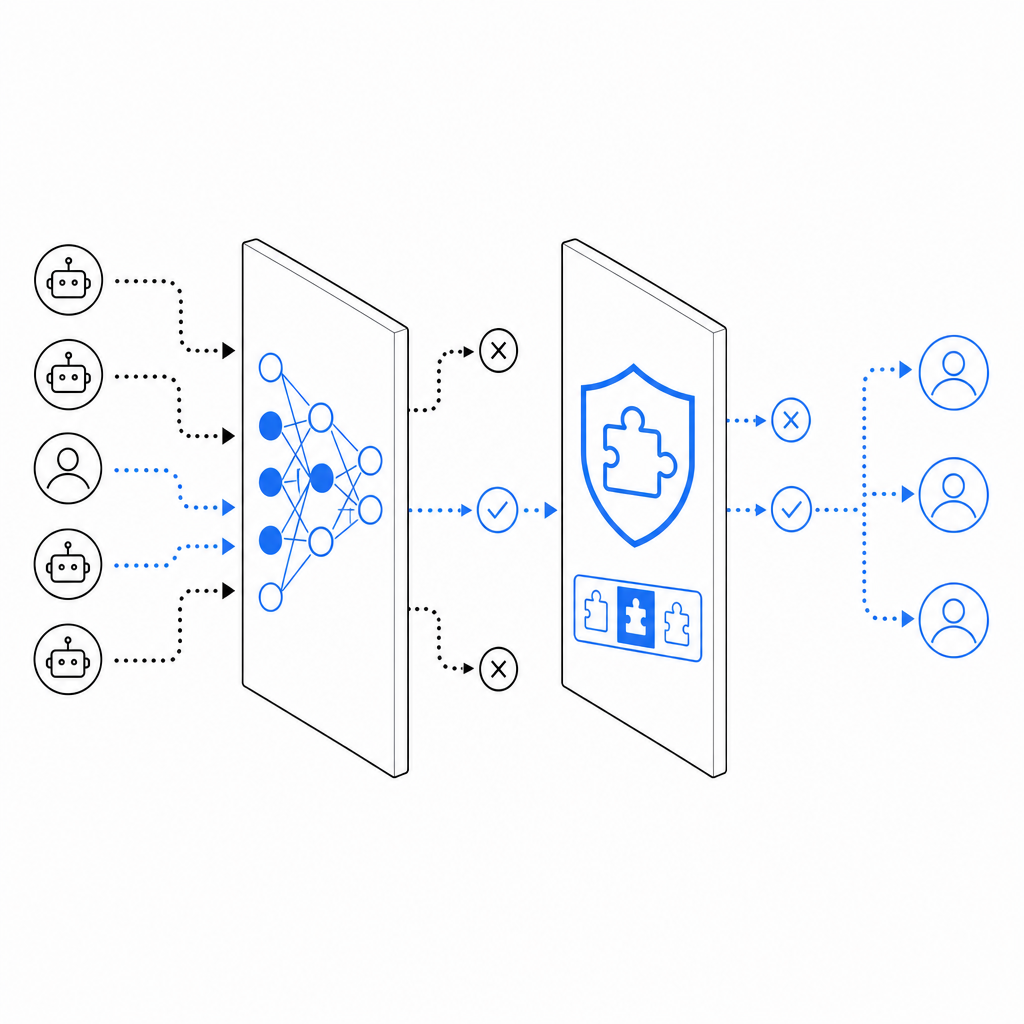
Integrating a CAPTCHA solution enriches your defense by filtering suspicious users who ML models mark as borderline or uncertain, reducing false positives and providing a tangible barrier to automated scripts.
How to Use Kaggle Insights to Improve Your Bot Defense
- Explore public datasets and kernels on Kaggle related to bot detection to understand common features and data patterns.
- Implement layered detection mechanisms combining ML models with CAPTCHA-based interaction checks to cover both detection and prevention.
- Validate bot detection decisions server-side using REST APIs like CaptchaLa’s validation endpoint:
POST https://apiv1.captcha.la/v1/validate
Headers: X-App-Key, X-App-Secret
Body: {
  "pass_token": "user_challenge_token",
  "client_ip": "user_ip_address"
}- Employ native SDKs to streamline integration across web and mobile platforms without sacrificing user experience.
- Continuously monitor and retrain models to adapt to evolving bot tactics informed by new Kaggle competition findings and real-world data.
Conclusion
Kaggle’s bot detection challenges provide a rich resource for building sophisticated machine learning classifiers focused on behavioral data and event sequences. However, the ultimate defense combines these automated signals with interactive bot-challenges like those offered by CaptchaLa, which supports multiple platforms and languages, and provides robust APIs for server-side verification. Exploring Kaggle’s shared datasets and notebooks helps refine detection models, while deploying CAPTCHAs mitigates risk in real user environments.
For a deeper dive into API usage, SDK integration, and pricing tiers, check out CaptchaLa's documentation and pricing.
Whether you're developing an academic project or bolstering enterprise-grade bot defenses, combining Kaggle insights with practical CAPTCHA safeguards offers a strong, multi-layered approach to keeping your platforms secure.