
Bot detection jobs focus on identifying, preventing, and mitigating automated threats that mimic human behavior online. Professionals in this area develop and maintain systems to distinguish legitimate users from malicious bots, protecting websites and apps from fraud, spam, scraping, and DDoS attacks. As automation and bot traffic continue to grow, expertise in bot detection is increasingly critical across industries, especially those operating SaaS platforms or e-commerce sites.
Understanding what bot detection jobs involve helps aspiring cybersecurity professionals prepare for this specialized role. This article covers core skills, common tools, job responsibilities, and how providers like CaptchaLa fit into the landscape alongside competitors such as reCAPTCHA, hCaptcha, and Cloudflare Turnstile.
What Do Bot Detection Jobs Entail?
At their core, bot detection roles require designing, deploying, and constantly improving mechanisms that differentiate humans from bots on digital platforms. These jobs typically include tasks such as:
- Implementing CAPTCHA challenges and invisible bot traps
- Analyzing traffic patterns to detect behavioral anomalies
- Integrating third-party and custom bot defense tools
- Monitoring system performance and false positive rates
- Responding to new bot attack vectors and evasion techniques
- Collaborating across teams (engineering, fraud, UX) to balance security and user experience
The goal is to maintain robust defenses that minimize friction for real users while stopping increasingly sophisticated bots. This requires both technical expertise and an analytical mindset.

Essential Skills for Bot Detection Professionals
To excel in bot detection jobs, candidates need a combination of technical abilities, security knowledge, and problem-solving skills. Here are the most relevant competencies:
Programming and Scripting: Proficiency in languages like JavaScript, Python, or Go for implementing detection logic and automations. Familiarity with front-end frameworks (React, Vue) is useful for embedding client-side protections, such as CaptchaLa’s SDKs.
Data Analysis & Machine Learning: Experience interpreting traffic logs, user behavior metrics, and training models to spot patterns indicative of bot activity.
Network Security Fundamentals: Understanding web protocols, HTTP headers, IP reputation, and rate limiting to identify anomalies at the network layer.
API Integration: Ability to work with bot defense services via APIs, such as calling CaptchaLa’s validation endpoint to verify user tokens and server-issued challenges.
Threat Intelligence Awareness: Keeping up-to-date on emerging bot evasion tactics and the ecosystem of automated tools.
UX & Accessibility Considerations: Ensuring security measures do not degrade legitimate user experience or exclude accessibility groups.
Popular Tools and Platforms Used in Bot Detection Jobs
Security practitioners rely on a blend of custom solutions and external platforms to tackle bot threats. Below is a comparative overview of several prominent bot defense SaaS providers and their capabilities:
| Feature/Provider | CaptchaLa | reCAPTCHA | hCaptcha | Cloudflare Turnstile |
|---|---|---|---|---|
| CAPTCHA Types | Interactive, invisible, server challenges | Image/audio, checkbox, invisible | Image challenges, machine learning | Invisible, privacy-focused |
| SDK Support | Web (JS/Vue/React), mobile (iOS/Android/Flutter), Electron | Web, Android, iOS | Web, mobile | Web only |
| API Validation | POST validate with app key/secret | Token-based verification | Token verification | Token validation |
| Pricing Model | Free tier 1000/month, Pro & Business tiers | Free with usage limits | Per solved CAPTCHA | Included with Cloudflare services |
| Privacy Level | First-party data only | Owned by Google | Focus on privacy | Emphasizes no tracking |
Each tool has strengths and trade-offs—CaptchaLa offers flexible SDK options and easy server-side token validation, while others may excel in global scale or widely recognized branding. Bot detection jobs often involve integrating multiple such services tailored to client needs.
The Technical Workflow in Bot Detection Roles
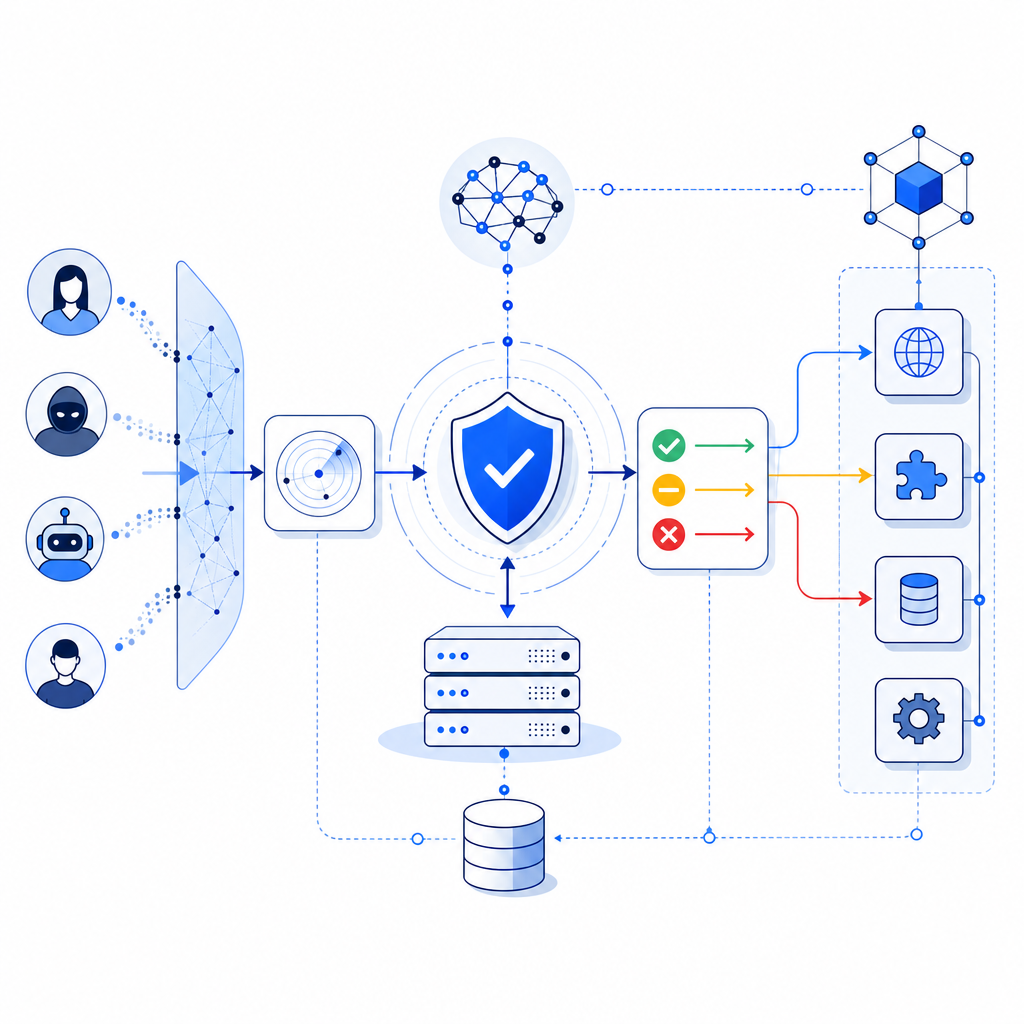
Here’s a general step-by-step process that someone working in bot detection might perform regularly:
Collect Traffic Data: Gather logs from web servers, API gateways, and client-side scripts capturing user interactions.
Pre-Process Input: Normalize and enrich data with context such as IP geolocation, device fingerprints, and session duration.
Apply Detection Logic: Run behavioral heuristics and ML models to assign bot likelihood scores.
Challenge or Block: Use tools like CaptchaLa to issue CAPTCHA challenges or other friction techniques to suspicious users.
Validate Responses: Send tokens from the user back to server endpoints (e.g., POST https://apiv1.captcha.la/v1/validate) for verification before granting access.
Analyze False Positives/Negatives: Tune detection parameters based on feedback and incident reports.
Stay Updated: Continuously monitor bot trends and update methods accordingly.
Career Outlook and Growth Opportunities
Bot detection is a growth area within cybersecurity, with roles often aligned under titles such as bot mitigation engineer, fraud analyst, security engineer, or application security specialist. Demand is particularly strong in sectors like e-commerce, online gaming, financial services, and SaaS platforms.
Entry points typically include general cybersecurity or web development experience, supplemented by knowledge of web protocols and automation tools. Certifications in security and data analysis can bolster prospects. Advanced roles may evolve into leadership positions managing bot defense strategy or broader threat intelligence teams.
Companies like CaptchaLa continue innovating with multilingual SDKs, native mobile libraries, and flexible API models that allow bot detection professionals to build tailored defenses at scale. Understanding these tools alongside competitor offerings is key for anyone pursuing bot detection jobs.
Bot detection roles combine technical depth with ongoing challenges posed by evolving malicious automation. For professionals interested in protecting digital experiences and combating abuse, it offers a dynamic, impactful career path.
Where to go next? For more details on implementing bot detection solutions, explore CaptchaLa’s documentation or check out their pricing plans tailored to different usage needs. Whether you’re building your first bot detection system or expanding an existing platform, understanding how SaaS tools fit into your security stack is essential for future success.