
Bot detection IDs in Cloudflare serve as unique identifiers that help distinguish between genuine human visitors and automated bots on websites using Cloudflare’s security services. These IDs are fundamental to enabling Cloudflare’s bot mitigation tools by tracking suspicious activity patterns across requests and triggering appropriate challenges or blocks. Understanding how these bot detection IDs function can clarify why some users get prompted with CAPTCHAs or other defenses, while others gain seamless access.
This post breaks down the concept of bot detection IDs in Cloudflare, how they compare to other bot defense mechanisms like CaptchaLa, reCAPTCHA, hCaptcha, and Cloudflare Turnstile, and technical insights into implementing bot detection based on these IDs.
What Are Bot Detection IDs in Cloudflare?
Bot detection IDs are essentially tokens or identifiers assigned to each visitor’s session or fingerprint to track their behavior over time. Cloudflare generates these IDs by analyzing HTTP headers, browser fingerprinting data, IP reputation, and interaction patterns. The goal is to create a probabilistic model that classifies visitors with a high likelihood of being bots.
Once an ID is assigned, Cloudflare’s systems can:
- Monitor activity consistency tied to that ID
- Apply rate limiting or challenge responses when anomalies arise
- Remember past threat signals and adjust risk scores dynamically
This helps Cloudflare reduce false positives while still stopping automated abuse effectively.
How Bot Detection IDs Feed into Cloudflare’s Bot Management
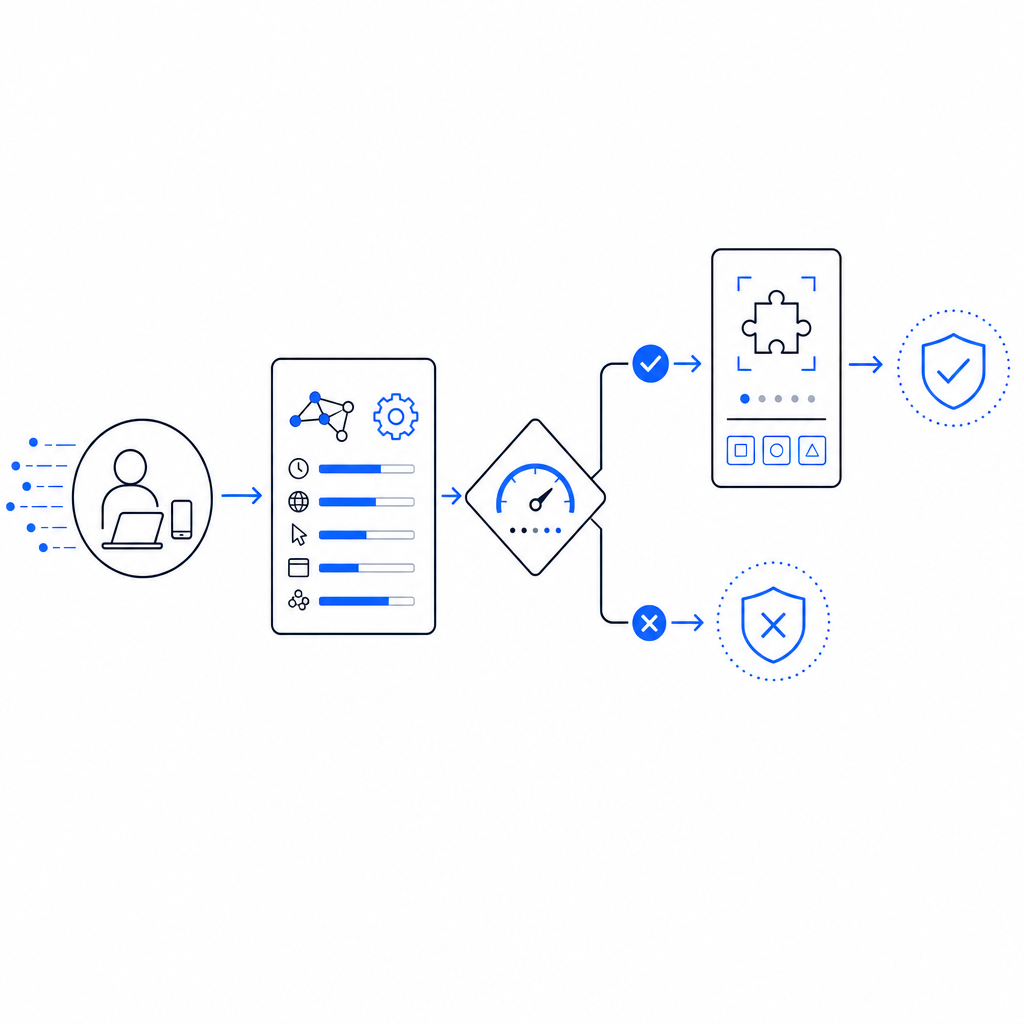
Cloudflare’s Bot Management employs machine learning models that take bot detection IDs as input features. For example, if an ID shows repeated suspicious request patterns such as:
- Excessively high request velocity
- Suspicious navigation paths
- Missing JavaScript or cookie compliance
the system escalates the visitor’s risk score and triggers mitigations such as CAPTCHA challenges or blocking.
Comparison: Cloudflare Bot Detection vs Other CAPTCHAs
| Feature | Cloudflare Bot Detection IDs | reCAPTCHA | hCaptcha | CaptchaLa | Cloudflare Turnstile |
|---|---|---|---|---|---|
| Identification Method | Behavioral analysis + fingerprinting | Challenge-response + risk analysis | Similar to reCAPTCHA but privacy-focused | First-party data with SDK support | Privacy-first CAPTCHA replacement |
| Deployment | Integrated into Cloudflare CDN and DNS | Google service; client-side & server-side | Third-party CAPTCHA service | Independent SaaS platform | Fully serverless, easy integration |
| Customizability | Limited to Cloudflare ecosystem | Moderate via API parameters | Moderate | Highly customizable SDKs (JS, iOS, Android) | Minimal customization |
| Data Privacy | Shares some data with Cloudflare | Google collects user data | HCaptcha emphasizes data privacy | First-party data only, no third-party sharing | Designed to reduce data footprints |
| Bot Mitigation Approach | ID tracking + ML risk scoring + challenge triggers | Score-based, fallback CAPTCHA challenges | Similar to reCAPTCHA | Token validation + bot challenges | No friction challenge, token-based |
This table highlights that Cloudflare’s bot detection IDs fit into a larger ecosystem of bot management powered by its CDN infrastructure. However, alternatives like CaptchaLa provide more flexibility with multiple native SDKs and strictly first-party data handling.
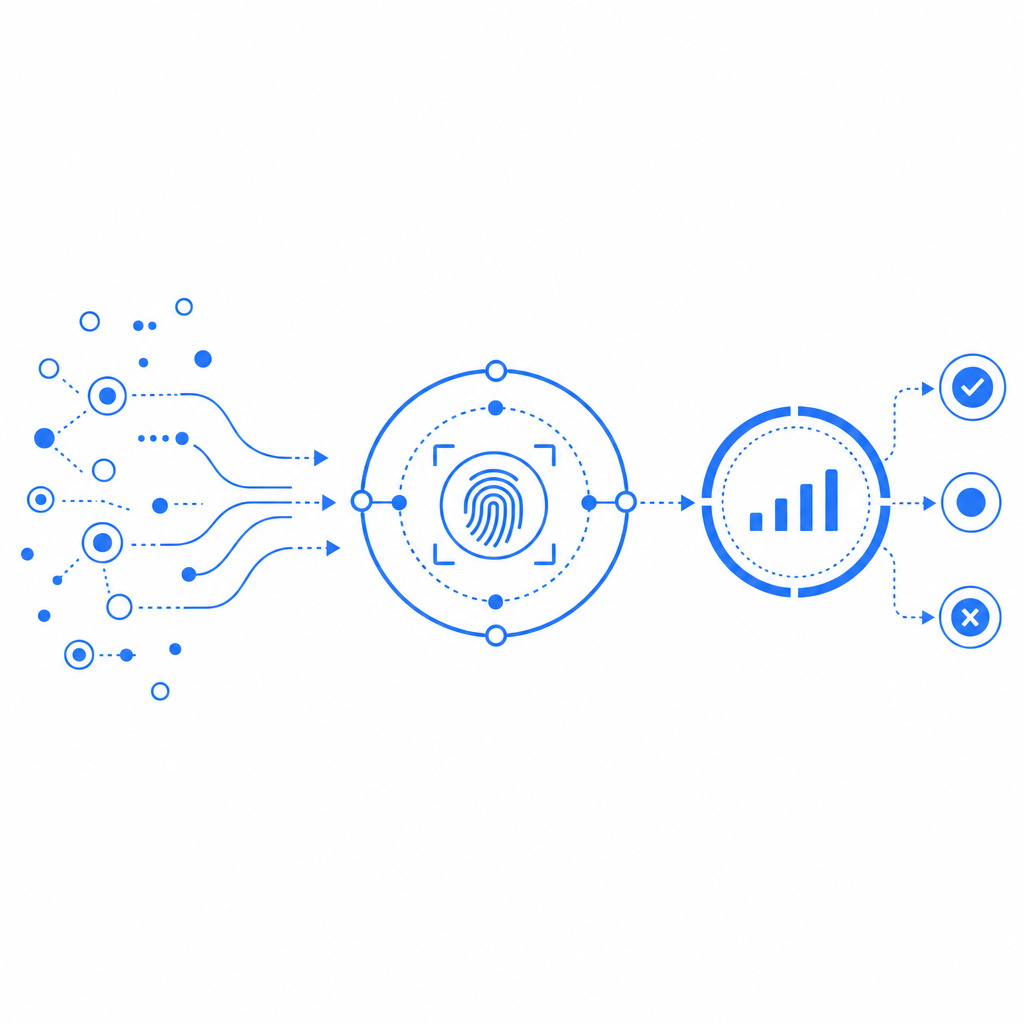
Technical Insights: How Bot Detection IDs Are Used Practically
For developers integrating bot detection into their workflows, understanding the technical flow behind bot detection IDs can be helpful. While Cloudflare handles ID assignment internally, here is a conceptual overview:
Visitor Request Arrives
Cloudflare examines every incoming request, extracting headers, cookies, user-agent, and IP information.Fingerprint Creation
A unique fingerprint or interim ID is generated based on collected data points (device attributes, network info).Behavior Monitoring
Requests associated with the fingerprint/ID are monitored for velocity, navigation logic, and JavaScript cookie presence.Risk Scoring
ML models score the bot detection ID's activity for abnormalities.Challenge Issuance or Allowance
If the score exceeds thresholds, challenges like CAPTCHA or JavaScript challenges are triggered for that ID.Validation and Adaptation
Responses to challenges feed back into risk scoring, refining future decisions on the ID's trustworthiness.
For developers seeking alternatives with more direct control, platforms like CaptchaLa provide first-party validations via SDKs and APIs. For example, CaptchaLa’s server-side validation uses a simple POST request with tokens and IP addresses to confirm if a response came from a legitimate human.
Here is a simplified example of validating a CAPTCHA token with CaptchaLa server SDK:
// Node.js example for token validation with CaptchaLa API
const axios = require('axios');

async function validateToken(passToken, clientIp) {
  try {
    const response = await axios.post('https://apiv1.captcha.la/v1/validate', {
      pass_token: passToken,
      client_ip: clientIp
    }, {
      headers: {
        'X-App-Key': 'YOUR_APP_KEY',
        'X-App-Secret': 'YOUR_APP_SECRET'
      }
    });
    return response.data.success;
  } catch (error) {
    console.error('Validation error:', error);
    return false;
  }
}
This explicit server-side validation contrasts with Cloudflare’s entirely managed bot detection ID system, giving website operators greater transparency and control.
Benefits and Limitations of Using Cloudflare Bot Detection IDs
Benefits
- Seamless Integration: Works out-of-the-box for websites behind Cloudflare CDN with minimal setup.
- Adaptive Learning: Uses machine intelligence that improves over time with global data.
- Low Friction User Experience: Challenges only trigger under suspicious conditions, maintaining convenience.
- Global Scale: Cloudflare’s global network provides comprehensive bot data across billions of requests.
Limitations
- Opaque Logic: Bot detection ID generation and scoring are internal, limiting customization.
- Cloudflare Dependency: Only available to websites using Cloudflare’s services.
- Privacy Concerns: Some organizations may prefer fully first-party solutions without data shared outside their control.
- Challenge Types: Challenge options are limited compared to specialized CAPTCHA providers.
Choosing the Right Bot Detection Approach
Deciding between Cloudflare’s bot detection IDs and other CAPTCHA/bot defense solutions depends on your website’s current tech stack, control preferences, and privacy posture.
- If you already use Cloudflare’s edge services and want a low-management setup, their bot detection IDs provide an effective shield against bots without additional coding or infrastructure.
- If privacy and data control are higher priorities, or you want SDKs supporting mobile and desktop apps, exploring alternatives like CaptchaLa (with native SDKs for Web, iOS, Android, Flutter, and Electron) may be beneficial.
- For sites seeking minimal friction CAPTCHAs, Cloudflare Turnstile offers a privacy-first, serverless challenge system with no user interaction often required.
- Established options like reCAPTCHA and hCaptcha remain popular for general use but bring different trade-offs in user experience and privacy.
Conclusion
Bot detection IDs in Cloudflare are a foundational piece of their bot mitigation ecosystem, enabling effective tracking and determination of malicious traffic. They provide a mostly hands-off, integrated solution for websites protected by Cloudflare but come with trade-offs in customization and data transparency.
For teams that want more agency or advanced SDK support across platforms, first-party CAPTCHA and bot-defense services like CaptchaLa present a compelling alternative that supports multiple UI languages and direct API integrations. Understanding the role and application of bot detection IDs allows developers and security teams to choose the right tools for defending their online assets against bots.
To learn more about bot defense options, SDK integration, or pricing plans, visit CaptchaLa pricing or explore comprehensive documentation. These resources can help you align bot mitigation strategies with your project goals and technological requirements.