
Facebook’s vast network faces constant threats from automated bots that spread spam, fake accounts, and malicious activity. Bot detection on Facebook is about reliably identifying and blocking these automated accounts while ensuring legitimate users can interact smoothly. Achieving this balance involves sophisticated behavioral analysis, CAPTCHA challenges, and risk-based authentication.
This post explores core approaches Facebook uses for bot detection, how they compare to common bot defense solutions like reCAPTCHA, hCaptcha, Cloudflare Turnstile, and how independent platforms such as CaptchaLa fit into the larger bot mitigation ecosystem.
How Facebook Detects Bots: Core Techniques
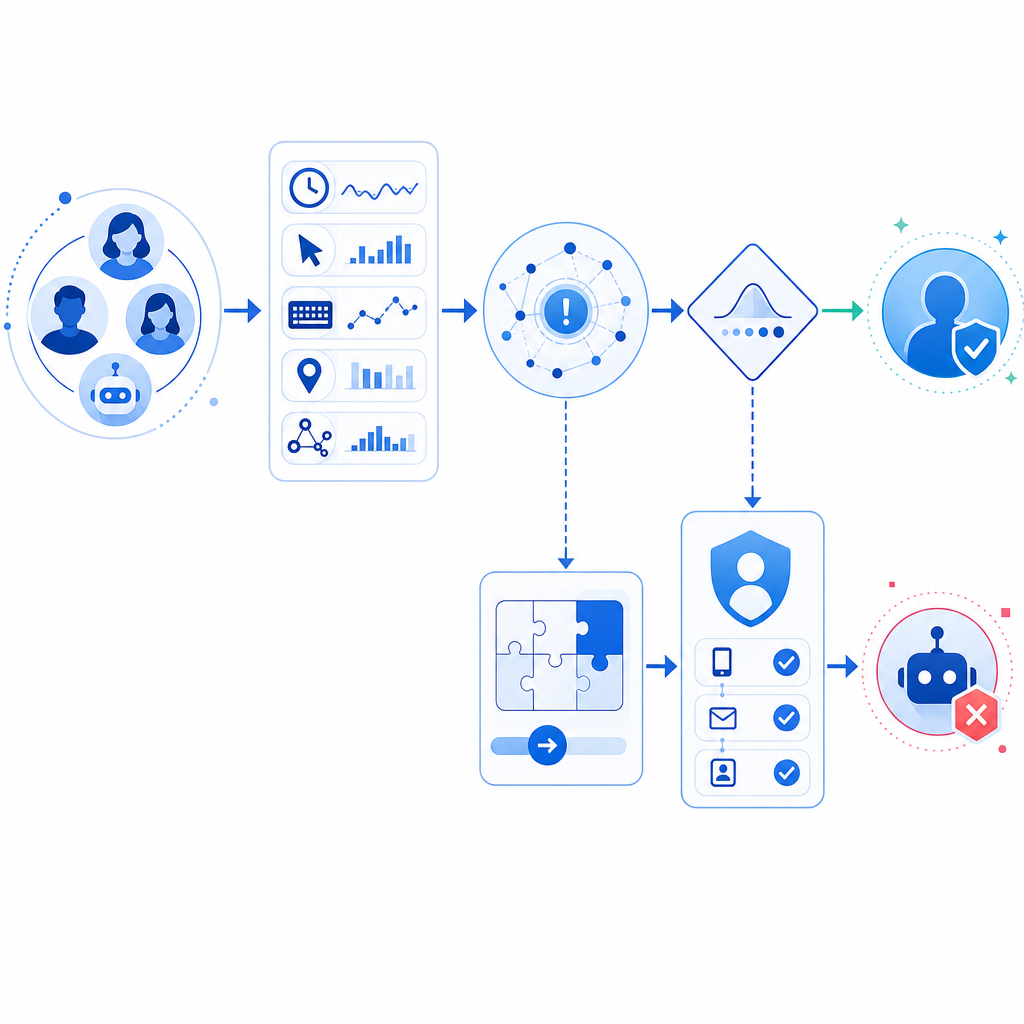
Facebook draws on multiple overlapping strategies to detect automated accounts:
1. Behavioral Analysis & Machine Learning
Rather than relying solely on static checks, Facebook continuously analyzes user behaviors such as:
- Posting frequency and patterns
- Friend request sending speed and volume
- Interaction with suspicious URLs or pages
- Device and IP address anomalies
Sophisticated machine learning models evaluate these signals in real time to flag suspicious accounts for further review or challenge. This dynamic approach allows Facebook to adapt to evolving bot tactics.
2. CAPTCHA Challenges & Human Verification
When automated patterns are detected or when accounts exhibit abnormal activities, Facebook deploys CAPTCHAs or similar tests to confirm a user is human. These tests may include:
- Image recognition tasks
- Text distortion decoding
- Puzzle-solving challenges
This helps filter out bots at critical interaction points while keeping disruption minimal for genuine users.
3. Phone and Email Verification
Bots often use disposable or stolen credentials. Facebook combats this by enforcing multi-factor verifications like:
- Confirming mobile phone numbers via SMS
- Requiring email address validation
- Using additional identity confirmation for suspicious logins
4. IP & Device Fingerprinting
Facebook tracks IP reputation, geo-location consistency, and device fingerprinting data to detect patterns linked to automation or mass account creation. Unknown or high-risk sources trigger additional scrutiny.
Common Bot Detection Tools Compared
| Feature | reCAPTCHA | hCaptcha | Cloudflare Turnstile | CaptchaLa |
|---|---|---|---|---|
| Challenge Types | Image/text puzzles | Image/text puzzles | Invisible/no CAPTCHA | Customizable challenge |
| Privacy Focus | Google data | Privacy-focused | No CAPTCHA, invisible | First-party data only |
| SDK Platforms | Web, Mobile | Web, Mobile | Web | Web, Mobile, Desktop |
| Price Model | Free + paid plans | Free + paid plans | Free | Free tier + paid plans |
| Multi-language Support | Limited | Extensive | Limited | 8 UI languages |
| Customization | Low | Medium | Low | High |
Facebook’s challenges resemble reCAPTCHA in actively engaging users when suspicious behavior is detected, but Facebook leverages massive proprietary data and machine learning uniquely tailored to its platform’s scale. Meanwhile, independent providers like CaptchaLa provide flexible, privacy-conscious options for other businesses seeking bot detection without Google’s ecosystem dependencies.
Integrating CaptchaLa for Bot Defense Beyond Facebook
While Facebook builds comprehensive internal systems, many websites and apps need practical, developer-friendly bot detection to defend against automated abuse. CaptchaLa offers:
- Native SDKs for Web (including React, Vue), iOS, Android, Flutter, and Electron
- Server validations via straightforward APIs with secure token postbacks
- Multi-language UI supporting global audiences
- A free tier sufficient for smaller sites, with scalable paid plans
Developers can deploy CaptchaLa with minimal friction to challenge suspicious clients and reduce bot-driven fraud or spam. Its reliance on first-party data enhances privacy and lowers false positives compared to externally powered solutions.
Here’s an example of server-side validation with CaptchaLa’s API:
# Example Python pseudocode for server validation
import requests

def validate_token(pass_token, client_ip, app_key, app_secret):
    url = 'https://apiv1.captcha.la/v1/validate'
    headers = {'X-App-Key': app_key, 'X-App-Secret': app_secret}
    data = {'pass_token': pass_token, 'client_ip': client_ip}

    response = requests.post(url, json=data, headers=headers)
    result = response.json()

    if result.get('success'):
        return True
    else:
        return False
Best Practices for Bot Detection on Facebook and Beyond
Employing strong bot detection requires a layered strategy:
- Leverage Behavioral Analytics: Continuous monitoring to identify suspicious activity patterns before issuing challenges.
- Use Adaptive Challenges: Deploy CAPTCHAs or step-up verification only when risk is detected to minimize friction.
- Enhance Identity Verification: Back CAPTCHA with email, phone, or even biometric checks where appropriate.
- Monitor IP and Device Data: Watch for proxies, VPN use, or device spoofing.
- Keep Up With Bot Evolution: Update models and challenge types as attackers adapt.
Facebook’s approach reflects these principles at immense scale, but smaller sites can implement simpler versions using tools like CaptchaLa or the well-known reCAPTCHA and hCaptcha. When privacy is a concern, CaptchaLa’s first-party data model can be an appealing alternative.

Conclusion
Bot detection on Facebook blends behavioral analytics, CAPTCHA challenges, identity verification, and device fingerprinting to keep automated abuse in check. Comparable tools exist in the market, each balancing usability, privacy, and security differently. Independent platforms like CaptchaLa offer versatile options for companies needing flexible and privacy-conscious bot defense.
For developers seeking to strengthen their bot mitigation strategy beyond Facebook’s ecosystem, reviewing bot detection options—including API easy integration and SDK availability—helps choose the right fit for their user base and threat model.
If you want to explore how CaptchaLa can fit your project’s bot defense needs, check out our documentation for implementation guides or review our pricing plans to find a suitable tier. Robust bot detection doesn’t have to be complicated—start protecting your users today.