
A bot detection check is a technical process a website or app uses to determine if incoming traffic originates from a human user or an automated program (bot). This check is critical because bots can perform malicious activities such as credential stuffing, spam, scraping sensitive data, or launching denial-of-service attacks. Implementing an effective bot detection check prevents unauthorized bot access while maintaining a smooth user experience for legitimate visitors.
What Is a Bot Detection Check and How Does It Work?
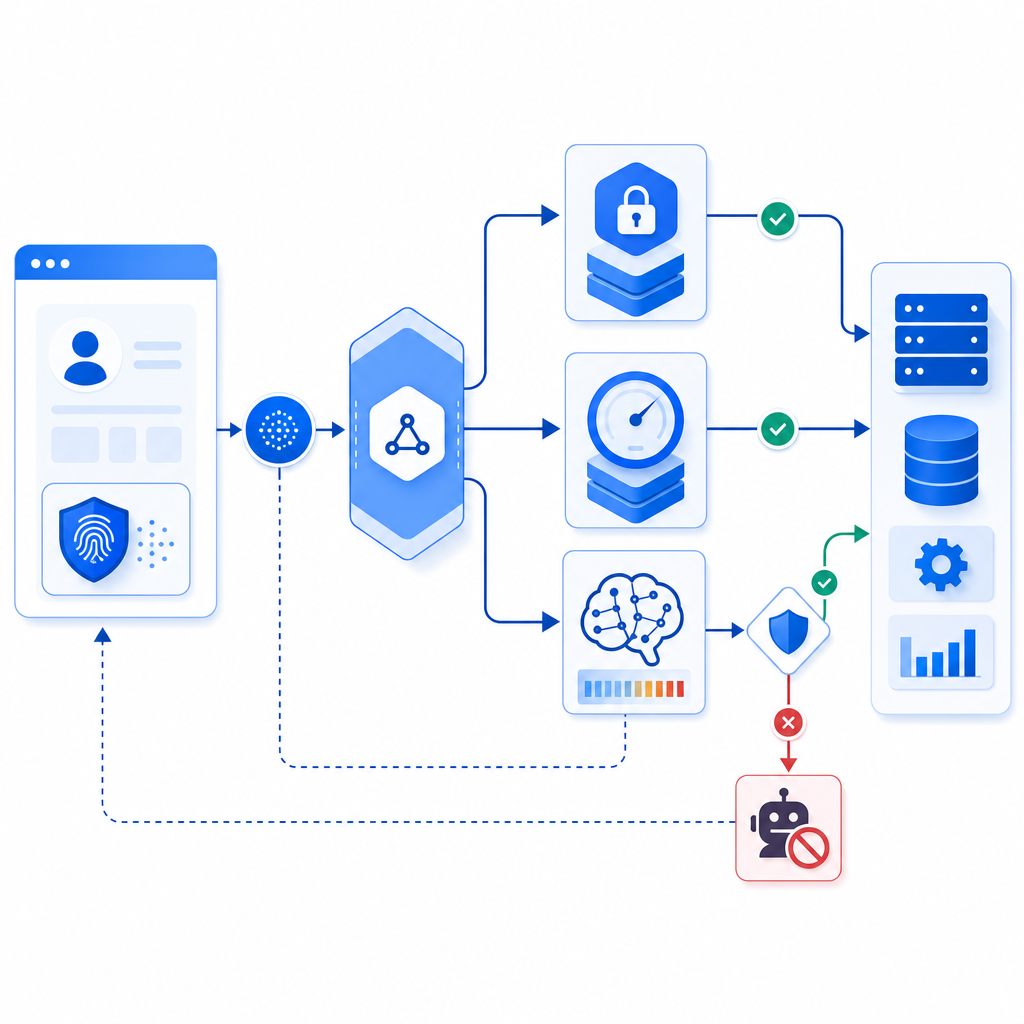
At its core, a bot detection check involves analyzing requests to your website to distinguish bots from humans. This can include:
- Behavioral analysis: Examining mouse movements, keystroke patterns, or time spent on page that bots can’t easily mimic.
- Challenge-response tests: Presenting CAPTCHAs or puzzles that humans can solve but bots typically cannot.
- Network heuristics: Checking IP reputation, request rate limits, and other network signals.
- Fingerprinting: Using browser fingerprint data such as user-agent, screen resolution, and plugin information to detect suspicious or automated clients.
When a request is flagged as potentially bot-generated, the system can challenge the user with a CAPTCHA or block the request entirely.
Popular Methods of Bot Detection Checks
1. CAPTCHAs
CAPTCHAs remain a widely used form of bot detection. They require users to complete a task—like identifying images, solving a puzzle, or typing distorted characters—to prove they are human. Popular CAPTCHAs come from providers like Google's reCAPTCHA, hCaptcha, and CaptchaLa. Each offers unique challenge types and integration options.
2. JavaScript-Based Behavioral Analysis
Advanced bot detection uses JavaScript to monitor user interaction patterns invisibly. For example, analyzing mouse movement randomness or speed to detect automated scripts. These checks happen seamlessly without interrupting user flow.
3. Device and Browser Fingerprinting
Collecting detailed device and browser attributes creates a fingerprint unique or suspicious enough to classify traffic as bot-driven or human. Fingerprinting techniques help catch sophisticated bots that try to mimic human behavior.
4. Rate Limiting and IP Reputation
By tracking request rates from specific IP addresses and cross-referencing threat intelligence databases, websites can block or throttle traffic from known bad actors or botnets.
Comparing Leading CAPTCHA and Bot Detection Services
| Feature | CaptchaLa | reCAPTCHA (Google) | hCaptcha | Cloudflare Turnstile |
|---|---|---|---|---|
| Challenge Types | Image, puzzle, invisible, slider | Image, checkbox, invisible | Image, checkbox, invisible | Invisible, frictionless |
| Data Privacy | First-party data only | Uses Google data | Privacy-focused alternative | First-party, integrated CDN |
| SDK Platforms | Web, iOS, Android, Flutter, Electron | Web, iOS (limited) | Web, mobile | Web, integrated on network |
| API Validation | Yes (POST /validate) | Yes | Yes | Yes |
| Free Tier | 1000/mo free tier | Free tier | Free tier | Free tier |
| Pricing | Scales to 1M requests | Free for most use | Pay-per-use | Included with Cloudflare plans |
Unlike some competitors, CaptchaLa provides native SDKs for a broad range of platforms—including Flutter and Electron—plus server SDKs such as captchala-php and captchala-go for easy backend validation. Its privacy model focuses on first-party data only, appealing to privacy-conscious applications.

Implementing a Bot Detection Check with CaptchaLa
Integrating a bot detection check does not have to be complicated. Here’s how you might implement a CAPTCHA challenge and validate it server-side with CaptchaLa:
// Pseudocode for client-side token generation after user solves a CAPTCHA
function onCaptchaSolved(passToken) {
  // Send token to server for validation
  fetch('/validate-token', {
    method: 'POST',
    headers: { 'Content-Type': 'application/json' },
    body: JSON.stringify({ pass_token: passToken, client_ip: userIP })
  })
  .then(res => res.json())
  .then(data => {
    if (data.success) {
      // Proceed with user request
    } else {
      // Show error or block access
    }
  })
}
On the server side (in PHP, Go, etc.), you would forward the token to the official validation endpoint:
POST https://apiv1.captcha.la/v1/validate
Headers:
  X-App-Key: your-app-key
  X-App-Secret: your-app-secret

Body:
{
  "pass_token": "token-from-client",
  "client_ip": "user's IP address"
}
The response will indicate whether the token is valid and the user is verified.
Technical Considerations for Effective Bot Detection
- Latency: Choose solutions with low verification latency to avoid adding noticeable delays.
- False Positives: Balance strictness so real users don’t get blocked unnecessarily.
- Accessibility: Provide multiple verification methods for accessibility compliance.
- Localization: CaptchaLa supports 8 UI languages, helping global users complete checks easily.
- Scalability: Ensure the bot detection check can scale with your traffic needs—all CaptchaLa plans support dramatic scaling, including a free tier.
Why Bot Detection Checks Matter Beyond Blocking Bots
While the immediate goal is to stop bots, effective bot detection checks improve overall security and performance:
- Protect user data by blocking automated scraping and credential stuffing.
- Maintain resource availability by mitigating bot-based DDoS attacks or excessive scraping.
- Improve analytics accuracy by filtering out bot traffic.
- Enhance user experience by preventing spam and abuse that degrade trust.
Choosing the right balance of detection and verification technologies, such as CaptchaLa’s flexible SDKs and API-driven validation, helps deliver this protection with minimal user friction.
Conclusion: Building Smarter Defenses with a Bot Detection Check
A bot detection check is a foundational tool for any site or application that wants to ensure only legitimate human traffic interacts with its services. Evaluating options like CaptchaLa, reCAPTCHA, hCaptcha, and Cloudflare Turnstile helps you find the right mix of security, privacy, and user experience.
If you want to experiment with integrating bot detection checks today, CaptchaLa’s documentation offers comprehensive guidance, and its modular SDKs support fast deployment across web and native platforms. With a free tier to get started and scalable pricing for growth, it’s worth examining how these manageable, API-driven checks can improve your site’s resilience.
Where to go next? Learn more about CaptchaLa features and plans by visiting their pricing page or dive into detailed developer resources on the docs site. Reliable bot defense is a key step in safeguarding digital experiences.