
A bot detection API is a tool that helps websites and applications identify whether incoming traffic is from a human or an automated program (bot). These APIs analyze user behavior, request patterns, and other signals to distinguish legitimate users from malicious bots that may scrape content, perform credential stuffing, or launch denial-of-service attacks. By integrating a bot detection API, online services can block or challenge suspicious activity automatically, reducing fraud, spam, and resource abuse without impacting legitimate users’ experience.
What Does a Bot Detection API Do?
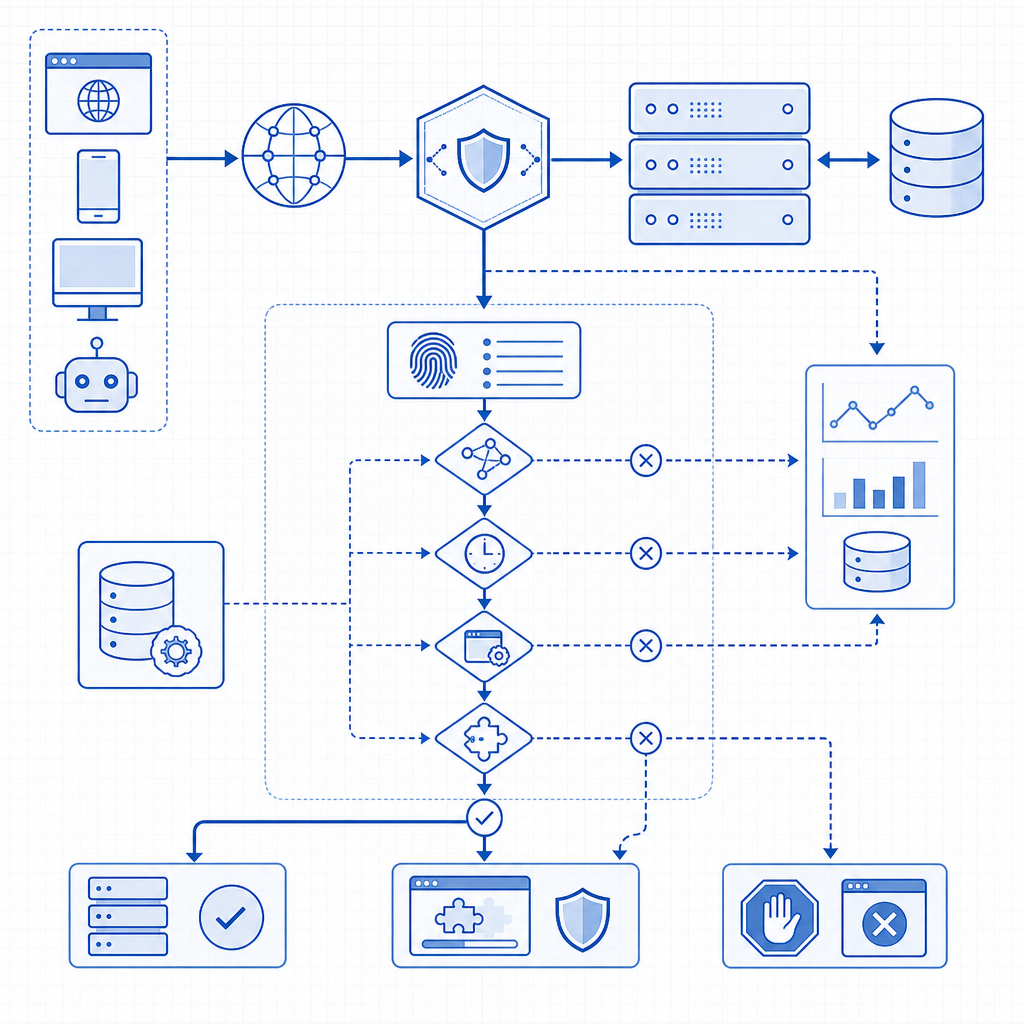
At its core, a bot detection API provides a real-time verification mechanism to filter out automated traffic. When a user interacts with a protected site or app, the API assesses the request and returns a verdict—typically a token or score—that indicates whether the actor is likely human. This verification step can trigger additional challenges (like CAPTCHAs) or block the request outright.
Key functions include:
- Monitoring interaction patterns such as typing speed, mouse movements, and navigation paths
- Analyzing request headers, IP reputation, and rate limits
- Issuing challenge tokens for suspicious cases
- Reporting analytics on detected bots and false positives
Most bot detection APIs work by combining passive monitoring with active challenges to minimize disruption for real users while effectively stopping bad bots.
Integration and Technical Features
When choosing and integrating a bot detection API, developers should consider the following technical specifics:
SDK Language Support
APIs like CaptchaLa offer native SDKs for JavaScript frameworks (Vue, React), mobile platforms (iOS, Android, Flutter), and Electron apps. This broad coverage simplifies deployment across different frontend environments.Server-Side Validation
After a client completes a challenge, your backend server can verify the token with a secure POST request to endpoints likehttps://apiv1.captcha.la/v1/validate, supplying parameters such aspass_tokenandclient_ip. Header authentication usingX-App-KeyandX-App-Secretensures requests are from authorized sources.Server Token Usage
For dynamic challenge issuance, APIs provide endpoints such ashttps://apiv1.captcha.la/v1/server/challenge/issuethat return fresh tokens, preventing reuse and replay attacks.Lightweight Loaders
Loading scripts such ashttps://cdn.captcha-cdn.net/captchala-loader.jskeep frontend impact minimal and improve performance.
Comparison Table: CaptchaLa vs. Competitors
| Feature | CaptchaLa | reCAPTCHA | hCaptcha | Cloudflare Turnstile |
|---|---|---|---|---|
| SDKs | Web (JS/Vue/React), iOS, Android, Flutter, Electron | Web-focused (JS) | Web + Mobile | Web-focused (JS) |
| Languages Supported | 8 UI languages | 30+ languages | Multiple languages | Multiple languages |
| Server Validation API | Yes, with secure keys | Yes | Yes | Limited documentation |
| Pricing | Free tier (1,000/mo), scalable | Free with usage limits | Free + pay-per-use | Free tier available |
| First-party data usage | Yes | No | No | No |
| Challenge Types | Customizable challenges | Checkbox, Invisible CAPTCHA | Custom challenges | Invisible, privacy-focused |
Why Use a Bot Detection API Over Manual Filtering?
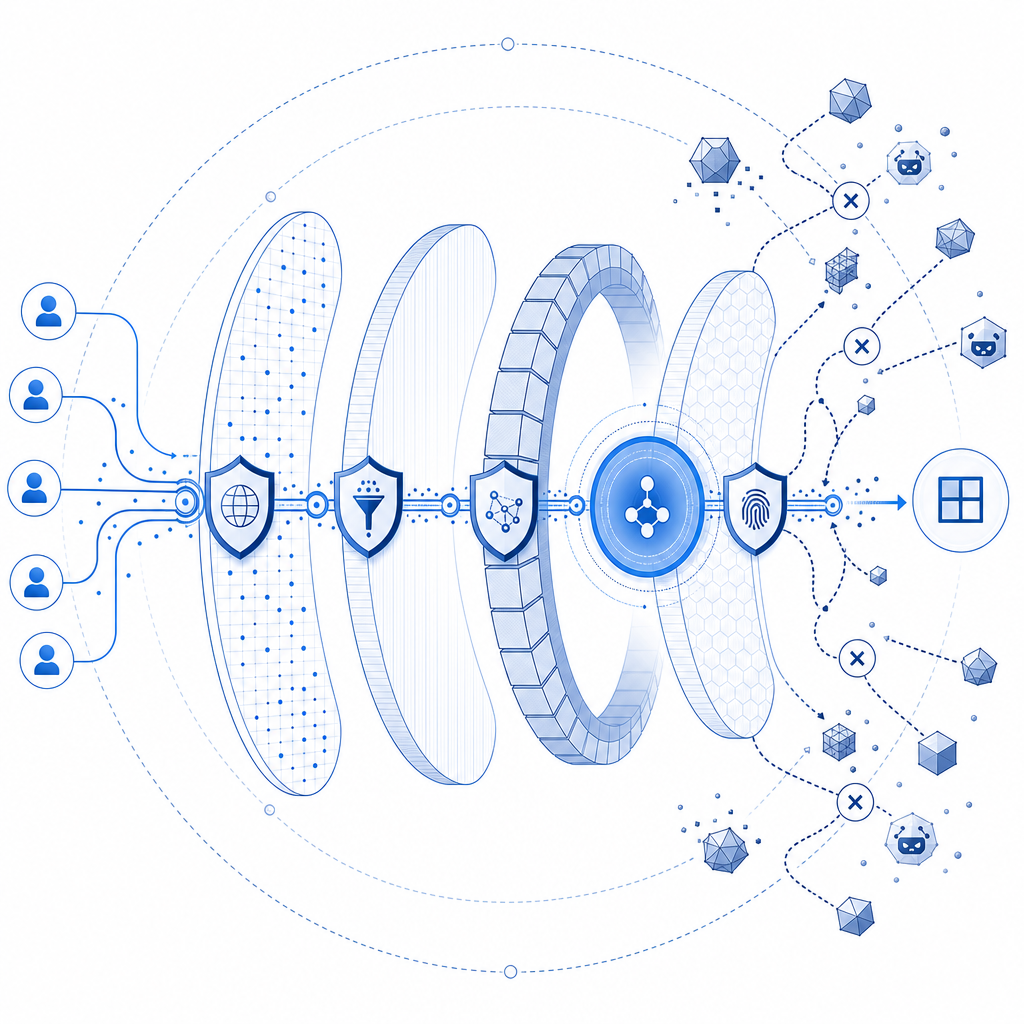
Manual methods such as IP blacklisting or basic rate limiting cannot handle sophisticated bots that mimic human behavior or use distributed networks. Bot detection APIs utilize machine learning and heuristic techniques to adapt to evolving bot tactics, providing:
- Adaptive defenses: They learn over time, tracking new bot signatures and behaviors.
- Reduced false positives: Friendly users rarely face interruptions compared to blanket blocks.
- Automation: Continuous scanning saves security teams from constantly updating blocklists.
Challenges and Best Practices That Matter
Deploying a bot detection API effectively involves more than flipping a switch. Consider these aspects:
- Privacy and Compliance: Some detection methods analyze behavioral biometrics or device fingerprints. Review what personal data is collected and ensure compliance with regulations like GDPR. CaptchaLa focuses on first-party data to address privacy concerns.
- User Experience: Balance protection with usability. Invisible or lightweight challenges help retain legitimate users rather than annoying them with constant CAPTCHA puzzles.
- Integration Complexity: Check that SDKs and server APIs work smoothly with your tech stack and CI/CD processes.
- Monitoring and Analytics: Use the API’s reporting tools to tune detection parameters and investigate suspicious traffic sources.
How CaptchaLa Fits Into Your Bot Defense Strategy
CaptchaLa offers a comprehensive bot detection API designed for versatile integration and international audiences. With support for 8 UI languages and extensive SDK coverage—including Maven, CocoaPods, and pub.dev packages—CaptchaLa can easily fit into web and mobile projects.
Its backend validation endpoints provide secure token verification, helping prevent token replay and spoofing. The service leverages only first-party data to enhance user privacy, a growing priority for compliance-conscious organizations.
Developers can explore CaptchaLa’s documentation for detailed guides and sample code to speed up integration.
Conclusion
A bot detection API is an essential tool to protect your online assets from automated abuse while maintaining a smooth user experience. Whether you select CaptchaLa, reCAPTCHA, hCaptcha, or Cloudflare Turnstile, understanding your needs around SDK compatibility, privacy, and scalability is crucial.
For companies wanting transparent pricing and flexible usage tiers, CaptchaLa’s pricing offers options from free to enterprise levels. The first step to safer digital interactions begins with integrating a reliable bot detection API.
Where to go next? Check out the CaptchaLa docs for implementation details or explore their plans on the pricing page to find a fit for your project.