
Bot detection AI automatically identifies and stops bots from abusing websites and applications. Unlike simple CAPTCHAs or static rule-based systems, bot detection AI leverages machine learning models and behavioral analysis to distinguish malicious automation from genuine human users with higher accuracy and lower friction. This allows businesses to protect user experiences, prevent fraud, and maintain site performance even as automated threats become more sophisticated.
In this article, we’ll examine what bot detection AI is, how it works, and how it compares to other bot mitigation approaches, including solutions like CaptchaLa, reCAPTCHA, hCaptcha, and Cloudflare Turnstile.
What Is Bot Detection AI?
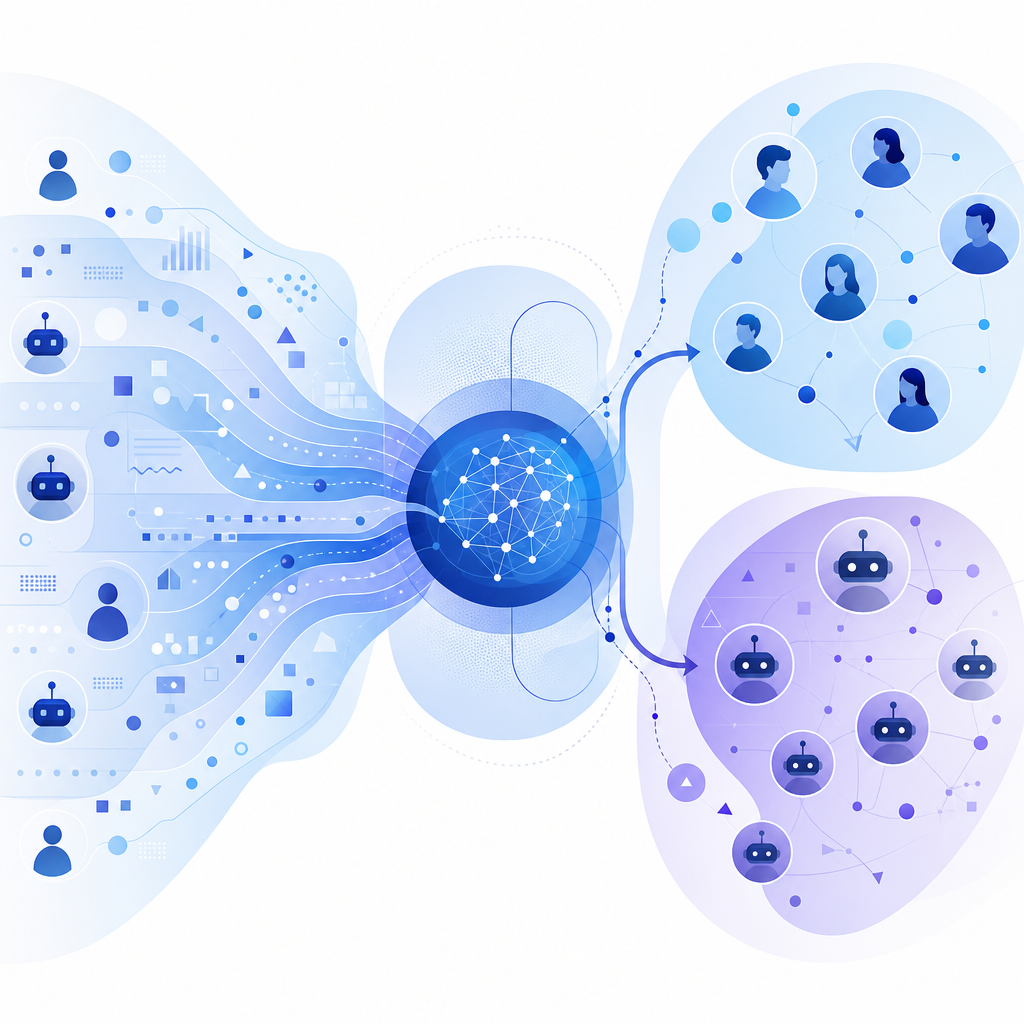
Bot detection AI refers to the use of artificial intelligence—typically machine learning algorithms—that analyze a wide range of signals and data points to identify automated scripts or software bots. These bots range from benign web crawlers to malicious scrapers, spammers, credential stuffing attacks, scalpers, and more.
Traditional bot defense methods rely on challenge-response tests like CAPTCHAs, IP blacklists, or simple heuristics (e.g., monitoring request rates). While these methods can catch many bots, they often generate friction for users or fail against more sophisticated operators that mimic human behavior.
Bot detection AI improves on this by:
- Collecting first-party behavioral data such as mouse movements, keystroke dynamics, browser environment, and interaction timing
- Training models to spot abnormalities or patterns indicative of automated activity
- Adapting continuously as attackers change tactics
This results in more accurate bot classification with fewer false positives and less user disruption.
How Bot Detection AI Works: Key Techniques
Behavioral Analysis and Anomaly Detection
At the core of bot detection AI is behavioral analytics—examining how users interact with a site in real-time. For instance, humans have natural, non-linear cursor movements and varying typing speeds, while bots often perform rapid, perfectly timed actions.
AI models analyze large volumes of interaction data, flagging anomalies that deviate from typical human patterns. These might include:
- Excessive request frequency
- Unusual mouse patterns or robotic scrolling
- Suspicious browser fingerprint inconsistencies
Device and Network Fingerprinting
Bot detection AI also employs fingerprinting techniques—collecting details such as device type, screen resolution, installed fonts, and IP reputation. AI can weigh these signals collectively to generate a risk score rather than relying on any single attribute.
Continuous Learning from First-Party Data
Solutions like CaptchaLa utilize only first-party data collected directly from their client integrations. This continuous stream of fresh, relevant data trains models to evolve alongside attacker techniques without compromising user privacy.
Multi-Layered Defense with Adaptive Challenges
In many deployments, bot detection AI acts as a risk engine that triggers secondary defenses, such as adaptive CAPTCHA challenges or progressive delays, only when suspicious activity is detected. This layered approach balances security with usability.
Comparing Popular Bot Detection Solutions
Here’s an objective look at some widely used bot detection and CAPTCHA providers, highlighting AI capabilities and developer features:
| Feature | CaptchaLa | Google reCAPTCHA | hCaptcha | Cloudflare Turnstile |
|---|---|---|---|---|
| AI-Based Bot Detection | Yes, with first-party data and adaptive challenges | Yes, with risk analysis and behavior signals | Yes, employs ML risk scoring | Yes, focuses on frictionless user verification |
| Supported SDKs | Web (JS, Vue, React), iOS, Android, Flutter, Electron | Web, mobile SDKs available | Web, mobile SDKs available | Web-focused |
| Privacy | First-party data only, privacy conscious | Google ecosystem collects metadata | Privacy-focused interface | Data handled via Cloudflare network |
| Pricing | Free tier 1,000 requests/mo, Pro tiers | Free with thresholds, enterprise paid | Pricing based on CAPTCHA volume | Free with Cloudflare plans |
| Challenge Types | Invisible, interactive CAPTCHAs, adaptive | Invisible, reCAPTCHA v3, V2 Checkbox | Traditional CAPTCHAs, invisible, audio | Invisible, minimal friction CAPTCHA |
Each solution offers AI-driven detection but differs on integrations, privacy stance, and flexibility. For developers valuing privacy and multi-platform support, CaptchaLa presents an appealing option that combines AI detection with native SDKs for web and mobile.
Implementing Bot Detection AI: Technical Overview
For teams building bot detection into their stack, here are some practical technical specifics:
Client-Side Integration:
Use native SDKs or JavaScript loaders like CaptchaLa’s loader to collect interaction data and issue challenges seamlessly.Server-Side Validation:
Validate tokens with API endpoints (e.g., POST https://apiv1.captcha.la/v1/validate), sending pass tokens and client IPs along with secure authentication headers (X-App-Key,X-App-Secret).Challenge Issuance:
Optionally, issue server-side challenges through endpoints like/v1/server/challenge/issuewhen higher risk is detected, adding an adaptive layer.Monitoring and Analytics:
Track bot detection metrics and user experience impacts continuously to fine-tune thresholds and detection models.
Example pseudo-code for validating a bot detection token:
// Pseudocode: Validate CAPTCHA token on backend
const validateCaptcha = async (passToken, clientIp) => {
  const response = await fetch('https://apiv1.captcha.la/v1/validate', {
    method: 'POST',
    headers: {
      'Content-Type': 'application/json',
      'X-App-Key': process.env.CAPTCHA_APP_KEY,
      'X-App-Secret': process.env.CAPTCHA_APP_SECRET,
    },
    body: JSON.stringify({ pass_token: passToken, client_ip: clientIp }),
  });
  const result = await response.json();
  return result.success; // true if verified, false otherwise
};
By integrating bot detection AI like this, sites can filter out automated abuse while preserving smooth workflows for human users.

Challenges and Considerations with Bot Detection AI
While AI brings clear advantages, there are challenges to keep in mind:
- False Positives/Negatives: No model is perfect; tuning thresholds and combining multiple signals helps balance accuracy.
- Privacy and Compliance: Use of behavioral data requires transparency and compliance with data protection regulations like GDPR. First-party data strategies minimize risks.
- Adaptability: Attackers continually upgrade techniques. Continuous retraining is essential to prevent detection evasion.
- User Experience: Minimizing friction and invisible detection is critical to avoid driving away real users.
Choosing a bot detection AI provider such as CaptchaLa that offers flexible SDKs, proactive support, and transparent pricing can aid in overcoming these hurdles effectively.
Conclusion
Bot detection AI is fundamentally transforming how websites defend against automated abuse. By analyzing behavioral signals and device fingerprints via machine learning, it delivers more accurate defense with less friction compared to traditional tools. Solutions like CaptchaLa balance privacy, developer convenience, and powerful risk assessment across multiple platforms — making them worthy options alongside reCAPTCHA, hCaptcha, and Cloudflare Turnstile.
Where to go next? Explore CaptchaLa’s pricing plans to find the tier that fits your project size and needs, or dive into the comprehensive documentation for integration guides and best practices. Effective bot detection AI protects your user base while keeping the experience smooth — and that benefits everyone.