
Are CAPTCHA jobs real or fake? The short answer is: while legitimate CAPTCHA jobs do exist, a large majority of online opportunities advertising CAPTCHA-solving work are scams or low-paying schemes. Genuine CAPTCHA employment is rare, often confusing, and should be approached cautiously. This post unpacks the reality behind these jobs, key red flags, and safer ways to earn income online without falling victim to fraud.
What Is a CAPTCHA Job?
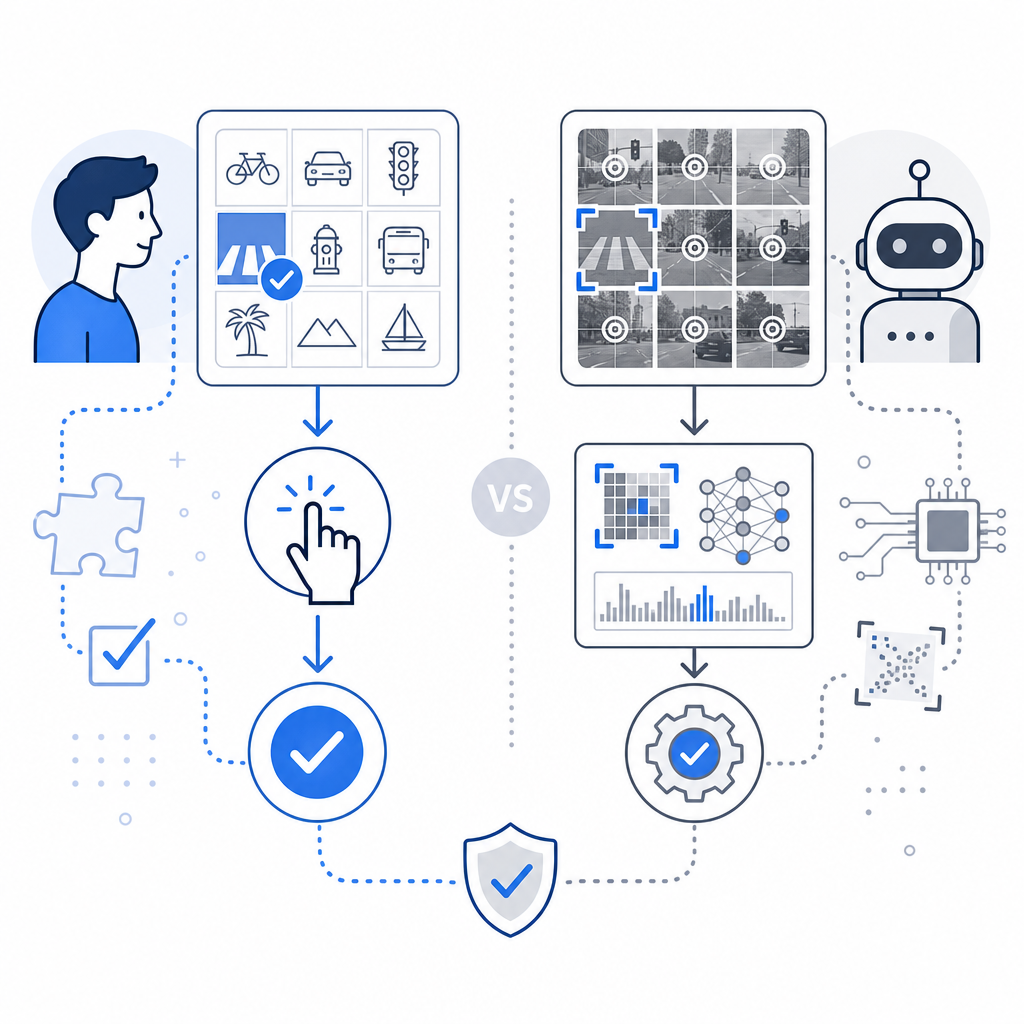
A CAPTCHA job typically involves manually solving CAPTCHA challenges—those distorted text boxes, image puzzles, or "select all the street signs" tests you encounter on websites. Some websites outsource this human verification to remote workers who get paid per CAPTCHA solved. The goal is to prove you are a human and not a bot trying to abuse online forms, accounts, or services.
Though the premise sounds simple, most companies that require CAPTCHA solutions use automated systems like CaptchaLa, Google's reCAPTCHA, hCaptcha, or Cloudflare Turnstile to protect themselves from fraud efficiently. Human CAPTCHA solving is only usually engaged as a fallback for complex challenges or in large-scale data labeling projects.
Why Are CAPTCHA Jobs Often Considered Fake?
Many advertisements for CAPTCHA jobs are circulated on freelance and work-from-home sites promising easy money for minimal effort. Unfortunately, the reality is not so rosy:
- Extremely low pay: Most real CAPTCHA services that hire humans pay fractions of pennies per solved CAPTCHA. This means earning a meaningful income requires solving thousands, which is not practical.
- Scams and phishing: Some CAPTCHA job postings are fronts for scams that collect personal or financial information or require upfront fees.
- Bots pretending: Advertisers sometimes use bot accounts to lure job seekers with fake payment proofs, hoping to harvest data or recruit freelancers for other unpaid tasks.
- Illegal activities: Some CAPTCHA jobs are tied to fraud rings trying to bypass security systems unlawfully — engaging with these can have legal consequences.
Due to these issues, most experts advise treating CAPTCHA job advertisements with skepticism and verifying employer credentials before sharing sensitive data or accepting work.

Comparing CAPTCHA Providers and the Reality of Human-Driven Solutions
Many leading CAPTCHA defense providers rely on advanced, AI-assisted challenge mechanisms. Here's how some compare and why manual CAPTCHA solving jobs do not often feature in their models:
| Provider | CAPTCHA Type | Human Solvers Involved? | Notes |
|---|---|---|---|
| CaptchaLa | Image/text-based, adaptive | Rare (fallback only) | Emphasizes privacy and first-party data for bot defense; uses SDKs for automation and validation. |
| Google reCAPTCHA | Risk analysis & CAPTCHA combos | Rare | Most challenges solved automatically; human input minimal. |
| hCaptcha | Image classification | Minimal | Uses crowdsourcing platforms for training datasets, not general CAPTCHA jobs. |
| Cloudflare Turnstile | Invisible challenges | None | Uses behavioral analysis, no user interaction required in most cases. |
Manual human solving is mostly relegated to data labeling or academic projects, rather than ongoing CAPTCHA “jobs” advertised online.
How to Identify a Legitimate CAPTCHA Job Offer
If you still want to explore CAPTCHA-related work, look out for these signs of legitimacy:
- Clear company background: Verify the employer's website, business registration, and online reputation.
- No upfront fees: Legit jobs never ask for money to start or buy software.
- Transparent payment structure: Rates per solved CAPTCHA or hourly pay should be realistic and stated upfront.
- Proper contract and communication: Professional language, clear contract terms, and official communication channels.
- Use of official SDKs/APIs: Established providers like CaptchaLa offer developer SDKs and API endpoints for challenge validation. Legitimate jobs involve working within these infrastructures rather than random platforms.
Here’s an example snippet for server-side CAPTCHA validation with CaptchaLa’s API to illustrate real-world integration:
// Verify CAPTCHA token on server
async function verifyCaptcha(passToken, clientIp) {
  const response = await fetch('https://apiv1.captcha.la/v1/validate', {
    method: 'POST',
    headers: {
      'X-App-Key': 'your-app-key',
      'X-App-Secret': 'your-app-secret',
      'Content-Type': 'application/json',
    },
    body: JSON.stringify({ pass_token: passToken, client_ip: clientIp }),
  });
  const data = await response.json();
  return data.success; // true or false
}
Such technical integration is what powers serious CAPTCHA validation, not manual endless solving jobs.
Why Using CAPTCHA Defense Services Like CaptchaLa Matters
While manual CAPTCHA solving jobs are dubious at best, integrating reliable CAPTCHA defenses on your own sites is crucial to block bot abuse. Solutions like CaptchaLa provide multi-platform SDKs (JavaScript, iOS, Android, Flutter, Electron) and server-side validation tools that reduce dependency on human solvers and strengthen security.
Compared to popular alternatives such as reCAPTCHA or hCaptcha, CaptchaLa focuses on privacy-conscious design and first-party data usage, offering flexible pricing plans including a free tier to get started (pricing details here). Whether you’re a developer or a security-conscious product manager, understanding and deploying these solutions protects you from fraudulent exploits — including scam CAPTCHA job schemes.
Summary
- Majority of CAPTCHA jobs advertised online are fake, low-paying, or scams.
- Legitimate human CAPTCHA solving roles are rare and usually part of data labeling rather than casual work-from-home gigs.
- Trusted CAPTCHA providers automate challenges and only rarely resort to human solutions.
- Always vet job offers carefully: check for red flags like upfront fees, vague terms, and lack of company verification.
- Investing in robust CAPTCHA defenses such as CaptchaLa is a practical way to handle bot protection, not relying on unsupported manual solving.
For developers interested in adding CAPTCHA protection or validating human tokens, CaptchaLa’s comprehensive developer documentation and scalable pricing options provide a secure foundation for your applications.
Interested in stronger bot defenses without the headache of manual CAPTCHA solving? Explore CaptchaLa’s pricing plans or dive into the docs to get started protecting your digital projects today.