
When it comes to protecting websites and apps from automated abuse, selecting the best CAPTCHA library is critical. The right CAPTCHA solution balances strong bot defense with usability, developer-friendly integration, and scalability. Developers often face a variety of options—from well-established providers like Google reCAPTCHA and hCaptcha to newer, privacy-focused solutions like Cloudflare Turnstile or independent services like CaptchaLa. Understanding their differences, capabilities, and integration requirements helps identify which library fits your project’s needs best.
What Makes a CAPTCHA Library the Best?
The best CAPTCHA library successfully accomplishes three key goals:
- Effective Bot Detection: It reliably distinguishes human users from bots, minimizing false positives and negatives.
- User Experience: It offers seamless, non-intrusive challenges or invisible verification to maintain conversion rates.
- Developer Integration: It provides easy-to-use SDKs, thorough documentation, and flexibility across platforms.
Additional factors include support for multiple languages, privacy compliance (e.g., first-party data usage), and customizable challenge types.
Key Features to Evaluate
Bot Defense Accuracy and Adaptability
The core function of a CAPTCHA library is to block malicious bots without frustrating real users. Popular solutions like Google reCAPTCHA v3 use advanced risk analysis based on user behavior to minimize interruptions, while hCaptcha allows site owners to monetize bot detection by participating in a broader data ecosystem.
Newer tools such as Cloudflare Turnstile eliminate puzzles altogether with cryptographic proofs, improving user experience but requiring cloud infrastructure. Independent libraries like CaptchaLa introduce customizable challenges and maintain first-party data handling, improving privacy and control.
SDK and Platform Support
A versatile CAPTCHA library offers native SDKs across web frameworks and mobile platforms. For example, CaptchaLa supports JavaScript frameworks including Vue and React, as well as iOS, Android, Flutter, and Electron. It also provides server SDKs in PHP and Go, streamlining backend validation.
| Library | Web SDKs | Mobile SDKs | Server SDKs | Languages Supported |
|---|---|---|---|---|
| Google reCAPTCHA | JS Vanilla, React | Android, iOS | Java, .NET etc. | Multiple |
| hCaptcha | JS Vanilla, React | Android, iOS | Various | Multiple |
| Cloudflare Turnstile | JS Vanilla | Limited | Limited | English only |
| CaptchaLa | JS, Vue, React | iOS, Android, Flutter, Electron | PHP, Go | 8 UI languages including English, Spanish, Chinese |
Validation and Security Workflow
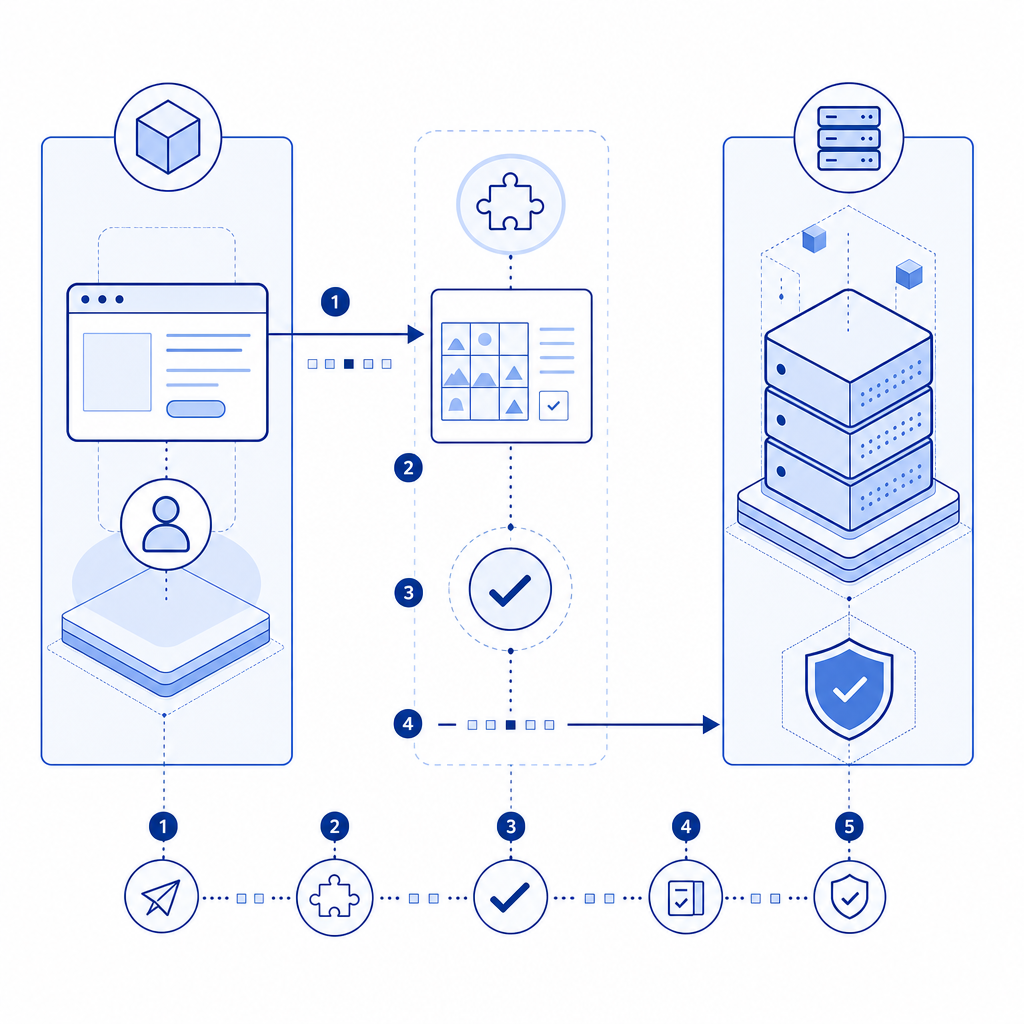
A robust CAPTCHA library has a straightforward yet secure validation mechanism. Typical flow involves client-side token generation followed by server-side validation via API calls. For instance, CaptchaLa uses a POST request to https://apiv1.captcha.la/v1/validate with a token and client IP, authenticated through API keys.
Below is a simplified example to illustrate server-side validation with CaptchaLa’s Go SDK:
// Validate CAPTCHA token from client
func validateCaptcha(token string, clientIP string) (bool, error) {
    client := captchala.NewClient("YOUR_APP_KEY", "YOUR_APP_SECRET")
    resp, err := client.Validate(token, clientIP)
    if err != nil {
        return false, err
    }
    return resp.Success, nil
}
Pricing and Usage Limits
Budget considerations often dictate choice. Google reCAPTCHA and Cloudflare Turnstile are widely used partly because they offer generous free tiers. hCaptcha revenue-sharing can offset costs but introduces third-party data usage. CaptchaLa provides a transparent pricing model starting with a free tier of 1000 validations per month, scaling to millions for business use, with all data processed first-party for privacy.
| Plan | Monthly Requests | Notes |
|---|---|---|
| Google reCAPTCHA | Free | Rates vary, data used by Google |
| hCaptcha | Free + Revenue | Monetizes bot detection |
| Cloudflare Turnstile | Free | Limited platform support |
| CaptchaLa | Free (1000/mo) | First-party data, Pro up to 200K |
Balancing User Experience & Accessibility
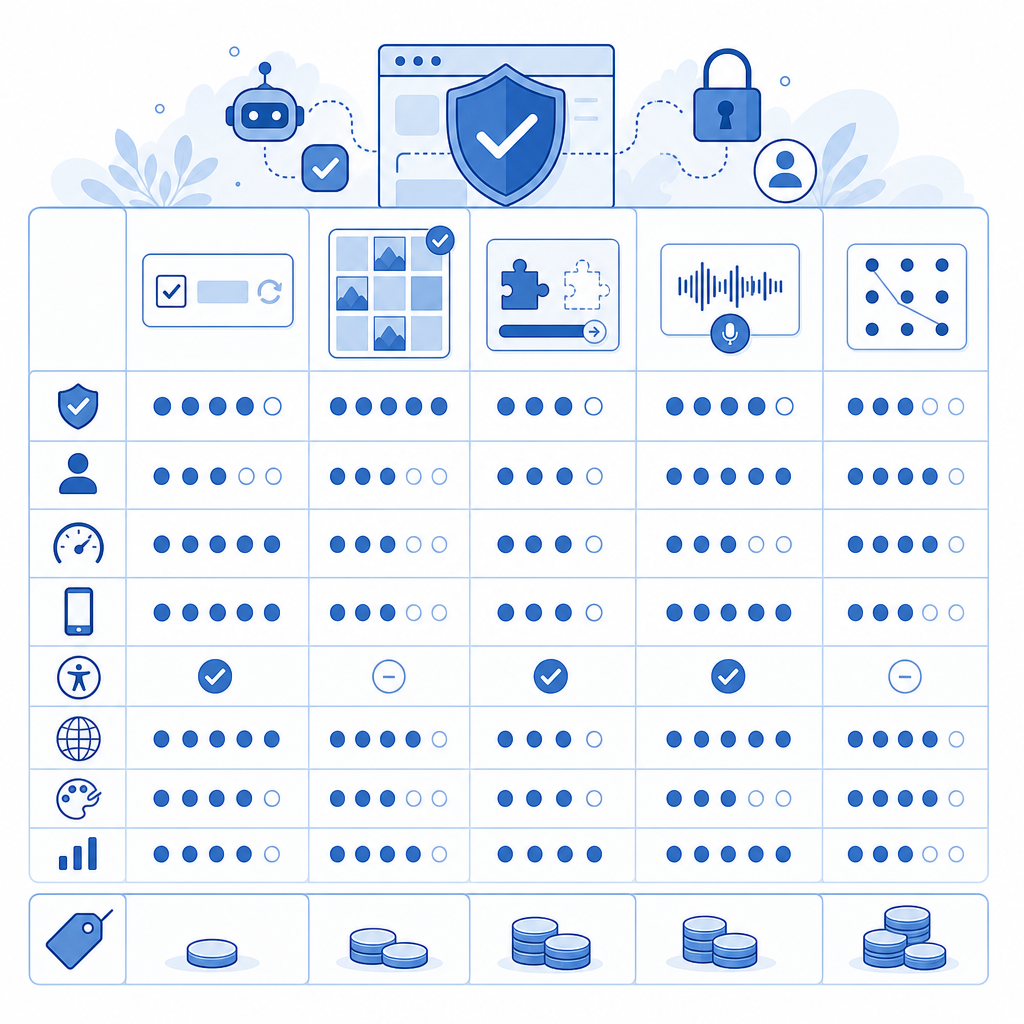
While strong bot defense is essential, the best CAPTCHA library minimizes friction for legitimate users. Libraries differ in challenge styles: some rely on image-based puzzles, others use invisible challenges assessing behavior, or cryptographic proofs requiring no interaction.
CaptchaLa supports UI localization in 8 languages and offers customizable challenge settings that improve accessibility and user friendliness. This approach enhances conversion rates compared to frustrating or overly long CAPTCHAs.
How to Integrate the Best CAPTCHA Library
Integration complexity varies. Here’s a high-level checklist applicable when adding a CAPTCHA library to your web or mobile app:
- Choose the SDK for your platform (e.g., React, iOS, Flutter).
- Include the client-side library via CDN or package manager.
- Generate and display the CAPTCHA challenge on your form or login page.
- Capture the response token after user interaction.
- Send the token server-side along with client info for validation.
- Process the validation result to allow or deny further actions.
For example, adding CaptchaLa in a React app might involve:
import { CaptchaLaWidget } from 'captchala-react';

// Render CAPTCHA widget
function MyForm() {
  const onSuccess = token => {
    // Send token to server for validation
  };

  return <CaptchaLaWidget siteKey="YOUR_SITE_KEY" onSuccess={onSuccess} />;
}
Complete references and code samples are available in the CaptchaLa docs.
Conclusion
Selecting the best CAPTCHA library depends heavily on your specific needs: bot detection accuracy, user experience, platform support, privacy, and budget. While reCAPTCHA and hCaptcha remain popular, alternatives like Cloudflare Turnstile and CaptchaLa offer compelling options focused on usability and data control.
If you are looking for a flexible CAPTCHA library with multi-platform SDKs, first-party data usage, and transparent pricing, consider exploring CaptchaLa. The documentation provides clear guidance, and the free tier supports initial testing before scaling up.
Where to go next? Review detailed pricing and step through integration examples in the docs to get started securing your apps with effective, user-friendly CAPTCHA protection.