
When it comes to web security, the best CAPTCHA job is to distinguish humans from automated bots reliably and seamlessly. CAPTCHA solutions serve as gatekeepers, preventing abuse such as spam, credential stuffing, and fake account creation. Their core function is deceptively simple—detecting automation—but achieving it without frustrating legitimate users is a delicate balance of user experience and security.
This post breaks down what defines the best CAPTCHA job, compares notable services, and explores how modern CAPTCHA tools like CaptchaLa fit into the evolving bot-defense landscape.
What Is the Best CAPTCHA Job, Really?
The "best CAPTCHA job" means more than just blocking bots. Effective CAPTCHA systems must:
- Accurately separate genuine users from bots, minimizing false positives and negatives.
- Integrate smoothly into diverse platforms without adding noticeable friction.
- Support accessibility and multiple languages to serve global user bases.
- Protect site resources and data without sacrificing user engagement metrics.
- Offer flexibility for various web frameworks and mobile environments.
For example, CaptchaLa supports 8 UI languages and native SDKs for Web (JS/Vue/React), iOS, Android, Flutter, and Electron, helping developers deliver fluid user experiences on any platform. Their server SDKs like captchala-php and captchala-go simplify back-end validation, a critical step to verify pass tokens securely.
Comparing Leading CAPTCHA Solutions
To understand what the best CAPTCHA job looks like, it’s helpful to compare popular options:
| Feature | CaptchaLa | Google reCAPTCHA | hCaptcha | Cloudflare Turnstile |
|---|---|---|---|---|
| Supported SDKs | Web, iOS, Android, Flutter, Electron | Web, Android, iOS | Web, Android, iOS | Web |
| Languages | 8 UI languages | 40+ languages | 40+ languages | US English |
| Validation API | POST with pass_token, client IP | API with token validation | API with token validation | API-based challenge validation |
| Free Tier | 1000/month | Extensive free tier | Free tier with pay-per-use | Free, tenant-based model |
| Privacy | First-party data only | Uses Google data | Some third-party data | Privacy-focused, no tracking |
| User Experience Focus | Configurable, lightweight | User-friendly but invasive | Focus on privacy and UX | Invisible CAPTCHA approach |
This variety highlights that the best CAPTCHA job depends on your project’s priorities—whether that’s privacy, internationalization, or ease of integration.
Technical Specifics of a Quality CAPTCHA Job
Implementing a CAPTCHA well requires attention to detail. Here’s a numbered list of key technical elements that define an effective CAPTCHA deployment:
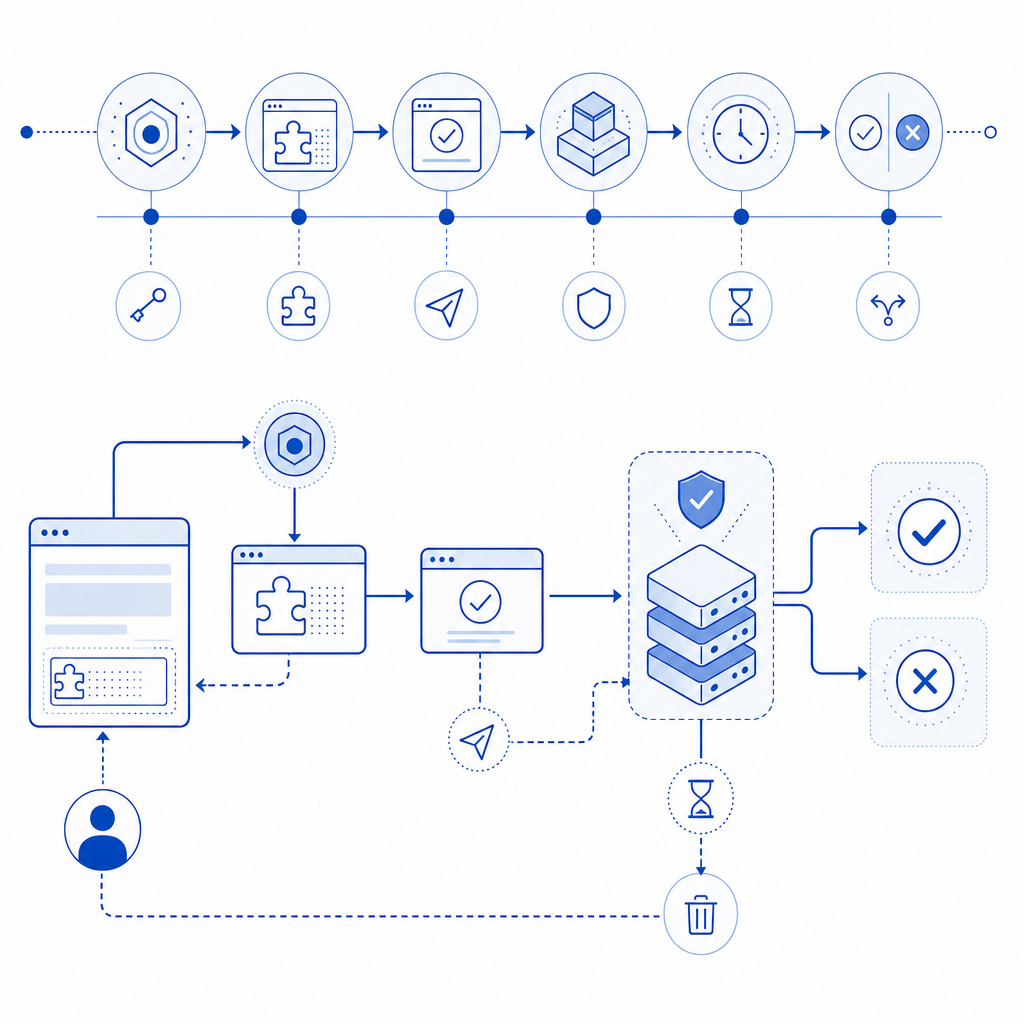
Token Generation and Issuance
CaptchaLa provides a server-token endpoint (POST https://apiv1.captcha.la/v1/server/challenge/issue) where backend systems can request CAPTCHA challenges dynamically based on user risk scoring or session context.Client-Side Integration
Using scripts like CaptchaLa’s loader, developers embed CAPTCHA widgets securely on pages. The challenge adapts based on user input and platform signals, maintaining balance between security and usability.Pass Token Validation
After users complete a challenge, your backend verifies the CAPTCHA response by posting to CaptchaLa’s validation API (POST https://apiv1.captcha.la/v1/validate) with payloads containingpass_tokenand the client IP address. This step ensures the token is authentic and prevents replay attacks.Language and Accessibility Support
Including multilingual UI support is crucial for worldwide websites. CaptchaLa supports 8 UI languages out of the box, making it practical for international applications.Scalability and Limits
Handling traffic spikes without service degradation makes or breaks usability. CaptchaLa offers flexible plans from free tiers (1000/month) up to business-level volumes (1 million/month), allowing growth without technical bottlenecks.
Where Do Competitors Fit In?
If we look beyond CaptchaLa, Google reCAPTCHA presents a widely adopted solution that often sets the baseline expectation. It offers advanced risk analysis but depends on Google’s infrastructure and data collection, which may concern privacy-minded users.
hCaptcha focuses on privacy and economic incentives—site owners earn rewards by helping label data sets. It supports multiple languages and decent integration options, but some users report a slightly more intrusive experience than invisible CAPTCHAs.
Cloudflare Turnstile represents a newer entrant emphasizing invisible CAPTCHA technology that often doesn’t require user interaction. It is well-suited to sites already using Cloudflare but less flexible for others.
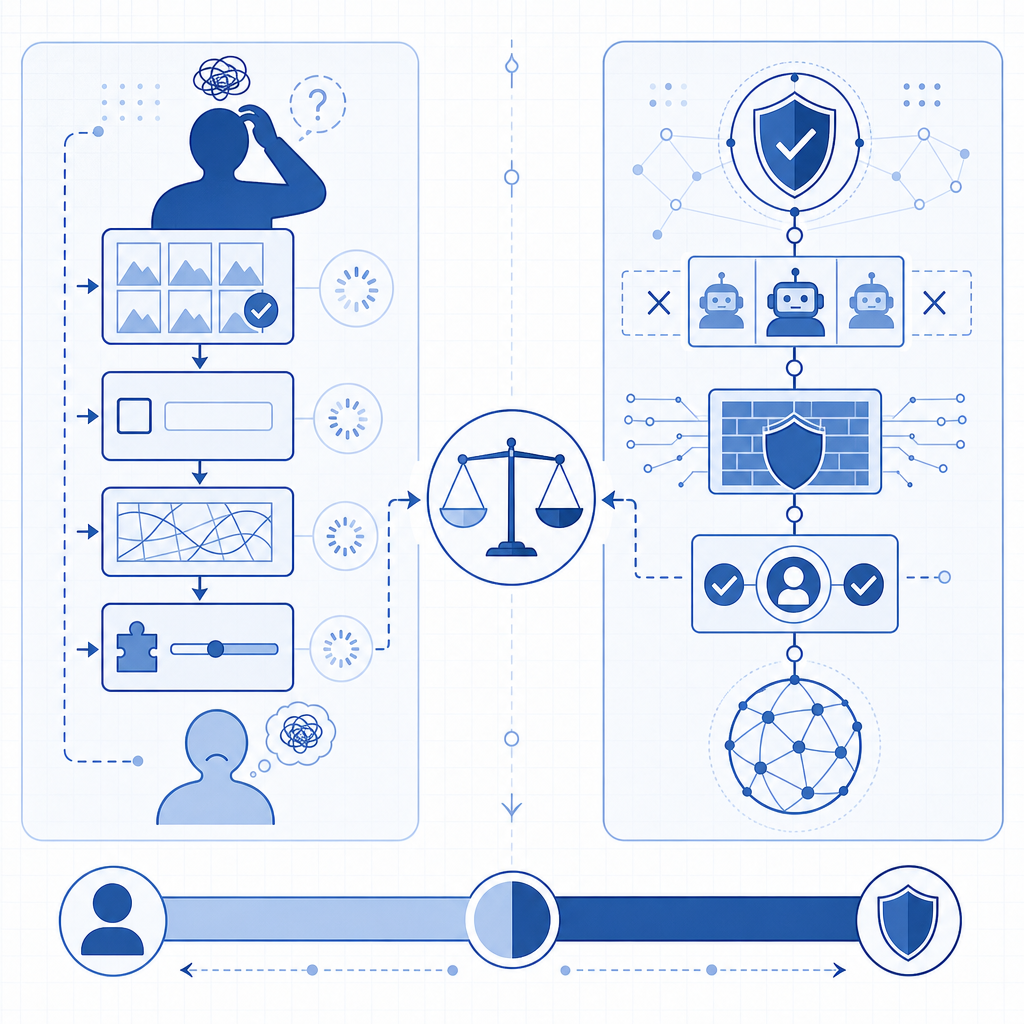
Selecting the best CAPTCHA job involves examining these trade-offs and choosing a tool that balances security, user experience, and developer convenience.
Implementing CAPTCHA with CaptchaLa: A Practical Approach
Integrating a CAPTCHA service like CaptchaLa involves these general steps:
- Register for an API key and set up your application.
- Add the CaptchaLa loader script to your frontend pages.
- Request challenge tokens from your backend via the server-token endpoint based on your risk logic.
- Display the CAPTCHA widget using the provided tokens and UI options.
- On form submission, send the user's
pass_tokenand IP to the validation endpoint. - Process the validation response to decide whether to allow user actions.
For example, here’s a simplified server-side pseudocode snippet demonstrating validation:
# Verify CAPTCHA response from client
def verify_captcha(pass_token, client_ip):
    payload = {
        "pass_token": pass_token,
        "client_ip": client_ip
    }
    headers = {
        "X-App-Key": YOUR_APP_KEY,
        "X-App-Secret": YOUR_APP_SECRET
    }
    response = http_post("https://apiv1.captcha.la/v1/validate", json=payload, headers=headers)
    return response.json().get("success", False)
This example highlights how simple and secure server-side validation is, a crucial part of the best CAPTCHA job to ensure token authenticity.
Final Thoughts
The best CAPTCHA job is not just about blocking bots—it’s about seamlessly integrating protective measures that respect users, privacy, and development workflows. Solutions like CaptchaLa provide flexible SDKs, multi-language support, and straightforward APIs that help developers embed effective bot defense without sacrificing experience.
Other contenders like Google reCAPTCHA, hCaptcha, and Cloudflare Turnstile each have their niches, but the choice ultimately depends on your project’s unique needs.
Where to go next? Dive deeper into CaptchaLa’s documentation or explore plans that fit your scale on the pricing page to see how a well-executed CAPTCHA implementation can elevate your security posture.