
Bot Detector X is a security tool designed specifically to identify and block malicious automated traffic, or bots, from accessing websites or applications. Unlike basic CAPTCHA challenges, Bot Detector X uses a combination of behavioral analysis, client-side heuristics, and server-side validations to accurately distinguish between legitimate users and automated scripts. This focused approach reduces false positives while ensuring bots do not compromise your service’s integrity.
In this post, we’ll discuss how Bot Detector X operates, compare it with other popular bot defense solutions, and explore key technical aspects of effective bot detection platforms, including CaptchaLa’s approach.
What Is Bot Detector X and How Does It Work?
Bot Detector X is not a single product but a category of bot management tools that combine multiple detection methods. These typically include:
- Behavioral Analysis: Monitoring mouse movements, typing rhythms, navigation patterns, and device signals to spot irregularities typical of bots.
- Challenge Mechanisms: Integrating CAPTCHAs or challenge-response tests that require human cognition, but only when risk is detected to keep user experience seamless.
- Server-Side Validation: Cross-referencing requests against known threat intelligence and analyzing request headers or rate limits to flag suspicious activity.
Some advanced versions go beyond fingerprinting by leveraging machine learning models trained on trillions of interaction data points, enabling the detection of novel bot behaviors without disrupting normal users.
By combining these layers, Bot Detector X solutions limit the ability of automated attacks such as credential stuffing, scalping, spam submissions, fake account creation, and scraping sensitive data.
How Bot Detector X Compares to Popular Alternatives
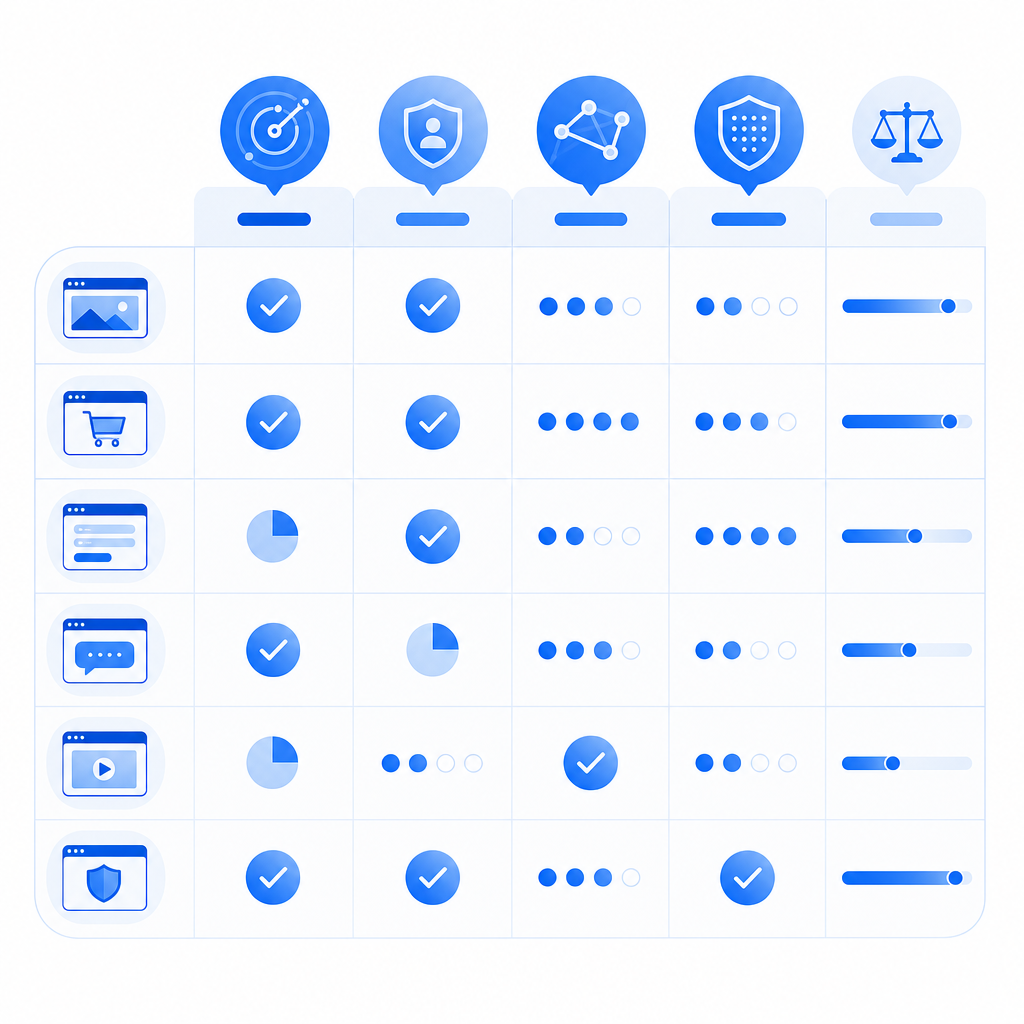
Let’s put Bot Detector X in context by comparing it to three prominent bot defense and CAPTCHA providers: reCAPTCHA, hCaptcha, and Cloudflare Turnstile. Each brings unique strengths and trade-offs.
| Feature / Platform | Bot Detector X (General) | reCAPTCHA | hCaptcha | Cloudflare Turnstile | CaptchaLa |
|---|---|---|---|---|---|
| Challenge Type | Behavioral + Conditional CAPTCHA | Image-based or Invisible Challenges | Privacy-focused CAPTCHA with rewards | Invisible, passive challenges | Adaptive CAPTCHA + bot detection |
| Privacy Focus | Varies, may track data extensively | Google data sharing | Privacy-centric, less data sharing | Minimal user data retention | First-party data only, 8 UI languages |
| Integration | SDKs vary by provider | JS widget, mobile SDKs | JS widget, native SDKs | Easy JS embed, Cloudflare network | JS, iOS, Android, Flutter, Electron SDKs |
| Pricing | Often enterprise tiered | Free with Google tie-in | Pay-per-usage | Included with Cloudflare plans | Free tier 1000/mo + scalable plans |
| Bot Detection | Layered, ML-infused | Risk analysis with score | User verification + risk | Passive risk assessment | Multi-layer heuristics + server validation |
Each product excels in different scenarios: reCAPTCHA offers strong baseline detection with widespread adoption but some privacy trade-offs; hCaptcha appeals to privacy-sensitive sites and monetization; Cloudflare Turnstile is excellent for Cloudflare users looking for invisible protection. Bot Detector X strategies tend to emphasize layered detection and flexible responses across traffic types.
Key Technical Details Behind Effective Bot Detection
Experts recommend the following technical specifics when evaluating or building Bot Detector X tools:
- Multilingual, Cross-Platform SDKs: Wide compatibility across web frameworks (JS/React/Vue) and mobile platforms (iOS, Android, Flutter) ensures consistent protection everywhere.
- Server-Side Validation API: Protect against spoofed client responses by validating tokens, IPs, and challenge results server-side for robust verification.
- Graceful User Experience: Adaptive challenge issuance — only present CAPTCHAs or interactions when suspicious activity is detected to reduce user friction.
- Rate Limiting & Fingerprinting: Track repetitive patterns and unique browser/device fingerprints to identify automated traffic even if scripts change IPs.
- First-Party Data Use: Limiting shared data reduces concerns around privacy and regulatory compliance.
Below is a simplified example of how server-side token validation might be performed when integrating a bot detector:
// Server-side pseudocode for Bot Detector X token validation

// Function to validate bot detector token received from client
async function validateToken(passToken, clientIp) {
  const response = await fetch('https://apiv1.captcha.la/v1/validate', {
    method: 'POST',
    headers: {
      'X-App-Key': process.env.APP_KEY,
      'X-App-Secret': process.env.APP_SECRET,
      'Content-Type': 'application/json'
    },
    body: JSON.stringify({
      pass_token: passToken,
      client_ip: clientIp
    })
  });

  const result = await response.json();
  return result.isValid; // boolean indicating if token is verified
}
Where CaptchaLa Fits Into Bot Detector X Solutions
At CaptchaLa, we provide a modern bot defense system combining advanced challenge delivery and risk analysis with a strong privacy stance. Supporting 8 UI languages and native SDKs for web, iOS, Android, Flutter, and Electron, we facilitate easy integrations adaptable to diverse development stacks.
Like other Bot Detector X tools, CaptchaLa emphasizes first-party data usage only, reducing dependency on third-party cookies or trackers. Our validation process operates through secure server APIs to confirm challenge completion, helping protect against automated abuse without compromising user experience.
If you evaluate bot detector options, CaptchaLa brings a versatile alternative to reCAPTCHA or hCaptcha, with scalable tiers ranging from free to business levels capable of handling millions of validations monthly.

Choosing the Right Bot Detector X for Your Needs
Selecting the optimal bot detection approach depends largely on your priorities:
- User Experience vs. Security: Invisible or adaptive challenges improve UX but may require more sophisticated detection technology.
- Data Privacy Concerns: Solutions like CaptchaLa prioritize first-party data and reduce external tracking compared to some competitors.
- Integration Complexity: SDK availability and documentation quality impact speed to deployment.
- Cost & Scalability: Pricing models should align with your expected traffic and budget.
By reviewing these factors and exploring detailed documentation, you can strike a balance that protects your website or app without alienating users.
Conclusion
Bot Detector X solutions apply multi-layered detection techniques to identify and stop automated bots that threaten web services. While alternatives like reCAPTCHA, hCaptcha, and Cloudflare Turnstile each serve different niches, CaptchaLa offers a comprehensive toolkit with flexible SDKs and a privacy-first approach.
For developers and security teams, understanding these technical differences helps ensure automated threats are mitigated while maintaining smooth user interactions.
To explore further, check out CaptchaLa’s documentation and learn about their pricing tiers suitable for projects of varying scales. Implementing a robust bot detection system today prevents tomorrow’s automated attacks from disrupting your business.