
Auth0 bot detection logs provide critical visibility into automated threats targeting your authentication flows. These logs contain detailed records of suspicious activities flagged by Auth0’s bot detection mechanisms, helping security teams investigate, analyze, and respond to potential bot attacks. In essence, they are your window into automated abuse attempts, enabling you to better protect your login and sign-up endpoints against credential stuffing, scraping, and other malicious automation.
What Are Auth0 Bot Detection Logs?
Bot detection logs in Auth0 capture all events relevant to suspected bot activity during your user authentication processes. When Auth0’s bot protection mechanisms—such as anomaly detection and behavior-based risk scoring—flag a request, the event, context, and metadata are recorded in these logs. This enables administrators to review granular information like:
- IP address and geolocation of the request
- User agent string and device fingerprint
- Time and frequency of suspicious requests
- Triggered protection rule or anomaly that identified the bot
By monitoring these logs regularly, teams can identify attack patterns, understand which accounts or endpoints are targeted, and tune detection controls.
How Auth0 Detects Bots
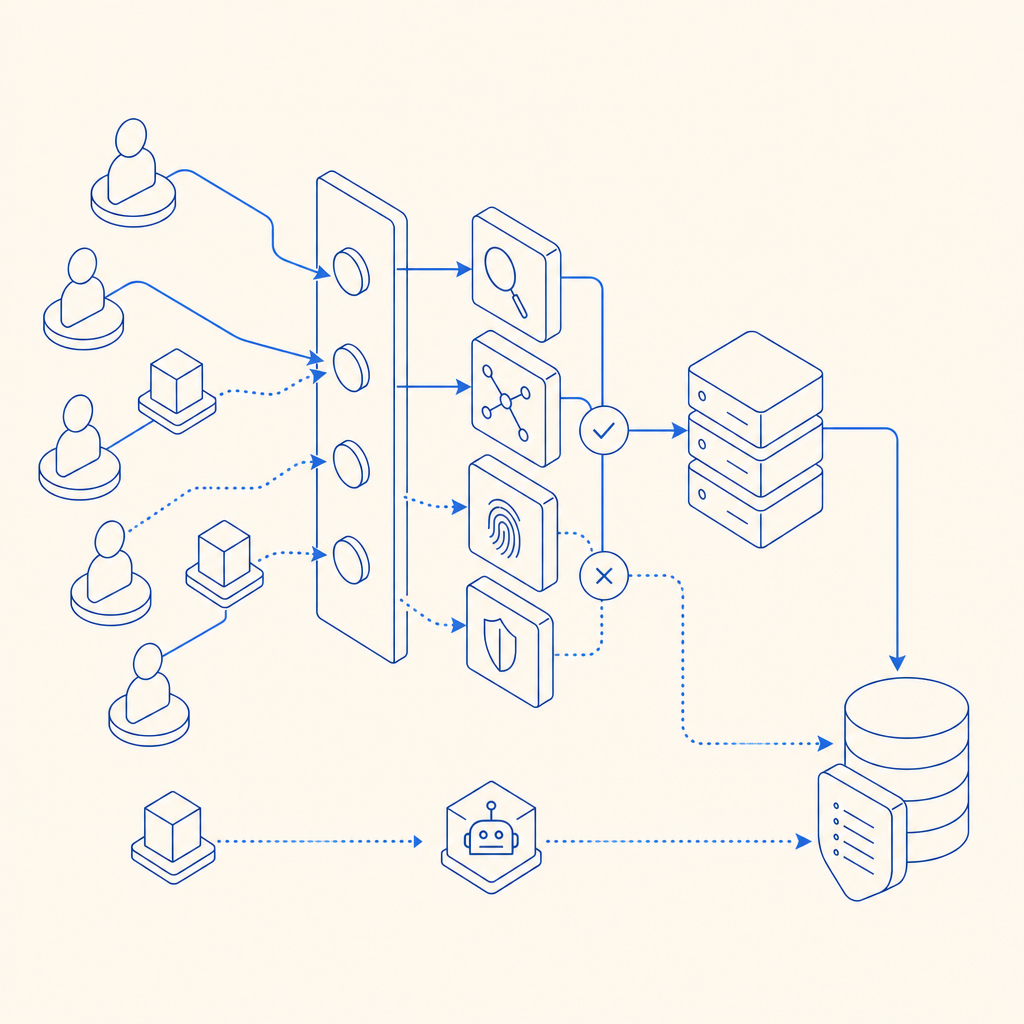
Auth0 leverages multiple detection methods including:
- Behavioral analysis: Monitoring how users interact with login fields and pages to spot automated patterns.
- Device fingerprinting: Identifying unusual or inconsistent device/browser profiles.
- IP reputation: Blocking requests from IPs associated with known bot networks.
- Rate limiting: Identifying rapid, repeated requests that surpass humanly possible thresholds.
When one or more of these triggers fire, a bot detection event is logged.
Navigating and Interpreting Auth0 Bot Detection Logs
Accessing your bot detection logs is typically done through the Auth0 Dashboard under Monitoring → Logs or via the Management API. Each log entry includes:
| Field | Description |
|---|---|
date | Timestamp of the event |
type | Event type (e.g., fapi_oauth_token_exchange) |
client_ip | IP address making the request |
user_agent | Browser or client user agent string |
description | Human-readable reason for the bot flag |
details | JSON blob with additional info like risk score |
Interpreting these fields allows you to identify whether an incident was a false positive, a new attack vector, or an ongoing campaign.
Common Challenges
- Volume Overload: Bot attacks can generate thousands of log entries, overwhelming security teams. Prioritize by risk score or targeted clients.
- False Positives: Behavioral nuances can trigger harmless users. Use thresholds and multi-factor signals to reduce noise.
- Limited Context: Logs contain metadata but not the full session context, requiring supplemental tools.
Comparing Auth0 Bot Detection with Other Bot Logs
Many bot defense platforms provide similar logging, but each has unique features:
| Feature | Auth0 Bot Logs | reCAPTCHA Enterprise | hCaptcha Enterprise | Cloudflare Turnstile Logs |
|---|---|---|---|---|
| Embedded in Auth0 Auth | Yes | No | No | No |
| Risk Scoring | Yes (behavioral + IP reputation) | Yes (proprietary ML models) | Yes (behavioral + DNS data) | Yes (network + behavioral) |
| Log Granularity | Moderate (detailed IP, UA, score) | High (with ML insights) | Moderate | Moderate |
| API Access to Logs | Yes | Yes | Yes | Yes |
| GDPR / Privacy Focus | First-party data only | Data shared with Google | Data shared with hcaptcha | Data processed by Cloudflare |
Auth0’s advantage is seamless integration with identity management workflows, while platforms like reCAPTCHA offer more generalized bot risk signals. CaptchaLa offers SDKs and APIs focused exclusively on bot defense and CAPTCHA verification, which can be complementary when you want to layer protection.
Best Practices for Using Auth0 Bot Detection Logs Effectively
To get the most from your logs and improve your bot defense posture, consider a structured approach:
- Centralize Logs: Aggregate bot detection logs with other security logs in your SIEM to correlate events.
- Analyze Patterns: Use dashboards or machine learning to detect spikes, repeated IPs, or targeted accounts.
- Tune Policies: Adjust Auth0’s bot detection sensitivity and rules based on false positives and attack data.
- Layer Protections: Combine Auth0’s bot detection with CAPTCHA challenges from providers like CaptchaLa to block suspicious traffic before login attempts.
- Automate Responses: Integrate with incident response or MFA workflows to block or challenge high-risk logins automatically.
// Example: Simple pseudocode to fetch Auth0 bot detection logs via Management API
const axios = require('axios');

async function getBotLogs(token, fromDate, toDate) {
  const response = await axios.get('https://your-domain.auth0.com/api/v2/logs', {
    headers: { Authorization: `Bearer ${token}` },
    params: {
      q: 'type: bot_detection AND date:[' + fromDate + ' TO ' + toDate + ']',
      sort: 'date:1',
      per_page: 100
    }
  });
  return response.data;
}

// Use this function to regularly poll and analyze bot detection logs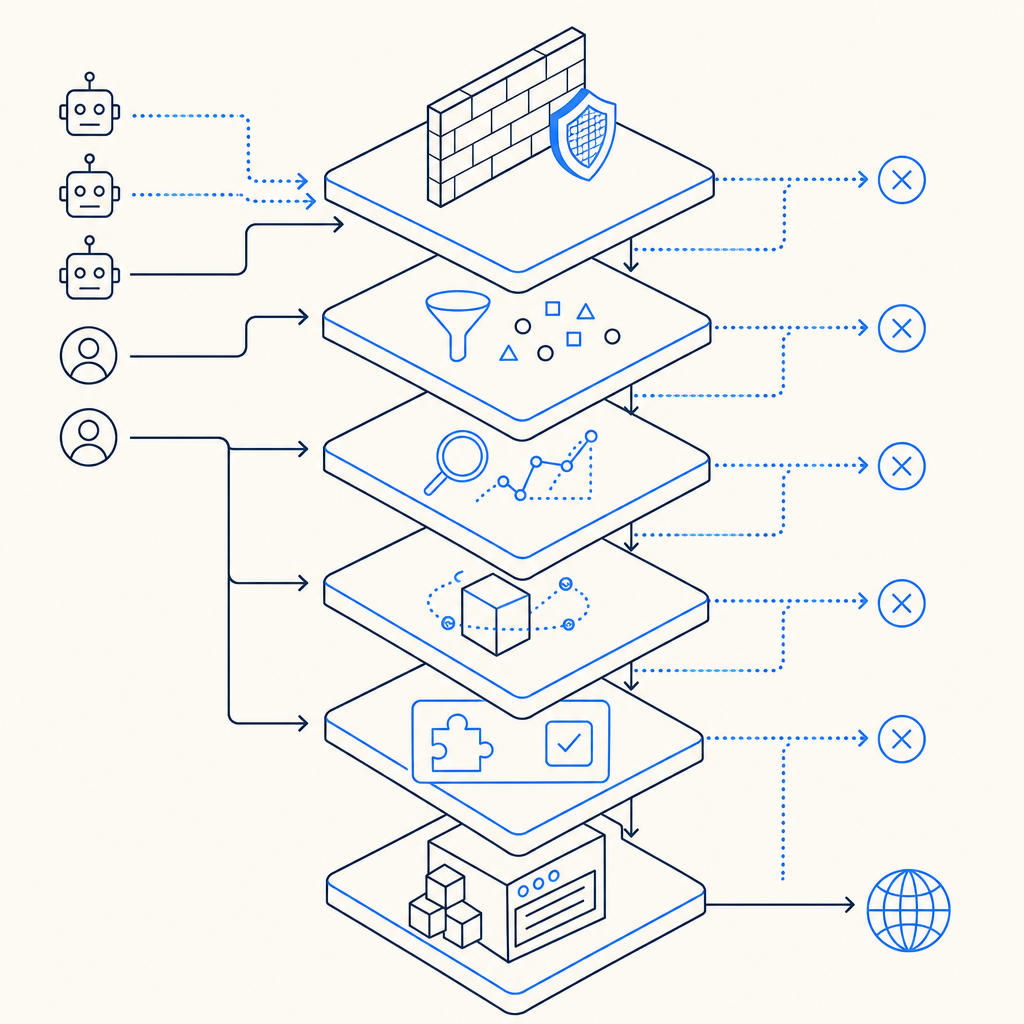
Enhancing Auth0 Bot Detection with CaptchaLa
While Auth0’s bot detection logs provide excellent insight, integrating an independent CAPTCHA and bot-defense solution like CaptchaLa can add an extra layer of security. CaptchaLa offers native SDKs for major platforms (Web, iOS, Android, Flutter, Electron) and flexible APIs designed for seamless integration alongside Auth0.
Some benefits include:
- Handling complex bot challenges to verify human users confidently
- Supporting 8 UI languages and multiple frameworks for broad international reach
- Transparent, first-party data collection (more privacy-friendly)
- Scalability from free tiers to enterprise volume
Using CaptchaLa alongside Auth0’s native bot detection can help reduce false positives and streamline user experience by challenging only suspicious traffic identified in your bot detection logs.
Where to go next? Check out the detailed CaptchaLa documentation to explore integration options, or review our pricing plans tailored for different traffic volumes. Combining Auth0 and CaptchaLa effectively can create a balanced bot defense system to secure your applications.