
A captcha harvester is a system that tries to collect or reuse CAPTCHA challenge results at scale so automated traffic can look human. From a defender’s point of view, the problem is not the challenge itself; it’s the attempt to turn a human verification step into a reusable asset. That can mean replaying pass tokens, proxying solves through compromised sessions, or abusing weak validation flows to let bots through.
If your site depends on CAPTCHA or bot checks, the right response is not “make the puzzle harder.” It’s to make each token harder to reuse, bind validation to the right session and client context, and make fraud signals visible before they become a pattern. That’s where good server-side verification matters more than visual difficulty.
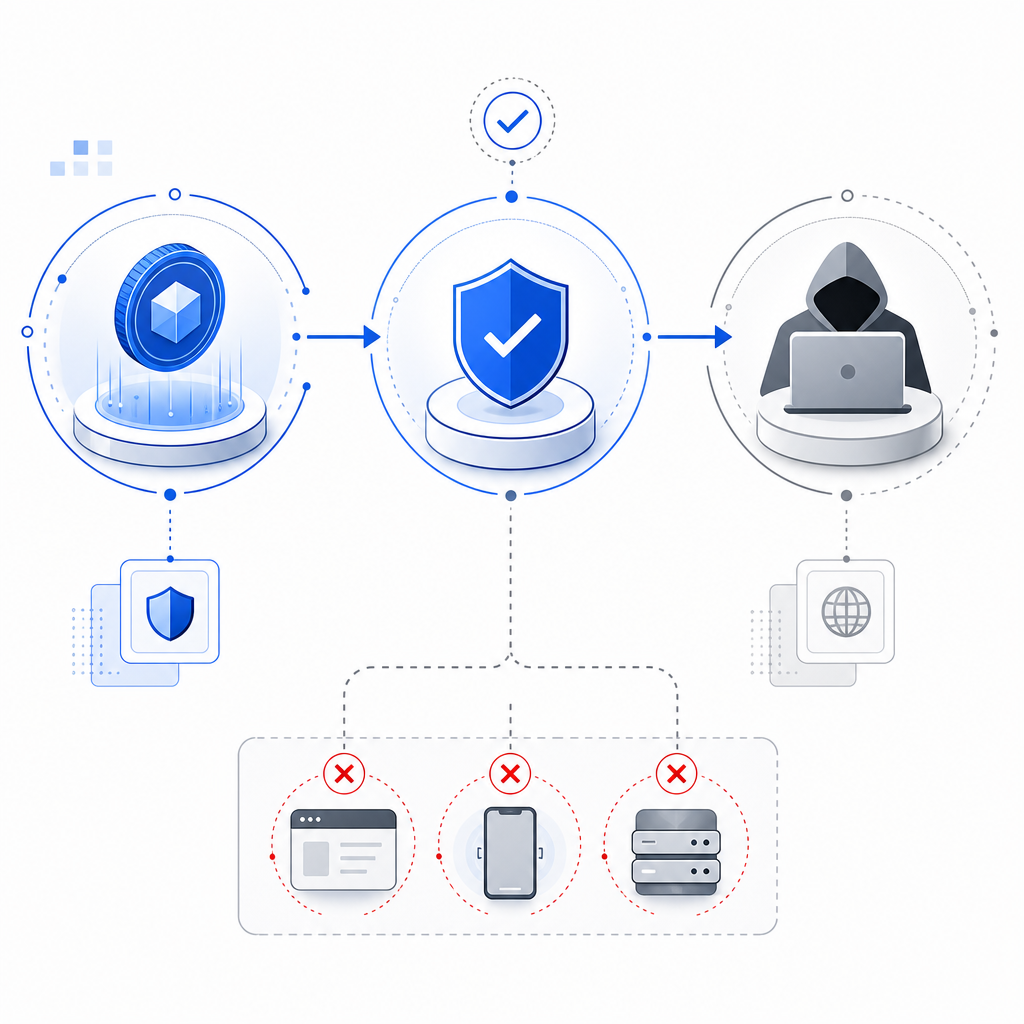
What a captcha harvester is actually doing
The phrase “captcha harvester” is broad, but the behavior usually falls into a few technical patterns:
Token collection
Bots trigger challenges and capture any resulting pass token or proof artifact for later use.Token replay
A token that was valid for one client or session gets reused on another request, sometimes with a different IP, device, or fingerprint.Challenge outsourcing
Automated traffic delegates the human-verification step to a real person elsewhere, then relays the result back to the bot.Weak backend validation abuse
If the server accepts a token without checking freshness, client IP, or session binding, harvested tokens can remain useful longer than they should.
The important distinction is that a CAPTCHA is not just a visual widget. It is part of a trust chain. Once the chain is broken, the attacker does not need to “solve” anything in the normal sense; they only need one valid artifact and a validation path that does not enforce enough context.
This is why defenders should think in terms of anti-replay, not just challenge difficulty. A strong implementation rejects tokens that are duplicated, stale, or detached from the request that generated them.
How defenders should detect harvesting behavior
A captcha harvester leaves signals if you look for them consistently. The most useful signals are usually operational, not theatrical.
Common indicators
- High challenge volume from a narrow IP range or ASN
- Repeated validation attempts with different client IPs
- Atypical solve timing: too fast, too uniform, or suspiciously delayed in batches
- Token reuse across sessions
- Mismatch between user agent, device hints, and request cadence
- Clusters of failures followed by sudden success spikes
A practical way to reason about this is to separate “challenge issuance” from “challenge acceptance.” If you issue thousands of challenges but see acceptance patterns that cluster unnaturally, that can indicate harvesting, delegation, or automated retry behavior.
Here’s a simple defender-side logging model:
# Log each challenge lifecycle event
issue_event:
  timestamp
  client_ip
  session_id
  device_fingerprint
  route
  challenge_id

validate_event:
  timestamp
  client_ip
  session_id
  challenge_id
  pass_token
  result
With that data, you can answer questions like:
- Was the same
pass_tokenpresented more than once? - Did validation come from the same
client_ipthat received the challenge? - Did one session produce an unusual number of challenge attempts?
- Are failures concentrated on a specific route such as sign-up, password reset, or checkout?
That kind of analysis is usually more valuable than relying on a single “bot score.” Scores help, but token lifecycle integrity is what stops reuse.
Why backend validation design matters more than puzzle difficulty
Many teams spend time tuning the frontend challenge while underinvesting in the server-side check. That’s backwards when facing a captcha harvester.
A robust validation flow should ensure the token is:
- Fresh: short-lived enough to reduce replay value
- Bound: associated with the right session or request context
- Verified server-side: never trusted based on browser-only checks
- Context-aware: evaluated with IP and other request metadata
- Single-use or effectively single-use: reuse should fail closed
For example, a validation API that accepts pass_token and client_ip lets you tie the result to the request origin rather than treating the token as a universal pass. CaptchaLa’s server-side validation uses POST https://apiv1.captcha.la/v1/validate with a body like {pass_token, client_ip} and app credentials in headers. That design makes replay harder because the server is not just asking “is this token real?” but “is this token real for this request?”
If you’re integrating at scale, the details matter:
- Keep secret keys out of the browser
- Validate on protected endpoints, not just at login
- Treat validation failure as a security event
- Rate-limit repeated challenge issuance from the same actor
- Watch for token reuse across routes and sessions
Comparing approaches from a defender perspective
Different CAPTCHA and bot-defense products make different tradeoffs. The right choice depends on UX, platform coverage, and how much control you want over validation.
| Approach | Strengths | Tradeoffs |
|---|---|---|
| reCAPTCHA | Widely recognized, familiar integration patterns | Can add friction; privacy and trust considerations vary by use case |
| hCaptcha | Good ecosystem support; often chosen as an alternative to reCAPTCHA | Still needs careful backend enforcement to prevent replay |
| Cloudflare Turnstile | Low-friction user experience; helpful when already on Cloudflare | Best fit depends on your edge architecture and traffic flow |
| CaptchaLa | First-party data only, multiple SDKs, and explicit server validation endpoints | Requires thoughtful integration like any security control |
The comparison that matters most is not “which widget looks easiest?” but “which system gives you control over issuance, validation, and logging?” If you can’t inspect the lifecycle, you can’t reliably distinguish a real user from a harvested token.
CaptchaLa also offers native SDKs across Web, iOS, Android, Flutter, and Electron, plus server SDKs like captchala-php and captchala-go. That can simplify consistent enforcement across app surfaces where bot activity often moves from one channel to another.

A practical anti-harvesting checklist
If you’re defending against a captcha harvester, use this checklist as a starting point:
Validate on the server every time
Do not accept a browser assertion without a backend check.Bind validation to request context
Includeclient_ipor equivalent contextual data when available.Shorten token usefulness
Tokens should expire quickly and become useless after use.Correlate events
Track challenge issuance, validation, and downstream behavior in the same telemetry stream.Rate-limit suspicious challenge creation
If one actor is generating unusual challenge volume, reduce their ability to farm tokens.Protect sensitive routes first
Sign-up, login, password reset, checkout, and ticketing flows are common harvesting targets.Review failure patterns weekly
Look for sudden changes in geography, timing, or reuse attempts.Prefer first-party data handling
Keep your trust signals under your control so you can reason about them and audit them later.
If you want a concrete implementation reference, the docs show the validation flow and server-token issuance endpoint, including POST https://apiv1.captcha.la/v1/server/challenge/issue. For teams planning volume, the pricing page is also useful because the tiers are straightforward: free for 1,000 monthly validations, Pro for roughly 50K–200K, and Business at 1M.
For implementation teams, the main lesson is simple: a captcha harvester succeeds when validation is weak, not when the visual challenge is clever. Build for replay resistance, context binding, and observability, and the harvest becomes much less useful.
Where to go next: review the integration flow in the docs, then choose a plan that matches your traffic on pricing.