
If you're wondering how to implement a reliable anti Wordle bot strategy, the answer lies in a blend of behavioral analysis, CAPTCHA integration, and real-time bot detection technologies. Wordle, as a widely popular daily puzzle game, is an attractive target for automated bots designed to guess words instantly or manipulate scoring systems. Preventing such bots is critical to ensuring a fair playing field and maintaining user engagement.
This article unpacks effective bot defense methods tailored specifically for Wordle-style games. We’ll cover core anti-bot tactics, compare leading CAPTCHA providers, and guide you on how to integrate services like CaptchaLa to bolster your game's defenses against automated cheating.
Understanding the Challenge: Why Target Wordle Bots?
The essence of Wordle is simple: guess the hidden word in six tries or less. Bots threaten this experience by automating guesses, harvesting word lists, or bypassing limits to gain unfair advantages. This disrupts gameplay fairness and may discourage genuine players.
Further, bots can skew leaderboard rankings, inflate usage metrics artificially, and increase server load, impacting performance for legitimate users. Hence, anti Wordle bot mechanisms must focus on:
- Distinguishing human users from scripted automated agents
- Throttling request rates to prevent brute-force attacks
- Detecting suspicious behavioral patterns (e.g., instant submissions)
By seamlessly integrating bot defenses without hindering real users, developers can preserve game integrity while maintaining an enjoyable UX.

Core Tactics for Anti Wordle Bot Protection
Behavioral Analysis and Rate Limiting
Bots typically perform repetitive, rapid interactions. Monitoring IP addresses and user behavior enables detection of unnatural patterns such as:
- Excessively fast or perfectly timed guesses
- High volume submission bursts
- Identical guess sequences across multiple sessions
Implementing adaptive rate-limiting throttles suspicious traffic, blocking or slowing down potential bots without affecting casual users.
Challenge-Response Tests: CAPTCHA
CAPTCHAs offer a direct challenge to verify human presence. Modern CAPTCHA solutions balance security with usability by employing tests like image labeling, click-based puzzles, or invisible challenge scoring. Wordle developers can embed CAPTCHA on:
- Initial game load or login
- Before a score submission or leaderboard update
- Upon suspicious behavior triggers, e.g., multiple failed guesses in rapid succession
CaptchaLa provides customizable CAPTCHA widgets available in eight UI languages. Their SDK support spans Web (JavaScript, React, Vue), iOS, Android, Flutter, and Electron—making integration straightforward across platforms. Servers can validate tokens via API, ensuring backend verification before accepting inputs.
Device Fingerprinting and Analytics
Fingerprinting involves collecting device and browser characteristics to identify unique users beyond cookies or IPs. Combining fingerprint data with usage analytics helps spot bots masquerading behind rotating IPs or proxies.
When paired with CAPTCHA challenges, fingerprinting raises the detection reliability and reduces false positives. CaptchaLa offers server-side SDKs in PHP and Go to facilitate fingerprint checks, supporting seamless anti bot logic integration.
Comparing Popular CAPTCHA Solutions for Wordle Bot Defense
| Feature | CaptchaLa | reCAPTCHA (Google) | hCaptcha | Cloudflare Turnstile |
|---|---|---|---|---|
| UI Language Support | 8 native UI languages | Multiple languages supported | Multilingual | Limited languages |
| Integration Platforms | Web, iOS, Android, Flutter, Electron | Web, iOS, Android | Web, mobile | Web |
| Pricing | Free tier (1k/month), flexible paid | Free with limits | Free + enterprise plans | Free |
| Privacy | First-party data only, privacy-conscious | Google data handling limitations | Emphasis on privacy | Privacy-focused, no challenges |
| SDK Availability | Web (JS/Vue/React), mobile, server SDKs | JavaScript only | JavaScript | JavaScript |
| Challenge Types | Image, text, behavioral, invisible scoring | Image, checkbox, behavioral | Similar to reCAPTCHA | Invisible user scoring |
For Wordle-like games requiring lightweight, privacy-conscious solutions without excessive user friction, CaptchaLa offers a compelling balance of language support, multi-platform SDKs, and tiered pricing suitable for indie developers and larger studios alike. The ability to handle validation server-side via API calls ensures data integrity and reduces client-side tampering risks.
Implementing Your Anti Wordle Bot Workflow with CaptchaLa
Here is a simplified example of integrating CaptchaLa’s verification in a server-side Wordle backend:
// 1. Client includes CaptchaLa widget on Wordle input form
// 2. When submitting a guess, get the pass_token from CaptchaLa client

const passToken = getCaptchaLaTokenFromClient();

// 3. Send token and client IP to your backend validation endpoint
async function validateGuess(passToken, clientIp) {
  const response = await fetch('https://apiv1.captcha.la/v1/validate', {
    method: 'POST',
    headers: {
      'X-App-Key': 'YOUR_APP_KEY',
      'X-App-Secret': 'YOUR_APP_SECRET',
      'Content-Type': 'application/json',
    },
    body: JSON.stringify({ pass_token: passToken, client_ip: clientIp }),
  });
  const result = await response.json();
  return result.success; // true if human verified
}

// 4. Only proceed with guess evaluation if validation passes
This flow shows how your game can call CaptchaLa’s validation API post-guess submission. If the validation fails or flags as bot activity, you can throttle or challenge the user again.
You can also request server-issued challenges if you need to proactively generate token challenges independent of client context:
POST https://apiv1.captcha.la/v1/server/challenge/issueRefer to the detailed CaptchaLa docs for SDK installation steps and best practices tailored for different platforms.
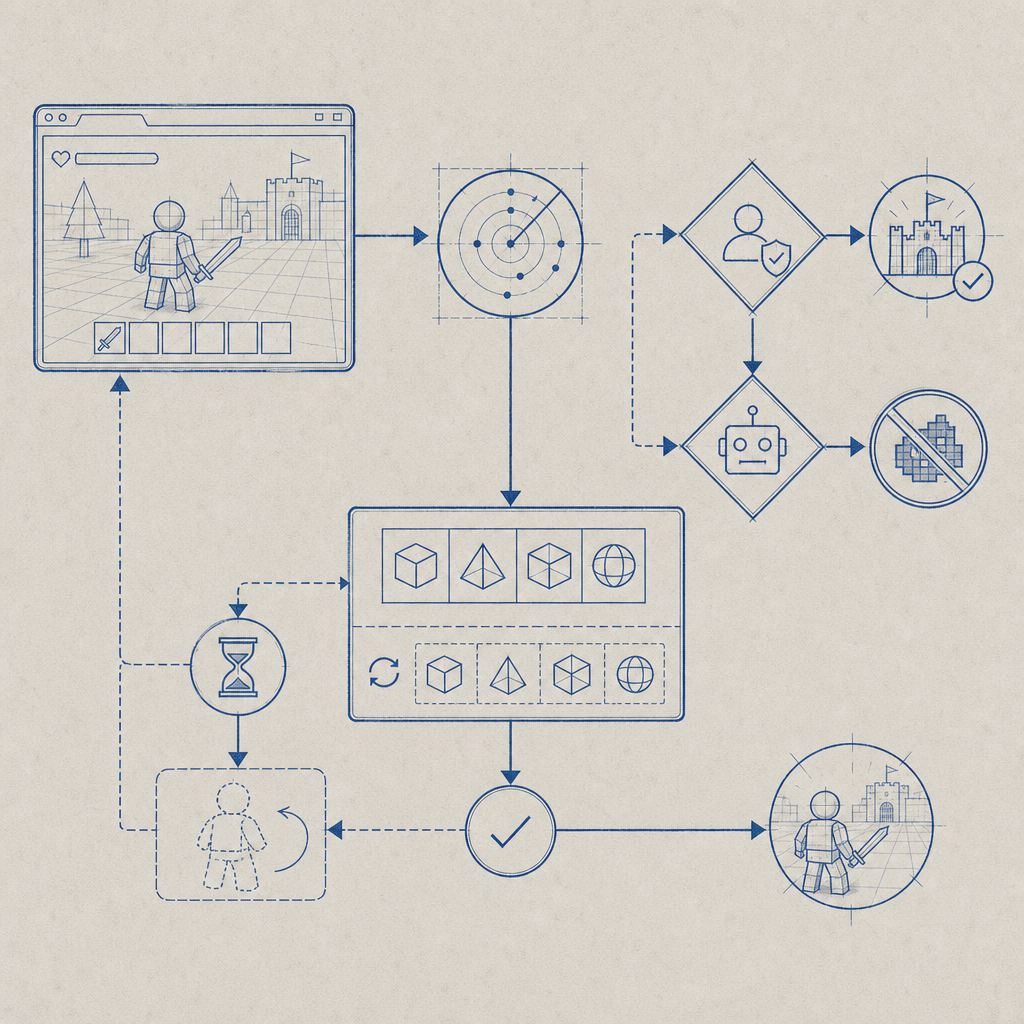
Additional Recommendations to Strengthen Anti-Wordle Bot Measures
- Use Multi-layered Defense: Combine rate limiting, CAPTCHA challenges, and fingerprinting for improved accuracy.
- Monitor and Update Rules: Analyze logs regularly to update IP blacklists, challenge triggers, and suspicious behavior profiles.
- Optimize UX: Avoid intrusive CAPTCHA challenges during normal play to maintain smooth user experience.
- Leverage Analytics: Track CAPTCHA pass/fail rates and correlate with game sessions to identify emerging threats.
- Consider SDKs for Mobile Apps: If your Wordle app spans mobile platforms, utilize native CaptchaLa SDKs for iOS/Android/Flutter.
Through a comprehensive, layered approach that includes CaptchaLa, developers can confidently defend Wordle-style games against automated bots without sacrificing legitimate user engagement or app performance.
Interested in seeing how CaptchaLa fits your game's bot-prevention needs? Check out our pricing plans or dive into detailed integration steps in the docs. Protect your Wordle experience with practical, developer-friendly anti bot tools today.