
Anti scraping techniques work best when they combine friction, detection, and server-side enforcement rather than relying on a single challenge. If you only block one pattern, scrapers adapt; if you layer rate limits, fingerprint signals, token validation, and behavior analysis, you make abuse much harder to scale.
The goal is not to stop every automated request forever. The goal is to raise the cost of abuse until scraping becomes unreliable, expensive, or noisy enough that it is no longer worth doing. That usually means defending the edge, the session, and the backend together.
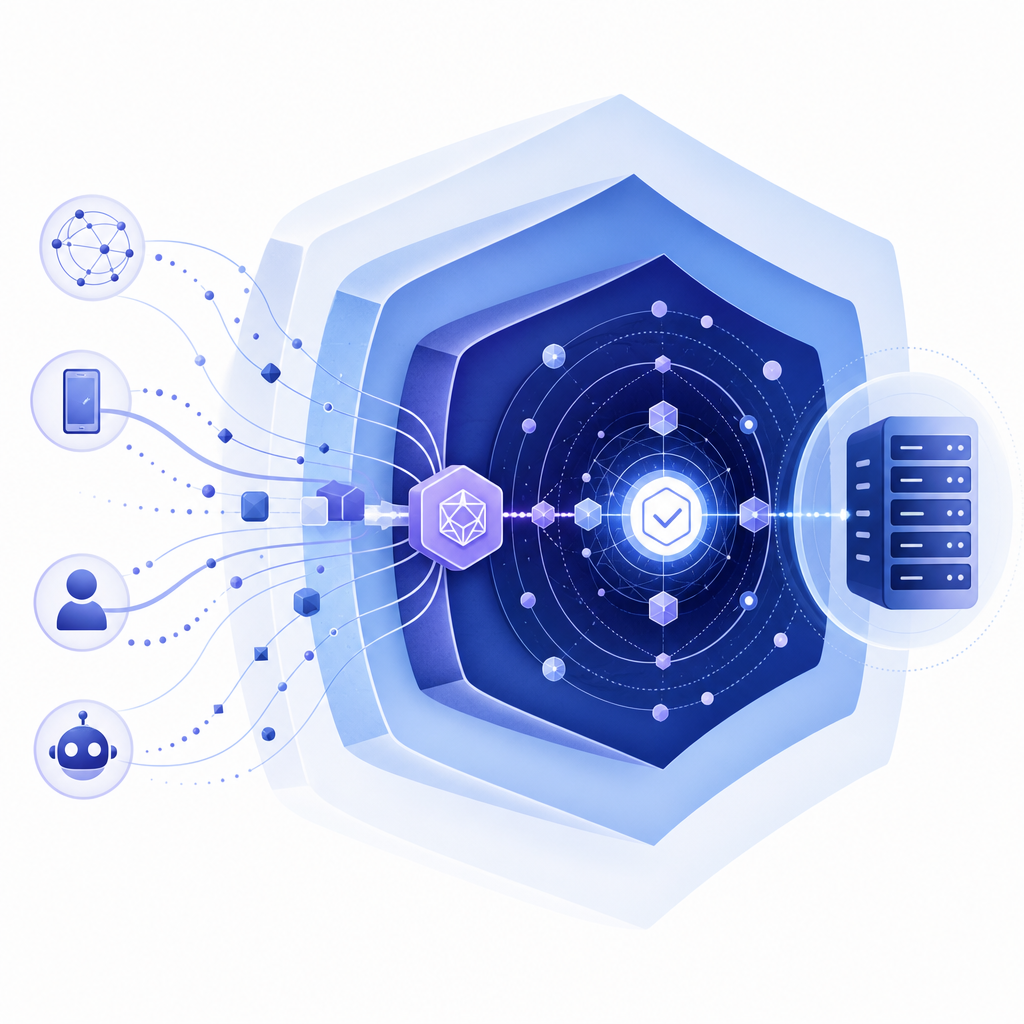
What anti scraping techniques actually do
Anti scraping techniques are controls that help you distinguish legitimate users from automated collection at scale. The strongest programs do not depend on one signal like IP reputation or one tool like a CAPTCHA widget. They use multiple signals, then decide whether to allow, challenge, throttle, or block.
A practical defense stack usually includes:
Traffic shaping
Rate limits, burst controls, and concurrency limits reduce high-volume abuse. These are useful even when you cannot reliably classify every request.Client and device signals
Browser entropy, header consistency, timezone/language mismatch, pointer behavior, and TLS/session continuity can all help identify automation patterns.Challenge-response verification
A challenge can prove that a client completed a human-facing interaction or passed a trust check. This is where systems like CaptchaLa fit naturally.Server-side validation
Never trust the client alone. A pass token is only useful if your backend validates it before granting access.Behavioral monitoring
Scrapers tend to leave traces: repeated traversal of category pages, unusual pagination depth, high request uniformity, and non-human session lengths.
The trick is to combine these controls so that one weak point does not collapse the entire system.
Layered defenses that hold up under real abuse
There are several anti scraping techniques that work well together, and the order matters. Start with controls that are cheap to enforce, then reserve stronger friction for suspicious traffic.
1) Put rate limits at the edge and at the app layer
Edge limits stop noisy bursts before they hit your origin. App-layer limits protect expensive endpoints like search, checkout, login, and content feeds.
Use different thresholds by route. For example:
- listing pages: higher request tolerance, lower page-depth tolerance
- search endpoints: stricter burst and concurrency controls
- auth endpoints: aggressive rate limiting and IP/session heuristics
- exports or bulk fetches: queued jobs, signed access, or manual review
2) Bind trust to a server-validated token
A client-side challenge should be treated as a signal, not proof. The backend should validate the pass token on every protected action that matters. CaptchaLa’s validate flow is designed for that model: your server sends pass_token and client_ip to POST https://apiv1.captcha.la/v1/validate with X-App-Key and X-App-Secret. That makes token reuse and replay much less useful.
A simple validation sequence looks like this:
POST /v1/validate
Host: apiv1.captcha.la
X-App-Key: your_key
X-App-Secret: your_secret

{
  "pass_token": "token-from-client",
  "client_ip": "203.0.113.42"
}
If the response is valid, grant the session step or release the protected data. If not, fall back to a challenge, throttle, or deny.
3) Make scraping economically unattractive
A scraper succeeds when it can collect enough data cheaply enough to matter. You can disrupt that in a few ways:
- paginate with server-side cursors instead of predictable offsets
- randomize non-essential response ordering where it does not harm UX
- cache aggressively for legitimate users but require stronger trust for repeated traversal
- watermark or segment feeds so leaked data is traceable
- move valuable bulk actions behind authenticated, scoped access
4) Use adaptive challenges, not constant friction
Constant friction frustrates real users. Adaptive friction keeps the happy path smooth and escalates only when risk rises.
Examples include:
- challenge after suspicious velocity, not on every visit
- require stronger proof for account creation than for simple page views
- trust returning verified sessions for a limited time window
- re-check before actions that expose bulk data
This approach is easier to maintain when the challenge system supports multiple platforms. CaptchaLa offers native SDKs for Web, iOS, Android, Flutter, and Electron, plus server SDKs like captchala-php and captchala-go, which makes it easier to enforce the same policy across clients.

Choosing the right tools: what each option is good at
Not every anti scraping technique solves the same problem. Some are better for bot traffic on login forms. Others are better for API abuse or content extraction. Here is a practical comparison:
| Control | Best for | Strengths | Tradeoffs |
|---|---|---|---|
| Rate limiting | Volume spikes, brute force, repeated access | Simple, fast, cheap | Can affect shared NATs or heavy legit users |
| Fingerprinting | Repeated automation patterns | Good for correlation and anomaly detection | Needs tuning and privacy-aware handling |
| CAPTCHA / challenge | Human verification, step-up friction | Strong signal at key moments | Adds user friction if overused |
| Token validation | Backend enforcement | Prevents client-side spoofing | Requires server integration |
| WAF rules | Known bad patterns, signature traffic | Quick to deploy | Can miss novel abuse |
| Behavior analytics | Scraper traversal, session anomalies | Good for adaptive decisions | Takes time to tune |
A lot of teams try to make the challenge widget do everything. That is usually a mistake. A challenge is strongest when it is part of a broader policy that includes server validation, rate controls, and monitoring.
For teams comparing providers, reCAPTCHA, hCaptcha, and Cloudflare Turnstile are all common options. Each has a different balance of UX, control, and integration style. The right choice depends on your traffic profile, your privacy constraints, and how much policy control you want in your backend.
Implementation details that matter more than the widget
The details are where most defenses succeed or fail. A polished challenge can still be easy to bypass operationally if your backend trust model is weak.
Validate on the server, not just in the browser
If a client says it passed, that should not be enough. Your origin should verify the result before allowing:
- account creation
- password reset
- search result expansion
- large content fetches
- form submission with high abuse value
For CaptchaLa, that means posting the token to the validate endpoint and checking the outcome before proceeding. If your app issues a challenge first, the server-token flow uses POST https://apiv1.captcha.la/v1/server/challenge/issue, which can be useful when the backend needs to initiate a step-up flow instead of waiting for the client.
Use first-party data for policy decisions
Good anti scraping techniques are built on signals you already own:
- request velocity by account and IP
- session age and continuity
- page traversal depth
- device or browser consistency
- historical abuse outcomes
- endpoint sensitivity
The more you depend on first-party data, the less exposed you are to third-party signal changes. That also helps with consistency across products and regions.
Keep the UX honest
A security control that annoys every legitimate user is usually too blunt. A few guidelines help:
- challenge only when risk rises
- explain why a step-up is needed
- cache trust briefly so the same user is not challenged repeatedly
- review false positives regularly
- measure completion rate, drop-off, and abuse prevented
CaptchaLa’s published tiering is straightforward to map onto growth stages: free tier for 1,000 monthly verifications, Pro for 50K–200K, and Business for 1M. That makes it easier to start small, instrument the flow, and expand as abuse grows without redesigning the policy.
A practical playbook for defenders
If you need a starting point, use this order:
Protect sensitive routes first
Logins, signups, search, exports, and content endpoints with high value should get the strongest controls.Add server-side validation
Treat client-side success as provisional until your backend confirms it.Apply velocity and depth limits
Scrapers often reveal themselves through repeated traversal and high-frequency requests.Escalate only when suspicious
Don’t punish normal users with constant checks.Review and tune weekly
Abuse patterns change quickly, and static rules drift.Instrument outcomes
Track validation pass rate, challenge rate, false positives, and blocked volume so you can see what is actually working.
The biggest misconception about anti scraping techniques is that they are a one-time setup. They are closer to a policy system. The better your signals, the less friction you need; the better your server enforcement, the less value a stolen token has.
If you want a reference implementation or integration details, the docs are the best place to start.
Where to go next: compare deployment options and plan limits on pricing, or review the docs to map validation into your backend flow.