
Anti scraping protection is the set of controls that detect, slow, or block automated collection of your content, inventory, or data before it becomes a business problem. The practical goal is simple: let legitimate users browse normally while making large-scale automated extraction expensive, noisy, and unreliable.
That matters because scraping usually does not look like a single dramatic attack. It looks like a steady stream of account creation, search abuse, pricing harvesting, inventory polling, credential abuse, and API enumeration. Good protection combines client-side challenge signals, server-side validation, rate limits, and behavioral checks so bots lose momentum without turning the site into a maze for humans.
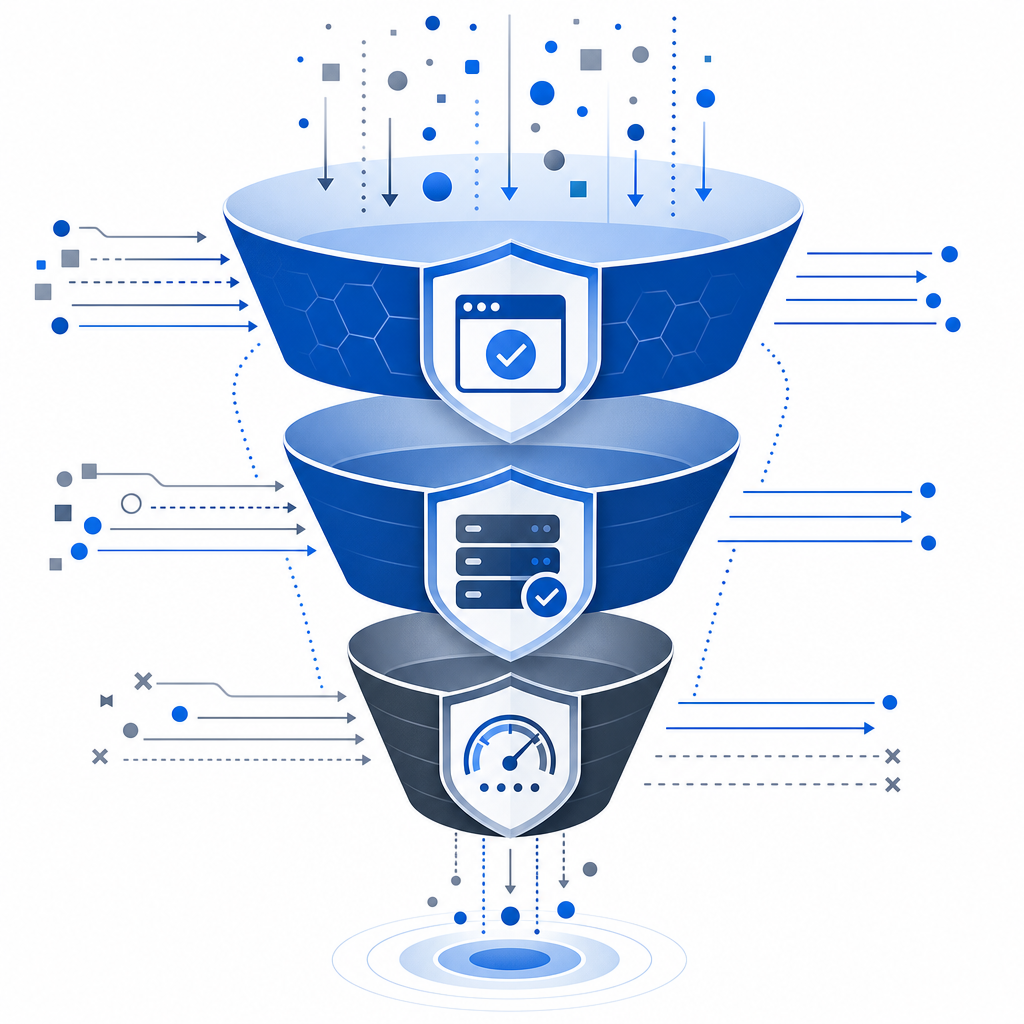
What anti scraping protection actually stops
Scraping is not one thing. Different defenses are needed depending on what is being targeted and how the automation behaves.
The most common targets are:
- Public content pages, where bots try to mirror articles, listings, or directories.
- Search endpoints, where repeated queries expose your catalog, pricing, or availability.
- Login and signup flows, where bot operators test stolen credentials or create fake accounts.
- APIs, where automation can extract structured data faster than a browser ever could.
- High-value workflows, such as checkout, coupon redemption, or referral abuse.
A useful mental model is to classify scraping by intent and cost:
| Threat pattern | Typical signal | Good defense layer |
|---|---|---|
| Headless browsing at scale | Low dwell time, high request volume | Challenge + rate limiting |
| Search harvesting | Repeated queries, rotating IPs | Server-side anomaly checks |
| Account farming | Many signups from similar environments | Proof-of-human + email/phone policies |
| API extraction | Predictable request sequences | Token binding + validation |
| Residential proxy abuse | Geo spread, inconsistent fingerprints | Multi-signal scoring |
The key is not to block every unusual request. It is to make automation harder to industrialize. A scraper that can fetch 10 pages is annoying; one that can reliably fetch 10 million is a revenue problem.
The protection stack: from friction to verification
The strongest anti scraping protection is layered. Relying on one tactic, such as IP blocking alone, usually creates false positives or a quick cat-and-mouse loop.
A practical stack looks like this:
Edge filtering
Start with coarse controls: rate limits, burst controls, ASN or geolocation rules where appropriate, and caching for safe public content. This reduces obvious floods before they reach sensitive logic.Client-side challenge
Add a lightweight proof step when traffic looks suspicious. The challenge should be fast, accessible, and predictable for real users. For many apps, this is where a service like CaptchaLa fits: it gives you a challenge flow you can place before expensive endpoints without redesigning your whole app.Server-side validation
Never trust the browser alone. Validate challenge results server-side using a short-lived token and your secret key. For CaptchaLa, validation is a POST request tohttps://apiv1.captcha.la/v1/validatewith{pass_token, client_ip}andX-App-Key + X-App-Secret. That server step is what turns a UI event into something defensible.Behavioral and risk scoring
Combine request timing, navigation paths, IP reputation, cookie continuity, and device consistency. One signal is rarely enough; a cluster of weak signals often is.Operational response
When you see abuse, respond with proportionate controls: soft blocks, step-up challenges, temporary throttles, or shadow limits. The best systems adapt rather than hard-fail every edge case.
Here is a simple implementation pattern:
# English comments only

on_request(request):
    if rate_limit_exceeded(request.ip):
        deny(429)

    if is_high_risk(request):
        show_challenge()

    if request.contains_pass_token:
        result = validate_server_side(
            pass_token=request.pass_token,
            client_ip=request.ip,
            app_key=ENV.APP_KEY,
            app_secret=ENV.APP_SECRET
        )

        if result == "pass":
            allow()
        else:
            deny(403)

    allow_if_low_risk()
That flow is intentionally boring. Boring is good. Anti scraping protection works best when it is predictable internally and inconvenient externally.
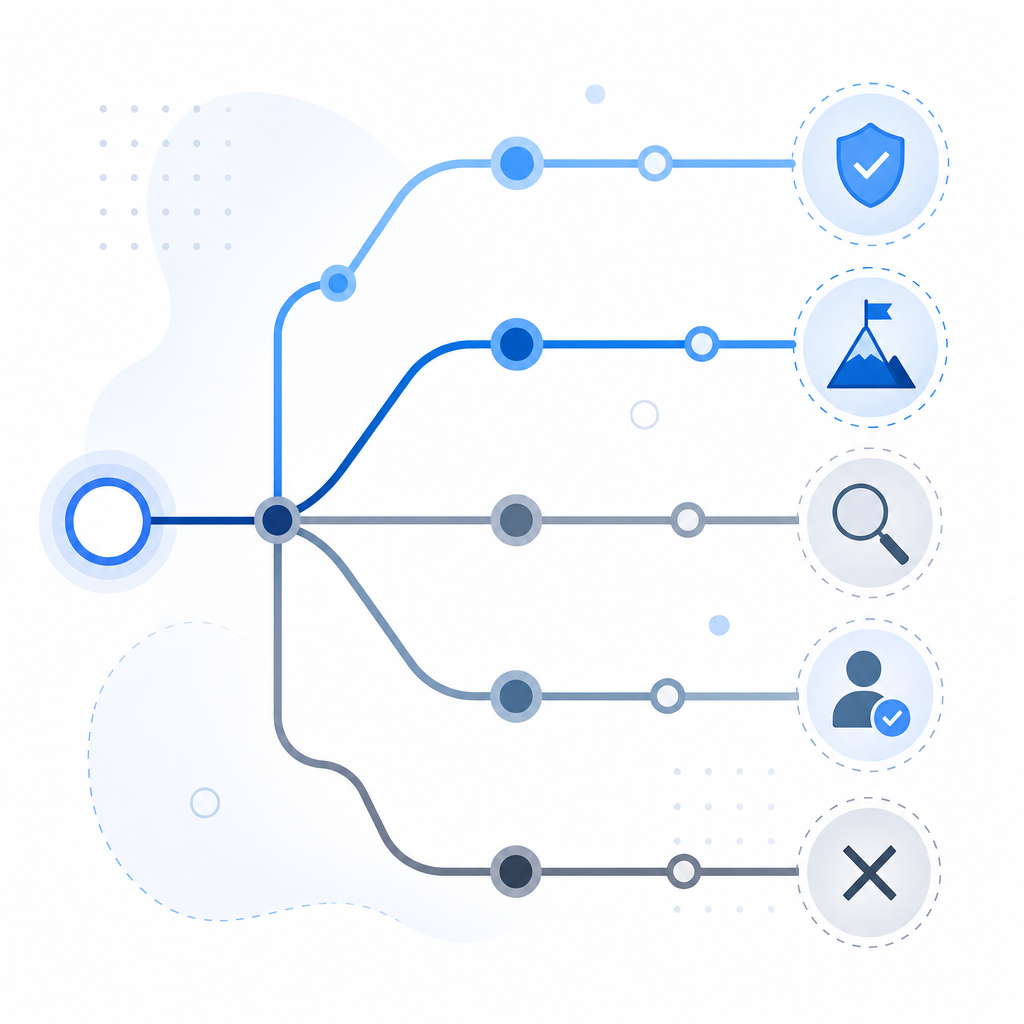
Choosing the right tools for your traffic patterns
Not every site needs the same mix of controls. A public directory, a SaaS dashboard, and an API product all face different automation pressure.
Here is a straightforward comparison of common options:
| Tool | Strengths | Tradeoffs | Good fit |
|---|---|---|---|
| reCAPTCHA | Widely recognized, strong ecosystem | Can add friction, UX varies by flow | General web forms |
| hCaptcha | Flexible, often used for privacy-sensitive deployments | May require tuning for user experience | Signups, login, public forms |
| Cloudflare Turnstile | Lightweight, low-friction, good for many sites | Best when you already use Cloudflare ecosystem | Front-door bot checks |
| Custom heuristics | Fully tailored to your traffic | Requires maintenance and tuning | Product-specific abuse patterns |
| CaptchaLa | Native SDKs, server validation, multiple app targets | Still needs thoughtful integration | Apps needing first-party control across web and mobile |
The right question is not “which tool blocks the most bots?” It is “which tool fits the ways abuse reaches my product?”
A few practical selection criteria:
- Where the risk lives: front-end pages, backend APIs, mobile apps, or all of them.
- How much friction you can tolerate: login flows can often accept a little more friction than content browsing.
- Whether you need mobile support: CaptchaLa supports Web SDKs for JS, Vue, and React, plus iOS, Android, Flutter, and Electron, which helps if your app spans multiple clients.
- How you verify: look for a clear validation path, not just a visual widget.
- Data handling: if first-party data is important to your privacy model, choose a provider and integration pattern that aligns with that requirement.
If you are building for multiple surfaces, support details can matter as much as the challenge itself. CaptchaLa also offers server SDKs like captchala-php and captchala-go, which reduces the odds of each service team inventing its own validation logic.
Implementation details that keep false positives low
A lot of anti scraping protection fails because teams focus on blocking rather than measuring. The better approach is to make the protection aware of context.
1. Bind the challenge to the request path
A token that proves a user passed on /signup should not automatically grant trust on /api/export. Tie tokens to route scope and expiration window so replay value stays low.
2. Keep tokens short-lived
The longer a pass token stays valid, the more useful it becomes to automation. Short expiry times reduce resale value and replay potential.
3. Validate close to the resource
If the expensive part of your app is an internal API or a download endpoint, validate there too. Front-end checks are useful, but they are not a substitute for server enforcement.
4. Use step-up logic instead of blanket denial
If a user is slightly suspicious, challenge them. If they fail repeatedly, throttle them. If they are clearly abusive, block them. Escalation is better than one-size-fits-all punishment.
5. Instrument outcomes
Track:
- challenge presentation rate
- challenge pass rate
- validation latency
- false-positive support tickets
- traffic blocked by rule type
These metrics tell you whether your controls are helping or just adding noise.
For teams looking to integrate quickly, CaptchaLa’s loader is served from https://cdn.captcha-cdn.net/captchala-loader.js, and the backend challenge issuance flow uses POST https://apiv1.captcha.la/v1/server/challenge/issue. That gives you a clear path from challenge issuance to validation without stitching together a custom protocol.
A deployment mindset that scales with abuse
The most resilient anti scraping protection is one you can tune over time. Scraping behavior changes, proxies rotate, browser automation improves, and new attack paths show up around the edges of whatever you just locked down.
A good deployment process usually includes:
- Start with low-friction checks on the most abused endpoints.
- Validate server-side for every trusted action.
- Monitor false positives for real user segments.
- Expand coverage to mobile and API clients where needed.
- Revisit thresholds monthly as traffic patterns change.
If you are just starting, a free tier is often enough to validate the workflow on production traffic without overcommitting. CaptchaLa’s published plans include a free tier at 1,000 monthly requests, Pro at 50K–200K, and Business at 1M, which is a reasonable spread for testing, growth, and higher-volume use cases.
The main thing to remember is that anti scraping protection is not a single widget. It is a policy: detect, challenge, validate, and adapt. When that policy is implemented cleanly, legitimate users barely notice it, while automation starts running into friction exactly where it hurts.
Where to go next: if you want integration details, start with the docs. If you are comparing usage levels for a pilot or rollout, see pricing.