
Anti scraping meaning refers to the techniques and technologies used to prevent automated programs—commonly known as bots—from extracting large amounts of data from websites without permission. This unauthorized data extraction, often called web scraping, can lead to unfair competitive advantage, data theft, increased server load, and violations of website terms of service. Anti scraping measures are therefore essential tools for protecting digital assets, maintaining data integrity, and ensuring fair access to online resources.
What Is Anti Scraping and Why It Matters
At its core, anti scraping means implementing methods that detect and block automated scraping bots from harvesting data repeatedly or at scale. While web scraping has legitimate uses like price comparisons or academic research, malicious scraping often involves competitors stealing proprietary pricing, user databases, or intellectual property. This drives many website operators to add bot detection layers that analyze traffic patterns, enforce rate limits, and challenge suspicious visitors.
Without anti scraping tools, websites risk exposure to data breaches, lost revenue, and degraded user experience due to system overload. On the flip side, overly aggressive defenses may inconvenience legitimate users or well-intentioned tools, so balance and adaptability are key.
Common Targets of Scraping
- E-commerce platforms (prices, inventory)
- Social media profiles and posts
- News and media content
- Financial and real estate listings
Understanding the meaning of anti scraping helps website owners appreciate the ongoing battle between data protection and accessibility.
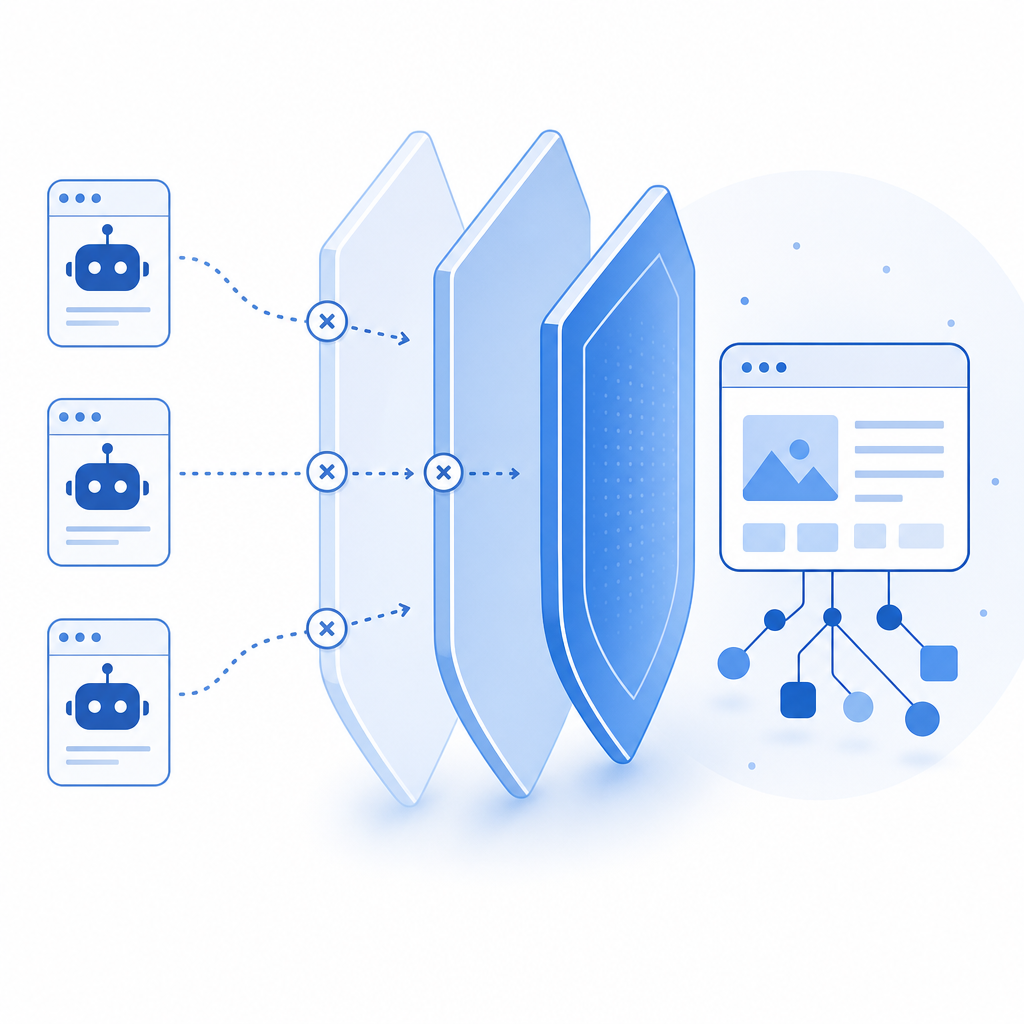
Key Anti Scraping Techniques and Technologies
Anti scraping employs a multi-layered approach combining behavioral analysis, technical challenges, and machine learning. Here are some of the most widely used methods:
1. Rate Limiting and IP Blocking
Limiting the number of requests a client IP or session can make within a time frame is a frontline defense. IP addresses exhibiting rapid-fire or excessively repetitive requests may be temporarily or permanently blacklisted.
2. User-Agent and Header Analysis
Bots often use generic or inconsistent user-agent headers. Analyzing headers for suspicious fingerprints helps detect non-human clients.
3. JavaScript and Cookie Challenges
Requiring clients to run JavaScript or accept cookies can block headless scrapers that don’t fully emulate browsers.
4. CAPTCHAs
These challenges distinguish humans from bots by requiring users to solve puzzles. Solutions like CaptchaLa offer customizable CAPTCHA systems to help verify user authenticity.
5. Behavioral Monitoring and Machine Learning
Advanced systems model normal human browsing behavior — mouse movements, click patterns, and page navigation — to flag anomalies likely caused by scripts.
6. Honeypots and Trap Data
Deliberately embedding misleading or invisible links helps lure and trap automated scrapers.
Comparing Popular CAPTCHA and Bot Defense Solutions
Captchas serve as a critical step in anti scraping stacks by providing an interactive gate to verify users. Here's a comparison of common CAPTCHA providers and their approach to anti scraping:
| Provider | CAPTCHA Types | Integration | Anti Scraping Focus | Free Tier Limits |
|---|---|---|---|---|
| CaptchaLa | Image, puzzle, invisible | JS, Vue, React, iOS, Android, Flutter, Electron SDKs | Strong API validation, multi-language UI, server-side verification | 1000/mo free, scalable plans |
| Google reCAPTCHA | Checkbox, invisible | Web SDKs, mobile APIs | Behavioral analysis, risk scoring | Generous free tier |
| hCaptcha | Image challenges | Web and mobile SDKs | Privacy-conscious, bot detection | Free with paid options |
| Cloudflare Turnstile | Invisible challenge | Easy JS integration | Low friction, uses first-party data | Free for Cloudflare users |
Each has trade-offs in terms of usability, privacy, and integration complexity, but all contribute to robust anti scraping strategies.
Implementing Anti Scraping With CaptchaLa
For developers and site operators seeking a comprehensive anti scraping tool, CaptchaLa offers:
- Native SDKs in JavaScript (also Vue and React), mobile platforms iOS/Android, Flutter, Electron
- Server-side SDKs for PHP and Go for seamless backend integration
- Lightweight loader script (
https://cdn.captcha-cdn.net/captchala-loader.js) for easy frontend deployment - API for token validation (
POST https://apiv1.captcha.la/v1/validate) that integrates with server logic - Support for 8 UI languages to ensure accessibility worldwide
Because CaptchaLa relies only on first-party data, it can fit privacy regulations more easily than some alternatives relying on third-party tracking.
Example: Basic Validation Request (PHP)
// Example: Validate captcha token on server with CaptchaLa PHP SDK

$client = new CaptchaLa\Client('X-App-Key', 'X-App-Secret');
$response = $client->validate([
    'pass_token' => $_POST['pass_token'],
    'client_ip'  => $_SERVER['REMOTE_ADDR'],
]);

if ($response->success) {
    // Proceed with form submission or action
} else {
    // Block request or ask user to retry captcha
}
Balancing Security and User Experience
Effective anti scraping tools must block suspicious scraping traffic without frustrating genuine users. Overusing intrusive CAPTCHAs or excessive IP blocking risks legitimate visitors dropping off or being mistakenly flagged. Combining invisible CAPTCHAs, rate limits, and behavioral analysis allows detection that adapts over time and across different traffic patterns.
Operators should fine-tune thresholds and fallback challenges based on their site's unique needs. For example, a public news site might tolerate mild scraping to encourage sharing, while a commercial SaaS would want stricter controls to protect proprietary data.

Conclusion
Understanding the anti scraping meaning involves recognizing it as an essential defense against unauthorized automated data harvesting. From rate limits and request analysis to CAPTCHA challenges, modern anti scraping combines multiple methods to safeguard website assets. Providers like CaptchaLa offer flexible solutions with extensive SDK support and privacy-conscious designs to help websites integrate bot defenses effectively.
Where to go next? Explore CaptchaLa pricing to find the plan suited to your traffic needs, or dive into the docs for detailed integration guidance. Strong bot defense starts with understanding your options and tailoring anti scraping strategies to your specific risks.