
If you’re comparing anti captcha vs 2captcha, the short answer is this: they’re both part of the same problem space from a defender’s point of view, but they solve very different needs on the attacker side. 2Captcha is a human/solver marketplace often used to get around challenges; “anti-captcha” is sometimes used as a generic term for bypass services, and sometimes confused with defender-side anti-bot tools. If your goal is protecting a product, you should optimize for frictionless verification, server-side validation, and telemetry—not for outspending solvers.
The practical question for teams is not “which bypass service wins?” but “how do we make automated abuse uneconomical without annoying real users?” That’s where modern CAPTCHA and bot-defense design matters.
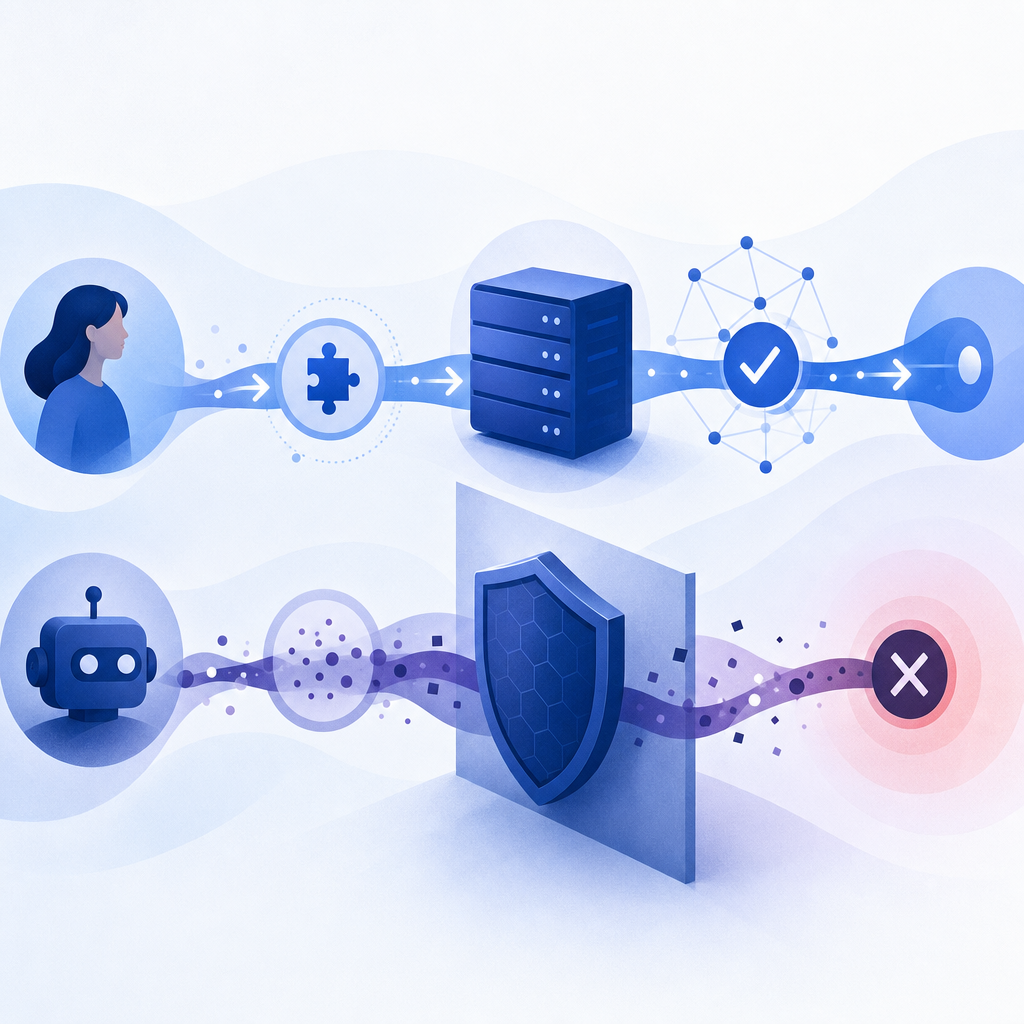
What people usually mean by “anti captcha vs 2captcha”
The phrase is ambiguous, so it helps to separate the two concepts:
- 2Captcha: a third-party solving service that typically routes challenge-solving to humans or human-assisted workflows.
- Anti-captcha / anti captcha: often used loosely to mean either another solving service or the broader idea of defeating CAPTCHA systems.
- Defender-side CAPTCHA/bot defense: what product teams deploy to verify humans, reduce abuse, and keep automation costs high.
From a defender’s perspective, the comparison isn’t about feature parity. It’s about economics and verification depth. Solvers can often handle basic visual or token-based prompts if the only thing standing between an attacker and your endpoint is a single static puzzle. Modern defenses need to combine multiple signals: client integrity, challenge issuance, server-side validation, rate limiting, and behavior analysis.
A useful way to think about it is this:
| Dimension | 2Captcha / solver services | Defender-side CAPTCHA / bot defense |
|---|---|---|
| Primary goal | Help requests pass verification | Distinguish humans from automation |
| Cost model | Variable per attempt or per task | Predictable SaaS or infrastructure cost |
| Risk to operators | Used for abuse, scraping, signup fraud | Protects accounts, forms, checkout, and APIs |
| Best defense against it | More than one signal; server-side checks | N/A |
If you’re evaluating tools as a platform owner, the goal is not to “beat a solver once.” It’s to make abuse expensive enough that it no longer scales.
Why solver services still work on weak implementations
Solver services tend to succeed when integrations are shallow. A common pattern is client-side-only checks: render a challenge, accept a token in the browser, and trust that token without meaningful server validation. If the backend doesn’t verify the token, bind it to the request context, or reject reuse, automation can often replay or purchase a valid result.
Here are the most common weaknesses defenders should avoid:
No server-side validation
- If the client says “human verified,” the backend should not simply believe it.
- Validate every pass token on the server.
No request context binding
- Tokens should be checked against the relevant IP or session context where appropriate.
- If a token is detached from the original request, it becomes easier to reuse.
Long-lived or reusable tokens
- Short TTLs reduce replay risk.
- One-time semantics are much safer than permissive reuse.
Single-signal enforcement
- A challenge alone is not enough.
- Combine with velocity checks, device/session heuristics, and endpoint-specific rules.
Predictable challenge behavior
- Static flows are easier to target.
- Adaptive issuance reduces automation success rates.
That’s why a defender-oriented system should be treated as a validation layer, not just a widget. CaptchaLa is built around that defender mindset: first-party data only, straightforward server checks, and SDKs that fit into existing web and mobile stacks without making your forms brittle.
What a robust integration should look like
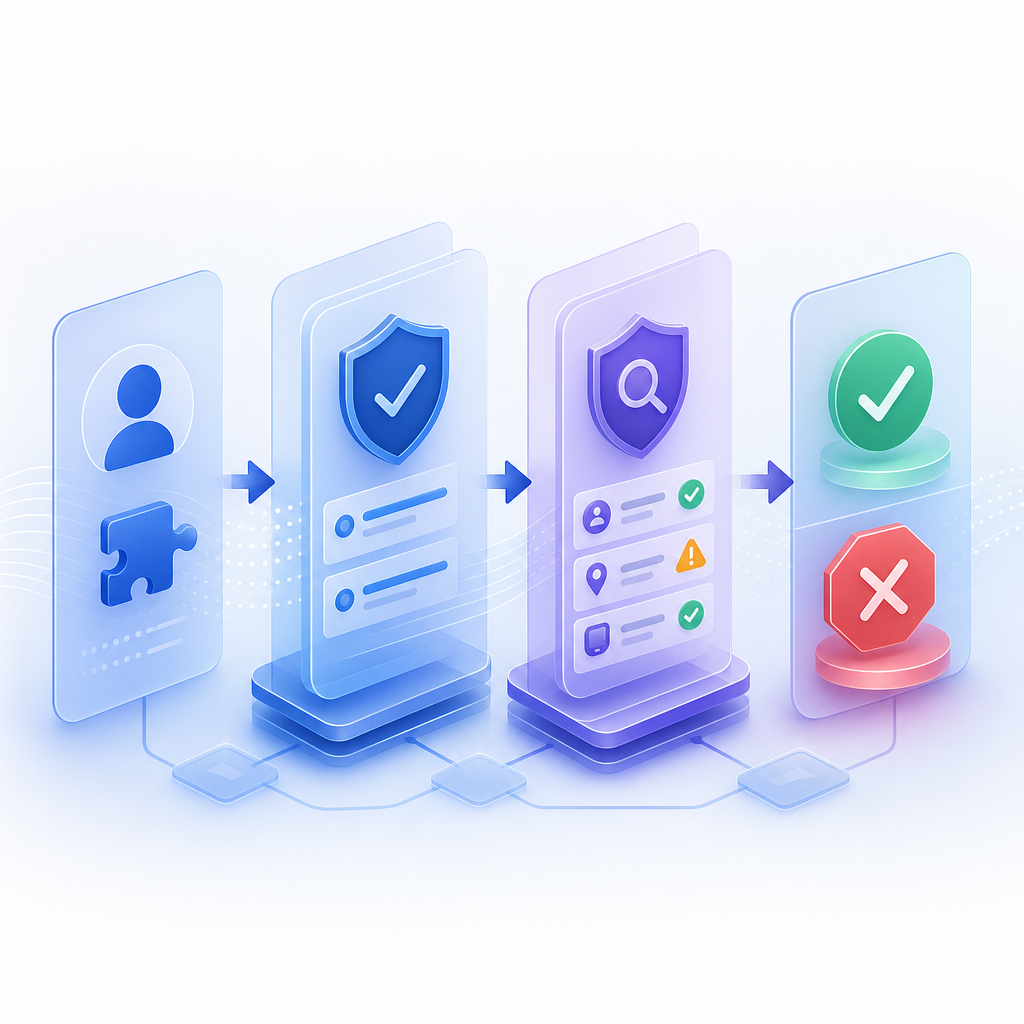
A secure integration should be boring in the best way: simple client flow, explicit server verification, and clear failure handling. A typical pattern is:
- The client requests or receives a challenge.
- The user completes the interaction.
- The client sends a pass token to your backend.
- The backend validates the token with the CAPTCHA provider.
- Your app decides whether to proceed.
For CaptchaLa, the server validation flow is intentionally explicit. The validation endpoint is:
POST https://apiv1.captcha.la/v1/validatewith a body like:
{
  "pass_token": "string",
  "client_ip": "string"
}
and authentication via X-App-Key plus X-App-Secret.
That matters because token checks should happen where trust is strongest: your server. Client-side UI can be helpful for usability, but the real decision should happen after verification on the backend.
A simple backend flow
// English comments only
async function verifyCaptcha(passToken, clientIp) {
  const response = await fetch("https://apiv1.captcha.la/v1/validate", {
    method: "POST",
    headers: {
      "Content-Type": "application/json",
      "X-App-Key": process.env.CAPTCHALA_APP_KEY,
      "X-App-Secret": process.env.CAPTCHALA_APP_SECRET
    },
    body: JSON.stringify({
      pass_token: passToken,
      client_ip: clientIp
    })
  });

  if (!response.ok) {
    return { ok: false, reason: "captcha_validation_failed" };
  }

  const data = await response.json();
  return { ok: data.success === true };
}
For teams that need to issue server-side challenge tokens, there’s also a dedicated endpoint:
POST https://apiv1.captcha.la/v1/server/challenge/issueThat can be useful when your backend wants tighter control over issuance rather than relying only on client bootstrapping.
If you’re implementing across multiple platforms, the ecosystem matters too. CaptchaLa provides native SDKs for Web (JS, Vue, React), iOS, Android, Flutter, and Electron, plus server SDKs such as captchala-php and captchala-go. There are also package options for Maven (la.captcha:captchala:1.0.2), CocoaPods (Captchala 1.0.2), and pub.dev (captchala 1.3.2). The integration story is less about “adding a widget” and more about keeping verification consistent across surfaces.
How to compare defender options without getting distracted by bypass tools
If you’re choosing between CAPTCHA providers or bot-defense approaches, compare them on the things that affect abuse prevention and user experience, not on whether a solver community can name them.
Evaluate these criteria
Validation depth
- Does the system require server-side verification?
- Are tokens short-lived and single-use?
- Can you bind validation to request context?
Coverage
- Web, mobile, embedded apps, and desktop?
- Support for your actual stack matters more than marketing language.
Operational clarity
- Are logs and validation responses understandable?
- Can support and engineering teams debug failures quickly?
Localization and accessibility
- Multi-language UI support helps real users complete challenges.
- CaptchaLa supports 8 UI languages, which can reduce unnecessary friction in global products.
Data handling
- First-party data only is a good baseline for teams that want tighter privacy control and simpler compliance posture.
Pricing shape
- Choose a model that fits your traffic profile.
- CaptchaLa’s public tiers include Free at 1,000/month, Pro at 50K–200K, and Business at 1M. That kind of structure helps teams match spend to traffic without overcommitting early.
It’s also worth naming the broader market fairly. reCAPTCHA, hCaptcha, and Cloudflare Turnstile are all relevant references depending on your stack, threat model, and UX tolerance. Some teams prioritize very low friction; others prefer stronger challenge frequency or specific deployment constraints. The right answer depends on where abuse is coming from: signups, credential stuffing, scraping, referral fraud, checkout abuse, or API flooding.
A defender’s takeaway
If you came here trying to decide whether anti captcha vs 2captcha is the “stronger” side, the more useful conclusion is simpler: solver services expose weak verification, and your defense should assume automation will adapt. Don’t rely on the visual layer alone. Validate on the server, keep tokens narrow in scope, and pair CAPTCHA with rate limits and behavioral controls.
For most product teams, the right architecture is layered: a challenge at the edge, a server-side decision in the middle, and abuse controls around the sensitive action. That approach is far more resilient than trying to guess which bypass tool is popular this month.
Where to go next: if you want to see how that looks in practice, start with the docs or check pricing for a plan that matches your traffic.