
Anti bot verification on Codeforces plays a crucial role in maintaining a fair and level playing field in competitive programming contests. It refers to mechanisms implemented to detect and block automated bots that might otherwise submit solutions on behalf of real participants or scrape contest content unfairly. With the increasing sophistication of bots, Codeforces and similar platforms must employ effective verification methods to ensure human presence and discourage dishonest practices.
This blog dives into how anti bot verification is applied on Codeforces, key technologies behind it, and how services like CaptchaLa fit into the ecosystem alongside alternatives such as reCAPTCHA and hCaptcha.
Why Does Codeforces Need Anti Bot Verification?
Codeforces hosts timed programming competitions where accuracy and speed determine ranks. Bots threaten this environment by:
- Submitting solutions automatically to gain unfair advantage or disrupt contests.
- Scraping contest problems and test data to share or exploit outside the rules.
- Flooding the platform with fake accounts or requests to degrade performance.
Anti bot verification systems help detect and block these automated activities by requiring users to prove they are human. This protects not only fairness for genuine participants but also platform stability during high-traffic contests.
Common Techniques Behind Anti Bot Verification on Codeforces
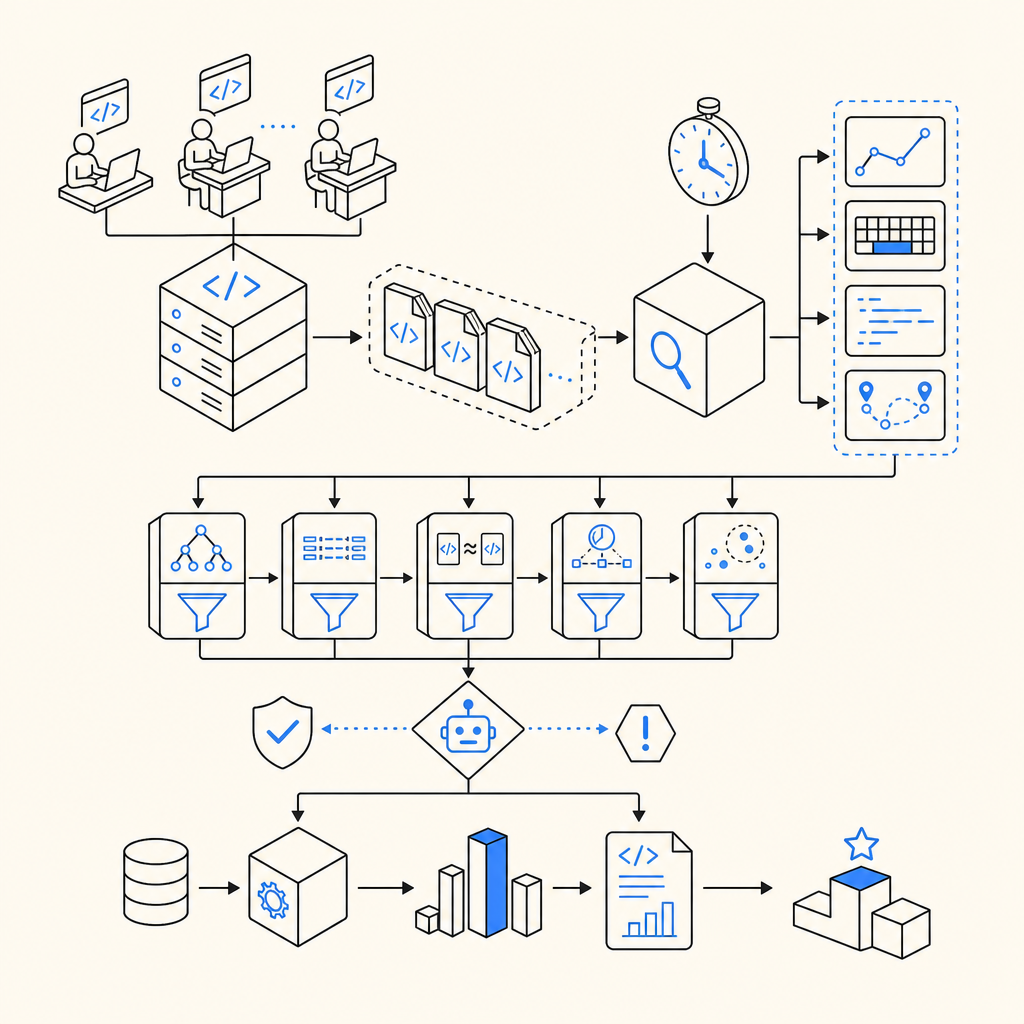
Codeforces uses a mix of strategies to distinguish bots from humans:
Challenge-Response Tests (CAPTCHAs)
Traditional CAPTCHAs ask users to identify images, type distorted text, or solve simple puzzles that require human-like cognition. These are effective against basic bots but can be vulnerable to advanced machine learning attacks.
Behavioral Analysis
Monitoring mouse movements, keystrokes, and interaction patterns helps identify robotic behavior. Bots tend to have predictable, repetitive input patterns.
Rate Limiting and IP Reputation
Limiting the number of submissions or requests per IP address and leveraging threat intelligence feeds to block suspicious IP ranges reduces abuse.
JavaScript Fingerprinting and Token Validation
Embedding JavaScript challenges that generate tokens verified server-side can confirm legitimate browsers vs headless scripts.
Comparing Popular Anti Bot Verification Providers
Codeforces does not publicly disclose its entire bot defense stack, but many platforms evaluate prominent CAPTCHA providers for integration. Here’s a high-level comparison relevant to competitive programming websites:
| Feature | reCAPTCHA | hCaptcha | Cloudflare Turnstile | CaptchaLa |
|---|---|---|---|---|
| Challenge Types | Image, checkbox, invisible | Image-based, checkbox | Invisible, passive | Customizable challenges with SDKs |
| Privacy Focus | Google data processing | Privacy-centric with user compensation options | Privacy-forward, no user tracking | First-party data only, simple consent |
| Ease of Integration | Widely supported SDKs | SDKs with enterprise features | Lightweight JS loader | Native SDKs for Web, iOS, Android, Flutter, Electron |
| Pricing | Free & enterprise tiers | Free with revenue share | Free | Free tier 1K/month; scalable plans available |
| Customization Level | Limited | Moderate | Limited | Extensive, server and client token validation |
| Language Support | Multiple | Multiple | Multiple | 8 UI languages |
Each solution balances security, user experience, and privacy differently. CaptchaLa stands out with flexible SDKs and straightforward server-side validation APIs, enabling platforms like Codeforces to tailor anti bot verification without compromising user convenience or privacy.
Technical Implementation Considerations for Codeforces-Style Platforms
Building or integrating anti bot verification involves these technical points:
Choosing the Verification Mode
Should the system use visible challenges (e.g., clicking images) or invisible ones based on behavioral and token validation? Invisible methods reduce friction but require more backend checks.SDK Integration
Codeforces may embed SDKs directly into their web interface (React/JavaScript), mobile apps, or APIs. CaptchaLa offers native support across web frameworks and mobile platforms for seamless multi-environment coverage.Server-Side Validation
After client verification, the server must validate tokens efficiently against the verification provider’s API to confirm legitimacy before accepting submissions.Rate Limiting and Anomaly Detection
Layering CAPTCHA challenges with IP throttling and analytics helps catch sophisticated botnets or distributed attacks.Localization and Accessibility
Competitive programming communities are global—prompting for challenges in multiple languages and ensuring accessibility compliance is important. CaptchaLa supports 8 UI languages natively.
Example: Simple CaptchaLa Integration Snippet (JavaScript client side)
// Load CaptchaLa loader script dynamically
const script = document.createElement('script');
script.src = 'https://cdn.captcha-cdn.net/captchala-loader.js';
document.head.appendChild(script);

script.onload = () => {
  CaptchaLa.render('captcha-container', {
    siteKey: 'your-site-key',
    theme: 'light',
    onSuccess: (token) => {
      // Send token to backend for verification before accepting form submission
      console.log('User token:', token);
    }
  });
};
This lightweight integration can be enhanced with server token issuance and validation APIs for stronger guarantees.

The Role of CaptchaLa in Anti Bot Verification on Codeforces
Services like CaptchaLa provide the building blocks for platforms like Codeforces to implement anti bot verification with:
- Transparent privacy policies centered on first-party data only.
- Scalable pricing plans starting with a free tier suitable for emerging contests.
- Multi-language support catering to global user bases.
- Extensive SDKs simplifying adoption in web and mobile contest apps.
- Well-documented APIs enabling robust server-side token validation.
Such features align well with the needs of competitive programming platforms striving to keep bots at bay while maintaining a smooth contestant experience.
Conclusion
Anti bot verification on Codeforces is essential for preserving contest fairness and platform integrity. By combining challenge-response techniques, behavioral analysis, and server-side validation, Codeforces can effectively deter automated bots. Selecting the right CAPTCHA solution—including options like CaptchaLa—involves balancing security, privacy, accessibility, and integration ease.
If you’re interested in exploring how to implement or upgrade anti bot verification for your own platform or contest site, check out CaptchaLa’s documentation or view their pricing plans for scalable options.
Where to go next? Learn more about protecting your users and contests with CaptchaLa.