
Anti bot verification on Codeforces and similar competitive programming platforms is essential to maintaining fair play, preventing spam, and protecting user accounts from automated abuse. By employing CAPTCHA and bot defense mechanisms specifically tailored to the dynamic Codeforces environment, platforms can ensure that only legitimate human users participate in contests and discussions without unnecessary friction.
What Is Anti Bot Verification in Codeforces?
Codeforces hosts an active community around competitive programming, involving contests, problem submissions, voting, and discussions. These activities make it an attractive target for automated bots aiming to manipulate rankings, spam forums, or exploit platform features. Anti bot verification refers to the set of processes and technologies—such as CAPTCHAs or risk-based challenge-response tests—that help identify whether a user is human or an automated script.
On Codeforces, challenges arise because the anti bot system must not only block obvious bots but also minimize disruption for genuine users who value fast access during timed contests or rapid problem-solving. This balancing act demands solutions that are both secure and user-friendly.
Common Approaches to Anti Bot Verification on Codeforces
CAPTCHA Challenges
Traditional CAPTCHAs require users to solve puzzles—selecting images, typing distorted text, or clicking checkboxes—to prove they are human. Common services integrated across various platforms include Google's reCAPTCHA, hCaptcha, and Cloudflare Turnstile. Each has pros and cons relevant to competitive programming platforms:
| Service | Key Strengths | Considerations for Codeforces |
|---|---|---|
| reCAPTCHA v3/v2 | Widely adopted, reliable bot detection | May add latency; sometimes falsely flags users |
| hCaptcha | Privacy-focused, monetization options | Slightly more user interaction in some flows |
| Cloudflare Turnstile | Low friction, privacy-friendly | Newer, less tested in high-stakes platforms |
| CaptchaLa | Multiple SDKs, lightweight integration, native language support | Focus on flexible SDKs and scalability |
Risk-Based Verification
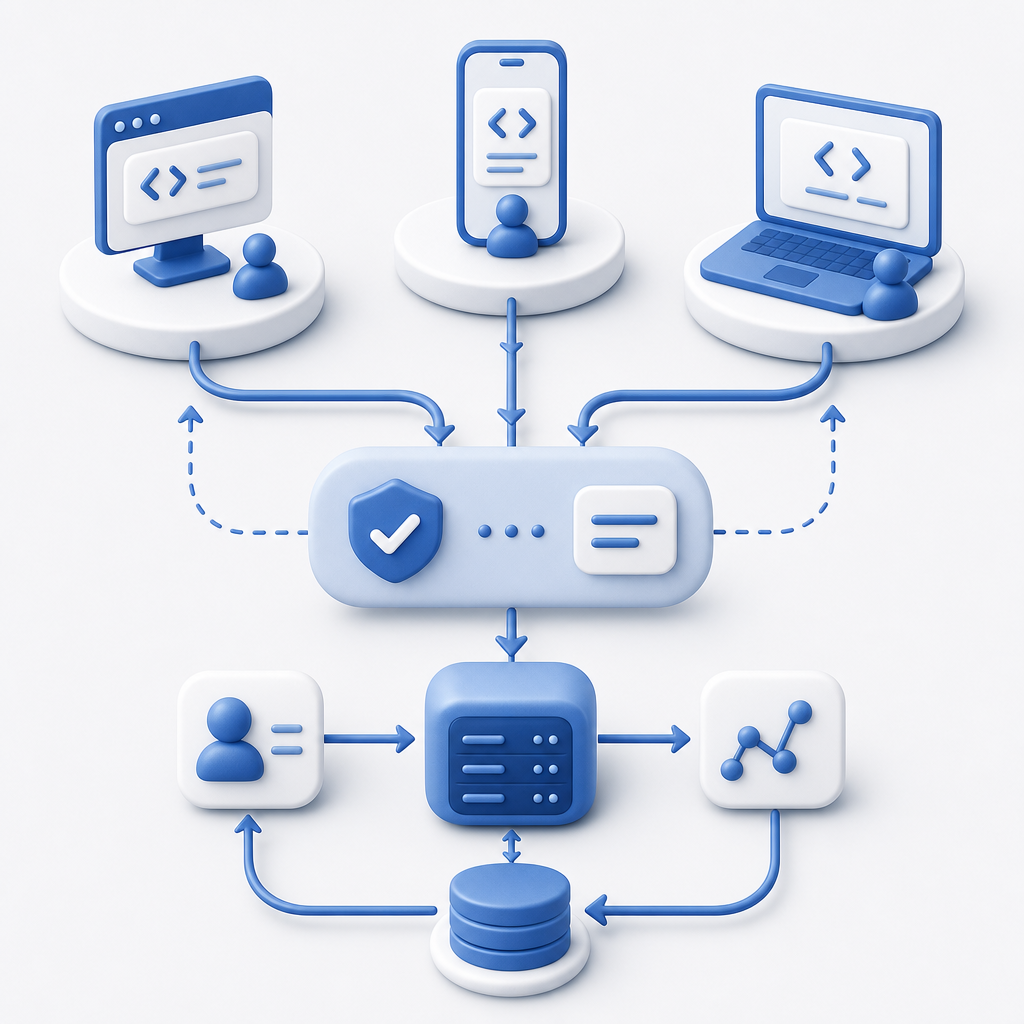
Instead of requiring a challenge on every user interaction, modern systems, including those offered by CaptchaLa, evaluate contextual signals such as IP reputation, request patterns, and device fingerprinting to assign a risk score. Low-risk users pass transparently, while suspicious traffic triggers challenges. This reduces friction during Codeforces contests where speed is crucial.
Server-Side Token Validation
To ensure verification is robust, anti bot systems leverage server-side validation API calls confirming challenge results. For example, CaptchaLa provides endpoints to validate tokens with your app's secret keys, bridging client-side challenges with backend enforcement.
// Example: Validate CAPTCHA token server-side with CaptchaLa
const response = await fetch('https://apiv1.captcha.la/v1/validate', {
  method: 'POST',
  headers: {
    'Content-Type': 'application/json',
    'X-App-Key': APP_KEY,
    'X-App-Secret': APP_SECRET,
  },
  body: JSON.stringify({
    pass_token: userChallengeToken,
    client_ip: userIpAddress,
  }),
});
const data = await response.json();
if (data.success) {
  // Proceed with user request
} else {
  // Challenge failed or bot suspected
}
Challenges Unique to Codeforces and Competitive Platforms
Minimizing User Friction During Timed Contests
Codeforces contests rely on lightning-fast interactions. Any delay from CAPTCHA challenges can frustrate users or unfairly impact contest results. For this reason, invisible or low-friction verification, such as behavioral analysis or risk-based scoring, is preferred over constant challenges.
Multilingual and Geographically Diverse User Base
With participants worldwide, anti bot verification tools on Codeforces must support multiple languages and regional variations. CaptchaLa supports 8 UI languages and native SDKs for web frameworks (React, Vue), iOS, Android, and others, enabling smooth integration across platforms.
Scalability to Handle Traffic Spikes
Contests drive high traffic spikes with thousands of requests per second. Verification systems need to scale efficiently without introducing latency. CaptchaLa’s server SDKs (captchala-php, captchala-go) and CDN-hosted loaders help distribute load and reduce delays.
Comparing Popular Anti Bot Verification Solutions for Codeforces
| Feature | reCAPTCHA | hCaptcha | Cloudflare Turnstile | CaptchaLa |
|---|---|---|---|---|
| UI Languages Supported | Limited (mostly English) | Multiple | Limited | 8 (including non-Latin) |
| Native SDKs (Web, Mobile) | Web (JS) only | Web, Mobile limited | Web (JS), mobile SDKs limited | Full suite: Web (JS/Vue/React), iOS, Android, Flutter, Electron |
| Server SDKs | Yes (popular libs) | Yes | Limited | Yes (captchala-php, captchala-go) |
| Validation API | Yes (HTTPS POST) | Yes | Yes | Yes (https://apiv1.captcha.la/v1/validate) |
| Pricing Model | Free with limits | Free with monetization | Free | Free tier 1000/mo, Pro & Business plans scale up to 1M+ |
| User Privacy Focus | Medium (Google ecosystem) | Higher | Higher | First-party data only |
Integrating CaptchaLa for Codeforces Bot Defense
CaptchaLa offers a balance of ease of integration, multiple SDK options, and customizable challenges suitable for platforms like Codeforces. For instance:
- Add the CaptchaLa loader script to your web app’s header:
<script src="https://cdn.captcha-cdn.net/captchala-loader.js" defer></script>Use native UI components for React or Vue to display challenges as needed.
Handle server-side validations via CaptchaLa’s API endpoints to confirm legitimacy.
The ability to configure challenge difficulty, risk-thresholds, and language options lets you tailor anti bot verification to your community’s needs, maintaining fairness without sacrificing user experience.
Final Thoughts on Anti Bot Verification Codeforces Needs
Selecting an appropriate anti bot verification system for Codeforces requires balancing bot detection accuracy, user experience, language support, and scalability. While large providers like reCAPTCHA and hCaptcha are widely used, other options like CaptchaLa bring niche advantages such as extensive SDKs, first-party data privacy, and flexible pricing.
When deploying such defenses, consider a layered approach:
- Use risk-based analysis to reduce unnecessary challenges during contests.
- Deploy visually effective yet unobtrusive CAPTCHAs only when needed.
- Rely on server-side validation to enforce security without trusting client-only proofs.
This strategy preserves the competitive integrity and community engagement Codeforces depends on.
If you want to explore technical details or pricing for integrating anti bot verification solutions tailored to competitive programming platforms like Codeforces, visit the CaptchaLa docs or check out pricing options.
Where to go next? Dive into CaptchaLa’s SDKs and API to build secure, user-friendly bot defense for your projects.
CaptchaLa offers a practical path to smarter anti bot verification.